



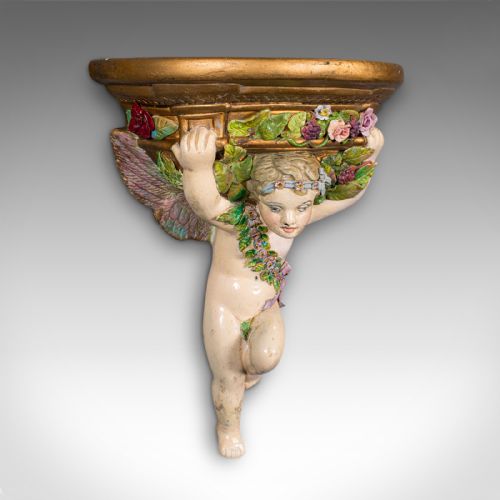


Cherub Wall Brackets
Cherub wall brackets combine sculptural presence and architectural support, bringing classical figures into domestic interiors as ledges, sconces, and mirrors.
Cherub Wall Brackets
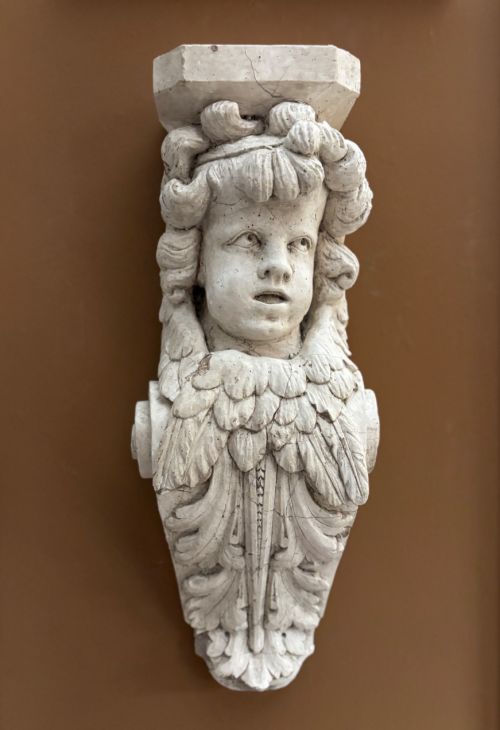
Cherub wall brackets encompass structural ledges, corbels, and illuminated sconces that feature winged putti or cherubic figures as their primary ornament. These decorative supports emerge primarily in nineteenth-century and early twentieth-century interiors, drawing on revived Baroque, Rococo, and classical vocabularies.
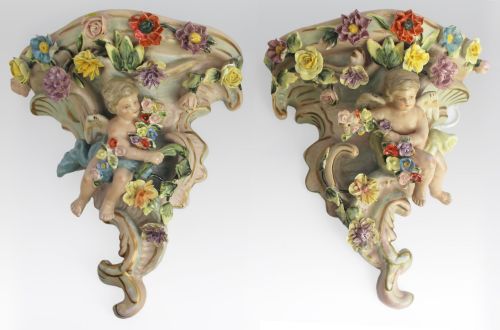
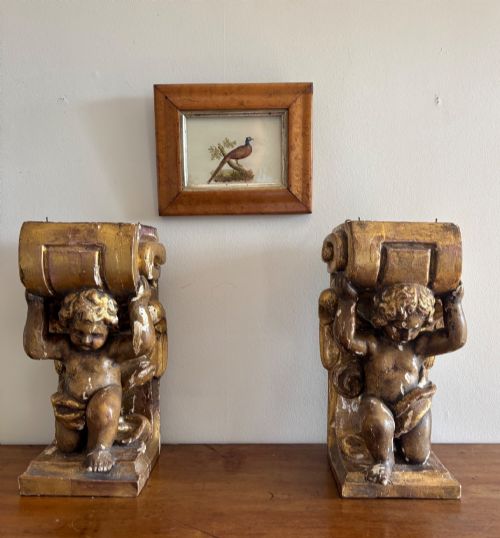
The versions most commonly encountered on this page take the form of carved wood or giltwood pairs designed to flank mirrors, paintings, or architectural focal points. Alongside solid wood supports, buyers frequently find porcelain, plaster, and brass examples that adapt the same figural motif to smaller wall sconces and clock mounts.
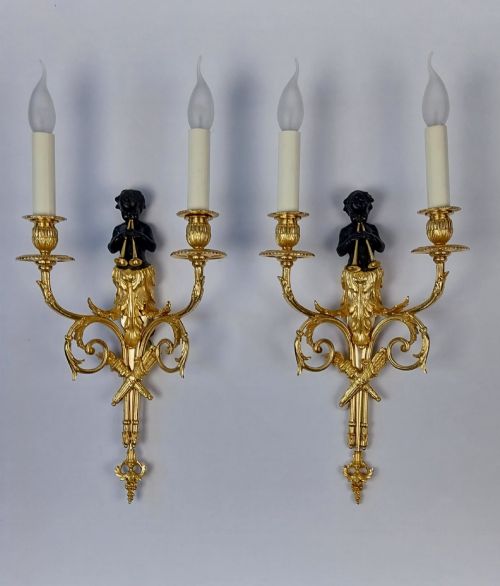
Object types extend beyond simple wooden shelves into functional lighting, including twin-arm wall lights and appliqués integrated with the carved or cast figures. Origins span English, French, Italian, and German workshops, reflecting a widespread European appetite for theatrical, highly ornamental wall furniture.
Materials and construction
Cast metal pieces employ brass, bronze, and silver plating, combining foundry techniques with chased surface detail to define the figures. Ceramic and plaster iterations, including majolica, parian ware, and porcelain, are shaped in moulds before being fired or sealed and painted.
Listings feature periods spanning from the mid-nineteenth century through the 1930s, encompassing both carved timber and ceramic materials.
Distinctions in quality
The application of surface finishes also separates workshop traditions, with genuine water gilding over gesso offering a depth and ageing process distinct from modern metallic paints. Integration between the structural shelf and the figural support marks superior design, ensuring the bracket reads as a unified sculpture rather than an assembled oddment.
Minton·Copeland
The Cherub Wall Brackets Glossary
- Putto
- A plump, usually winged male infant figure frequently depicted in classical and Renaissance art. In later revivals, these figures became central motifs for decorative wall furniture.
- Giltwood
- Timber, typically lime or pine, that has been coated with gold leaf over a prepared gesso ground. This finish provides the bright, reflective surfaces seen on formal nineteenth-century brackets.
- Corbel
- A structural piece of stone, wood, or metal jutting from a wall to carry a superincumbent weight. In decorative brackets, the structural load is often visually supported by the carved figure.
- Majolica
- A type of earthenware decorated with opaque coloured glazes over a tin enamel. Pieces from this tradition introduce vibrant colour to figural wall supports.
- Gesso
- A plaster mixture used as a smooth base for paint or gold leaf on wood. Its application allows carvers to build up fine details before gilding.
Cherub Wall Brackets: Frequently Asked Questions
How were cherub wall brackets used historically?
These brackets served primarily as decorative ledges to display small clocks, porcelain figurines, or vases in formal reception rooms. When combined with arms or branches, they functioned as wall lights to reflect candlelight and brighten dark corners.
Their placement was typically symmetrical, often flanking large mirrors, mantelpieces, or architectural doorways to enhance the perceived grandeur of an interior.
How do I securely mount a heavy wall bracket?
Due to the dense materials such as solid carved wood, bronze, or majolica, these pieces carry significant weight and require fixing directly into wall studs or masonry using appropriate wall anchors. The mounting points integrated into the backplate or structure must bear both the weight of the bracket itself and any object placed upon its ledge.
Consulting a professional installer ensures the structural integrity of the wall is not compromised by the cantilevered weight of the shelf.
How can I distinguish nineteenth-century pieces from later reproductions?
Examination of the reverse and mounting points often reveals the age of the materials, with older wood showing dry patina, hand-cut fixings, or shrinkage cracks consistent with age. Gilt surfaces on nineteenth-century pieces typically exhibit a fine network of craquelure and subtle wear revealing the red bole beneath the gold leaf.
Stylistic cues also help, as nineteenth-century revivals adhere closely to specific historical vocabularies like Louis XIV or Rococo Revival, executed with high-relief hand craftsmanship.
How should I clean antique giltwood and brass?
Giltwood surfaces are exceptionally fragile and should only be dusted gently with a dry, soft feather duster or a clean, dry artist's brush. Moisture and commercial cleaning agents will dissolve historical water gilding and damage the gesso beneath.
Brass and bronze elements can be left with their natural oxidation or treated very sparingly with a non-abrasive cloth, avoiding any chemical dips that strip desirable age patination.