


Bronze Cherub Sconces
These bronze cherub sconces bring figurative charm and warm candle or electric illumination to a room, cast in classical and revival designs.
Bronze Cherub Sconces
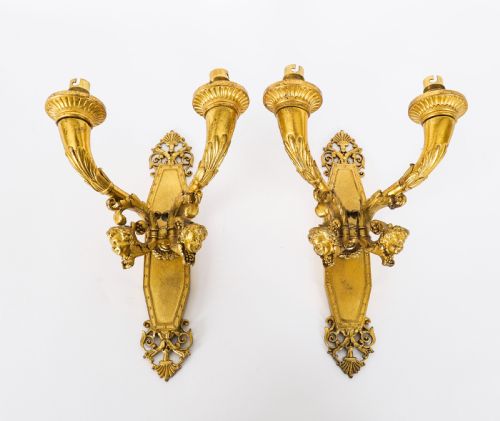
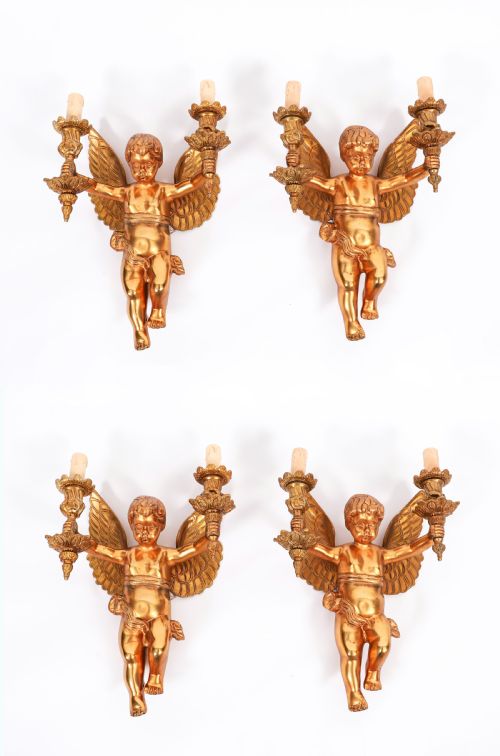
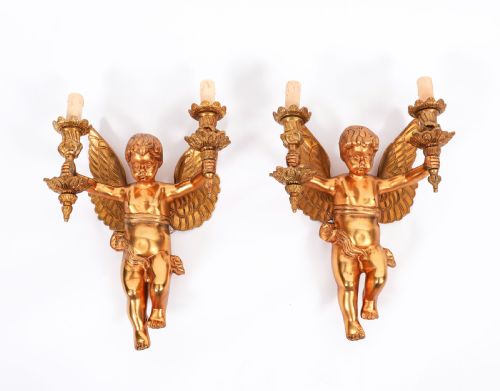
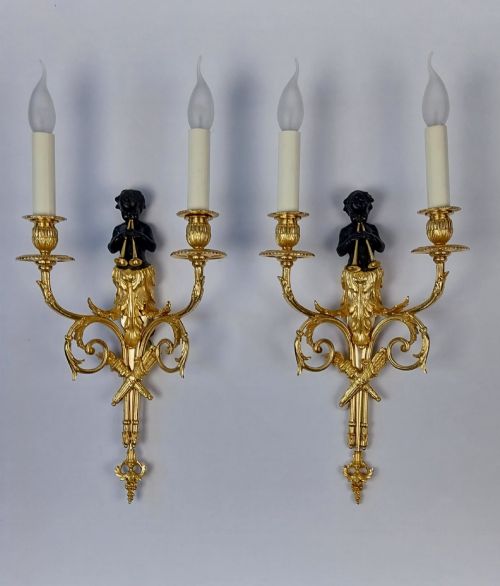
When you search for bronze cherub sconces, you encounter wall lights and fittings dominated by nineteenth-century French and Italian manufacture. The most frequent forms on this page are pairs and sets of four branch wall lights featuring cast figures supporting or accompanying the candle arms.
The styles span Louis XIV, Louis XVI, and Rococo revivals alongside French Empire, Napoleon III, and Arts and Crafts aesthetics. Workshops produced these pieces in both wall-mounted sconces and standing candlestick formats.
The architectural origins lean heavily towards continental chateau and salon interiors, utilising putti and cherubic motifs to soften formal metalwork. Dating ranges from the Regency period through to the early twentieth century.
How they were made
The primary metalwork combines cast bronze, patinated bronze, and ormolu with fire-gilded or gilt bronze surfaces. Secondary elements introduce marble bases and glass components to support the lighting function.
Casting methods rely on traditional foundry techniques where figures and branch arms were cast separately before being assembled with mechanical fixings. Chasing and finishing work refined the detail on the cherub faces, hair, and foliage before the application of gilt or dark patination.
Listings feature materials spanning gilt bronze, ormolu, patinated bronze, brass, glass, and marble across nineteenth-century periods.
What varies in quality
The distinction in quality rests upon the crispness of the original bronze chasing and the preservation of the fire gilt or ormolu surface. Superior examples retain fine anatomical detail in the cherub figures and clean junctions where the branch arms meet the backplate.
Weight and rigidity also separate standard production from superior casting, as denser bronze components provide better structural integrity for multi-branch lights. The integration of supporting materials like marble bases demonstrates greater material ambition in the higher tier of pieces.
The Bronze Cherub Sconces Glossary
- Ormolu
- Gilded bronze produced through a mercury amalgamation technique, creating a durable golden finish seen on many nineteenth-century mounts and lights. This finish requires careful cleaning to preserve the historical surface.
- Putti
- Plump infant figures, often winged, used extensively as decorative motifs in Renaissance and revival decorative arts. They appear frequently supporting the arms of these wall lights.
- Patinated Bronze
- Bronze treated with chemical solutions to produce a darkened or antiqued surface colour on the metal. This treatment highlights the lighter gilt or ormolu details by contrast.
- Candelabra
- Branched lighting fixtures designed to hold multiple candles or bulbs simultaneously. They represent a significant portion of the multi-light wall fixtures in this category.
Bronze Cherub Sconces: Frequently Asked Questions
How do I wire old sconces?
Conversion for modern electricity typically involves running flex through the existing hollow cast channels or arms without altering the outer bronze structure. A qualified electrician should handle the internal rewiring to ensure safety compliance with wall fixings.
Many pieces retain their original socket housings or have been adapted across different decades, so checking the internal hardware before installation is standard practice.
Are these French or Italian?
The majority of pieces in this category originate from French foundries working in Louis XIV, Louis XVI, and Rococo revival styles during the nineteenth century. Italian workshops also produced comparable multi-branch gilt ormolu lights with cherub motifs during the same decades.
Distinguishing between regional origins depends on the specific casting texture, chasing style, and the structural design of the backplates.
How do I clean gilt bronze?
Maintenance requires only a soft, dry cloth to remove dust from the recessed areas of the chasing and the cherub figures. Avoid abrasive cleaners or metal polishes that can strip away the historical ormolu or gilt surface.
If grime accumulates, professional conservation cleaning is safer than attempting chemical intervention at home.
Where should I hang these?
Wall sconces suit flanking positions beside mirrors, fireplaces, or architectural doorways in principal reception rooms. Their projection from the wall requires careful placement relative to surrounding furniture and traffic pathways.
Pairs look balanced in formal settings, while sets of four allow for uniform lighting across larger wall spaces.