

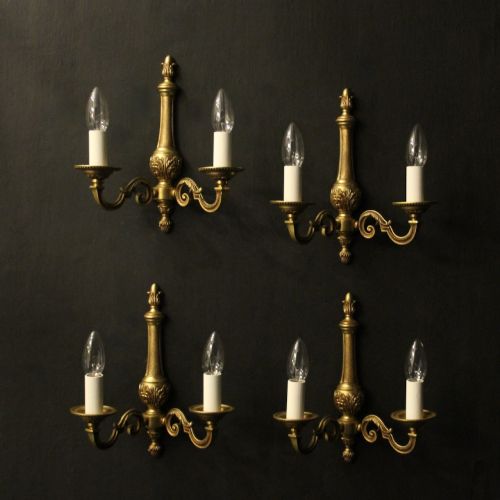
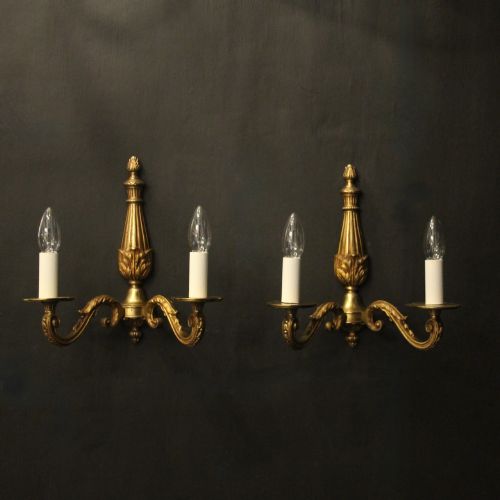
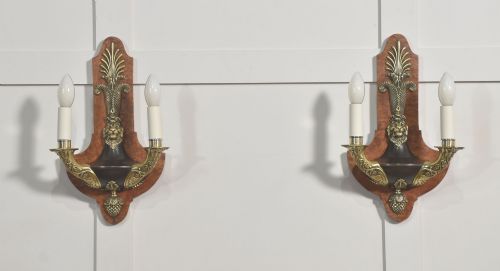
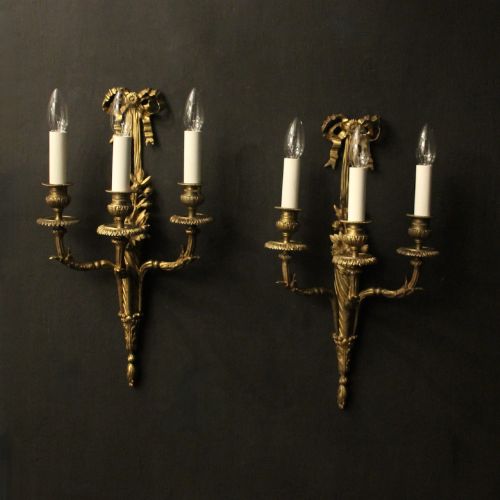
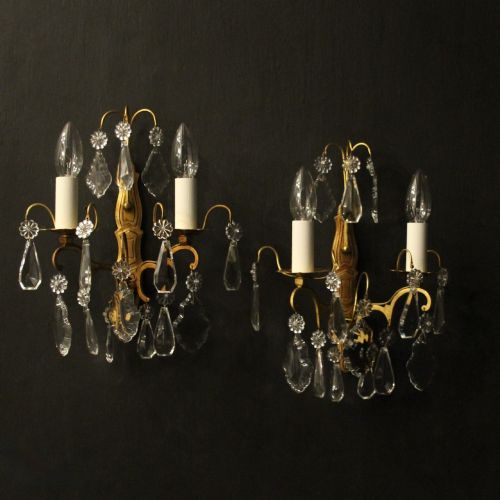
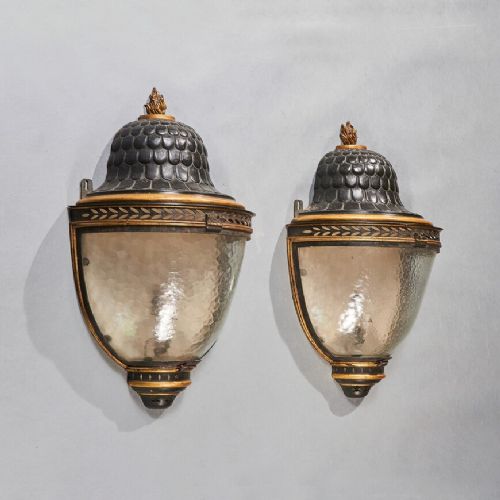
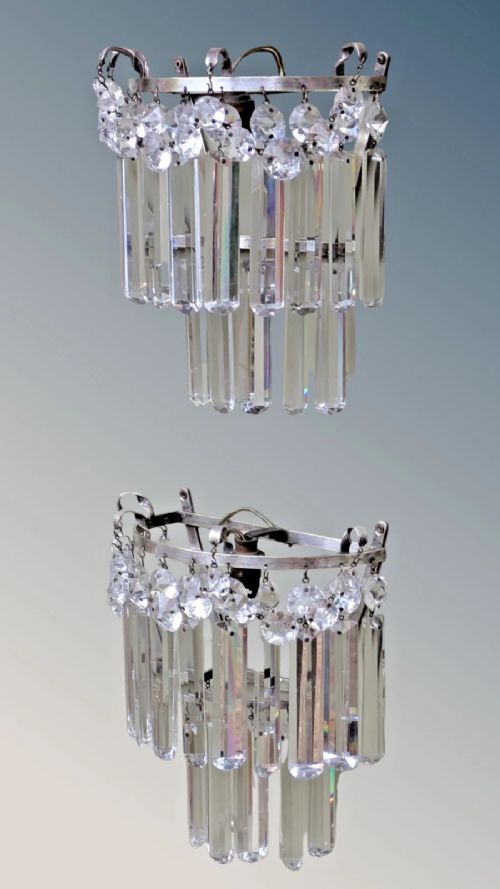
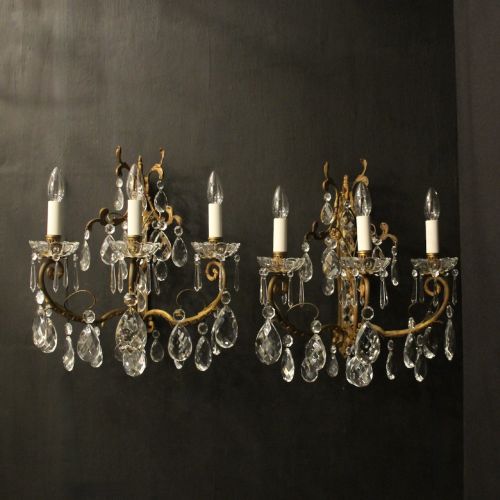
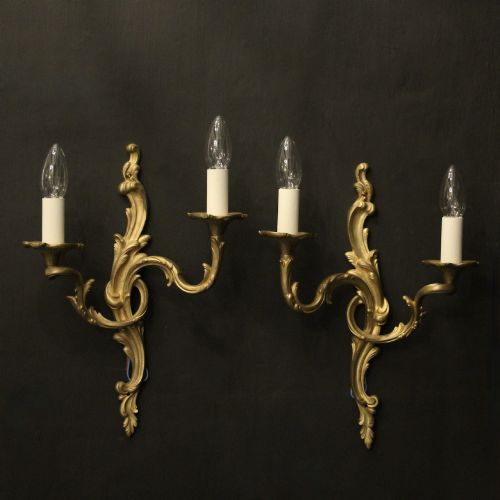
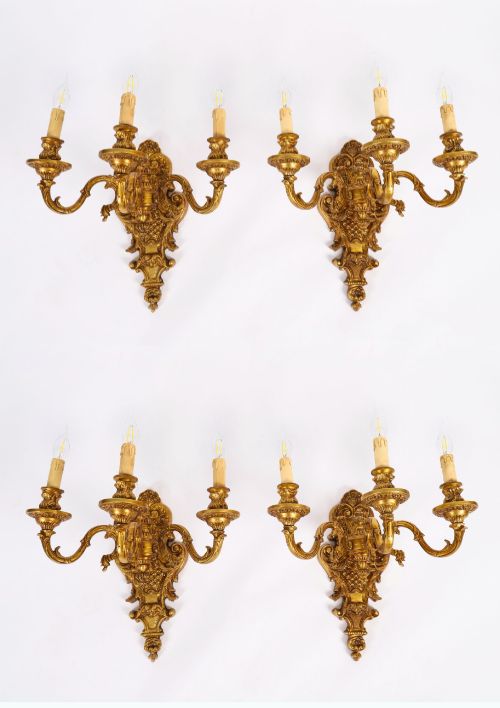
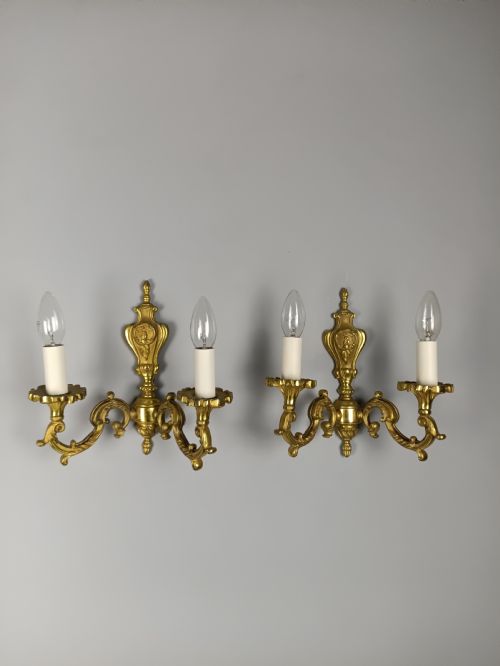
French Brass Sconce Pair
When you handle a french brass sconce pair, you touch heavy cast metal and gilded bronze shaped for candlelight.
French Brass Sconce Pair
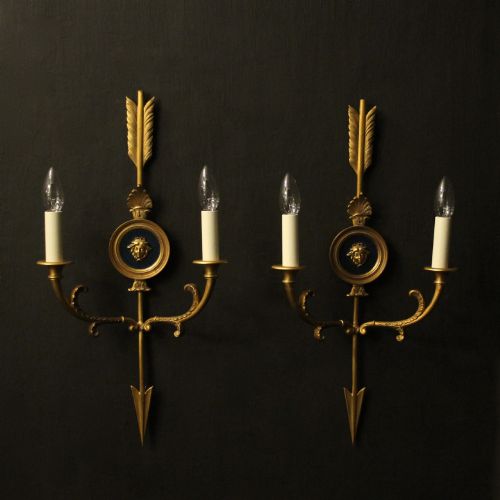
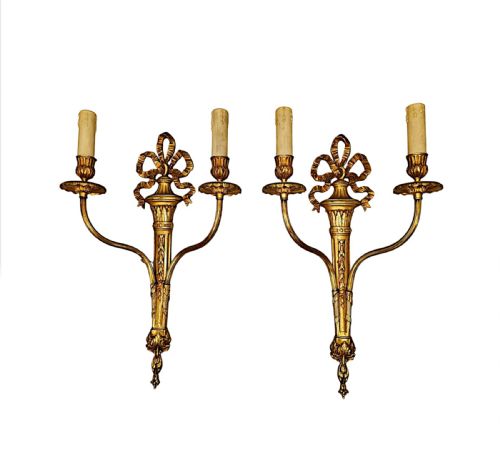
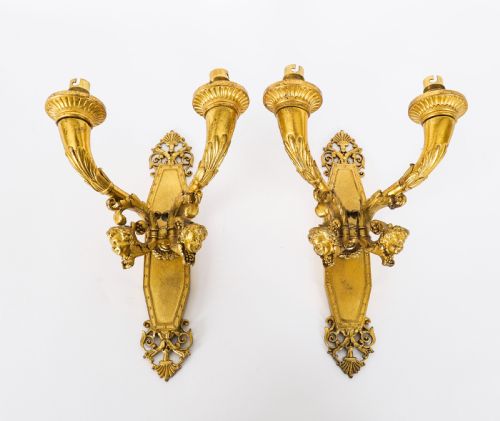
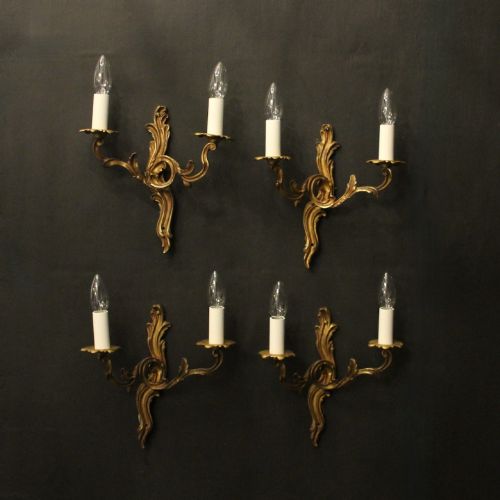
A french brass sconce pair brings wall-mounted illumination into a room, taking the form of twin, triple, or five-branch lights designed to reflect candlelight from polished metal surfaces. You encounter these pieces across periods ranging from the early nineteenth century through the 1930s, reflecting classical and revival aesthetics.
The selections on this page span styles such as Louis XIV, Louis XVI, Rococo, Empire, and Gothic, alongside simpler cast brass and half-lantern designs. Twin-arm gilded bronze and brass versions dominate the current records, frequently paired with ribbon motifs or crystal drops.
Makers and workshops across France produced these fixtures for domestic interiors, employing wall lights, appliques, and convex half lanterns to light hallways and reception rooms. The evidence shows surviving examples in configurations from single arms up to substantial multi-branch candelabras.
How they were made
Foundry workers cast brass, bronze, and ormolu into intricate arms and backplates, employing sand-casting methods that left textured surfaces behind the polished highlights. Craftsmen then applied gilding or parcel-gilt finishes to the bronze and brass structures to enhance the warmth of the metal under candle or gas light.
Makers integrated cut crystal drops, porcelain flowers, tole peinte, and enamel elements into the metal armatures, combining rigid cast frames with delicate glass or ceramic components. Backplates often incorporated stamped or chased details such as ribbons, tassels, and classical swags.
Several pairs incorporate carved wooden or brass rope and tassel motifs, proving that even a rigid metal light fixture appreciates a soft knot.
What varies in quality
The crispness of the chasing and the depth of the casting separate simpler production runs from superior foundry work. Sharp detail in the acanthus leaves, ribbons, and facial motifs indicates a careful hand in the original metalworking.
The weight of the bronze or brass and the integrity of the original gilding dictate the overall presence of the fixture. Heavier castings with intact fire-gilding or ormolu retain their definition and surface lustre far better than lighter, later stamped metal alternatives.
Casier
The French Brass Sconce Pair Glossary
- Ormolu
- Gilded bronze produced through a mercury-gilding process that leaves a rich, matte gold surface on cast metal objects. This finish was widely used on high-end French furniture and lighting mounts.
- Applique
- A wall-mounted light fixture designed to hold candles or electric bulbs against a vertical surface. The term is frequently used interchangeably with wall sconce.
- Tole Peinte
- Painted sheet metal used to form decorative panels, shades, or lanterns. It brings colour and contrasting texture to brass and bronze wall lights.
- Champlevé
- An enamelling technique where troughs are carved into the metal surface and filled with vitreous enamel before firing. You find this technique on ornate nineteenth-century candlesticks and associated hardware.
French Brass Sconce Pair: Frequently Asked Questions
How do I mount a heavy bronze wall sconce?
These fixtures require secure fixing into solid wall anchors or timber studs due to the substantial weight of cast bronze and brass.
Professional installation ensures the backplate supports the weight of multi-branch arms without pulling away from the plaster.
Were these wall lights originally wired for electricity?
Most nineteenth-century and early twentieth-century examples were designed exclusively for candles before receiving later electrical conversions.
Wiring paths typically run through the central armature or behind the backplate to preserve the exterior appearance of the metalwork.
How should I clean antique brass and ormolu?
Dusting with a dry, soft cloth protects fragile gilding and prevents abrasive wear to the raised details of the casting.
Harsh metal polishes strip away thin layers of ormolu and gilded bronze, so conservation cleaning requires gentle handling without chemical agents.
How do I distinguish Louis XVI style from Rococo?
Louis XVI fixtures rely on symmetry, straight lines, classical urns, ribbons, and geometric beadwork derived from neoclassical architecture.
In contrast, Rococo designs feature asymmetrical scrolls, C-scrolls, naturalistic foliage, and flowing organic shapes without rigid angles.