



Vintage Cherub Sconce Lighting
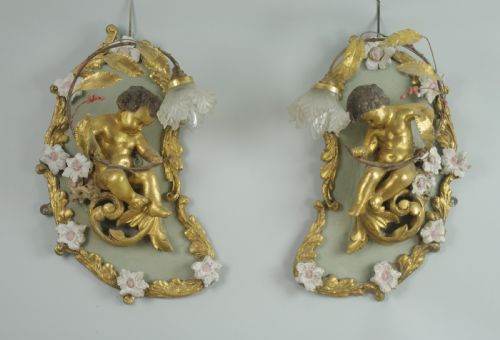
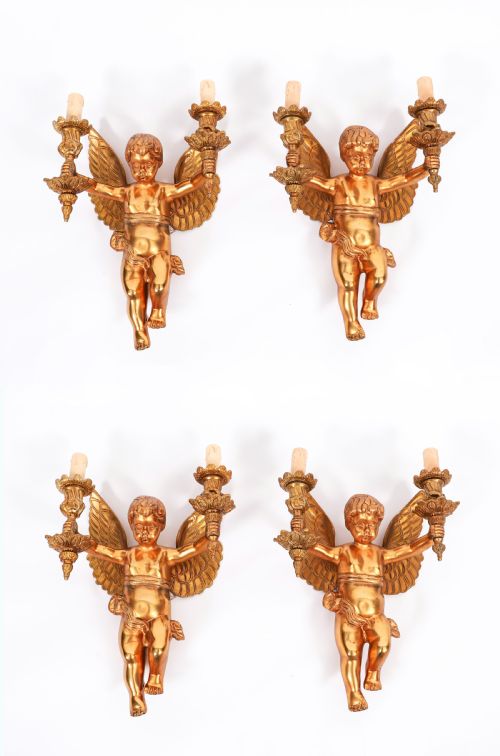
These vintage cherub sconce lighting fixtures bring classical charm and sculptural presence to an interior, making them a favourite for atmospheric wall illumination.
Vintage Cherub Sconce Lighting
Vintage cherub sconce lighting comprises wall-mounted fixtures featuring putti or cherubic figures, designed to hold candles or electric bulbs. The search phrase covers ornamental wall lights that draw upon classical and revival aesthetics.
Most examples found on this page date from the nineteenth and early twentieth centuries. Pieces range from grand pairs in the French Rococo Revival and Louis XVI manner to simpler brass or silver plated versions.
Forms include single, twin-arm, and multi-branch configurations, often incorporating glass lustres, shades, or intricate metalwork. They function primarily as decorative wall sconces and light fittings for reception rooms or hallways.
Materials and construction
Makers utilised cast metals, brass, bronze, and ormolu to form the structural bodies and detailed cherub figures. Giltwood and carved wood also appear, finished with applied gold leaf to create a rich surface sheen.
Techniques combine metal casting, chasing, and gilding with glasswork for lustre wall lights. Silver plating and applied patination provide alternative finishes across the nineteenth and early twentieth century periods.
Flying cherubs cast in mid-air remind us that even wall illumination once required a touch of theatrical ambition.
Distinctions in quality
Quality rests upon the crispness of the metal casting or wood carving in the cherub figures and backplates. Finer pieces display sharply defined facial expressions, articulated wings, and deeply chased surface detailing rather than soft or repetitive contours.
The choice of material and finish dictates the overall depth of the object, from heavy gilt bronze and ormolu to lighter cast brass and silver plate. Original gilding and integrated glass components further separate standard production from more ambitious decorative works.
The Vintage Cherub Sconce Lighting Glossary
- Ormolu
- Gilded bronze, often mercury-gilded, used extensively in French decorative arts to give a rich golden finish to metal mounts and figures.
- Putto
- A plump, often winged child figure derived from classical art, frequently depicted on these wall lights as cherubs.
- Lustre
- A glass pendant or drop hung from a light fitting to refract and enhance illumination from candles or bulbs.
- Appliqué
- A wall-mounted decorative fixture or sconce, synonymous with French wall lights.
- Rococo Revival
- A nineteenth-century design movement favouring asymmetrical scrollwork, naturalistic forms, and exuberant ornamentation.
Vintage Cherub Sconce Lighting: Frequently Asked Questions
How are cherub wall sconces wired?
Many vintage wall lights have been adapted for modern electric systems over time. An electrician can safely inspect and update the internal wiring to meet current standards.
Original lamp holders or candle tubes are often retained to preserve the visual character of the fixture while accommodating contemporary bulbs.
What is the difference between brass and ormolu?
Brass is an alloy of copper and zinc with a natural metallic yellow tone that develops a warm patina. Ormolu involves applying a layer of finely ground gold to a bronze base, creating a brilliant and durable golden lustre.
Ormolu mounts generally indicate higher-end nineteenth-century production compared to standard cast brass alternatives.
Where should wall sconces be placed?
Wall lights are traditionally mounted flanking a fireplace, mirror, or doorway to provide balanced ambient illumination. Height placement depends on ceiling proportions and eye level, typically ensuring the light source sits above head height.
Pairs and larger sets allow for symmetrical arrangements across longer hallway walls or formal reception rooms.
How do I date a cherub wall light?
Dating relies on examining the casting techniques, fixing screws, metal composition, and stylistic cues such as Louis XVI or Arts and Crafts details. Nineteenth-century pieces often show hand-chased surface work and heavier bronze construction.
Early twentieth-century examples frequently utilise lighter brass or gilt metal alloys alongside different manufacturing marks.