
Victorian Button Back Settee
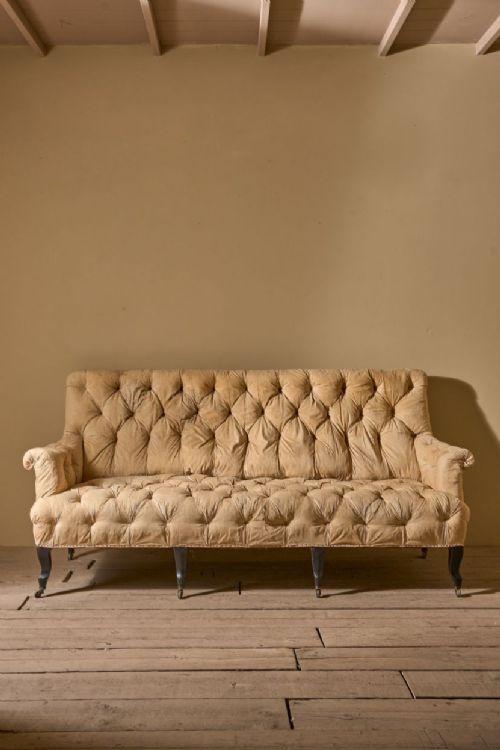
You are looking at a victorian button back settee, a deeply comfortable upholstered seat designed for formal reception rooms.
Victorian Button Back Settee
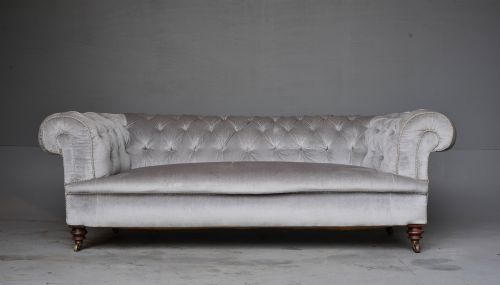
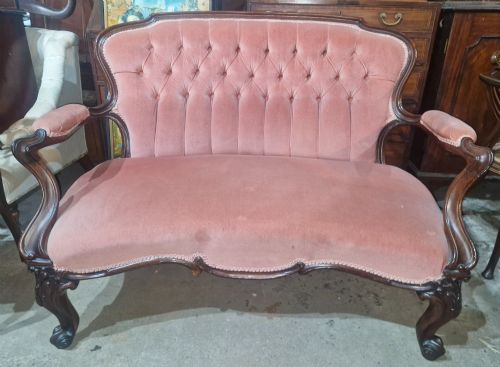
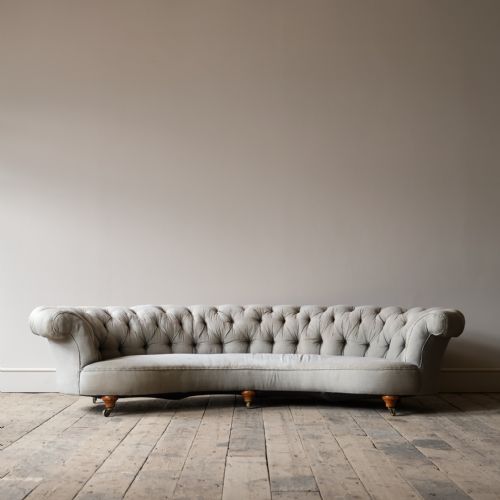
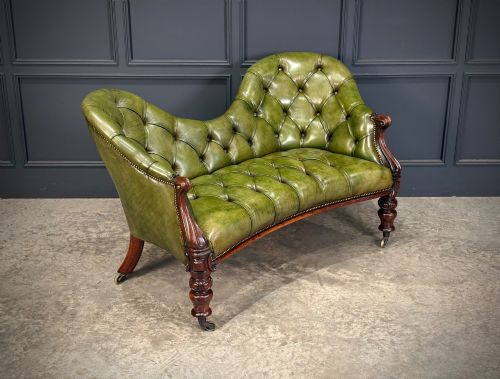
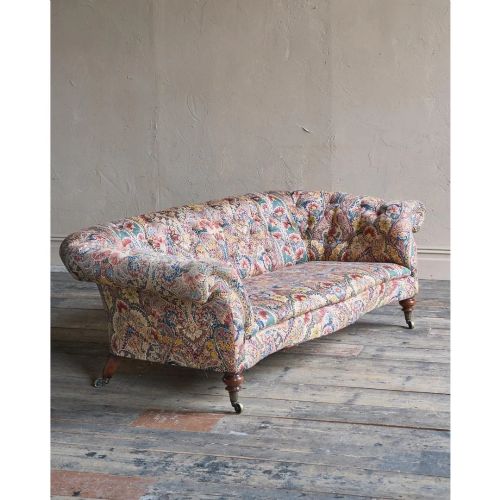
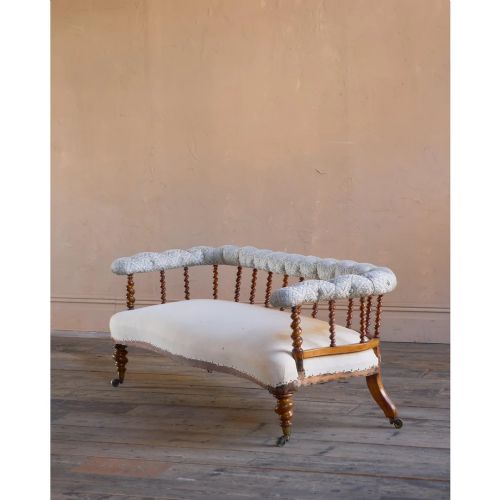
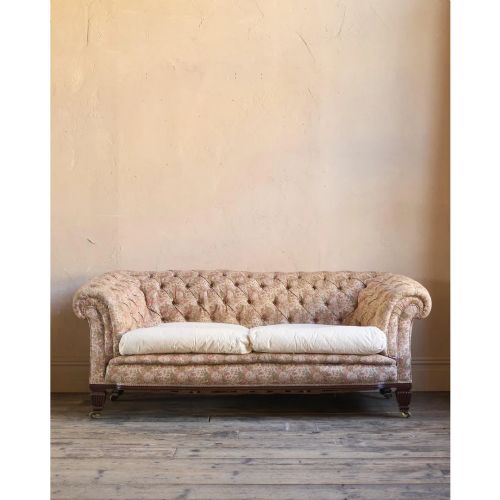
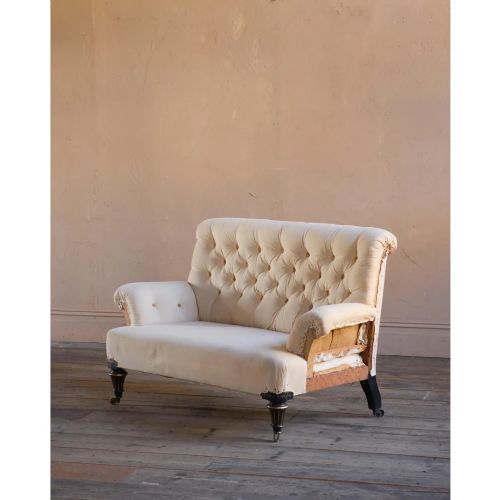
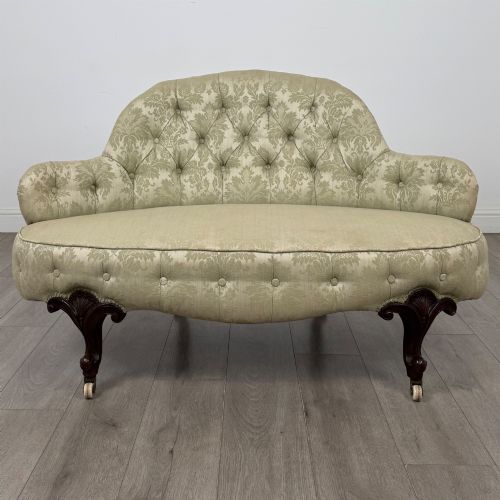
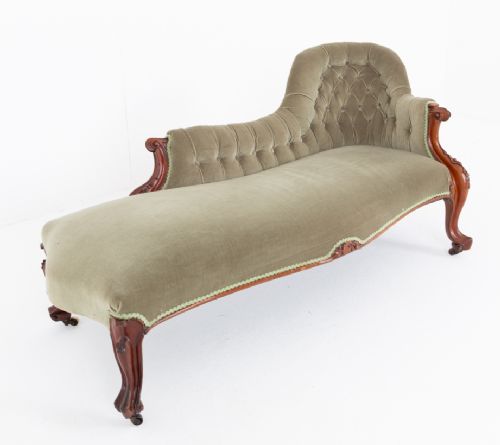
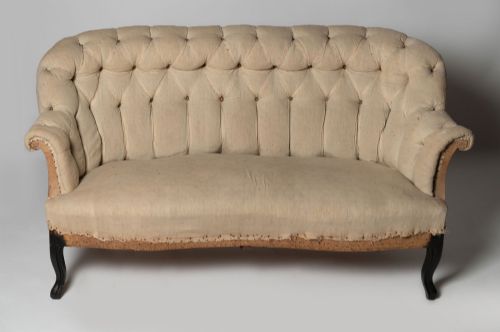
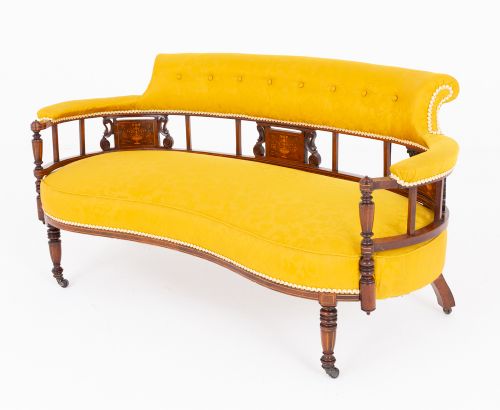
A victorian button back settee is a nineteenth-century upholstered seating form that combines a low, padded back with deep tufting secured by buttons. These pieces emerge in various configurations across the period, including classic Chesterfields, curved double spoon-back designs, and elegant salon sofas.
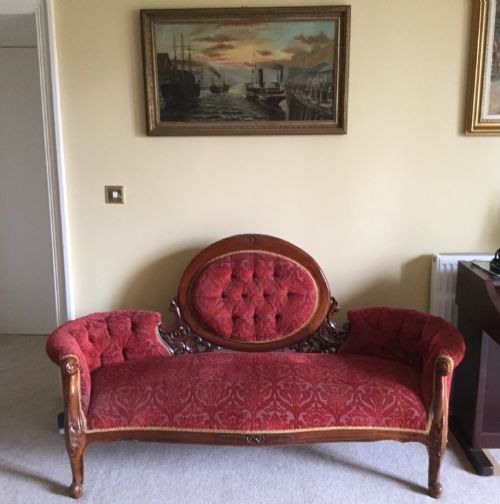
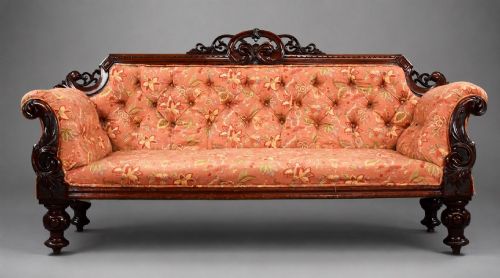
The version most commonly met on this page is the mid-nineteenth-century walnut or mahogany framed settee, often featuring serpentine fronts and elaborate scroll-carved woodwork. They function primarily as principal drawing-room seating, designed to offer upright support while maintaining decorative elegance.
Makers and workshops of the era produced these settees in both substantial proportions for country houses and more modest dimensions for town settings. The evidence shows surviving examples ranging from early nineteenth-century Regency styles through to later aesthetic movement pieces.
How they were made
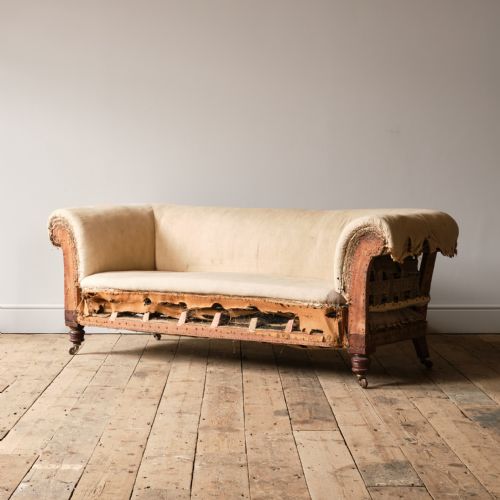
Makers built the structural frames of a victorian button back settee using durable hardwoods such as mahogany, walnut, and occasional ebonised timbers, joined with traditional carpentry methods to support heavy interior springing. The exposed wooden elements often received detailed hand-carving along the rails, cabriole legs, and arm terminals.
Upholstery techniques relied on complex internal webbing and coil springs fixed to a settee base, over which horsehair or similar traditional stuffing was packed and shaped. Deep buttoning was then applied by hand, drawing the fabric inward to create the characteristic geometric padded indentations before finishing with velvet, brocade, leather, or brass tack trim.
Victorian Button Back Settee Retail Price Guide 2026
Typical asking prices for victorian button back settee among the pieces listed under this phrase on Sellingantiques today, from the lower quarter to the upper quarter. They describe what is for sale here now, not the wider market.
Listings feature woods including mahogany, walnut, and ebonised hardwood, alongside upholstery materials such as leather, velvet, and brocade.
What varies in quality
The distinction between tiers of a victorian button back settee lies chiefly in the ambition of the timber carving and the architectural integrity of the frame. Superior examples display crisp, deeply carved rosewood or walnut members with harmonious proportions, whereas simpler pieces utilise plain mahogany or standard hardwoods with minimal ornamentation.
Quality also rests on the preservation of the original framework and the subtlety of the upholstery execution. Pieces retaining their structural rigidity and authentic show-wood surfaces sit at the upper end of the range, distinct from those requiring extensive reconstruction of internal springs and webbing.
Howard & Sons·C. Hindley & Sons·A Jackson and Graham·Holland & Sons·Hampton & Sons of Pall Mall·Gillows
The Victorian Button Back Settee Glossary
- Button back
- An upholstery method where tufting buttons are pulled tightly through the padding at regular intervals to create a diamond pattern. This technique secures the internal stuffing and provides firm lumbar support.
- Chesterfield
- A large upholstered sofa characterised by arms and back of the same height. Traditional versions feature deep buttoning and leather or fabric upholstery.
- Chaise longue
- An elongated upholstered seat designed for reclining, combining elements of a chair and a day bed. Nineteenth-century examples often feature a single scroll end and carved wooden framing.
- Spoon-back
- A chair or settee back shaped in the contour of a spoon bowl, providing anatomical support to the spine. It is frequently seen in mid-nineteenth-century walnut parlour seating.
- Serpentine front
- A furniture edge that curves outward in the centre and inward at the sides. This contour adds visual movement to the base of the settee.
Victorian Button Back Settee: Frequently Asked Questions
Where were these settees placed?
These upholstered seats were principally positioned in the formal drawing rooms, parlours, and reception spaces of grand houses. They served as central conversation pieces where hosts entertained guests.
In more private quarters, smaller versions or chaise longues stood in bedrooms and boudoirs for resting during the day.
How do I care for leather upholstery?
Leather-covered surfaces require gentle cleaning with a dry or slightly damp cloth to remove dust without stripping natural oils. Avoid placing antique leather in direct sunlight or near heat sources to prevent cracking.
Applying a specialist leather conditioner periodically helps maintain the suppleness of hand-dyed and buttoned hides.
Are these settees comfortable?
Nineteenth-century seating of this type was engineered for upright Victorian posture rather than modern lounging. The deep spring systems and padded buttoning provide firm, supportive backrests.
Some larger Chesterfield forms offer a deeper seat that accommodates relaxed sitting, depending on the internal springing arrangement.
How can I tell a Victorian piece from later ones?
Examining the framing timbers, construction joints, and underside webbing often reveals the period of manufacture. Nineteenth-century pieces typically employ solid hardwoods like walnut and mahogany with hand-tied coil springs.
Stylistic cues such as spoon-backs and specific carving motifs also point directly to mid-nineteenth-century cabinet-making traditions.