

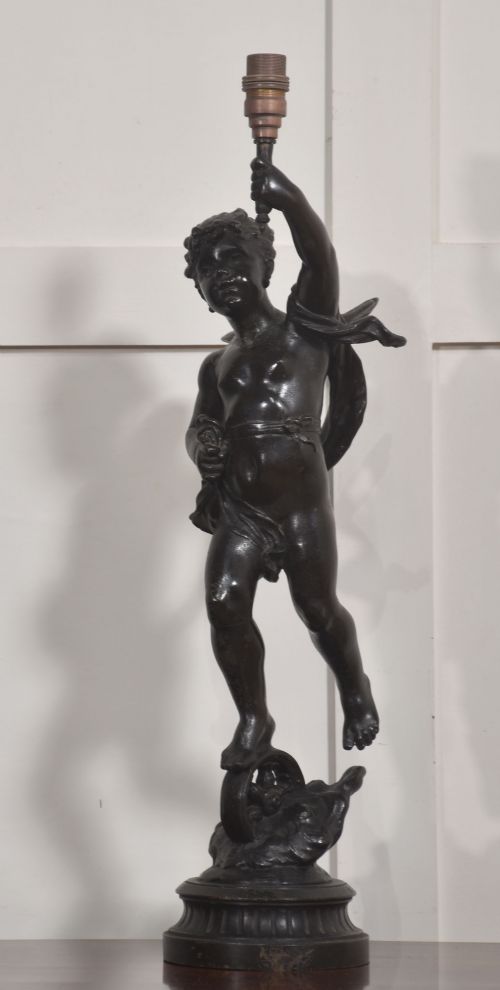


Victorian Bronze Table Lamp
When you handle a victorian bronze table lamp, you touch a heavy cast metal base that holds a century of interior illumination.
Victorian Bronze Table Lamp
A victorian bronze table lamp brings together nineteenth-century cast metalwork and domestic lighting, often converted from earlier oil burners or candelabra. You will frequently find pieces that pair patinated or gilded bronze with porcelain bodies, marble elements, or fabric shades.
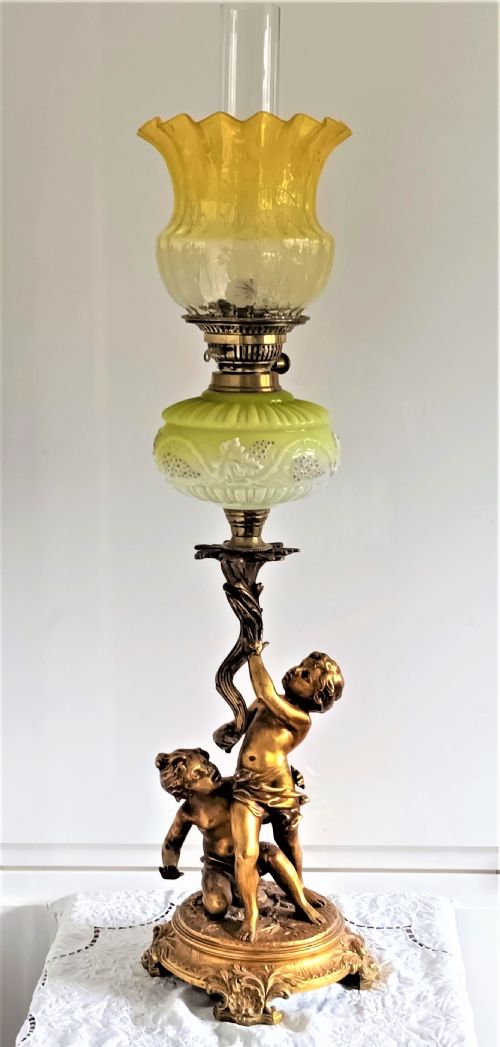
The forms span from figural statues and classical columns to urns and ewers, reflecting both English workshops and French design sensibilities. Many examples originate as oil lamps or decorative figures that later received electrical fittings for modern interiors.
The selection ranges from restrained English brass and bronze columns to elaborate French figural bases incorporating mythological motifs. These objects anchor a room with substantial weight and dark patination that contrasts with softer textile shades.
Materials and construction
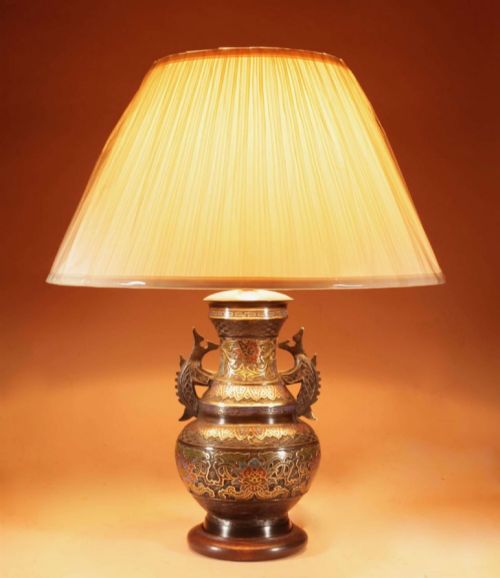
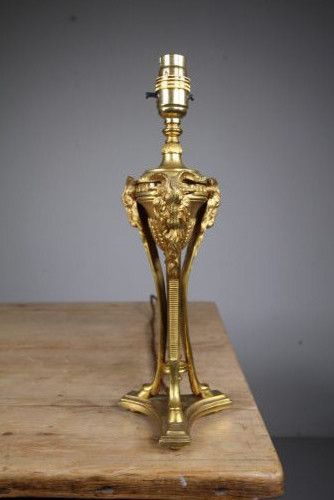
Foundry workers cast bronze and ormolu into intricate shapes, utilising techniques like lost-wax casting for figures and champlevé or cloisonné enamel for decorative panels. Gilt bronze and fire-gilt ormolu provide bright metallic highlights against darker patinated surfaces.
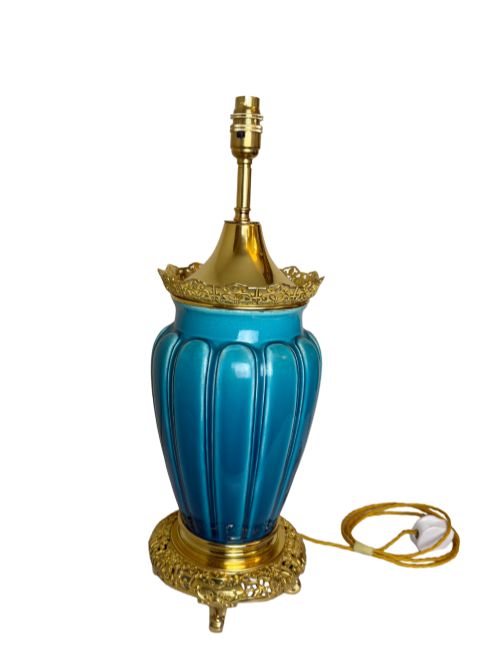
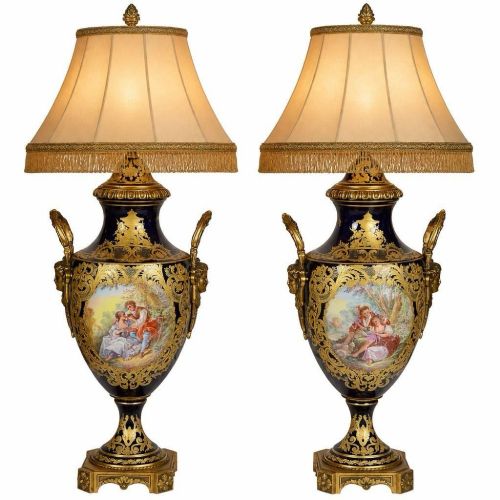
Many surviving pieces incorporate sections of blue or opaline glass, porcelain bodies, and carved marble plinths to add colour and texture to the metal framework. Fabric elements appear primarily as later additions or replacement shades on converted oil lamp burners.
Makers integrated structural bronze mounts with delicate components such as porcelain vases, rock crystal columns, and carved wooden bases. Subsequent conversions for electricity often involved threading internal wiring through original oil fonts and burner assemblies.
Victorian Bronze Table Lamp Retail Price Guide 2026
Typical asking prices for victorian bronze table lamp among the pieces listed under this phrase on Sellingantiques today, from the lower quarter to the upper quarter. They describe what is for sale here now, not the wider market.
Mythical creatures make unexpected appearances, including mermaids supporting rock crystal columns and cherubs moonlighting as electrical switchboard operators.
Assessing quality
Figural pieces by named sculptors display anatomical accuracy and balanced proportions that lesser foundry copies miss. The richness of the original fire-gilding or the depth of the hand-applied patina also separates standard production from exceptional studio output.
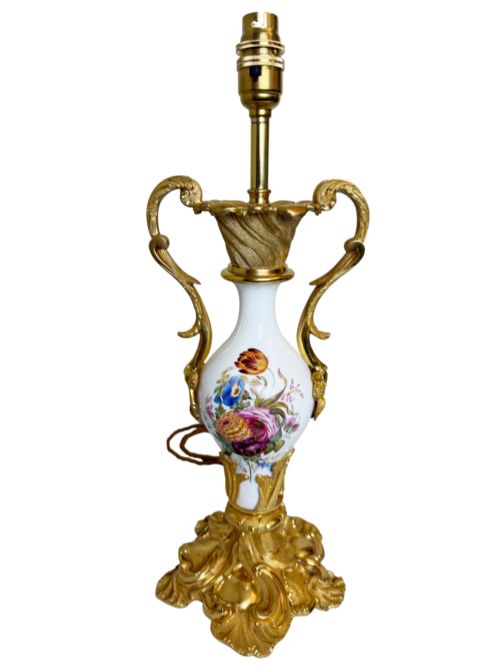
The integration of secondary materials such as Sevres style porcelain, marble bases, and cloisonné work indicates higher ambition in the original workshop. Finer items retain their original mounting hardware and structural integrity without loose joints or crude repairs.
Emile Picault·Joseph Hinks·Jean-Jules Cambos·H. Moreau·Aug. Moreau·Gillows
The Victorian Bronze Table Lamp Glossary
- Ormolu
- Gilded bronze produced by applying a mercury and gold amalgam to the metal surface and heating it until the mercury vaporised. This technique creates a durable, warm golden finish seen on French and English bases.
- Patination
- The surface coloration and sheen that develops on bronze through age and chemical treatment. A dark brown or green patination distinguishes authentic nineteenth-century metal from modern substitutes.
- Champlevé
- An enamelling technique where troughs are gouged into the bronze surface, filled with vitreous enamel paste, and fired. This colourful decoration appears on Japanese export pieces and European revival items.
- Ewer
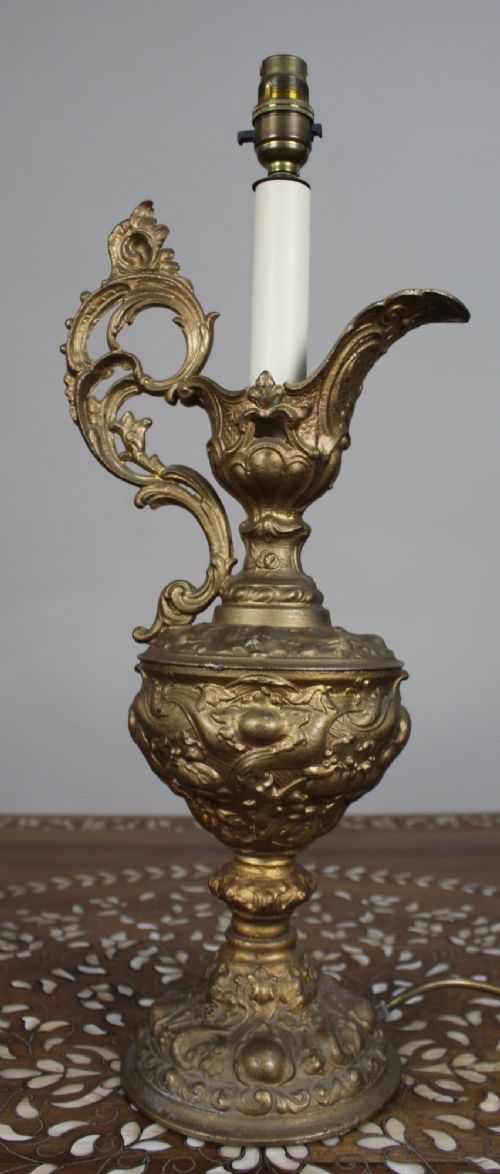
- A large jug with a wide spout and arched handle, originally designed for pouring water. Victorian makers frequently converted these metal vessels into lamp bases.
- Candelabra
- A branched candlestick holding multiple lights. Many tall examples were adapted into electric table lamps during subsequent decades by adding central wiring.
Victorian Bronze Table Lamp: Frequently Asked Questions
Were these always electric lamps?
Most of these pieces began life as oil lamps, gas fixtures, or decorative statues before receiving electrical conversions later in their history. The original burners and oil reservoirs were adapted to house lamp holders and wiring.
Finding traces of the original fuel mechanism or wick assemblies is common when inspecting the upper sections of the metalwork.
How do I date a bronze lamp?
Dating relies on stylistic clues, foundry marks, and the construction methods used to assemble the base. Pieces marked with specific nineteenth-century design registration stamps or signatures from known sculptors offer clear chronological markers.
Comparesons with period exhibition pieces and standard decorative arts references help narrow the decade of production.
Can I use standard modern shades?
Most antique bases accommodate standard shade carriers or custom shade fittings with appropriate shade ring reducers. The substantial weight of bronze provides a stable platform for various shade sizes and fabrics.
Selecting a shade that matches the proportions of the heavy metal base ensures the lamp remains visually balanced.
What is the difference between bronze and ormolu?
Bronze is a copper and tin alloy used for the structural casting and dark patinated figures. Ormolu refers specifically to bronze that has been coated with a gold-mercury amalgam to give it a bright golden appearance.
Many Victorian lamps combine both materials, using dark patinated bronze for figures and bright ormolu for decorative mounts.