

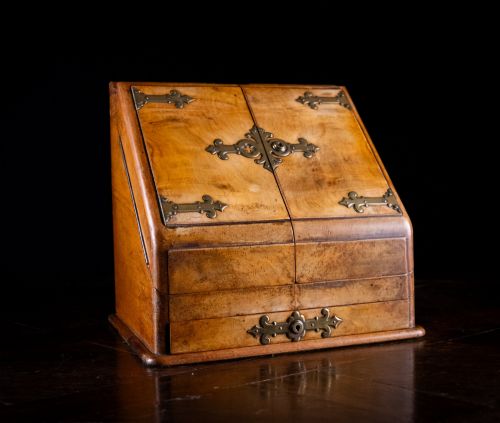
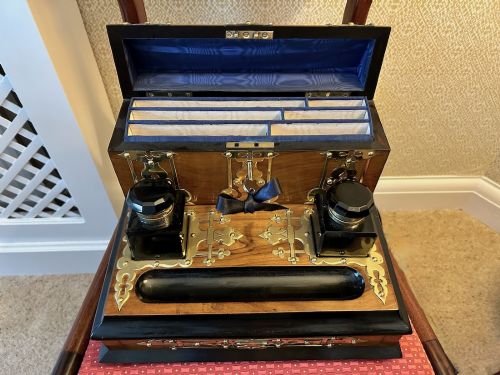
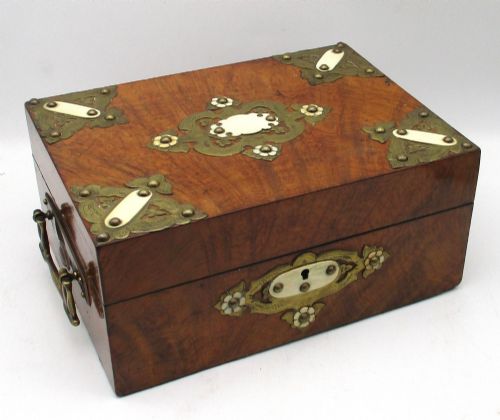
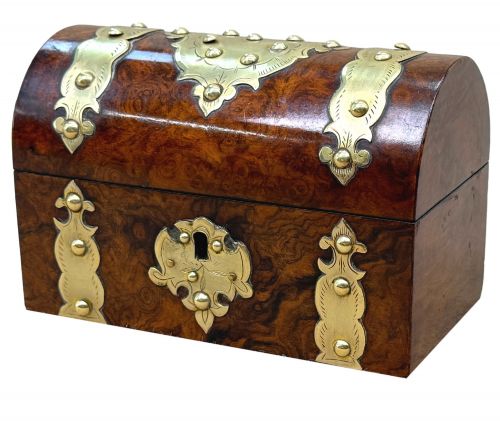

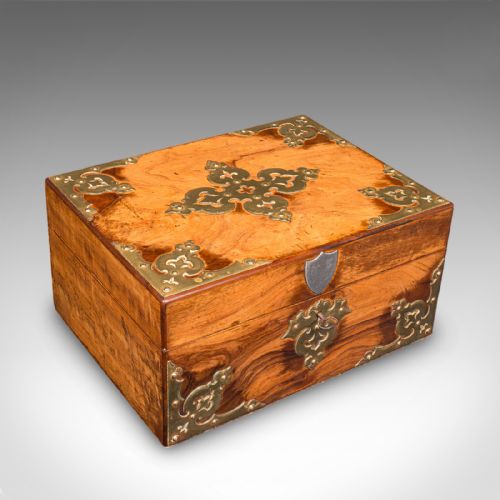


Victorian Brass Strapwork Box
A victorian brass strapwork box combines sturdy metalwork with rich timber to organise your desk or vanity with distinct nineteenth-century character.
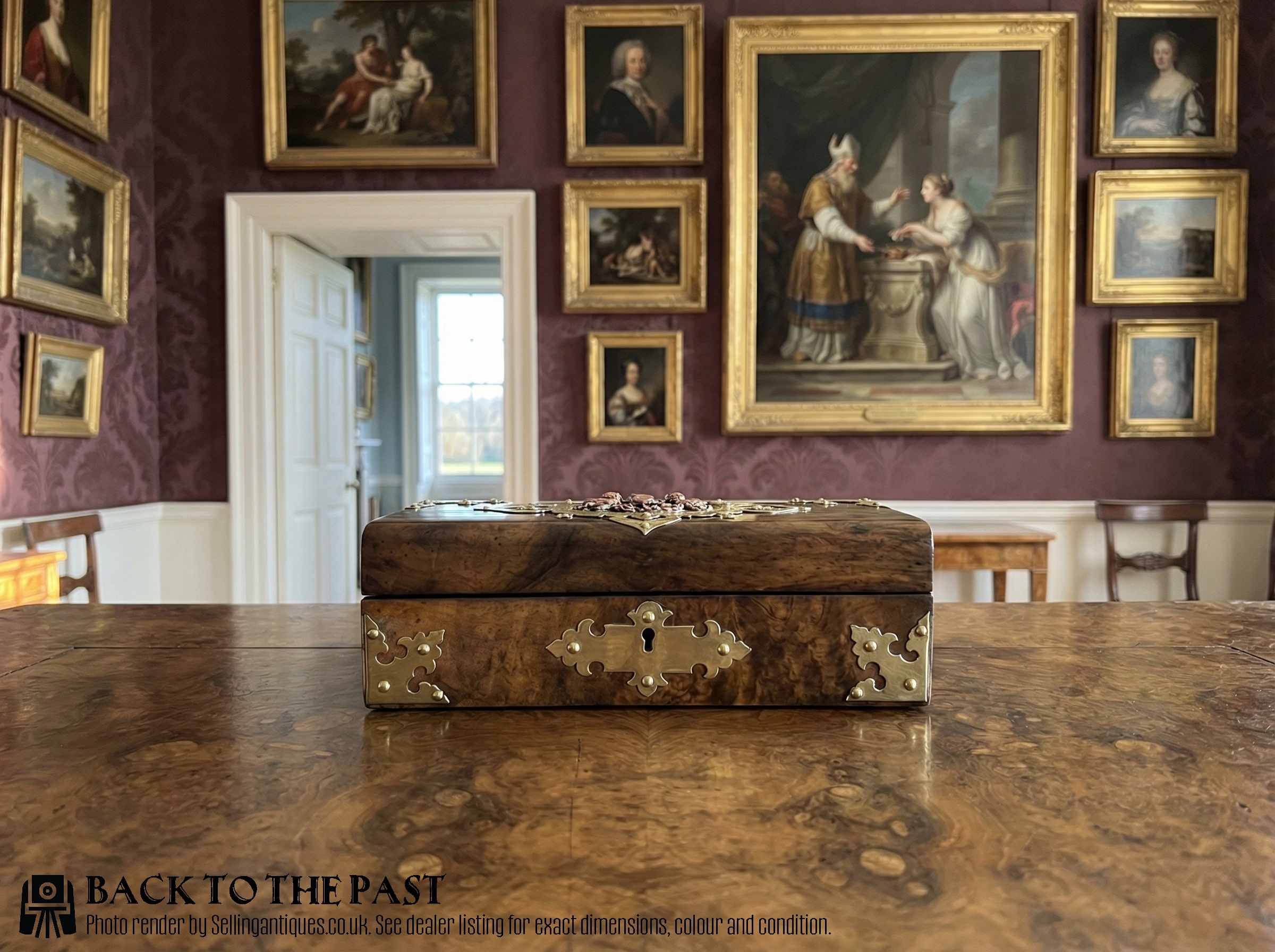
Victorian Brass Strapwork Box
When you search for a victorian brass strapwork box, you encounter pieces designed to hold stationery, tea, jewellery, or writing equipment across the nineteenth century. These items emerge in styles ranging from plain Victorian utility to Gothic Revival and French Second Empire expressions.
Origins stretch across English workshops and continental makers, utilising timbers like burr walnut, coromandel, and pollard oak. Each box reflects the Victorian appetite for orderly, decorative desk equipment.
What Varies in Quality
The distinction between standard and superior pieces rests on the choice of timber veneer and the execution of the metalwork. Finely figured burr walnut or heavily grained coromandel paired with substantial, intricately pierced brass strapwork signals a higher tier of production.
Interior appointments also separate levels of craftsmanship, with complete fitted compartments, silk linings, and integrated lock mechanisms demonstrating greater workshop skill. The crispness of the brass mounts and the exactness of the mitred wood joints determine the overall refinement of the box.
Victorian Brass Strapwork Box Retail Price Guide 2026
Typical asking prices for victorian brass strapwork box among the pieces listed under this phrase on Sellingantiques today, from the lower quarter to the upper quarter. They describe what is for sale here now, not the wider market.
Several boxes manage to look remarkably tough while wearing decorative silk lining and carrying your spare stationery.
The Victorian Brass Strapwork Box Glossary
- Strapwork
- Metal bands applied to the exterior of a box to reinforce corners and joints while adding geometric decoration. This technique defines the structural aesthetic of many nineteenth-century caskets.
- Burr Walnut
- A highly prized wood timber taken from the wart or burl growths of the walnut tree. It produces intricate, swirling grain patterns across the surface of boxes and cabinets.
- Coromandel
- A dense, heavy timber native to Asia featuring dark brown or black stripes against a fawn background. Cabinet makers utilised it for luxury nineteenth-century stationery and tea boxes.
- Ormolu
- Gilded bronze used for decorative mounts and desk accessories in the French Second Empire style. The technique imparts a rich golden finish to metal details.
- Casket
- A small ornamental box or chest intended for holding jewellery, letters, or precious items. These pieces often feature domed or hinged lids with secure locking mechanisms.
Victorian Brass Strapwork Box: Frequently Asked Questions
What were brass strapwork boxes used for?
These boxes served practical domestic functions to store private correspondence, writing paper, tea leaves, or personal trinkets. Their robust construction protected delicate contents from dust and damage.
Desk sets and stationery boxes kept working surfaces organised in nineteenth-century studies and drawing rooms. Tea caddies and jewellery caskets provided secure storage for costly household provisions and valuables.
How do I care for a nineteenth-century wood box?
Keep wooden boxes away from direct sunlight and extreme temperature shifts to prevent the timber and veneer from splitting. Dust regularly with a soft, dry cloth.
Apply a microcrystalline wax sparingly to nourish the wood surface and polish the brass strapwork without harming the original finish.
How can I tell the Victorian periods apart?
Pieces from the eighteen-fifties and sixties often feature classic rectilinear forms with restrained brass corner mounts and burr walnut veneers. Mid-century examples also showcase French Second Empire influences.
Later Victorian items from the eighteen-eighties display Gothic Revival or Arts and Crafts tendencies, incorporating heavier strapwork, domed stationery lids, and integrated ceramic or malachite panels.
Are the interior fittings usually original?
Many boxes retain their original silk linings, velvet bases, glass bottles, and bone accessories, though delicate textiles frequently show age-related wear. Original partitions and letter slots generally remain intact within stationery cabinets.
Inspecting the interior reveals whether compartments match the quality and timber of the exterior carcass.