

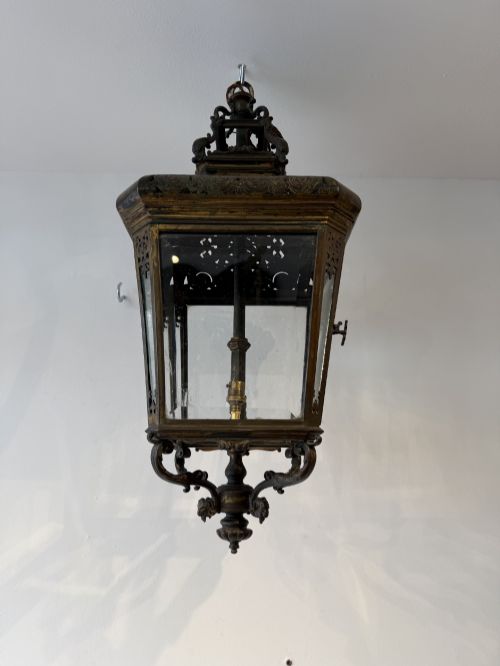


Victorian Brass Porch Light
These Victorian brass porch light examples offer robust metalwork and period glass designed to endure the weather while lighting an entrance.
Victorian Brass Porch Light
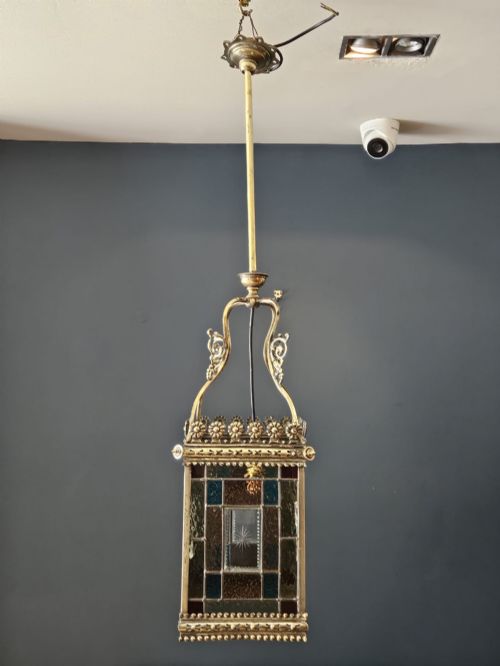
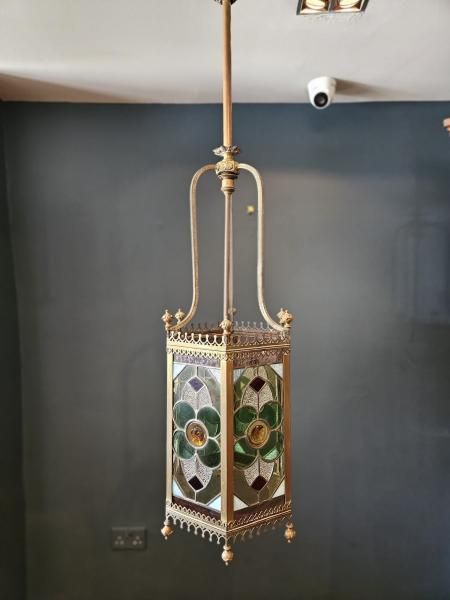
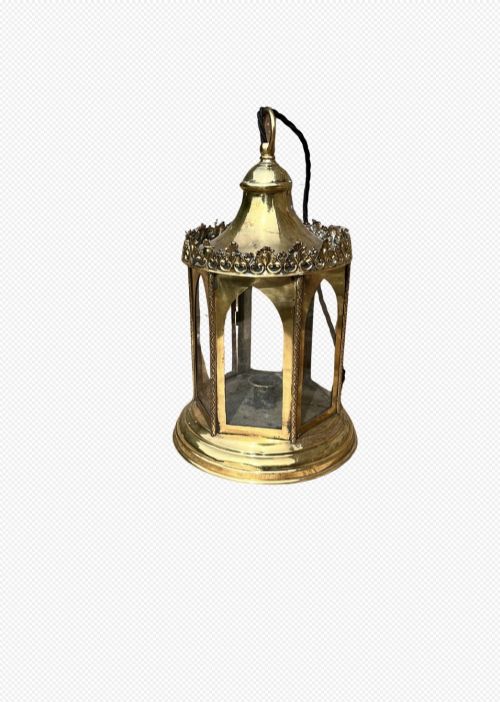
A victorian brass porch light brings heavy metal framing and glass panels to an exterior entrance or a grand interior hallway. Most pieces take the form of hexagonal or square hanging lanterns suspended by chains or mounted directly as wall lanterns.
The materials and styles span the nineteenth century, featuring brass frames combined with leaded or clear glass panels. Gothic Revival and Aesthetic Movement influences appear alongside simpler country house coaching designs.
Hexagonal lanterns and hanging pendant lights dominate the current selection, showing various patinas acquired over decades of exposure. These fixtures suit period properties requiring robust outdoor illumination with authentic historical character.
Construction and materials
Makers constructed these lanterns using heavy brass, bronze, and wrought iron frames soldered or riveted together to hold glass panels securely. Lead came holds individual pieces of leaded and coloured glass within the structural metal framework.
Surface finishes include natural unlacquered brass and painted metal alongside patinated bronze surfaces that weather over time. Many examples have undergone subsequent electrification from their original oil or gas configurations.
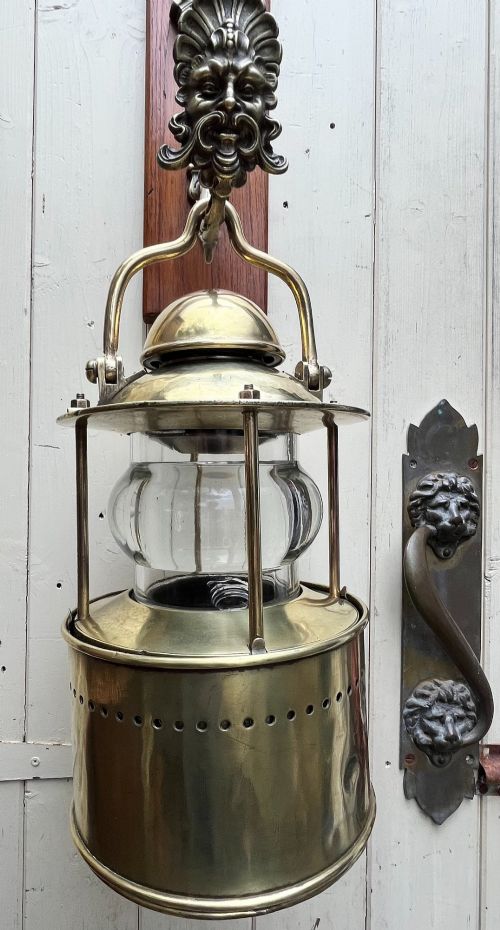
Several heavy coaching lanterns on this page spent their early lives guiding horse-drawn carriages through dark English country lanes.
Assessing quality
The weight and gauge of the brass or bronze framing dictate the structural integrity of each lantern. Substantial metalwork supports complex leaded glass arrangements far better than thin, lightweight alternatives.
Design complexity separates standard utility lighting from exceptional architectural pieces influenced by specific stylistic movements. Sharply defined Gothic Revival tracery and intact original coloured glass elevate the character of the fixture.
The Victorian Brass Porch Light Glossary
- Leaded glass
- Glass panels held together by strips of lead came to form geometric or decorative patterns. This technique provides both flexibility and strength within exterior lantern frames.
- Gothic Revival
- An architectural and decorative style drawing inspiration from medieval forms. Pieces often feature pointed arches, quatrefoils, and heavy vertical emphasis.
- Aesthetic Movement
- A late nineteenth-century design current prioritising visual beauty over narrative content. Objects from this tradition display refined geometric discipline and understated ornamentation.
- Coaching lantern
- A heavy-duty lighting fixture originally designed for horse-drawn carriages or exterior carriage houses. These pieces utilise robust glass and metal to withstand heavy weather.
Victorian Brass Porch Light: Frequently Asked Questions
How do I mount a hanging lantern outside?
Most hanging lanterns use a robust brass ceiling hook and suspension chain rated for exterior weight. Ensure the junction box and wiring match current safety standards before installation.
Position the lantern high enough above the porch floor to clear foot traffic while providing adequate illumination for the doorway.
Were these lights originally electric?
Original nineteenth-century lanterns utilised oil, kerosene, or gas burners to produce illumination. Metal fonts and burners inside the glass enclosure directed the flame safely.
Modern examples have almost entirely been converted to electricity for safe domestic use. Rewiring allows historic fixtures to function within contemporary electrical grids.
Can I use these lights outdoors?
Many of these pieces served as exterior entrance lighting or carriage house fixtures originally. The heavy brass, bronze, and leaded glass construction resists moisture and wind.
Examine the specific sealing and electrical IP rating of each converted fixture before exposing it to unsheltered weather.
How do I clean historic brass?
Historic brass develops a natural dark oxidation and patina over decades of exposure. Gentle dusting with a dry cloth preserves this surface character.
Avoid abrasive metal polishes unless you prefer a bright, shiny finish, though most collectors value the untouched historic surface.