


Gothic Glass Pendant Lamp
These gothic glass pendant lamp designs bring medieval verticality and warm coloured light straight into high-ceilinged hallways and entranceways.
Gothic Glass Pendant Lamp
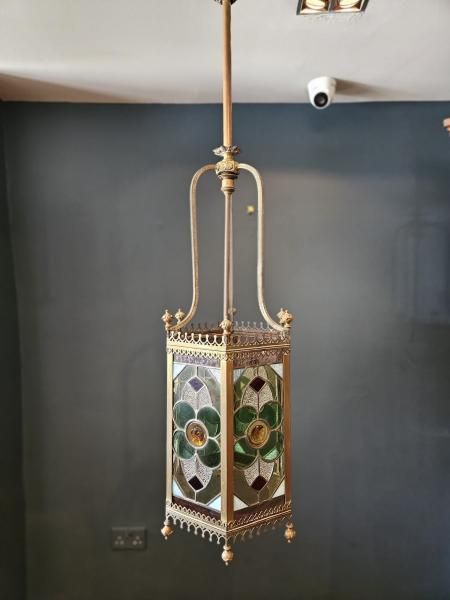
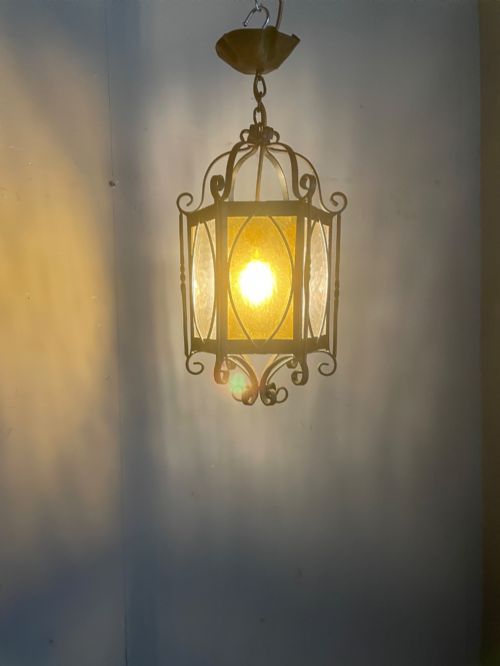
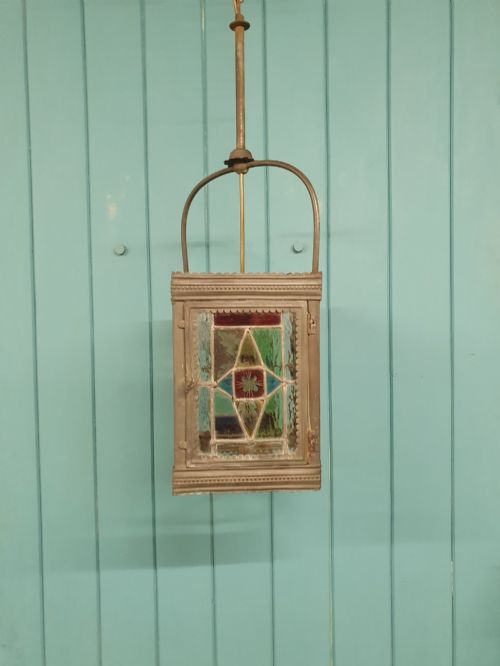
When searching for a gothic glass pendant lamp, a buyer encounters hanging lights, hall lanterns, and chandeliers spanning the Victorian era through the 1930s. The most common forms on this page are hexagonal or multi-sided hall lanterns featuring metal frameworks and coloured or leaded glass panels.
Stylistic influences range from nineteenth-century Gothic Revival and Victorian Gothic to Arts and Crafts and French Chateau pieces. Makers of the period drew inspiration from architectural tracery and ecclesiastical metalwork to produce striking overhead lighting for domestic spaces.
How they were made
Artisans constructed the structural frames using durable metals such as brass, wrought iron, cast metal, and beaten copper. These metals were often hand-worked by blacksmiths to achieve structural rigidity and decorative medieval silhouettes.
The glazing incorporated leaded glass, stained glass, and coloured glass panels, frequently held together with lead cames. Coloured or dimpled glass was selected to diffuse candlelight or early electric illumination into rich, atmospheric hues.
Listings span from the 1850s Victorian era through Edwardian and 1930s periods, uniting wrought iron, brass, and leaded glass.
What varies in quality
The distinction between standard production pieces and finer examples rests in the heft of the metalwork and the complexity of the glazing. Hand-forged blacksmith ironwork and intricate leaded or stained glass assemblies demonstrate superior craftsmanship compared to simpler cast frames.
Proportion and decorative restraint also separate the grades of work. Superior pieces exhibit balanced architectural detailing reminiscent of Pugin-inspired design, whereas lesser items rely on heavy, unrefined casting without historical conviction.
Pugin
The Gothic Glass Pendant Lamp Glossary
- Gothic Revival
- An architectural and decorative style drawing inspiration from medieval forms, pointed arches, and ecclesiastical motifs. This movement heavily influenced nineteenth-century interior metalwork and lighting.
- Leaded Glass
- Small panes of glass held together by strips of lead called cames to form geometric or pictorial patterns. It provides both structural support and decorative division within lantern panels.
- Hall Lantern
- An enclosed hanging light fixture designed specifically for entrance halls, corridors, and vestibules. These fixtures typically feature glass sides to protect the light source from draughts.
- Arts and Crafts
- A design movement valuing traditional craftsmanship, visible construction methods, and hand-beaten metal finishes. Pieces from this tradition emphasise the direct expression of materials.
- Came
- A slender strip of lead with a grooved channel used to hold individual pieces of glass together in a window or lamp panel. Cames are soldered at the joints to create a rigid web.
Gothic Glass Pendant Lamp: Frequently Asked Questions
Where should a gothic glass pendant lamp hang?
These lanterns suit high-ceilinged entrance halls, stairwells, and landings where their vertical proportions and coloured glass panels can be appreciated from below. They provide a strong architectural focal point in period properties.
Ensure adequate ceiling height before installation, as hanging lanterns require sufficient clearance to swing freely and cast their light effectively across the surrounding walls.
How do I identify a Victorian gothic hall lantern?
Look for heavy metal framing in brass, wrought iron, or copper combined with leaded or stained glass. Design cues often include pointed arches, tracery patterns, and ecclesiastical proportions.
Examining the construction methods underneath, such as hand-soldered lead cames and forged iron joints, helps confirm nineteenth-century origins against later twentieth-century reproductions.
Can these antique lanterns use modern electric bulbs?
Most hanging lanterns on this page are wired or easily adaptable for modern electrical fittings. Low-wattage LED bulbs work well inside coloured glass to mimic the warm glow of period lighting.
Consult a qualified electrician to inspect the internal wiring and ensure the vintage metal chassis safely supports modern electrical components.
What maintenance do leaded glass lanterns need?
Dust the metal framework and glass panels gently with a dry microfiber cloth to prevent grime accumulation. Avoid harsh chemical cleaners that might strip the original patina from the brass, copper, or iron.
Periodically check the stability of the hanging chain and the integrity of the lead cames holding the glass panels in place.