

Brass Ceiling Lights
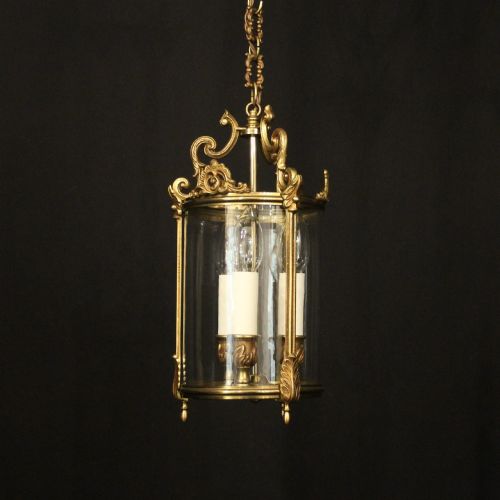
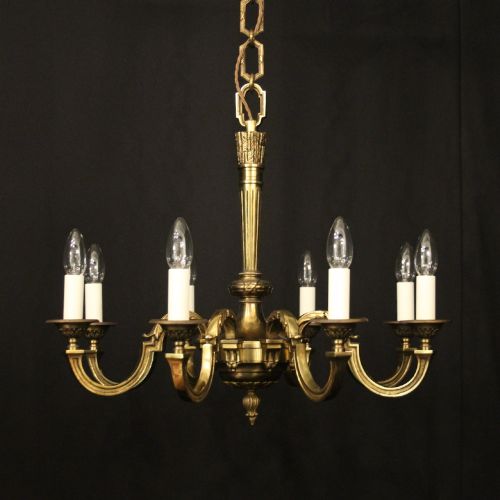
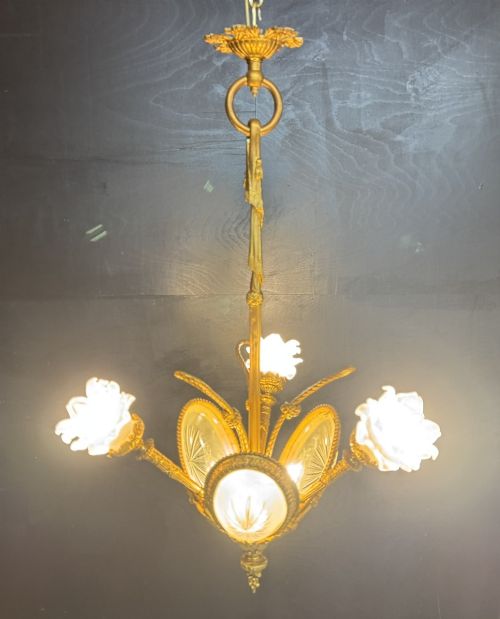
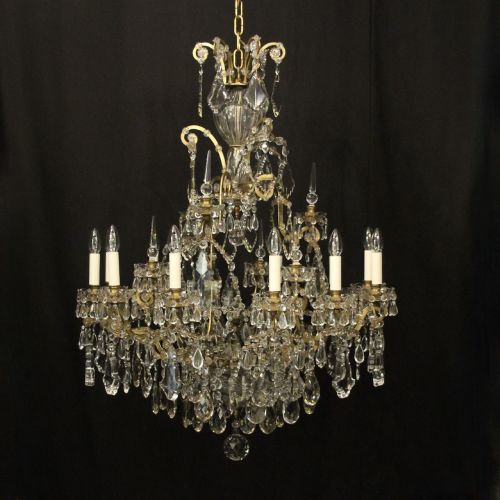
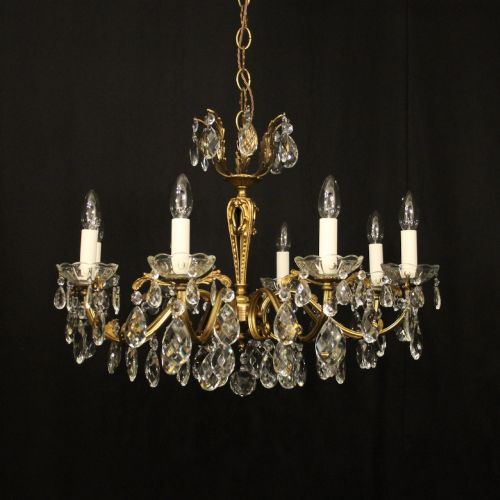
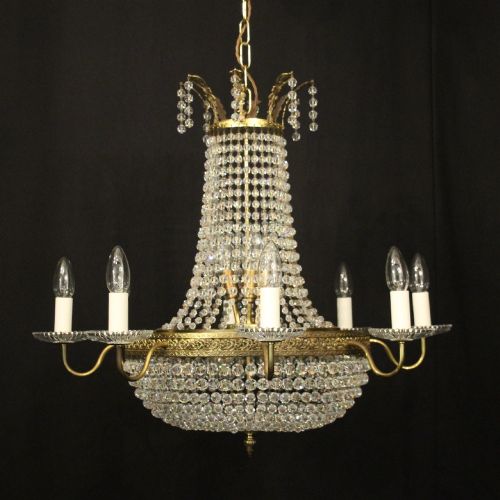
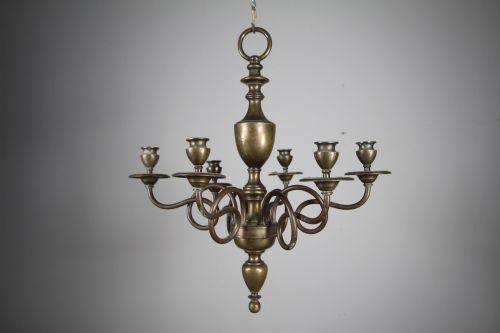
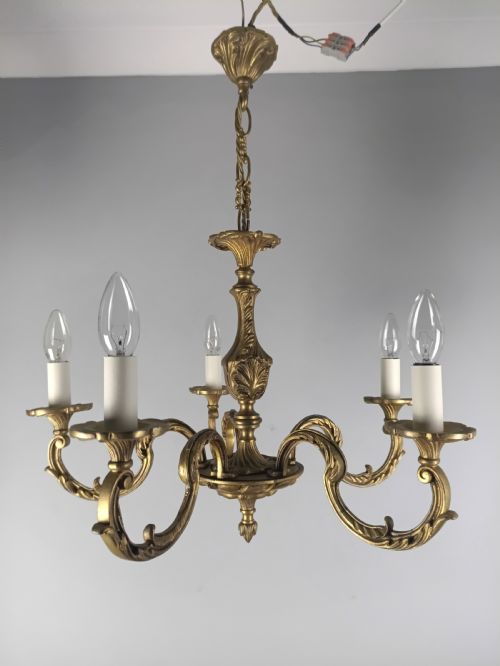
Brass ceiling lights bring weight and warm illumination to a room, spanning grand crystal chandeliers and pierced hanging lanterns.
Brass Ceiling Lights
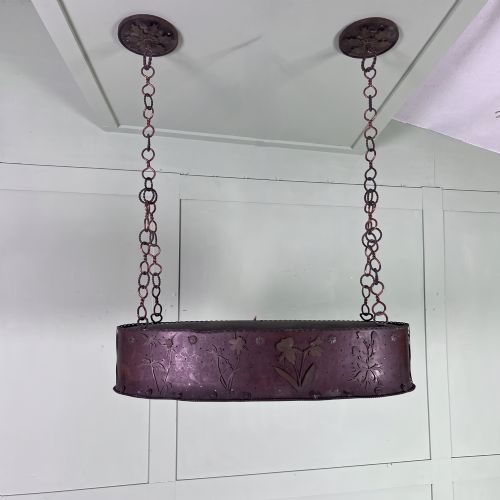
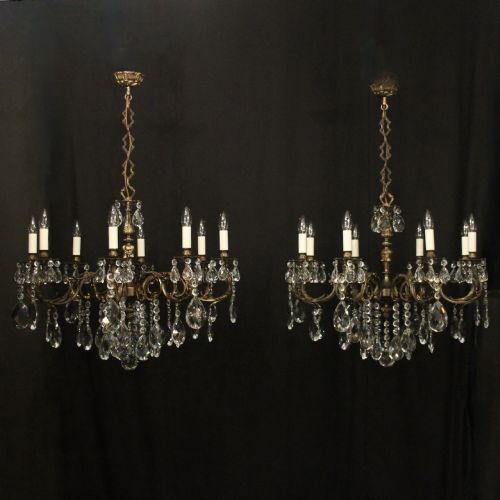
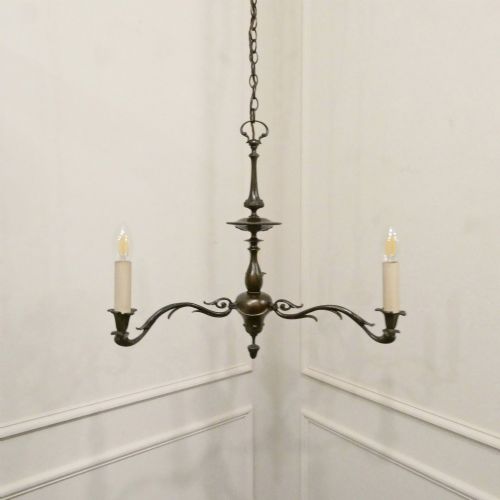
Brass ceiling lights encompass a diverse range of fixtures designed to illuminate interiors from above, including chandeliers, pendant lights, and hanging lanterns. When searching for brass ceiling lights, buyers encounter pieces originating from the nineteenth century through the early twentieth century, with a strong representation of Edwardian and 1920s or 1930s examples.
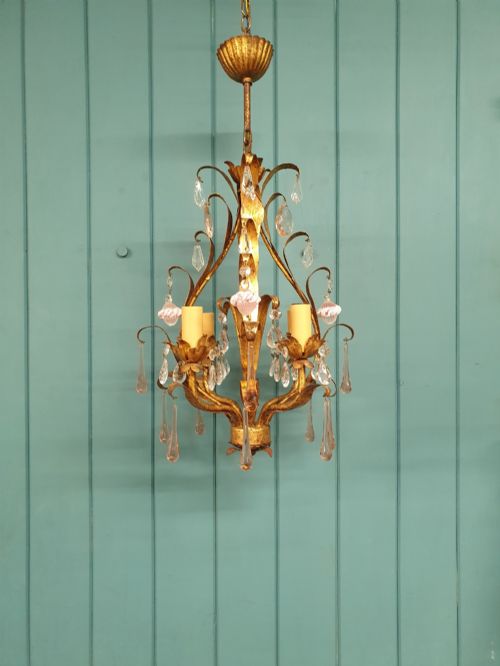
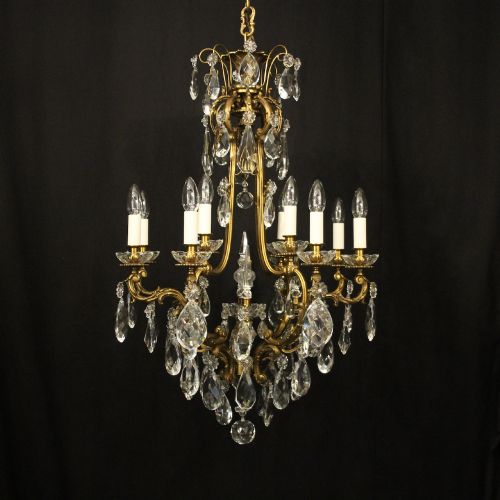
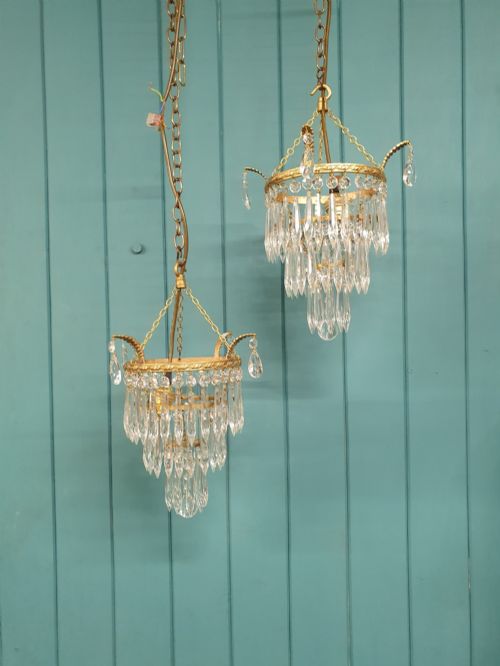
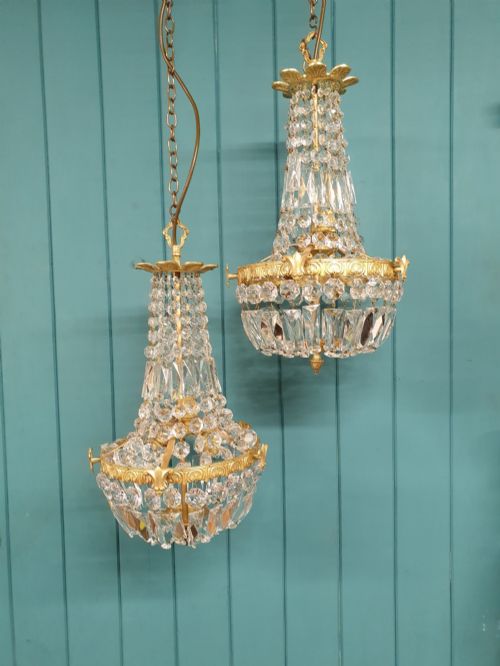
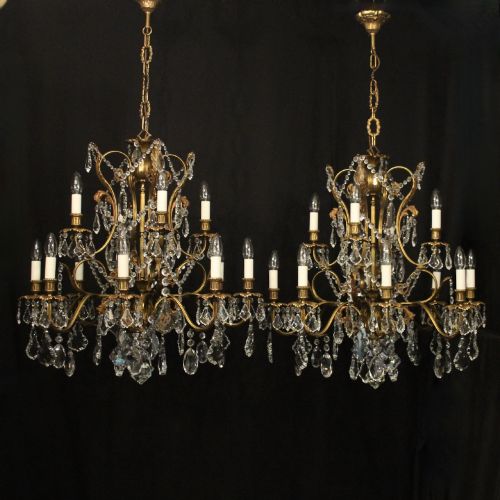
The selections span distinct stylistic influences such as French Empire, French Rococo, Flemish Revival, and Gothic, alongside Dutch and Italian variations. Most pieces lean heavily into French Chateau aesthetics, often manifesting as gilded or bronze birdcage and tent-and-waterfall chandeliers adorned with crystal drops.
How they were made
Makers utilised brass, bronze, gilt bronze, and ormolu as foundational metal frameworks, sometimes applying silver gilding to the surface for altered reflectivity. These metallic structures were cast, pierced, or hammered into shape depending on whether the intended design was a Gothic revival frame or a Moorish pierced lantern.
Glass and crystal elements were integrated extensively, utilising cut glass, cut crystal, and moulded components arranged in tiers, spikes, tents, and waterfalls. These glass pendants and beads were hand-hung from the metal armatures to refract the light cast by candle or early electric configurations.
Brass Ceiling Lights Retail Price Guide 2026
Typical asking prices for brass ceiling lights among the pieces listed under this phrase on Sellingantiques today, from the lower quarter to the upper quarter. They describe what is for sale here now, not the wider market.
Several fixtures embrace an 'Astroid' designation, proving that even Edwardian lighting designers occasionally looked to the cosmos for inspiration.
What varies in quality
The quality of these fixtures depends heavily upon the crispness of the metal casting and the precision of the hand-chased details on bronze and ormolu mounts. Finer examples display deeply articulated ornamentation and substantial physical weight rather than thin, pressed sheet metal.
The grade of the glass and crystal components creates a distinct divergence across the range, where sharp, hand-cut crystal prisms produce superior light refraction compared to simpler, moulded glass drops. Furthermore, the integrity of the original gilding and the completeness of the hanging crystal strands dictate the overall standard of the piece.
The Brass Ceiling Lights Glossary
- Chandelier
- A branched ornamental light fixture suspended from the ceiling. These fixtures hold multiple light sources, traditionally candles and later electricity.
- Ormolu
- Finely ground high-carat gold applied to a bronze object using mercury. This technique imparts a durable golden finish common on French decorative metalwork.
- Birdcage chandelier
- A form shaped with a skeletal metal framework resembling an aviary, typically decorated with cascading crystal drops. This style gained popularity during the nineteenth and early twentieth centuries.
- Tent and waterfall
- A chandelier configuration featuring an upper canopy of gathered glass beads forming a tent shape, coupled with a lower cascading waterfall of crystal strands.
- Hanging lantern
- An enclosed ceiling light suspended by a chain or bracket, often utilising glazed panels or pierced metalwork. These were frequently deployed in halls and entryways.
Brass Ceiling Lights: Frequently Asked Questions
How do I hang a heavy antique chandelier safely?
Hanging a heavy fixture requires securing the mounting bracket directly into ceiling joists or installing a structural steel noggin capable of supporting the total weight. The electrical supply must be routed through this support point before attaching the chain and canopy.
Professional installation is recommended for pieces constructed from solid bronze and crystal, as their substantial weight demands rated fixings that standard plaster ceilings cannot support alone.
Were these lights originally electrified or for candles?
Many examples from the nineteenth century and early twentieth century were built to burn candles or utilised early conversion burners before being adapted for electricity. Candle arms and drip pans often remain visible on pieces designated as candle chandeliers.
Rewiring is common practice for older fixtures to meet modern safety standards while retaining the original external metalwork and glass components.
How do I clean crystal drops without damaging the frame?
Cleaning requires removing the delicate crystal prisms and washing them individually in lukewarm water with a mild detergent, followed by drying with a lint-free cloth. Leaving the crystals on the frame risks chipping the glass against the metal arms.
The brass or bronze armature should be dusted gently with a soft brush, avoiding harsh metal cleaners that can strip historic patination or original gilding.
What rooms suit a tent and waterfall chandelier?
Tent and waterfall chandeliers suit spaces with adequate ceiling height to accommodate their vertical drop and tiered crystal arrangements. They function effectively in reception rooms, dining areas, and high-ceilinged hallways where their reflective properties can catch natural and artificial light.
Smaller mini crystal variants offer an alternative for more compact rooms that require the decorative detail of cut glass without an overwhelming physical scale.