




Victorian Gothic Pendant Light
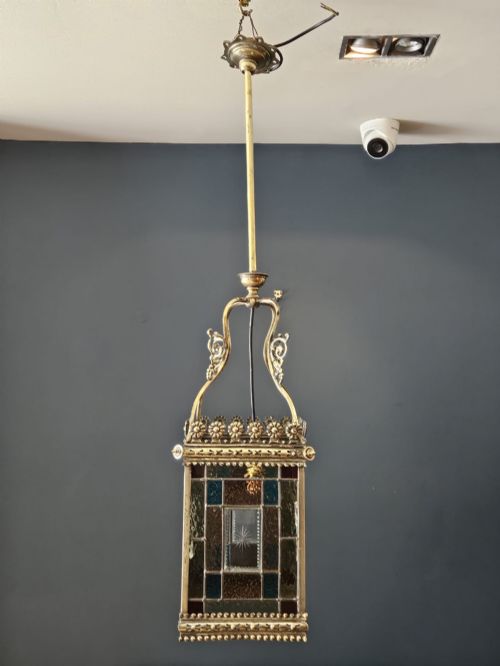
A victorian gothic pendant light brings medieval verticality and rich ecclesiastical metalwork straight into a hallway or high-ceilinged room.
Victorian Gothic Pendant Light
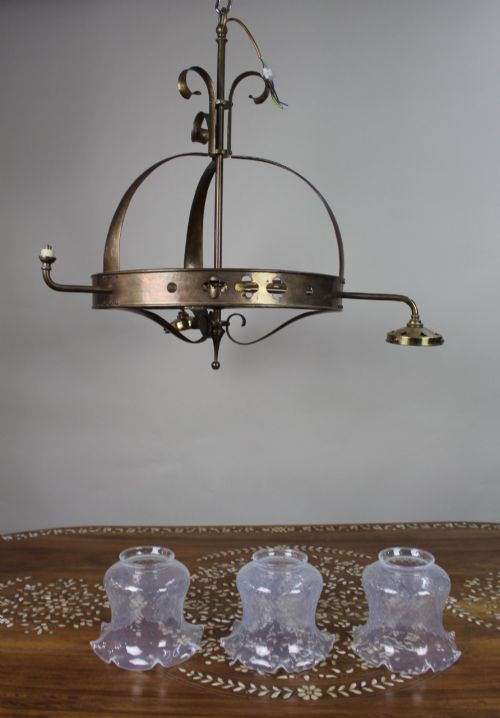
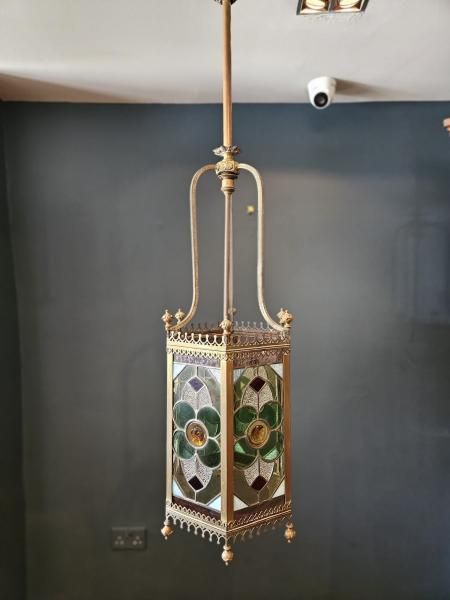
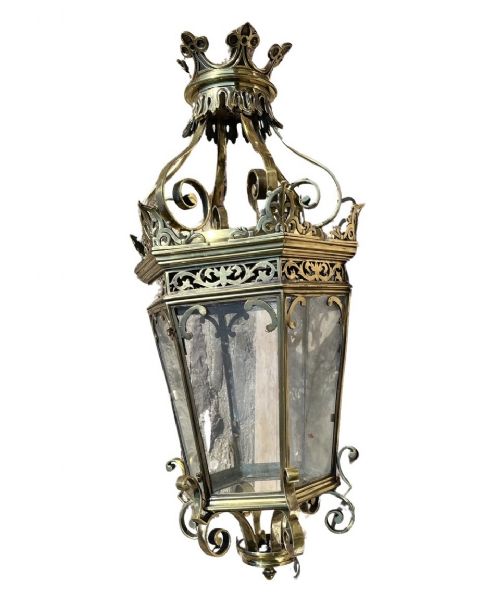
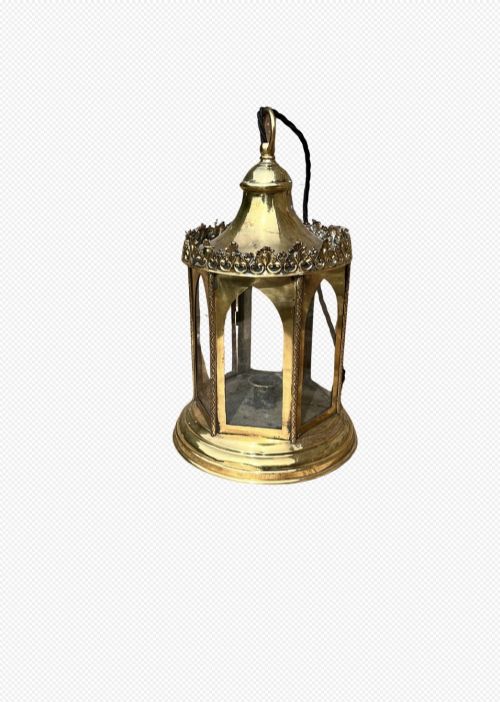
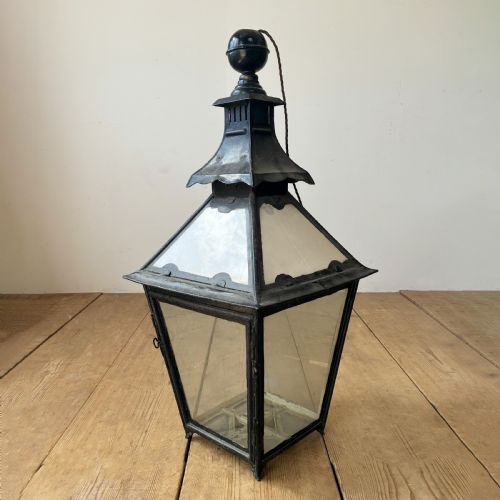
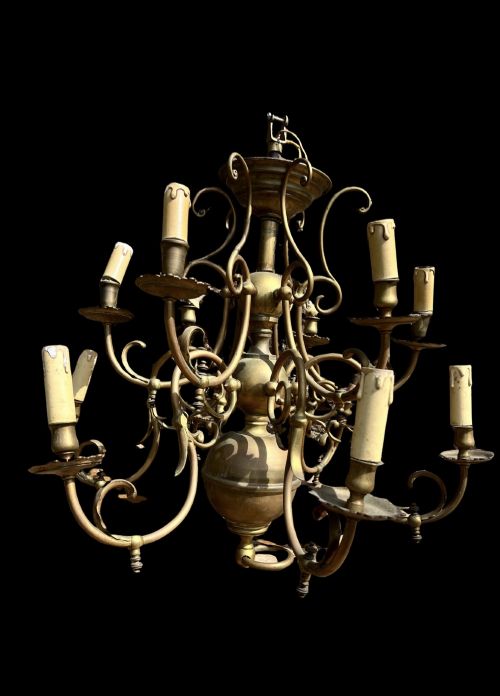
A victorian gothic pendant light encompasses hanging lanterns, brass chandeliers, and hall lights spanning the nineteenth century and the Edwardian period. Buyers searching for a victorian gothic pendant light typically encounter hexagonal or square brass lanterns, multi-branch gasoliers, and ecclesiastical corona lights.
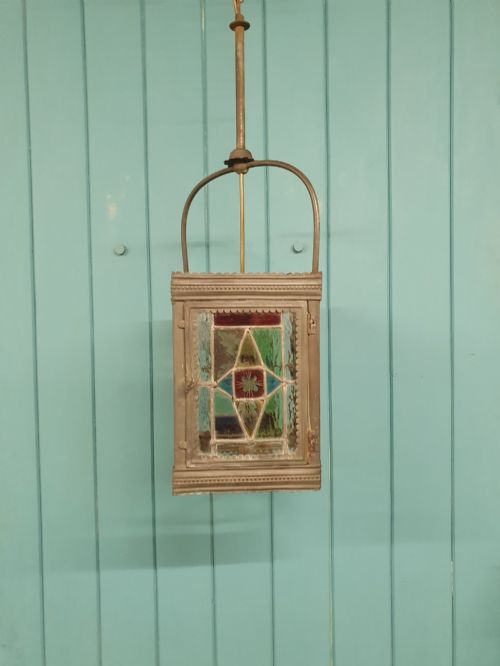
The surviving examples range from simple leaded glass hall fixtures to large cast iron ceiling lights and gilded bronze candelabra chandeliers. These pieces draw heavily upon Gothic Revival and Arts and Crafts design principles, often incorporating decorative details such as shamrocks or green man motifs.
Materials and construction methods
Makers constructed these hanging lights primarily in brass, gilded brass, bronze, and wrought iron, frequently combining heavy cast and sheet metal with leaded, opalescent, or coloured glass panels. Early examples utilised candle or gas lighting before workshops later converted the internal fittings to electricity.
The fabrication relies on soldered lead cames for glass panels, sturdy brass framing, and riveted or cast iron structural elements designed to support substantial weight in large entrance halls and ecclesiastical settings.
Some lanterns hide mischievous green man faces and lucky shamrocks right among the gothic scrollwork.
Evaluating quality and execution
Quality in these hanging fixtures rests upon the weight of the metal casting, the crispness of applied architectural details, and the complexity of the glass work. Substantial cast brass frames, intricate tracery, and heavy gauge leaded glass separate superior examples from standard production pieces.
The integrity of the original metal finish, whether gilded brass, patinated bronze, or blackened iron, dictates the visual authority of the piece when suspended from a ceiling.
Joseph Wilmotte Liege
The Victorian Gothic Pendant Light Glossary
- Gasolier
- A branched lighting fixture designed to burn coal gas, frequently converted to electricity in later periods. It provides multiple light points arranged in a chandelier formation.
- Corona light
- A circular crown-shaped hanging lighting fixture suspended by chains, heavily influenced by medieval ecclesiastical design. These fixtures often feature multiple candle holders or lamp points around the perimeter.
- Lead glass
- Glass panes held together within a framework of lead cames, commonly seen in geometric or coloured lantern construction. It diffuses light with rich texture.
- Opalescent glass
- A milky, semi-translucent glass that diffuses light softly without total transparency. It appears frequently in nineteenth-century gasolier shades.
- Gothic Revival
- An architectural and decorative style drawing on medieval forms, pointed arches, and ecclesiastical motifs. It dominates the aesthetic of these pendant lights.
Victorian Gothic Pendant Light: Frequently Asked Questions
How do I hang a heavy brass lantern safely?
Suspension of heavy cast brass and iron lanterns requires direct anchoring into ceiling joists using rated steel fixings and chains. Professional installation ensures the weight is distributed properly without straining old mounting points.
Electrical wiring inside these antique frames should also be inspected and renewed by a qualified electrician to meet modern safety standards before hanging.
Can gasoliers be converted to take modern bulbs?
Most surviving gasoliers have already undergone conversion to electricity during the twentieth century. Where old gas arms remain, electricians can adapt the internal channels to house standard lamp holders discreetly.
Careful adaptation preserves the original brass stopcocks and tubing while allowing the fixture to function safely in a modern room.
Where should I hang a large hall lantern?
Large lanterns and corona lights suit spaces with generous ceiling heights, such as entrance halls, stairwells, and high-ceilinged reception rooms. Their vertical proportions draw the eye upward and command attention in open spaces.
Ensuring adequate clearance beneath the lowest point of the hanging light is essential for daily movement in hallways and corridors.
How do I clean antique leaded glass panels?
Cleaning leaded glass requires mild soap and warm water applied gently with a soft cloth to avoid disturbing the fragile lead cames. Harsh chemical cleaners can strip historic patinas from the surrounding brass or iron.
Patina on the metal framework should be left largely undisturbed to preserve the authentic age and character of the fixture.