
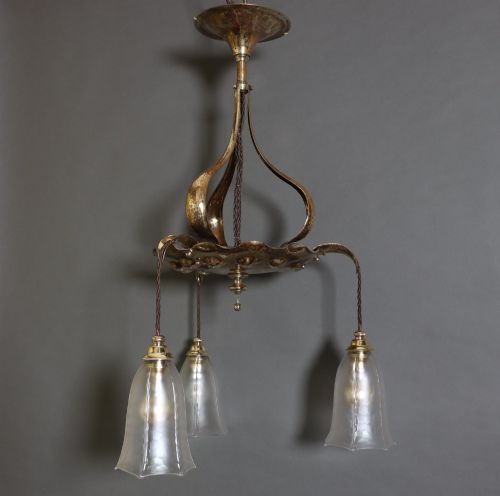
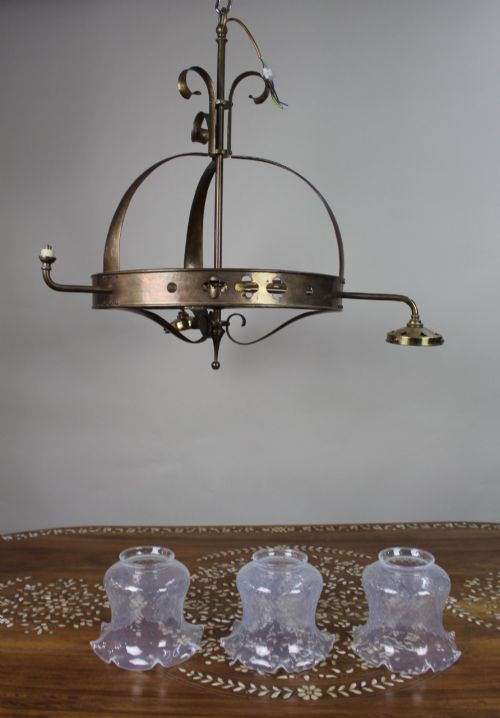
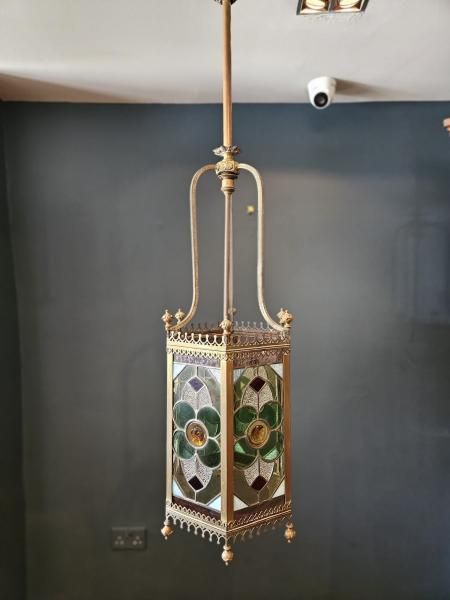


Gothic Revival Light Fixture
A gothic revival light fixture brings architectural punch and ecclesiastical atmosphere into a room, trading quiet subtlety for heavy metalwork and coloured glass.
Gothic Revival Light Fixture
A gothic revival light fixture takes architectural motifs from medieval buildings and translates them into illumination for domestic spaces. These pieces draw from nineteenth century design movements, spanning the Victorian and Edwardian eras up to the nineteen thirties.
You will encounter various forms across this page, ranging from single wall lights and hall lanterns to multi-branch brass chandeliers and heavy iron castle sconces. Many pieces merge gothic architecture with Arts and Crafts or Aesthetic period sensibilities.
Materials range from polished brass, gilt brass and bronze to wrought iron, cast iron, copper and leaded or opalescent glass. Some pieces retain traces of their original function, designed for candles or gas before conversion to electricity.
Materials and construction
Metals form the structural backbone of these pieces, utilising cast and wrought iron, heavy bronze, and brass that is frequently gilded. Blacksmiths shaped iron into sturdy brackets and lanterns, while foundries cast elaborate brass and bronze components.
Glass provides the diffusion for the light, appearing as opalescent shades, coloured glass panels, and leaded assemblies. Makers integrated these fragile elements securely into metal frames designed to hang safely from ceilings or project from walls.
The listings here span the nineteenth and twentieth centuries, incorporating Victorian, Edwardian, and Arts and Crafts design vocabularies in brass, iron, and glass.
What separates the finest examples
Quality rests upon the crispness of the metal casting and the character of the hand-wrought ironwork. Superior pieces display deep relief in brass and bronze elements, alongside thoughtful integration of decorative details like shamrocks or green man motifs.
The choice and condition of the glass elevate a piece, particularly where opalescent or coloured panels diffuse the light evenly. Heavier gauges of metal and substantial scale indicate work intended for important institutional or domestic interiors.
The Gothic Revival Light Fixture Glossary
- Gasolier
- A light fixture designed to burn gas, typically featuring multiple arms branching from a central column. Many survive converted to electricity.
- Opalescent glass
- Glass that has a milky, semi-translucent appearance, diffusing light softly. It scatters warm tones across a room.
- Ecclesiastical
- Pertaining to a church or chapel, describing items influenced by religious architecture and furnishings. These designs transferred easily to large domestic halls.
- Hall lantern
- An enclosed hanging light designed for corridors, vestibules and entrance halls. They protect the light source from drafts.
- Wall sconce
- A light fixture fixed to a wall rather than suspended from a ceiling. They often project outwards on decorative brackets.
Gothic Revival Light Fixture: Frequently Asked Questions
Can these old lights be wired safely?
Most antique light fixtures require rewiring to meet modern electrical standards before installation in a home. A qualified electrician can usually adapt old fittings without altering their exterior appearance.
Internal wiring channels often need updating to accommodate contemporary cables safely while preserving the original brass or iron housing.
How do I hang a heavy iron lantern?
Heavy iron and bronze fixtures demand secure ceiling fixings screwed directly into structural ceiling joists. Do not rely on plaster alone to hold substantial nineteenth century metalwork.
Professional installation is recommended for large chandeliers and lanterns due to their considerable weight and complex hanging chains.
What is the difference between gas and electric conversions?
Gasoliers originally routed gas through hollow brass arms to open burners, whereas electric fixtures contain insulated wire. Converted gasoliers retain their original valves or decorative keys despite carrying electrical wiring today.
How do I clean antique brass and bronze?
Dust these metal surfaces gently with a soft dry cloth to prevent grime accumulation over time. Avoid aggressive metal polishes that remove historic patination and the mellow tones accumulated over centuries.