
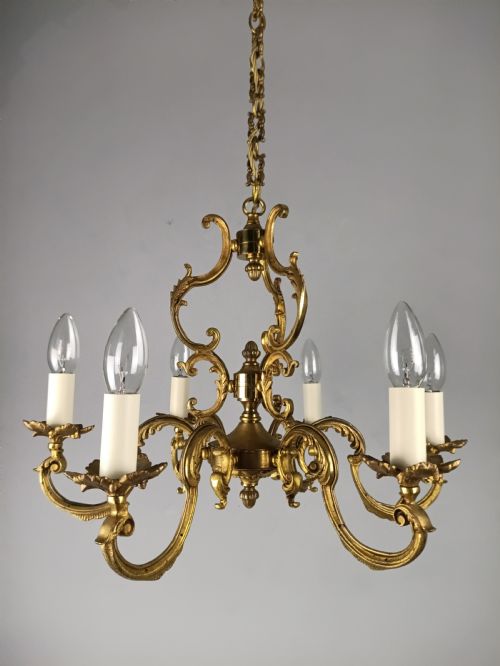


Ornate Brass Hanging Light
An ornate brass hanging light brings dramatic illumination and period detail to a high ceiling, drawing the eye upward.
Ornate Brass Hanging Light
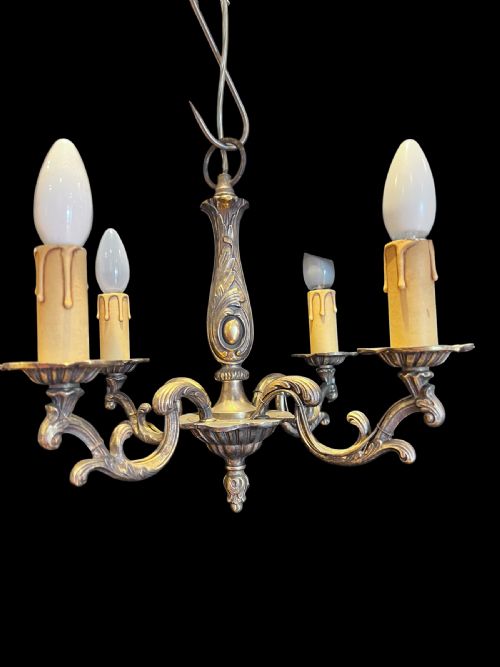
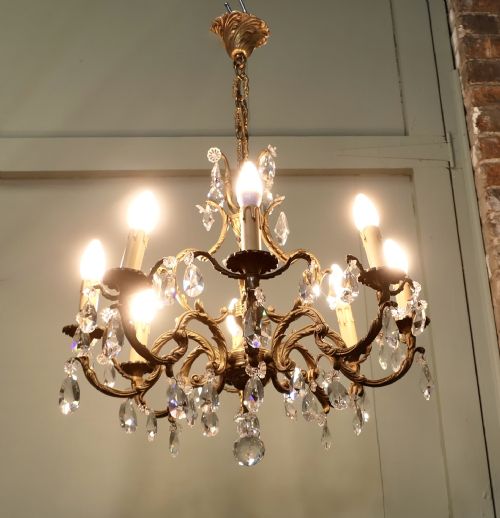
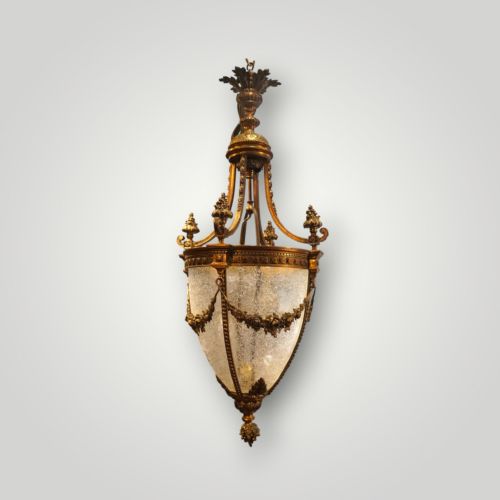
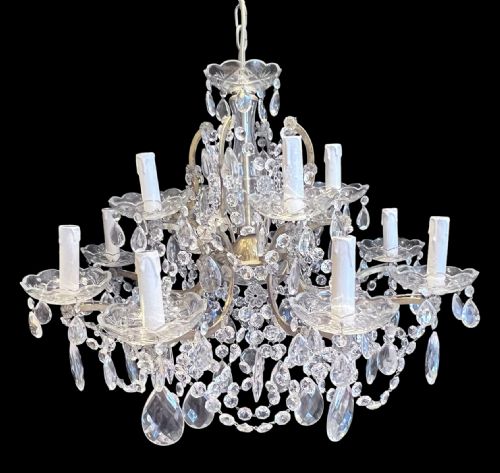
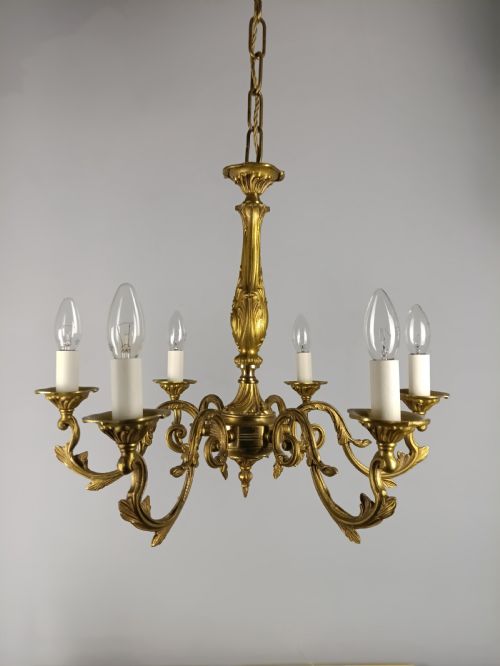
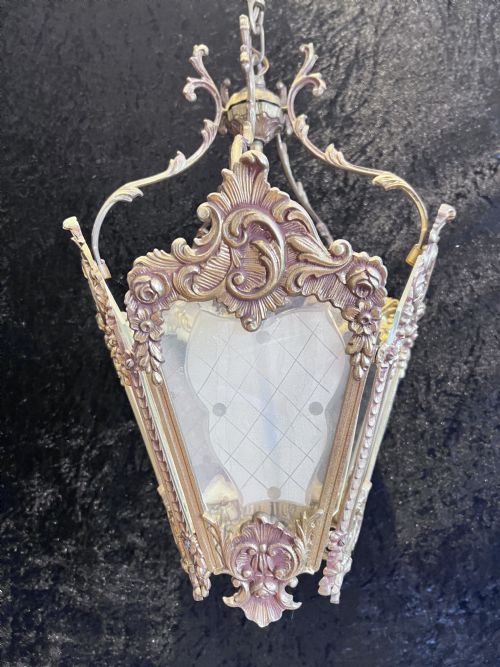
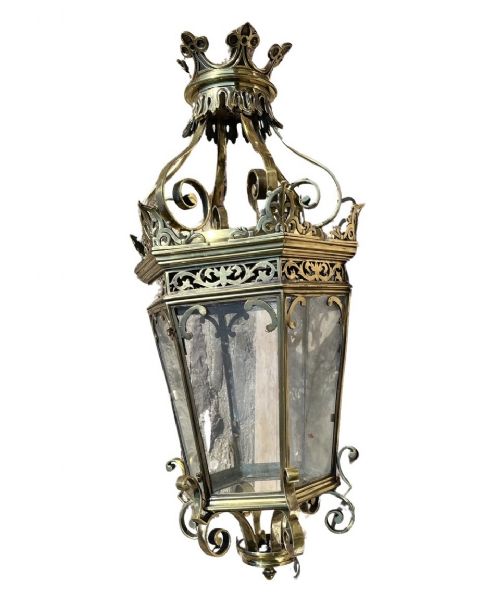
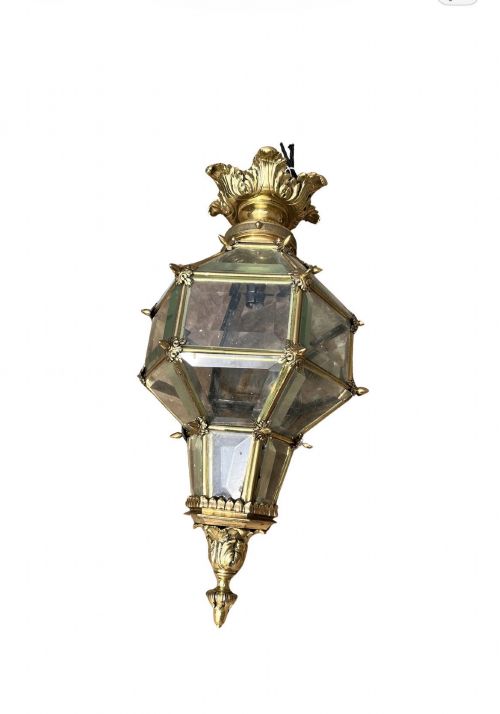
An ornate brass hanging light encompasses multi-arm chandeliers, hall lanterns, and pendant ceiling lights shaped by French Rococo, Gothic Revival, and Italian neoclassical aesthetics. Buyers seeking this style encounter pieces ranging from single-light lanterns to grand twelve-branch fixtures.
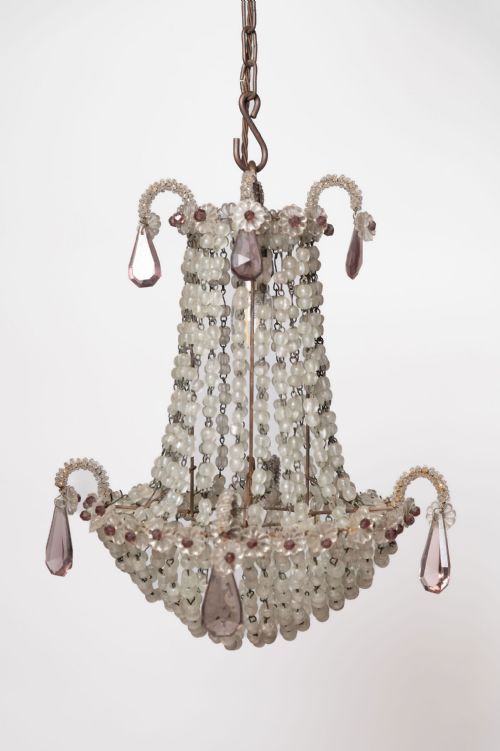
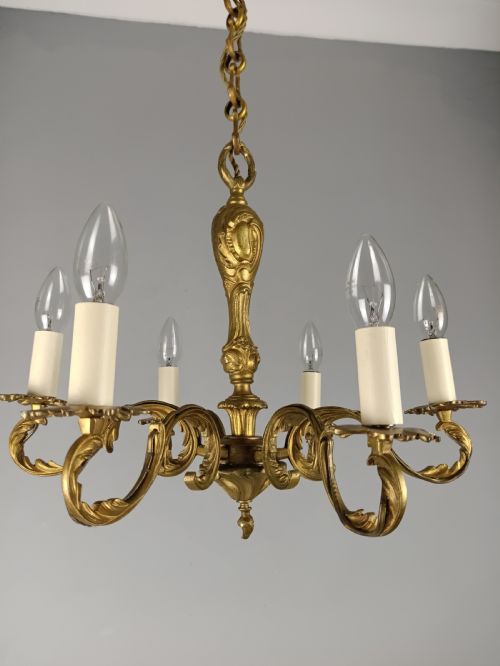
The selection leans heavily toward French chateau and Venetian designs, dominated by cast acanthus leaf mounts, crystal lustres, and gilded bronze finishes. These fixtures date primarily from the nineteenth century through the early twentieth century.
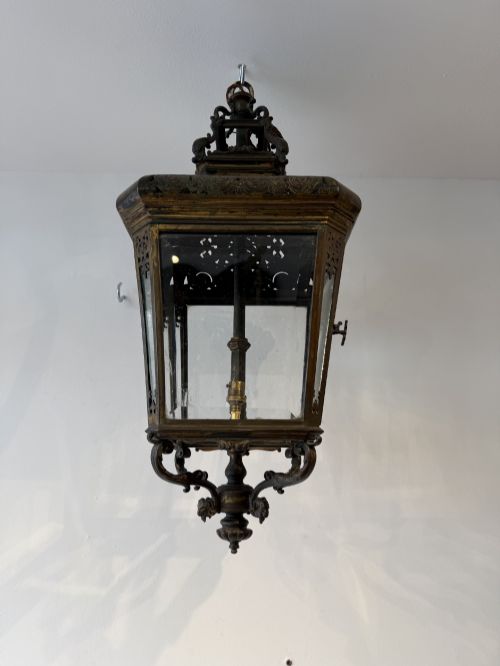
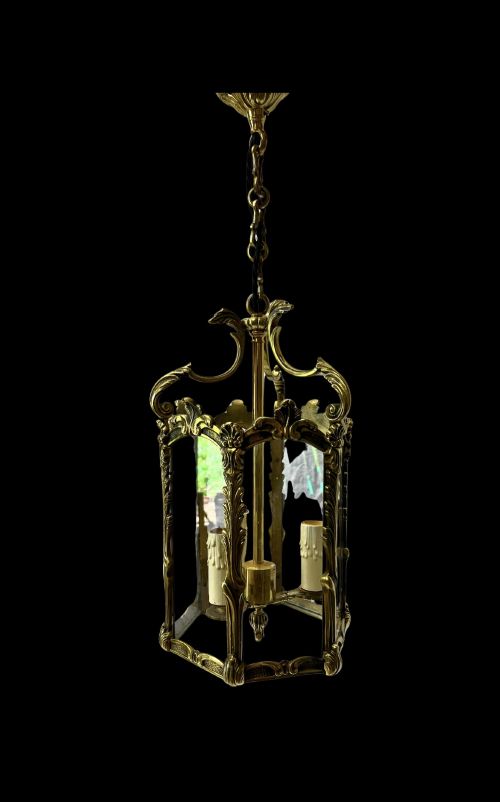
Most examples function as principal room centrepieces or grand entrance hall statements. The forms vary from hexagonal glass lanterns to multi-tiered crystal-hung candelabra fixtures.
How they were made
Maker workshops utilised cast bronze and brass, shaping structural arms and decorative mounts through traditional foundry methods. Gilt finishes and ormolu details were applied to enhance the metallic lustre.
Many fixtures incorporate hand-cut crystal lustres and pressed or blown glass panels secured within metal frames. Silver plating and applied gilding appear across various nineteenth-century and Edwardian examples.
Listed object types include multi-light chandeliers, hall lanterns, pendant lights, and ceiling candle light fittings.
What varies in quality
The quality rests in the crispness of the casting work, particularly in the definition of acanthus leaf mounts and figurative elements like cherubs. Heavier gauge metalwork and substantial cast bronze distinguish superior fixtures from lighter stamped alternatives.
The integration of glass and crystal components also drives distinction. Complete sets of original crystal lustres and well-fitted beveled glass panels elevate the integrity of a hanging light.
The Ornate Brass Hanging Light Glossary
- Ormolu
- A technique of applying finely ground high-carat gold to a bronze object using mercury amalgams. This process creates a durable, rich metallic finish seen on many French chandeliers.
- Lustre
- A cut glass or crystal pendant suspended from a chandelier to refract light. These elements are typically hung in sequences around the arms or crown of the fixture.
- Acanthus
- A classical foliage ornament modelled on the leaves of the Mediterranean plant, heavily utilised in Corinthian capitals and cast metal furniture mounts. It provides the characteristic scrollwork on many nineteenth-century branches.
- Candelabra
- A branched lighting fixture designed to hold multiple candles or electric lamp holders. In this context, it refers to the multi-armed framework suspended from the ceiling.
Ornate Brass Hanging Light: Frequently Asked Questions
How do I clean an antique brass chandelier?
Dust the metalwork gently with a soft dry cloth to prevent the accumulation of grime on intricate castings. Avoid abrasive chemical cleaners that can strip original gilding or patina.
For crystal lustres, remove them carefully and wash them in warm soapy water before drying thoroughly. Reattach each pendant in its exact position to maintain the balance of the fixture.
Can these hanging lights be rewired for modern use?
Most antique fixtures are adapted by electricians to accept standard contemporary wiring and bulb fittings. This process secures safe operation while preserving the structural integrity of the frame.
Consult a professional restorer who understands historical lighting construction. They ensure that internal channels accommodate modern cables without altering the exterior appearance.
Where should I hang a large hall lantern?
A grand entrance hall or high-ceilinged landing provides the ideal spatial context for a substantial brass lantern. These transitional spaces allow the piece to be viewed from multiple angles.
Ensure the ceiling height accommodates the drop of the chain and the physical scale of the lantern. Adequate clearance permits comfortable passage underneath.
How do I identify a French Rococo revival piece?
Look for asymmetrical scrollwork, flowing organic curves, and naturalistic motifs derived from eighteenth-century design. Cast acanthus leaves and shell-like cartouches frequently decorate the junctions.
The use of gilded brass and intricate bronze casting points directly to French manufacture during the nineteenth century. These stylistic markers differentiate revival work from earlier periods.