


Cast Bronze Ceiling Light
A cast bronze ceiling light brings heavy metal substance and layered period detail into a room, offering durability alongside elaborate historic ornament.
Cast Bronze Ceiling Light
A cast bronze ceiling light comprises substantial hanging fixtures produced across the nineteenth and early twentieth centuries, featuring robust metal structures designed to illuminate large spaces. Buyers searching this phrase encounter multi-armed chandeliers, hall lanterns, and pendant lights rooted in historic revival styles and modernist turns.
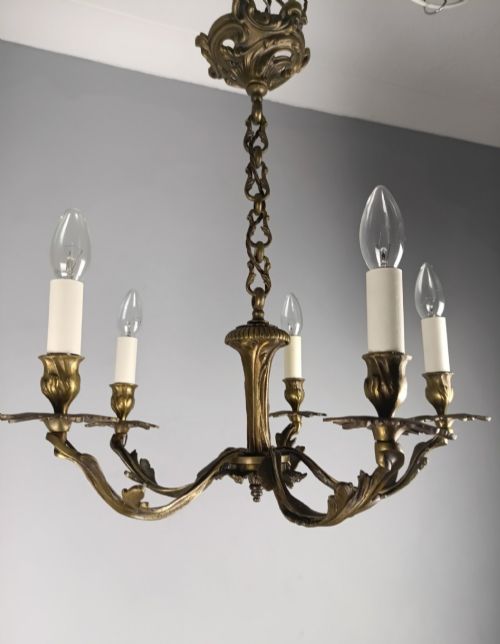
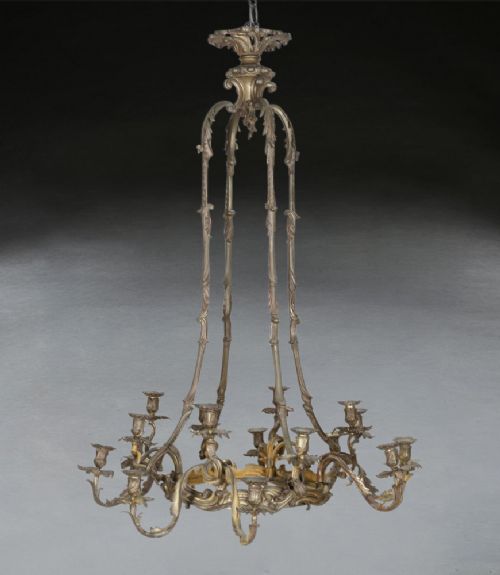
The most common examples on this page are French multi-light chandeliers and lanterns dating from the nineteenth century up to the 1930s. These pieces frequently incorporate regional design idioms such as Louis XVI, Rococo, Baroque, and Art Nouveau motifs.
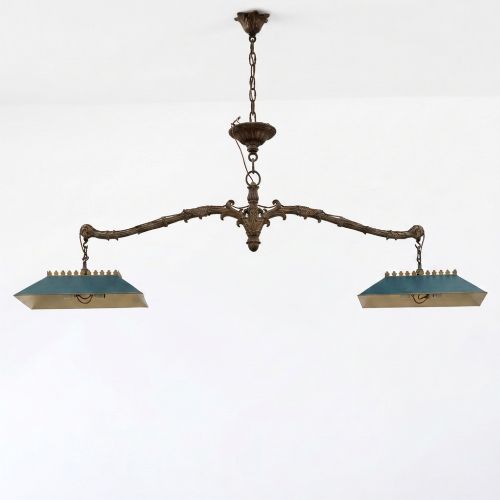
Beyond grand chandeliers, the selection includes specialised forms like billiard lights and hall pendants configured with three, five, eight, or sixteen lights. These fixtures utilise chains, rings, and decorative brackets to suspend heavy metal bodies securely from ceilings.
How they were made
Maker workshops utilised foundational metal casting techniques to form durable bronze, brass, and gilt metal frames capable of supporting heavy glass components and multiple branch arms. Molten metal poured into moulds created thick structural components that were subsequently chased, filed, and assembled by hand.
Surface finishes applied to the cast metal include gilding, silvering, and dark patination to achieve specific visual effects favoured in different decades. Cut glass shades, slip shades, and crystal elements integrate directly into the metal armatures, held by bezels and screws.
Listings feature cast bronze ceiling lights spanning the nineteenth century through the 1930s, incorporating cut glass, gilt bronze, and silvered bronze materials.
What varies in quality
Surface treatments also divide standard production from exceptional work, particularly the thickness and durability of gold or silver gilding and the quality of the cut glass. Weight distribution and structural integrity across multi-arm configurations reflect the engineering standards employed by the maker.
F&C Osler
The Cast Bronze Ceiling Light Glossary
- Bronze
- An alloy primarily of copper and tin, prized for its strength and ability to take fine detail in casting. It forms the heavy structural core of these ceiling lights.
- Chasing
- The manual process of refining a cast metal surface using hammers and punches to sharpen details and remove casting flaws. High-end fixtures show extensive hand-chasing.
- Ormolu
- A method of applying finely ground high-carat gold to a bronze object using mercury amalgamation or electroplating. This finish creates a rich golden glow on nineteenth-century pieces.
- Slip Shade
- A type of thick moulded art glass designed to slide directly into a metal frame or basket. These shades appear on later twentieth-century lighting.
- Patina
- The surface coloration and sheen acquired by bronze through age, handling, or intentional chemical treatment. A stable dark patina indicates undisturbed historic surfaces.
Cast Bronze Ceiling Light: Frequently Asked Questions
How do I clean a cast bronze ceiling light?
Dust the metal and glass components regularly with a soft, dry cloth to prevent grime accumulation in recessed cast details. Avoid harsh chemical cleaners or abrasive polishes that strip historic patination and damage applied gilt or silver finishes.
For glass shades, remove them carefully from the bronze frame if held by screws and wash them in warm soapy water. Ensure all electrical parts remain completely dry during any cleaning process.
How do I tell an 19th-century chandelier from a 1930s piece?
Nineteenth-century examples frequently lean heavily on historical revival styles such as Baroque, Rococo, or Louis XVI, featuring ornate cast ornamentation and heavy crystal drops. The construction often employs visible mechanical joins and hand-finished chasing across every bronze surface.
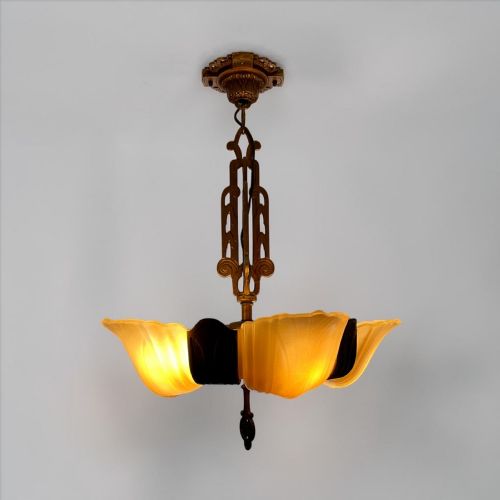
By contrast, pieces from the 1930s often reflect Art Deco or streamlined modern aesthetics, utilising slip shades and simpler geometric lines. The bronze work on later pieces tends toward more standardised industrial casting methods with less manual surface tooling.
Are bronze and brass ceiling lights the same thing?
Bronze and brass are distinct metal alloys, though both appear frequently in historic lighting construction. Bronze is primarily a copper-tin alloy offering superior tensile strength and dark patination potential, while brass is a copper-zinc alloy with a brighter yellow tone.
Many antique fixtures combine both metals, using cast bronze for structural load-bearing arms and brass for smaller decorative mounts or fixings. Over time, surface treatments often blur the visual distinction between the two materials.