
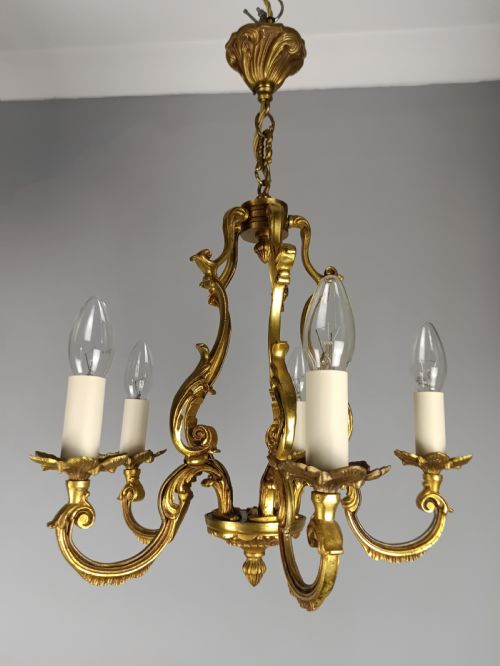
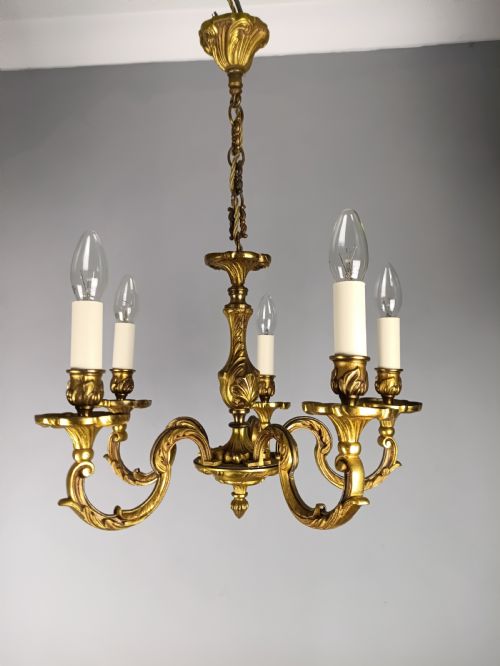
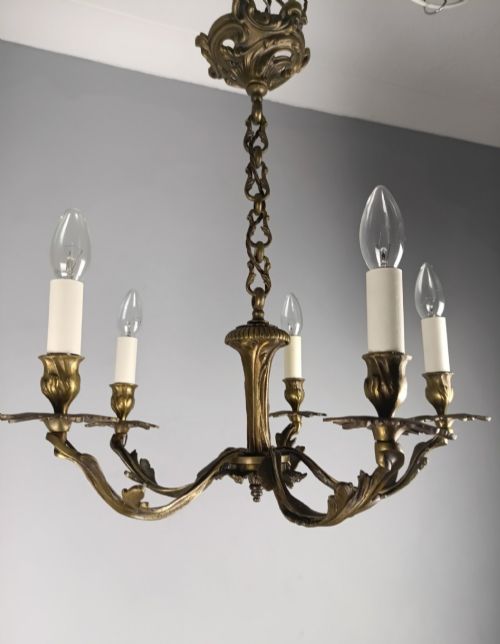
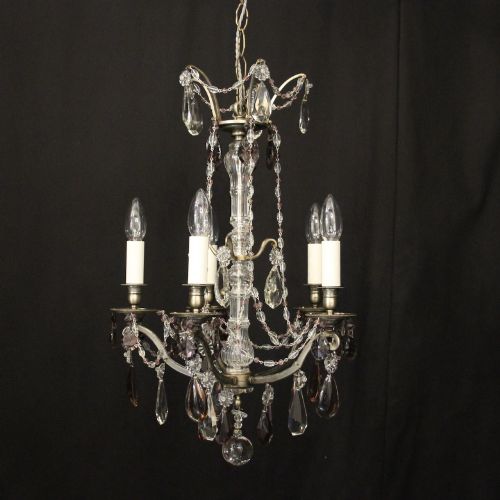
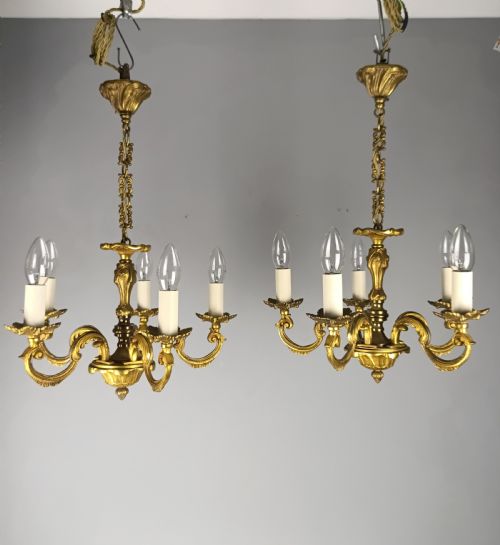
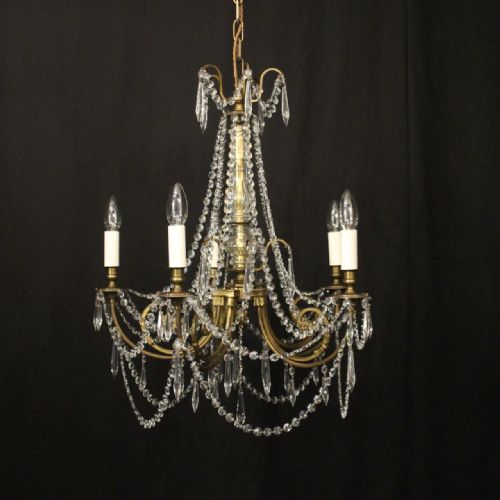
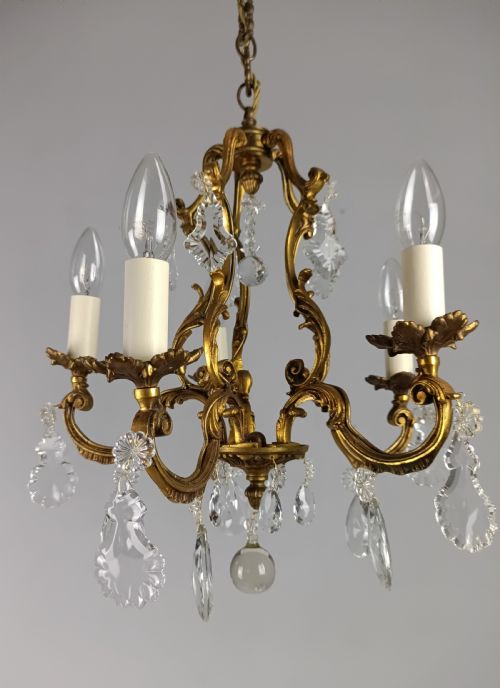


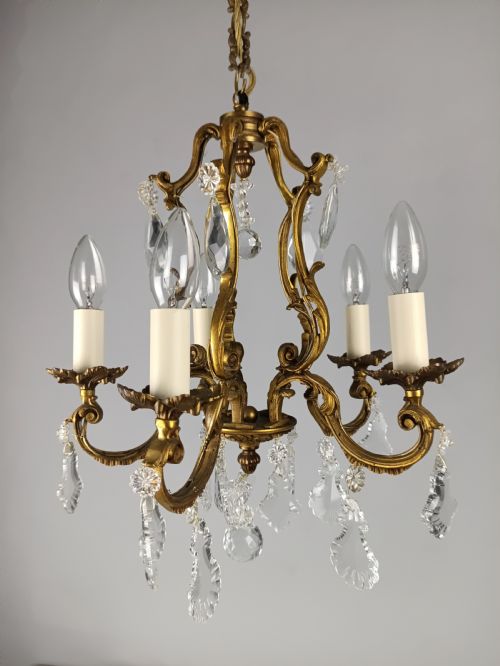


Bronze Five Light Chandelier
A bronze five light chandelier brings warm illumination and classical proportion to a room, and the examples gathered here offer precisely that presence.
Bronze Five Light Chandelier
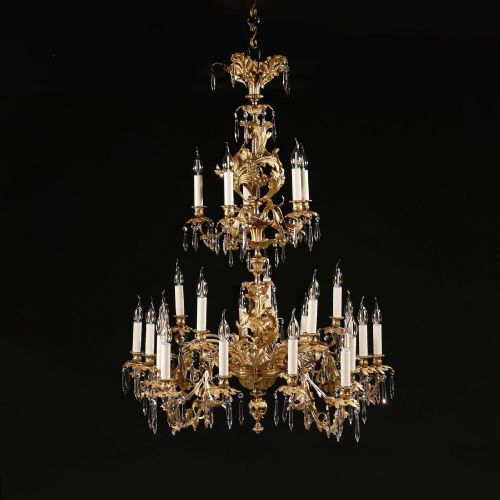
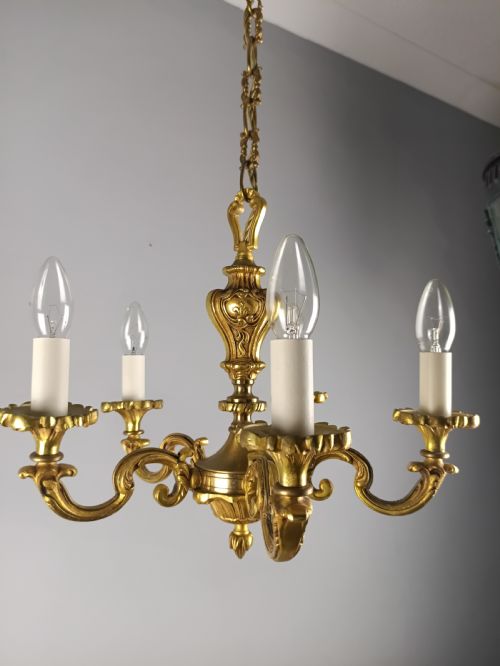
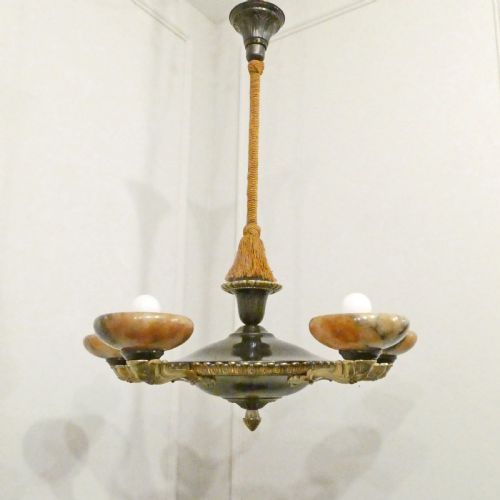
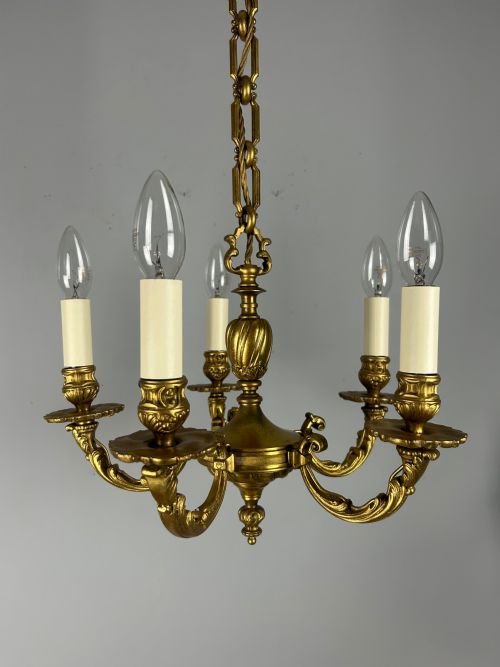
A bronze five light chandelier is a ceiling fixture designed with five illumination points, most frequently taking the form of French ceiling lights dating from the nineteen-thirties, the nineteen-twenties, and the nineteenth century. These pieces appear in styles such as French Rococo, Art Deco, Neoclassical, and Gothic Revival, reflecting distinct decorative movements across European craftsmanship.
The selections available here range from simple patinated metal frames to elaborate designs incorporating crystal drops, alabaster, and silver gilding. Buyers most commonly encounter French gilt bronze and gilded brass interpretations configured with five arms or branches, suiting medium-sized rooms perfectly.
How they were made
The construction of these chandeliers relies on casting bronze, brass, and gilt metal into intricate frames and arms, often finished with hand-applied gilding or patination. Metal components are frequently paired with cut glass and crystal pendants to refract the light emitted from the five branches.
Makers utilised traditional foundry techniques to shape the heavy metal components, integrating structural channels for wiring while preserving decorative motifs such as cherubs, scrolling foliage, and neoclassical details.
The selection spans nineteen-thirty, nineteen-twenty, nineteenth century, and Edwardian periods, utilising materials such as bronze, gilt brass, crystal, and alabaster.
What varies in quality
Quality in these chandeliers is determined by the crispness of the casting and the depth of the metal finish, distinguishing finely chased gilt bronze from simpler stamped metal constructions. Heavier frames with substantial bronze content exhibit superior structural integrity and longevity.
The refinement of the decorative elements, such as hand-cut crystal prisms, original gilding, and well-articulated arm junctions, separates standard production pieces from exceptional examples of period lighting.
The Bronze Five Light Chandelier Glossary
- Bronze
- An alloy consisting primarily of copper, traditionally used for durability and fine detail casting in decorative metalwork. It forms the primary structural and visual base for many antique chandeliers.
- Gilt bronze
- Metal cast in bronze and coated with a thin layer of gold or gold leaf to produce a rich, luminous surface. This finish is frequently found on nineteenth-century French lighting.
- Rococo Revival
- A nineteenth-century design movement drawing inspiration from the asymmetrical scrolls, shell motifs, and natural forms of the eighteenth-century French Rococo style. Chandeliers from this period display exuberant floral and leaf casting.
- Chandelier
- A branched ceiling-mounted lighting fixture designed to hold multiple light sources. In historical pieces, these are configured for candles or electrified bulbs across five or more arms.
Bronze Five Light Chandelier: Frequently Asked Questions
How do I wire an antique chandelier?
Wiring an antique fixture requires inspecting the internal channels within the bronze or brass arms to ensure safe passage for modern electrical cables. Many pieces accommodate standard modern lamp holders while retaining their historical exterior appearance.
It is advisable to consult a qualified electrician experienced with vintage lighting to guarantee that the installation meets current safety standards without compromising the original metal structure.
What rooms suit a five light chandelier?
A five light chandelier provides balanced illumination suited for dining rooms, bedrooms, or entrance halls of moderate dimensions. The spread of five branches distributes light evenly across the space.
Placement should account for the drop height of the fixture and the ceiling clearance of the room to ensure comfortable passage underneath.
How do I clean a gilt bronze chandelier?
Cleaning gilt bronze and brass requires gentle dusting with a soft brush or dry cloth to remove surface particles without disturbing the patination or gold leaf. Water and chemical solvents should be avoided unless recommended by a professional conservator.
Crystal drops and glass components can be carefully washed off the frame using mild soapy water before being dried and reattached.
How do I identify the period of a chandelier?
Dating relies on examining the casting techniques, fastening methods, and stylistic vocabulary exhibited by the bronze or brass frame. Characteristics such as Neoclassical symmetry or Art Deco geometric lines point directly to specific decades.
Comparing the decorative hardware, wiring channels, and metal patination against documented examples helps confirm whether a piece originates from the nineteenth century or the interwar period.