


Empire Style Lighting
Empire style lighting brings grand neoclassical forms, opulent gilt bronze, and cut crystal into rooms that need a serious focal point.
Empire Style Lighting
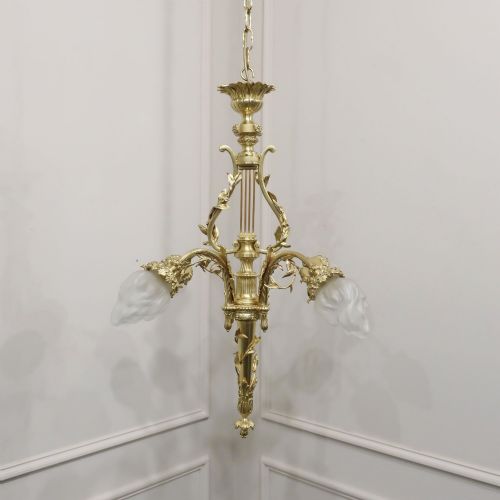
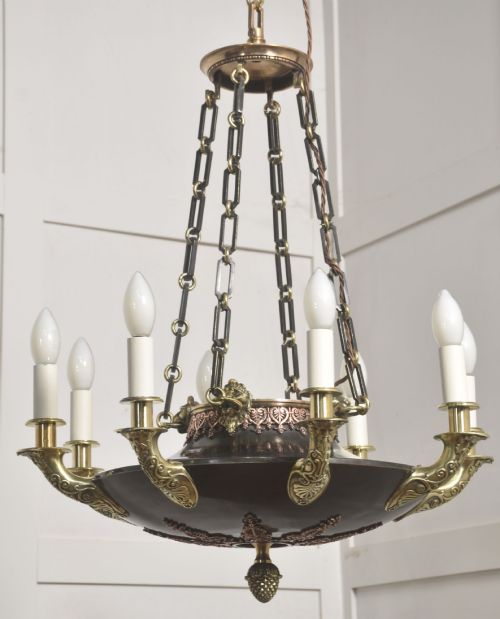
Empire style lighting encompasses grand chandeliers, monumental candelabra, wall lights, and table lamps rooted in 19th-century neoclassical design. Pieces originating from France dominate the selection, bringing classical motifs and formal symmetry to domestic interiors.
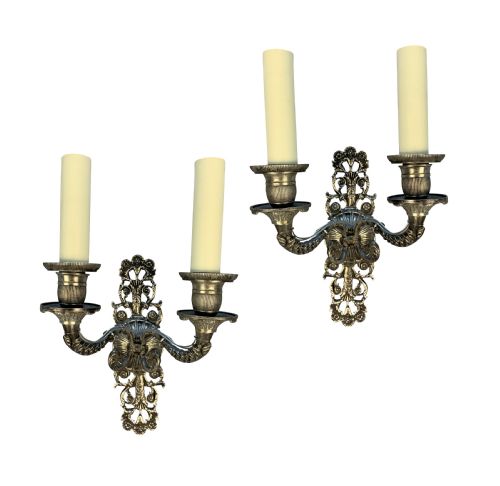
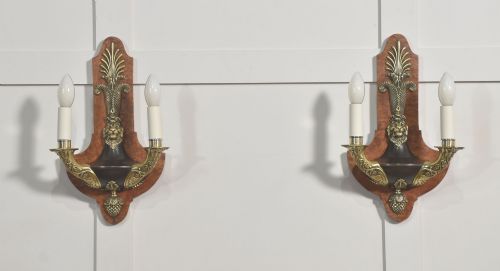
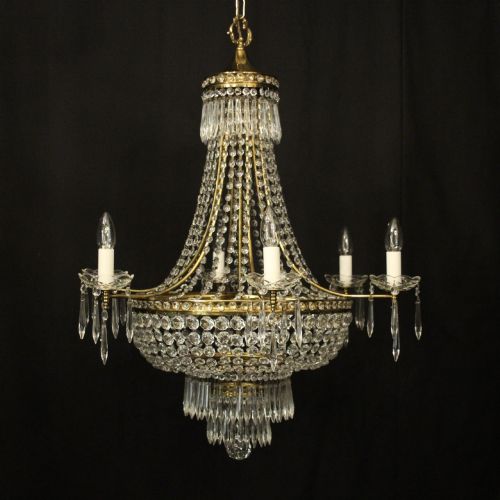
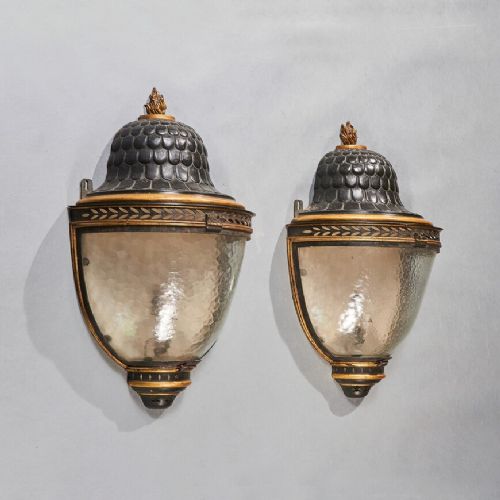
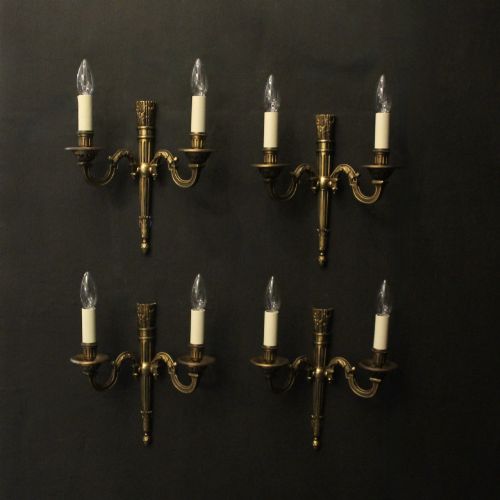
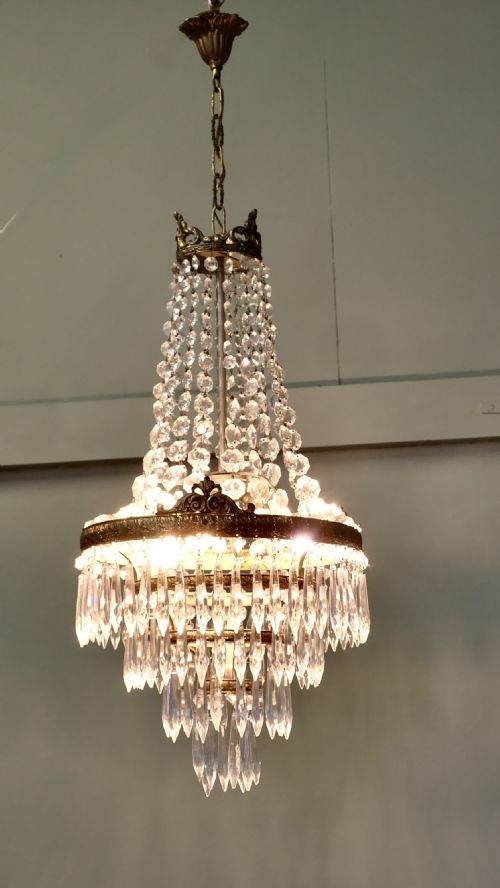
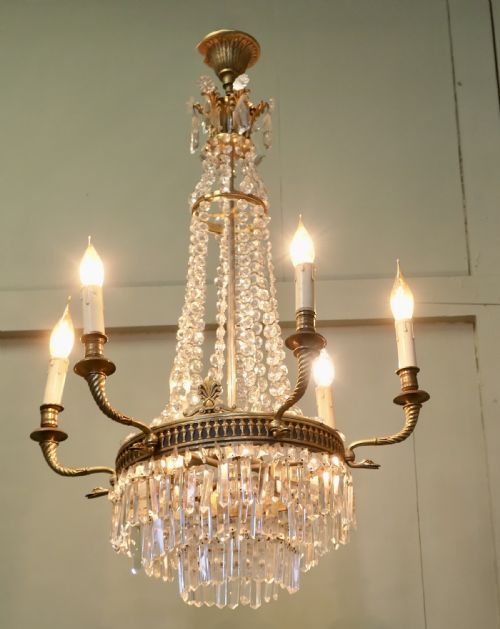
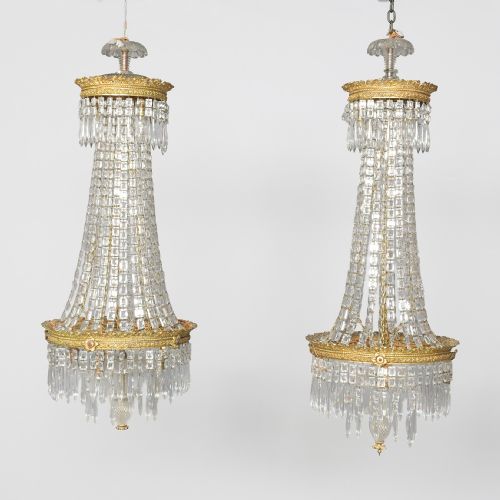
Chandeliers frequently feature tent and waterfall configurations hung with crystal drops, alongside multi-branch metal structures. Wall lights and sconces appear in matched pairs or larger sets, utilising classical urn, torch, and lyre motifs.
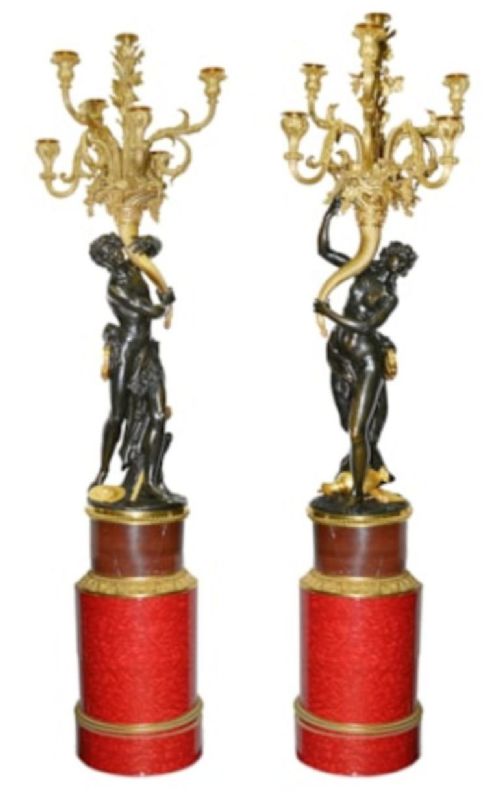
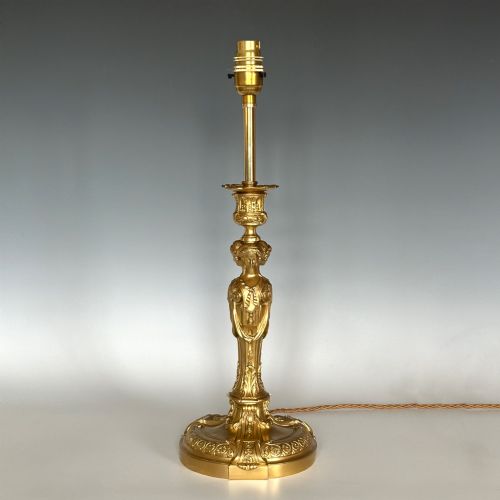
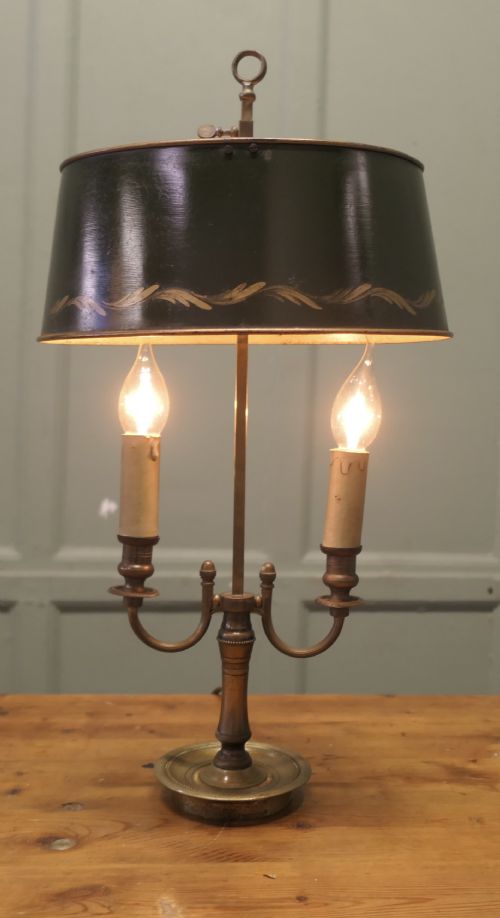
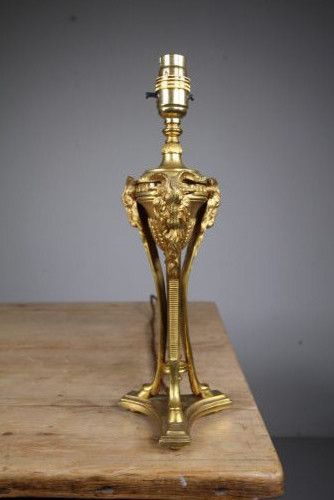
Candelabra and candlesticks utilise heavy cast metal bases, frequently combining bronze and ormolu. Table and floor lamps adapt these classical proportions for domestic illumination, often incorporating marble bases and toleware shades.
Materials and Technique
Gilt bronze, ormolu, and brass form the structural backbone of these pieces, providing a durable base for intricate cast ornamentation. Artisans employed mercury gilding and fire-gilding techniques on bronze to achieve deep, lasting metallic sheens.
Cut glass and crystal components are wired or pinned into cascading tent and waterfall formations on larger chandeliers and wall sconces. Natural materials such as white marble, burr walnut, alabaster, and painted tole peinte add contrasting texture and colour to the metalwork.
The listings feature 19th-century pieces alongside 20th-century revivals, utilising brass, gilt bronze, marble, and cut crystal.
Craftsmanship and Proportion
The crispness of the chased and cast detail separates superior metalwork from softer, more generalized production. Master makers achieved sharp definition in acanthus leaves, classical figures, and drapery that lesser castings lack.
Weight and structural integrity dictate quality in chandeliers and large candelabra. Solid bronze frames and heavy crystal drops create substantial presence, whereas lighter brass or plated substitutes yield a less resonant feel.
Pierre Philippe Thomire·Dugourc
The Empire Style Lighting Glossary
- Ormolu
- A method of applying finely ground high-carat gold to a bronze object using a mercury amalgam. This technique produces a warm, durable metallic finish characteristic of high-end neoclassical metalwork.
- Tole Peinte
- Painted or lacquered sheet metal, frequently used for shades and decorative body elements on bouillotte lamps and wall lanterns. It introduces rich colour contrasts to otherwise metallic compositions.
- Tent and Waterfall
- A chandelier configuration where strings of crystal beads form an upper conical tent shape above a wider cascading tier of drops. This design maximises light refraction.
- Retour d'Egypte
- A design sub-genre heavily influenced by Napoleon's Egyptian campaign, incorporating sphinxes, pharaohs, and lotus motifs into lighting supports. It represents an early 19th-century stylistic turn.
- Applique
- A French term for a wall-mounted light fixture or sconce designed to direct illumination outward into a room. These frequently match the decorative scheme of simultaneous chandelier suites.
Empire Style Lighting: Frequently Asked Questions
How do I clean antique crystal chandeliers?
Gently wipe each crystal drop by hand using a lint-free cloth dampened with a mild solution of warm water and diluted isopropyl alcohol. Avoid harsh chemical sprays that can strip the protective lacquer from underlying metal frames.
Support fragile glass arms carefully while cleaning to prevent stress fractures along the pin joints and mounting points.
Are these old lights safely wired?
Most antique lighting structures require rewiring to meet modern electrical safety standards before installation. Qualified electricians should inspect internal channels and replace degraded vintage wiring.
Original sockets and candle tubes can often be retained or appropriately sleeved to preserve historical appearance while ensuring safe operation.
How do I distinguish Empire style from Regency?
Regency lighting shares deep roots with French Empire design due to the concurrent Napoleonic wars, yet English Regency pieces frequently lean toward restrained classical austerity. French Empire lighting tends to display heavier mythological symbolism and more exuberant use of fire-gilt bronze.
Examining the underlying casting quality and secondary wood or marble elements usually clarifies the geographic origin of the piece.