

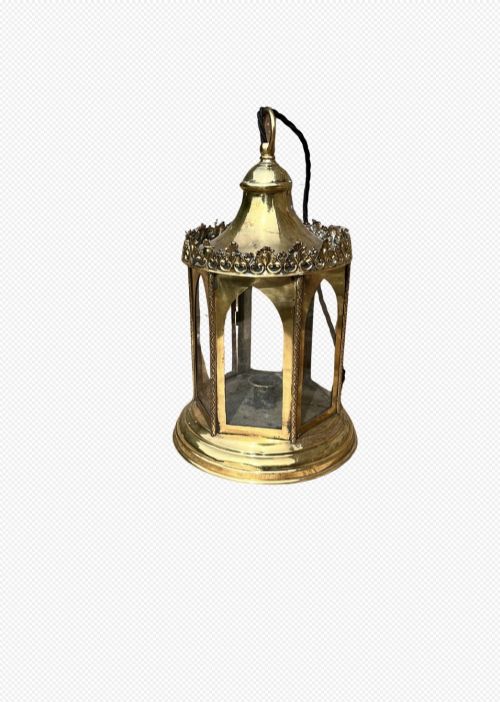
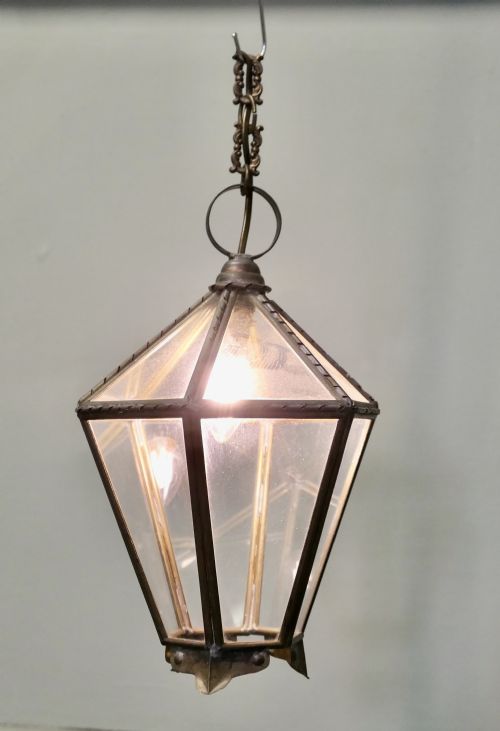


Gothic Revival Hall Lantern
These gothic revival hall lantern pieces bring architectural weight and ecclesiastical character to an entryway.
Gothic Revival Hall Lantern
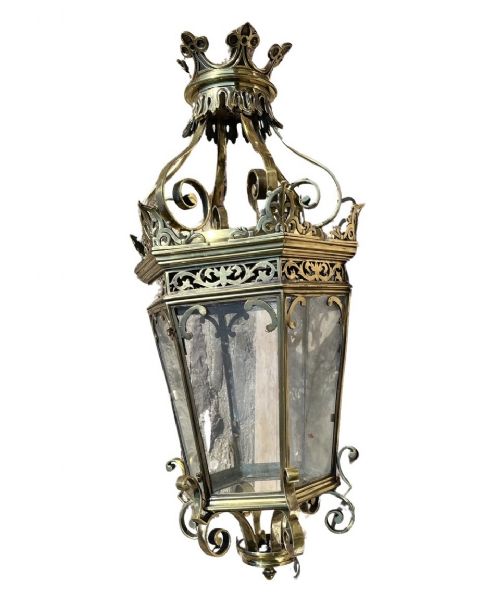
A gothic revival hall lantern combines medieval architectural motifs with functional hallway lighting, often taking hexagonal or square forms designed to hang from ceilings or mount near doorways. These fixtures draw directly upon historical ecclesiastical design, translating stone tracery and pointed arches into metalwork and glass.
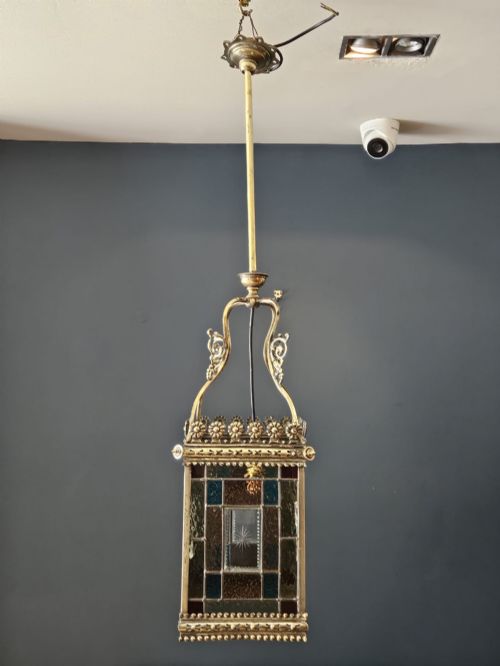
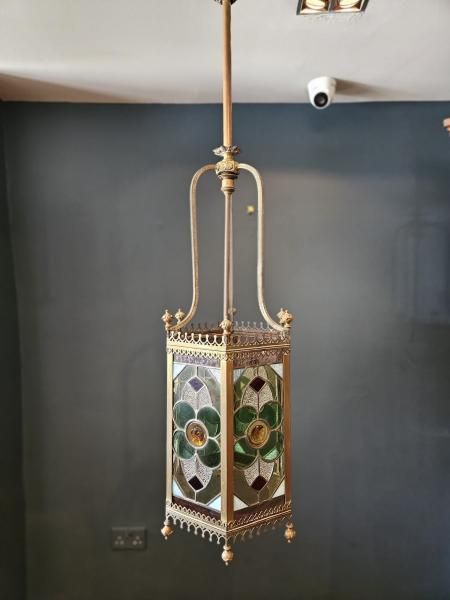
The pieces seen on this page span the Victorian and Edwardian eras, alongside later twentieth-century iterations influenced by earlier aesthetics. Buyers will frequently encounter brass frames paired with leaded or coloured glass panes, echoing the look of stained glass windows.
Many examples incorporate hinged doors for access to the interior light source, reflecting their original purpose of holding candles before conversion to electricity. Scale varies from compact porch lights to grand hexagonal pendants suited to substantial entrance halls.
Materials and Construction Methods
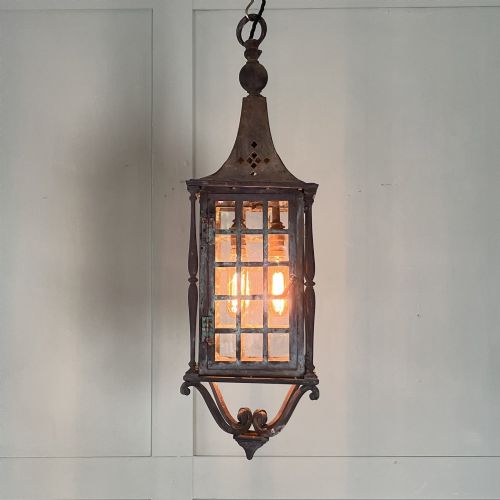
Makers constructed these lanterns using robust metals including brass, bronze, wrought iron, and copper, often shaping them through casting or blacksmithing techniques. The inclusion of blacksmith-made cast iron and heavy brass framing ensures structural integrity for hanging fixtures.
Panels of glass, leaded glass, and dimpled coloured glass are set within the metal armature, diffusing light in patterns reminiscent of Gothic interiors. Gilding and patinated finishes were frequently applied to the metalwork to enhance surface texture and simulate age.
Materials across these listings include brass, bronze, wrought iron, copper, and leaded glass, spanning the Victorian and Edwardian periods.
Distinguishing Quality in Construction
Quality rests in the precision of the metal framing and the complexity of the glasswork, where heavy gauge brass or hand-forged iron outlasts thinner folded sheet metal. The heft of the metal and the security of the joints determine the overall substance of the lantern.
The artistry found in leaded or coloured glass panels separates standard utility lighting from superior decorative examples. Intricate tracery, integrated motifs such as shamrocks or green men, and well-preserved original patination elevate the visual presence of the piece.
The Gothic Revival Hall Lantern Glossary
- Gothic Revival
- An architectural and decorative style drawing inspiration from medieval design, featuring pointed arches, tracery, and robust proportions. This aesthetic influenced buildings and furnishings throughout the nineteenth century.
- Leaded Glass
- Small panes of glass held together by strips of lead cording to form decorative windows or lantern panels. This technique permits intricate geometric and pictorial designs.
- Hexagonal Form
- A six-sided geometric shape commonly utilised in lantern construction to distribute light evenly across an entrance space. This configuration allows for multiple glazed viewing panels.
- Pendant Light
- A hanging light fixture suspended from the ceiling by a chain, cord, or metal rod. These fixtures serve as primary illumination sources in hallways and porches.
- Patina
- The surface appearance acquired by metals and other materials through age, handling, and oxidation. A desirable patination reflects the natural history of the piece.
Gothic Revival Hall Lantern: Frequently Asked Questions
How do I hang a heavy hall lantern?
Hanging a substantial metal and glass lantern requires secure anchorage into ceiling joists using rated fixings capable of supporting the combined weight of the frame and glass.
Consulting a professional electrician ensures the internal wiring safely accommodates the structural load and meets current safety standards.
Can these lanterns be used outdoors?
While many original fixtures served as porch or outside lights, modern placement depends on the weatherproof sealing of the individual piece.
Exposure to moisture can degrade historical metal finishes and leaded joints, so sheltered outdoor positions or indoor hallway placement remain preferable.
How do I clean leaded glass safely?
Cleaning requires a soft, dry cloth or a gentle damp sponge applied carefully around the lead cording to avoid loosening the joints.
Harsh chemical cleaners strip historical patination from the brass or iron frame and should be strictly avoided.
Were these always electric lights?
Early examples were originally designed to burn candles or oil before being adapted for electricity during later periods.
Many surviving pieces show evidence of past candle use, such as internal soot staining or original side doors for flame access.