



Victorian Gothic Chandelier
A victorian gothic chandelier brings heavy architectural brass, wrought iron and ecclesiastical glass straight from nineteenth-century halls into modern rooms.
Victorian Gothic Chandelier
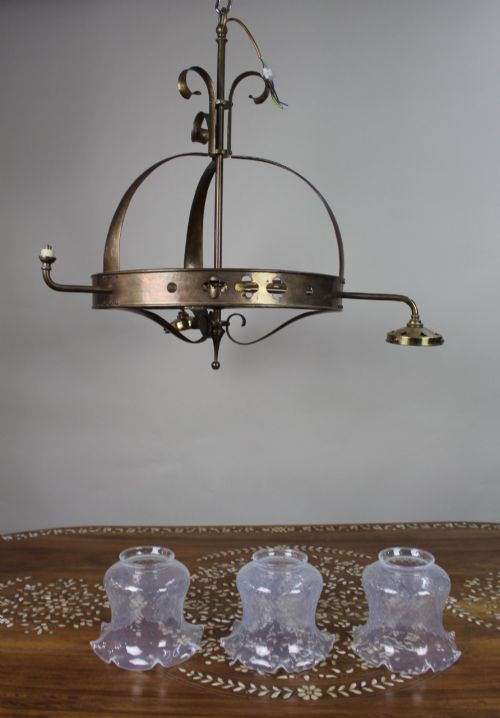
A victorian gothic chandelier represents the nineteenth-century revival of medieval design, taking the form of robust ceiling lights, hall lanterns and pendant fixtures. These heavy fixtures emerge from the Victorian era and the Edwardian period, drawing inspiration from Gothic Revival and Arts and Crafts aesthetics.
Most examples found here utilise sturdy metals such as brass, gilded brass, bronze, and wrought iron, frequently paired with opalescent or leaded glass shades. The forms range from multi-branched candelabra and gasoliers once lit by gas to expansive corona lights designed for high-ceilinged spaces.
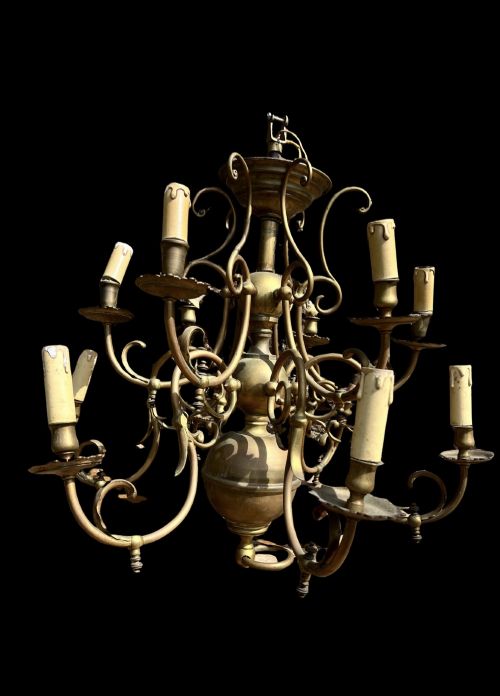
Makers and designers of the period looked to ecclesiastical architecture and historic manors for inspiration, producing hanging lights that feel substantial and ornate. Buyers encounter everything from simple single-bulb hall lanterns to massive multi-light brass chandeliers spanning seven branches or more.
How they were made
Makers constructed these fixtures using cast and wrought brass, bronze, and iron, often applying gilding or silvering to the metal surfaces. These robust metals were shaped to mirror medieval ironwork and stone tracery found in Gothic architecture.
Illumination evolved during the period, resulting in fixtures adapted for candles, gas jets, and later electricity. Glass components, including opalescent shades, globes, and leaded panels, were mouth-blown or assembled by hand to diffuse the heavy light of the era.
Some lanterns retain soot marks inside their glass globes from the exact moment candles flickered in draughty Victorian hallways over a century ago.
What varies in quality
The sophistication of the metal casting and the crispness of the Gothic detailing dictate the distinction between standard production and exceptional work. Heavy gauge cast brass and finely chased bronze elements show a superior hand compared to simpler stamped sheet metal.
The integrity and type of the glass components heavily influence the character of each piece. Intricate leaded glass panels and uniform opalescent shades demonstrate higher craftsmanship than plain or replacement glass globes.
Joseph Wilmotte
The Victorian Gothic Chandelier Glossary
- Gasolier
- A ceiling chandelier designed and piped specifically to burn coal gas for illumination before the widespread adoption of electric lighting. These fixtures often feature multiple downward-pointing arms.
- Corona
- A large, circular crown-like hanging light fixture suspended horizontally by chains, traditionally holding multiple candles or lamps around its perimeter. This form derives directly from medieval church lighting.
- Opalescent glass
- A milky, translucent glass that diffuses light with a soft glow, frequently utilised in shades and globes during the late nineteenth and early twentieth centuries.
- Leaded glass
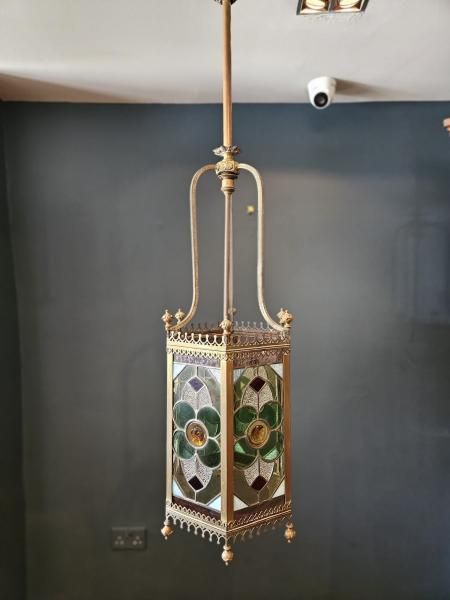
- Small panes of glass held together by lead cames, forming geometric or floral patterns within lanterns and hanging shades.
- Ceiling rose
- An ornamental plaster or metal disc fixed to the ceiling from which a chandelier or pendant light is suspended.
Victorian Gothic Chandelier: Frequently Asked Questions
How do I hang a heavy gothic chandelier?
These substantial brass and iron fixtures require secure anchorage into ceiling joists or structural nogging to support their considerable weight safely. Professional installation by an electrician ensures the mounting hardware bears the load properly.
Most antique fixtures utilise heavy link chains and ceiling roses that conceal the modern wiring while maintaining the historic aesthetic of the suspension.
Can these antique chandeliers use modern bulbs?
Many surviving fixtures have been professionally rewired for standard modern electrical sockets while preserving their original brass or bronze frames. Low-wattage LED bulbs that mimic the warm glow of historic gas or candle lighting work best.
Original gasoliers require conversion to electricity, a process that internal rewiring accomplishes without altering the external appearance of the brass arms.
How do I clean antique brass and glass?
Dusting with a dry, soft cloth prevents the buildup of grime on intricate metal castings and leaded glass panels. Avoid harsh commercial metal polishes that strip away the aged patina accumulated over the decades.
Glass shades and globes can be removed gently and washed in warm soapy water, provided they are dried completely before being reattached to the metal frame.
What is the difference between a hall lantern and a chandelier?
Hall lanterns typically feature enclosed glass panels held within a metal frame, designed originally to protect candles or gas flames from drafts in corridors and entranceways. They hang tightly from single chains or brackets.
Chandeliers project outward with multiple branches or arms designed to hold several light sources at once, creating a wider spread of illumination for principal rooms.