



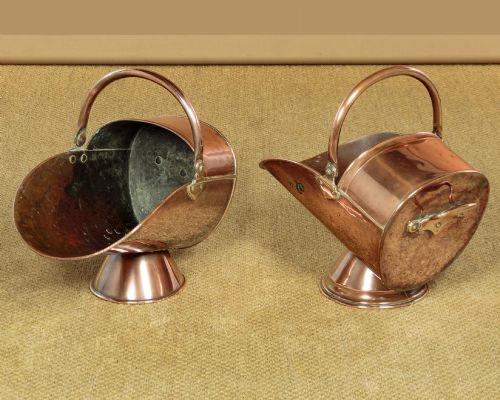

Victorian Brass Log Bin
These Victorian brass log bins bring warmth and texture to a hearth while keeping fuel neatly stored beside the fire.
Victorian Brass Log Bin
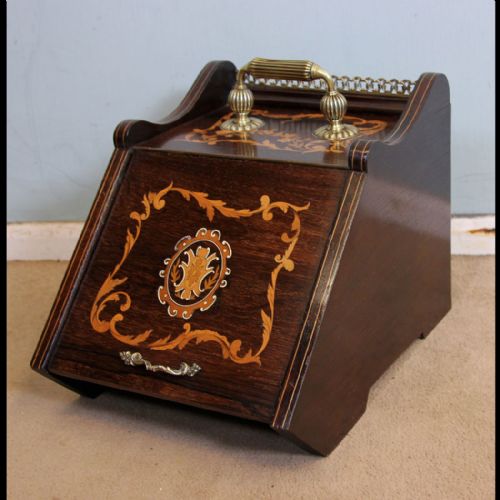
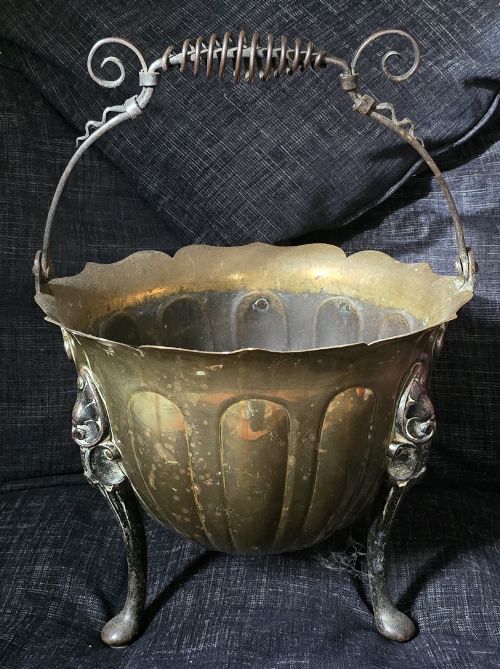
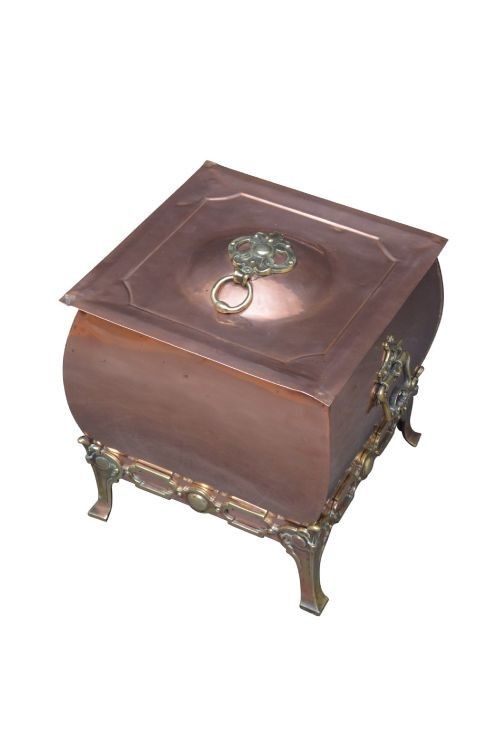
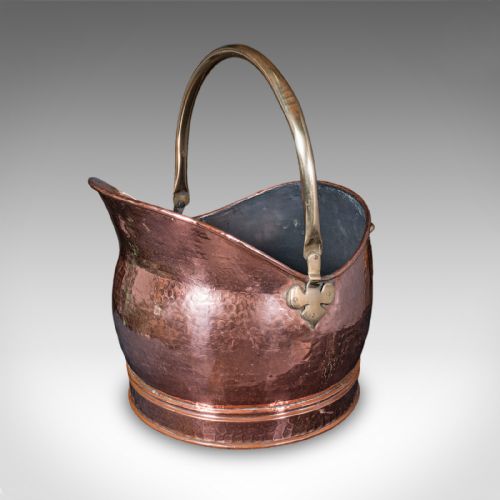
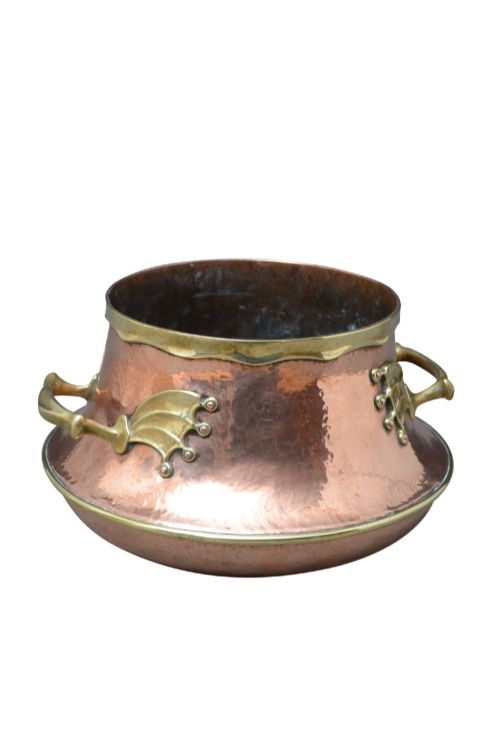
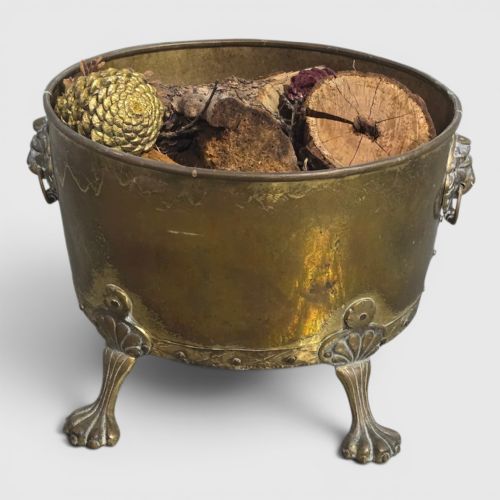
A victorian brass log bin is a heavy metal vessel designed originally to hold coal, peat, or firewood near the hearth, appearing on this page primarily in Victorian, Edwardian, and nineteenth-century forms. The selection includes cylindrical buckets, helmet-shaped scuttles, lidded purdoniums, and dual-purpose jardinieres that double as plant containers.
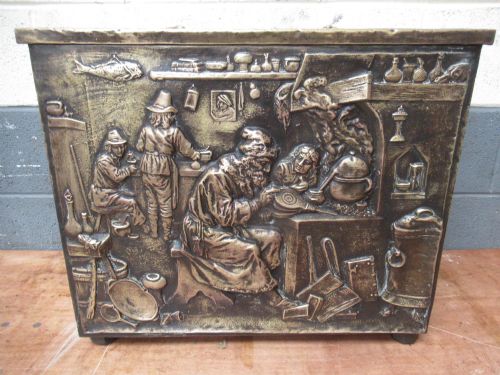
Most examples combine brass bodies with contrasting copper bands, iron carrying handles, or timber elements such as oak, walnut, and mahogany. Makers often applied repoussé embossing, hammered textures, or tavern scenes to the metal surface, reflecting Arts and Crafts, Art Nouveau, and Aesthetic Movement design influences.
How they were made
Metalworkers formed these vessels by spinning, beating, or pressing sheet brass and copper, joining seams with rivets or soldering before attaching cast brass feet, lion head handles, and hinges. Artisans frequently used hand-beating techniques to create textured surfaces, complementing the polished sheet metal with heavier cast mounts.
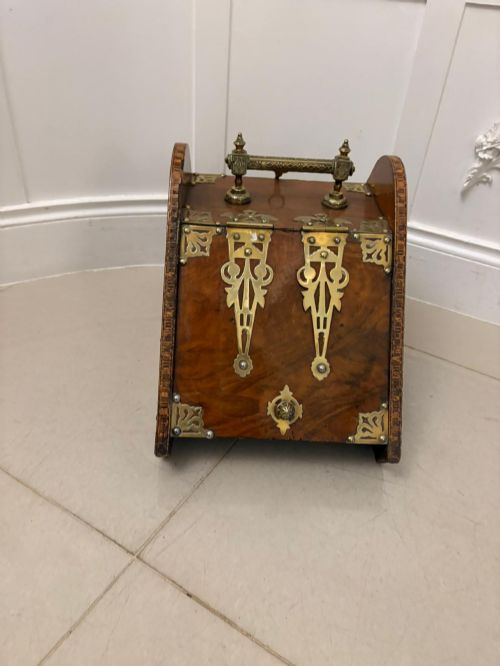
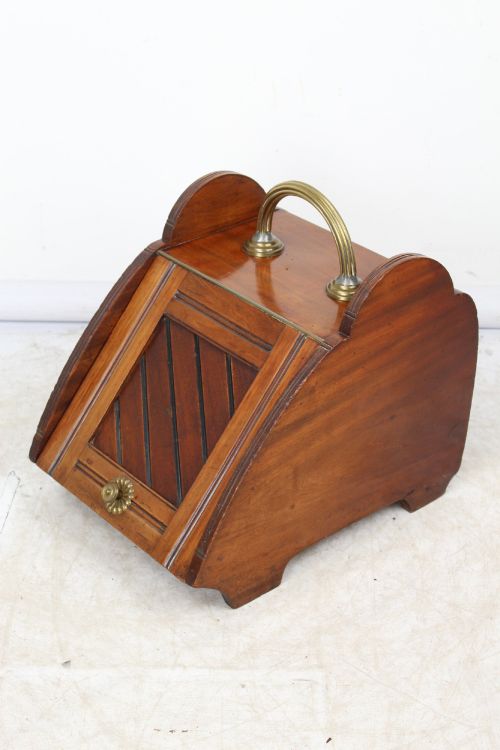
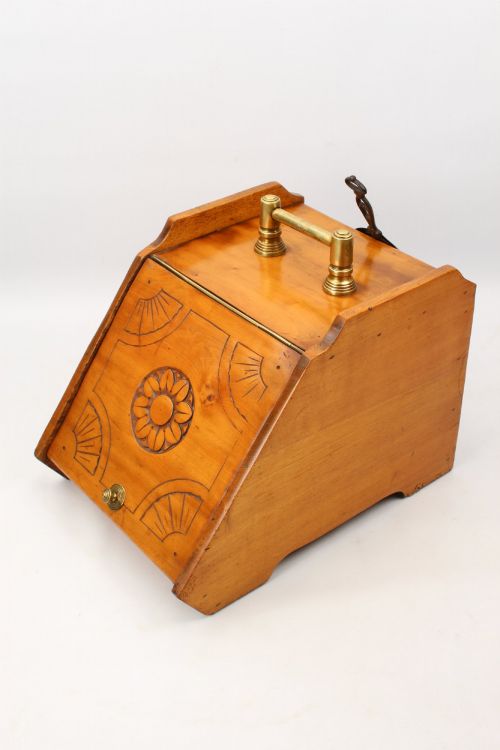
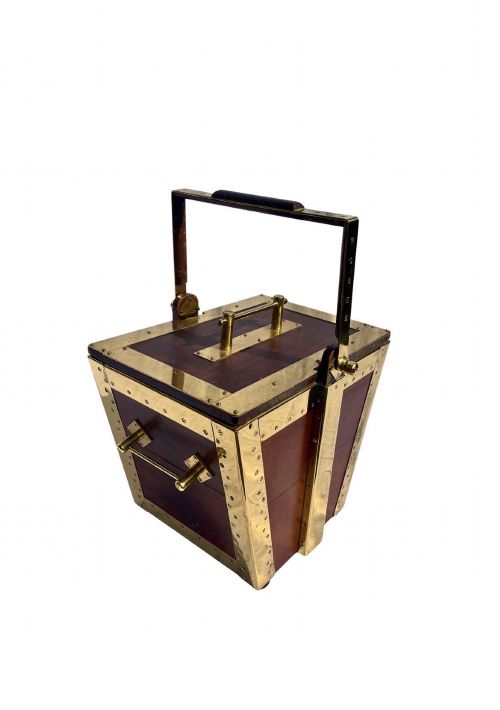
Wooden coal boxes and purdoniums relied on traditional cabinetmaking joints, incorporating carved or inlaid panels of walnut and oak fitted with brass handles, drop fronts, and interior metal liners to hold the fuel.
Victorian Brass Log Bin Retail Price Guide 2026
Typical asking prices for victorian brass log bin among the pieces listed under this phrase on Sellingantiques today, from the lower quarter to the upper quarter. They describe what is for sale here now, not the wider market.
Listings feature pieces spanning the Victorian, Edwardian, and early twentieth-century periods, utilising brass, copper, walnut, and oak.
What varies in quality
The distinction between standard utility items and finer pieces lies in the weight of the metal gauge, the depth of the hand-chased or embossed decoration, and the integrity of the structural joints. Superior examples feature heavy-gauge cast brass handles, solid timber carcases with intact metal liners, and crisp detailing on decorative friezes.
Design ambition also divides the range, separating plain utilitarian cylindrical buckets from elaborate vessels featuring hand-hammered panels, specialised maker signatures, or sophisticated metamorphic mechanisms such as tilting scuttles and drop-front purdoniums.
Henry Loveridge·Petrus Ramus·William Soutter And Sons
The Victorian Brass Log Bin Glossary
- Purdonium
- A specialised lidded coal cabinet, often fitted with a drop front and an internal metal shovel, designed to store fuel tidily beside a fireplace.
- Jardiniere
- An ornamental pot or vessel designed to hold plants, frequently utilised in period interiors or repurposed as a fireside log bin.
- Repoussé
- A metalworking technique where the artisan hammers the design from the reverse side to create a raised pattern on the surface.
- Dinanderie
- A medieval term revived in later periods for objects made of hammered or brass-worked alloy, often associated with decorative vessels.
- Helmet scuttle
- A traditional coal bucket featuring a flared rim and a raised back resembling a classical helmet, equipped with a swinging handle for transport.
Victorian Brass Log Bin: Frequently Asked Questions
How were these bins used originally?
Households used these containers to carry solid fuel from coal cellars or woodstores directly to the living room fireplace. They kept the hearth tidy while ensuring a ready supply of fuel close to the fire.
Many designs included removable metal liners, shovels, or drop-front doors to facilitate clean loading and ash removal.
How do I style a log bin at home?
These bins sit naturally beside open fireplaces and wood-burning stoves, filled with logs, kindling, or rolled blankets. Their reflective brass and copper surfaces introduce warmth and texture to modern and traditional rooms alike.
Alternatively, larger lidded or open vessels serve as striking planters for indoor foliage when positioned away from the hearth.
How can I tell the period of a log bin?
Dating relies on material combinations, construction methods, and stylistic motifs such as Arts and Crafts hand-beating or Art Nouveau botanical lines. Mid-Victorian examples often feature heavy cast brass fittings and simple copper banding, while later pieces show distinct revival or aesthetic movement influences.
Maker stamps on the base or hardware can also pinpoint specific workshops and manufacturing dates.