

Victorian Brass Kerb
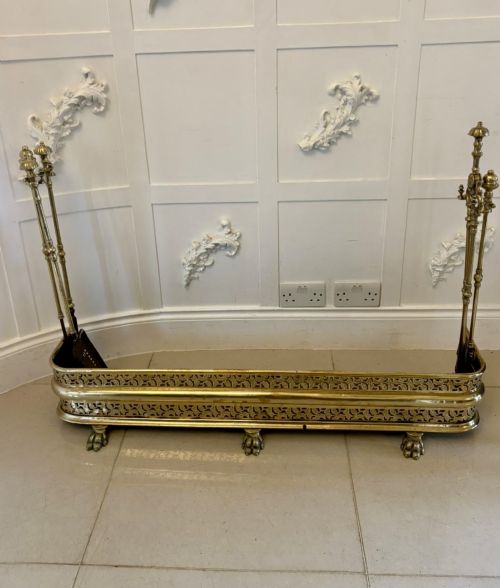
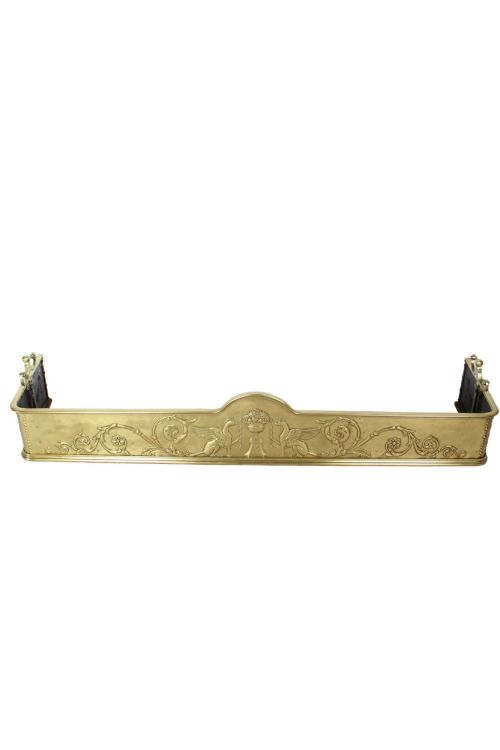
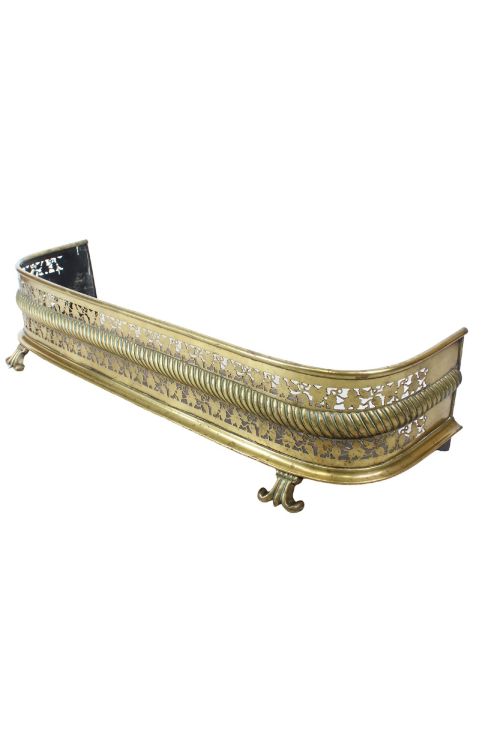
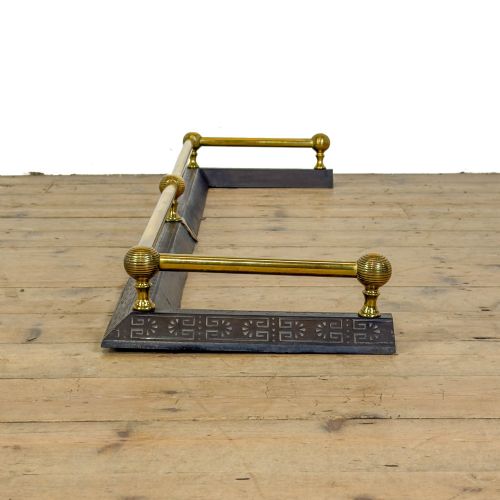
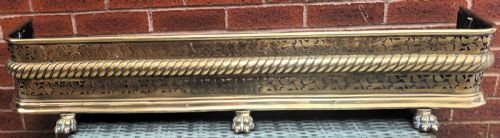
A victorian brass kerb frames an open hearth, bringing nineteenth-century metalwork and period character directly to the fireside.
Victorian Brass Kerb
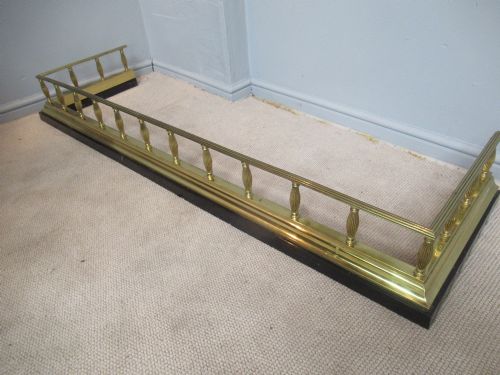
When you search for a victorian brass kerb, you are looking at fireplace fenders and hearth surrounds dating through the nineteenth century and into the Edwardian period. These pieces sit directly on the floor around the hearth to contain ash and protect the room.
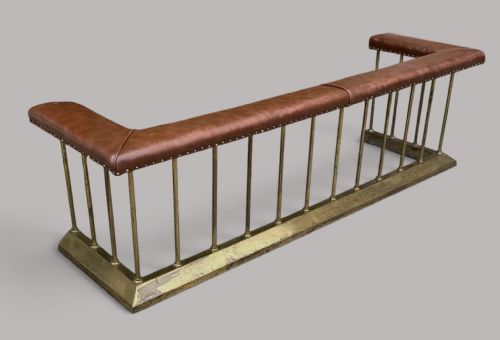
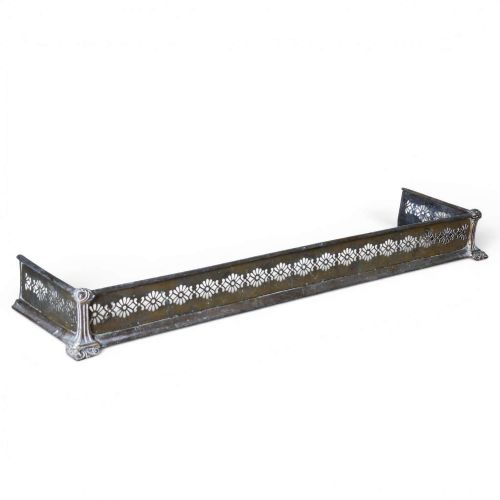
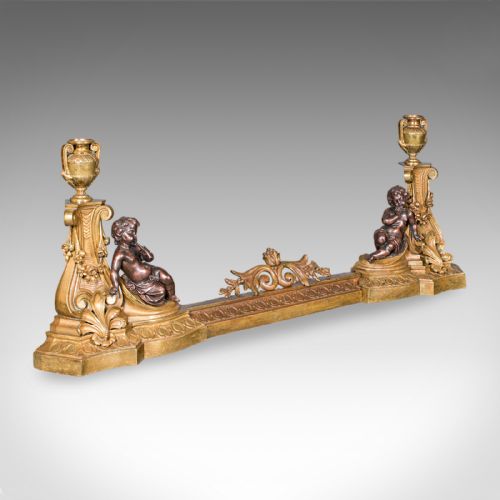
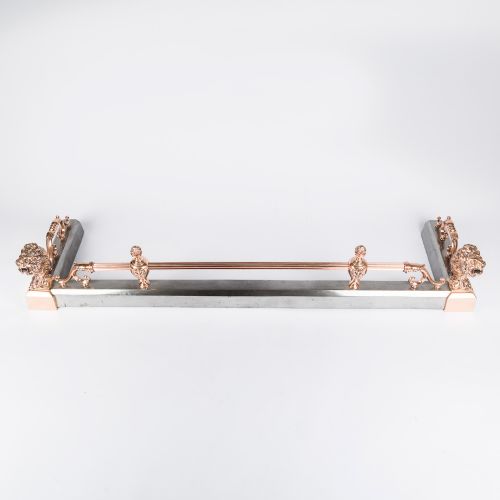
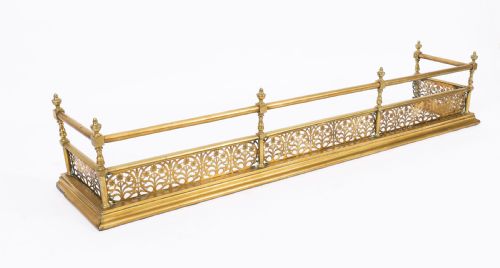
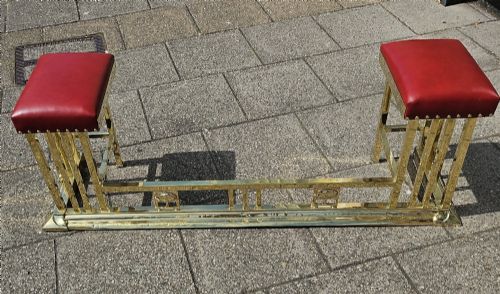
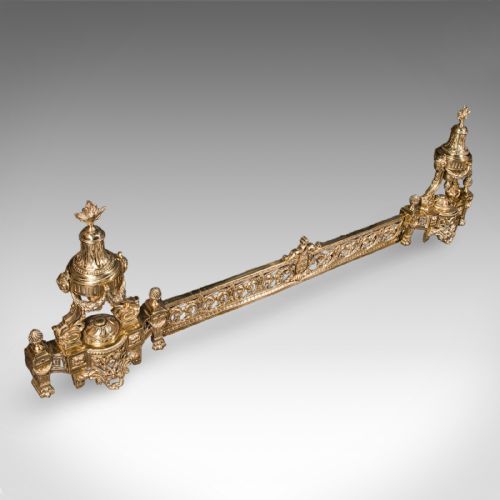
The version you are most likely to meet on this page is the standard brass fire fender, often detailed with pierced patterns, crests, or adjustable frames. Variations include club fenders upholstered in leather, as well as combinations incorporating cast iron, steel, bronze, and copper.
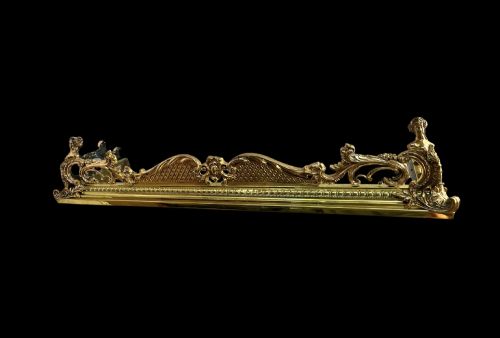
Originating largely from English workshops, these surrounds adopt styles spanning simple nineteenth-century utilitarian forms to ornate Regency, Neoclassical, Louis XV, Arts and Crafts, and Art Nouveau designs.
Metals and construction techniques
Makers constructed these fenders primarily using sheet brass, cast brass, and tubular metal, frequently combining them with iron or steel bases for structural weight and durability. Components were joined via rivets, brazing, and internal iron ties.
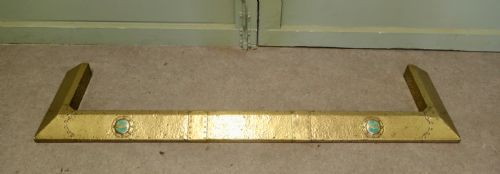
Decorative detailing relied on piercing, embossing, and casting, producing intricate foliage, geometric cut-outs, and applied motifs. Certain models incorporate contrasting materials such as copper accents, green enamel cabochons, polychrome highlights, or mature tan leather seating.
Listings feature periods spanning the Victorian era, the nineteenth century, and Edwardian times, alongside styles from Regency to Art Nouveau.
Distinctions in construction and finish
Quality rests in the gauge of the metal, the crispness of the cast or pierced ornamentation, and the integrity of the original construction rather than subsequent repairs. Heavier brass castings and thick gauge plates distinguish superior examples from lighter production pieces.
The refinement of the decorative motifs - such as hand-chased details on Neoclassical mounts or carefully hammered surfaces on Arts and Crafts and Art Nouveau designs - separates standard hearth furniture from finer decorative works.
The Victorian Brass Kerb Glossary
- Fender
- A low metal guard placed around the hearth to keep burning coals and ash contained. It provides a physical barrier between the fire and the room.
- Kerb
- An alternative term for a hearth fender, marking the boundary of the fireplace. It sits directly on the floor.
- Club Fender
- A specialised hearth surround featuring low upholstered seats on either side. These padded top rails are commonly wrapped in leather.
- Pierced Brass
- Metal sheet perforated with decorative patterns such as lattices, scrolling foliage, or geometric cut-outs. This technique lightens the visual weight of the surround.
- Cabochon
- A polished, unfaceted gemstone or enamel stone set flush into the metalwork. They appear frequently as decorative accents on Arts and Crafts pieces.
Victorian Brass Kerb: Frequently Asked Questions
How do I measure for a fender?
Measure the width and depth of your hearth space directly on the floor where the surround will sit. Account for the clearance needed around your fireplace insert or grate.
Note that some antique models include adjustable mechanisms to help tailor the exact fit between fireplace jambs.
What is a club fender?
A club fender is a hearth surround built with integrated low seats flanking the fire opening. These padded surfaces allowed people to sit close to the warmth.
They typically feature leather upholstery supported by a robust brass frame.
How do I clean antique brass?
Dust the metal gently with a soft, dry cloth to remove surface particles. Avoid harsh chemical polishes that strip away historic patination.
Preserving the aged surface maintains the character developed over more than a century of use.
Are these fenders adjustable?
Certain nineteenth-century models feature sliding corner sections or telescoping rails designed to alter the overall width. This adaptability helped fit surrounds to varying fireplace openings.
Check individual descriptions to see if a specific piece includes an extending mechanism.