
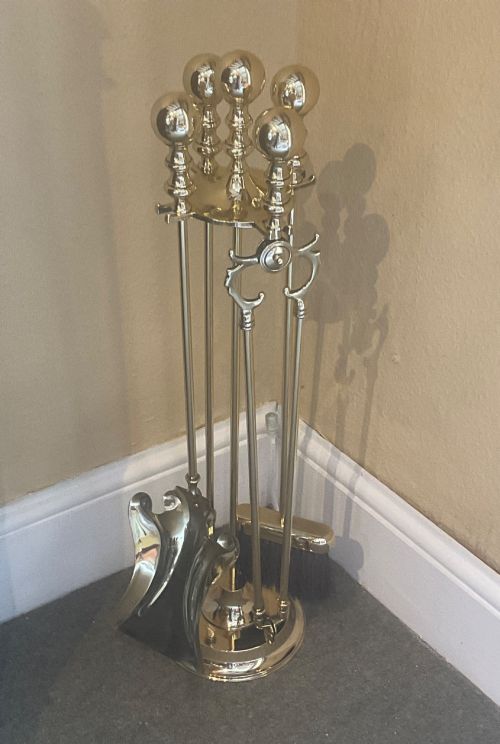
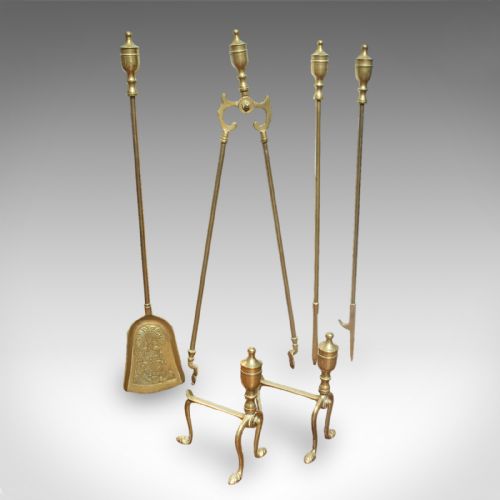


Victorian Brass Hearth Set
A victorian brass hearth set brings working warmth into a room, combining heavy cast metals with bright polished surfaces.

Victorian Brass Hearth Set
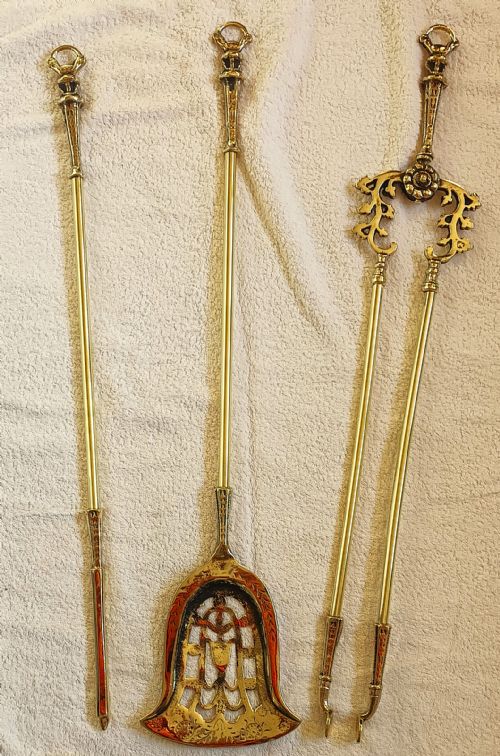
A victorian brass hearth set comprises essential fireplace tools such as pokers, shovels, and tongs, frequently accompanied by fire dogs or fenders. These assemblies organise the domestic hearth with coordinated metalwork designed for daily use.
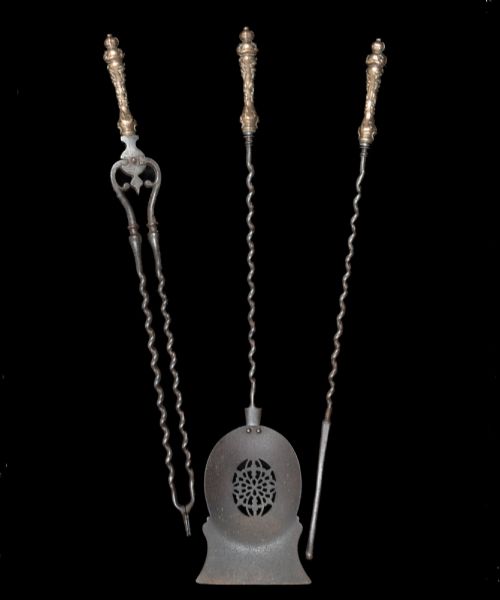
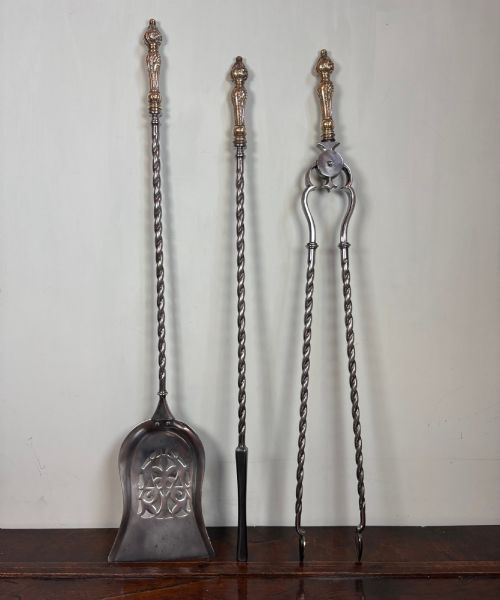
The versions most commonly met on this page date from the nineteenth century, spanning Victorian and Edwardian periods. Many sets pair bright brass handles and mounts with durable steel shafts intended for handling coal and ash.
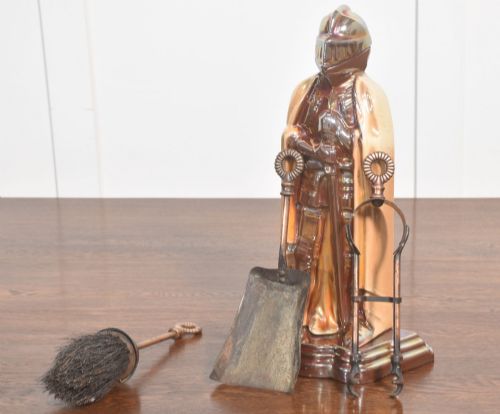
Beyond standard three-piece tool suites, related items include fender sets and companion stands. Collectors also encounter distinct stylistic variants influenced by Gothic Revival, Rococo, and Arts and Crafts movements.

Materials and Construction Methods
Makers utilised a combination of brass, steel, and iron to construct these hearth suites. Brass provided a decorative, non-corrosive finish for handles and ornamental mounts, while steel and iron formed the robust working shafts and blades required near open flames.
Manufacturing techniques relied heavily on casting and forging. Handles often display detailed cast brass ornamentation, including rope twist patterns, while shovels and pokers combine forged steel components with secure mechanical joints.
Victorian Brass Hearth Set Retail Price Guide 2026
Typical asking prices for victorian brass hearth set among the pieces listed under this phrase on Sellingantiques today, from the lower quarter to the upper quarter. They describe what is for sale here now, not the wider market.
Listings incorporate items spanning the Victorian, Edwardian, and Arts and Crafts periods, utilising brass, steel, iron, and copper.
Distinctions in Quality and Make
Substantial weight and gauge of metal separate superior companions from lighter utilitarian alternatives. Heavier brass castings and thick steel shafts endure prolonged exposure to heat without bending or loosening at the joints.
Attention to detail in the handles and mounts defines the upper tier of production. Fine examples exhibit crisp casting definition, carefully turned rope twist motifs, and cohesive design across every individual tool in the suite.
The Victorian Brass Hearth Set Glossary
- Companion set
- A matched group of fireplace tools, usually comprising a shovel, poker, and tongs, often displayed together on a dedicated stand.
- Fire irons
- The collective term for metal implements used to tend a coal or wood fire, including pokers, tongs, and shovels.
- Fire dogs
- Andirons placed in pairs on the hearth to support logs above the floor of the fireplace, allowing air to circulate underneath.
- Rope twist
- A decorative spiral pattern resembling twisted cord, frequently cast into the brass handles of nineteenth-century fire tools.
- Fender
- A low metal guard placed around the hearth opening to contain stray embers and protect the surrounding floor.
Victorian Brass Hearth Set: Frequently Asked Questions
What tools come in a standard set?
A standard nineteenth-century arrangement typically includes a shovel for clearing ash, a poker for adjusting fuel, and tongs for moving burning coals.
Many configurations also incorporate associated items such as fire dogs, fenders, or a coordinated stand to keep the implements upright by the fireplace.
How do I date a brass hearth set?
Dating relies upon stylistic markers, construction methods, and prevailing design movements recorded in the metalwork. Pieces from the Victorian era often show Gothic Revival or Rococo influences.
Later Edwardian and early twentieth-century examples frequently adopt cleaner Arts and Crafts lines while retaining traditional brass and steel combinations.
Are these tools suitable for daily fires?
The original steel and iron shafts are forged for actual use with coal and wood. Heavy construction allows them to handle active fires safely.
Care should be taken with polished brass surfaces to prevent tarnishing from extreme heat or abrasive cleaning agents over time.
What is the difference between brass and steel parts?
Brass was chosen primarily for handles, decorative mounts, and fenders to provide a bright, reflective appearance beside the hearth. Steel and iron were utilised for the working ends and shafts because of their strength under high temperatures.