
Victorian Brass Hall Stand
When you search for a victorian brass hall stand, you find practical hallway furniture built to hold wet umbrellas and walking sticks.
Victorian Brass Hall Stand
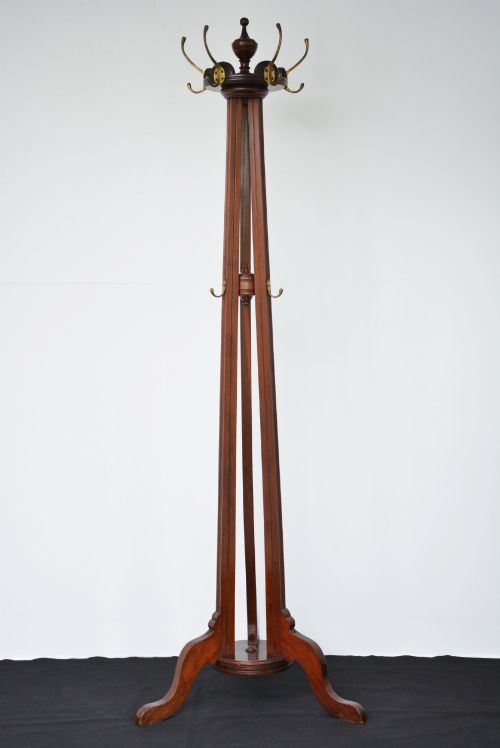
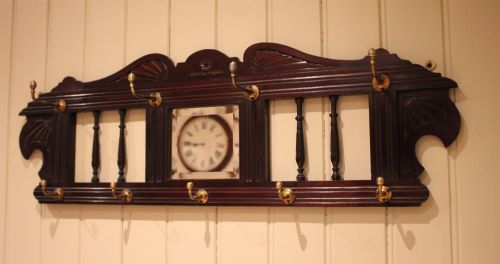
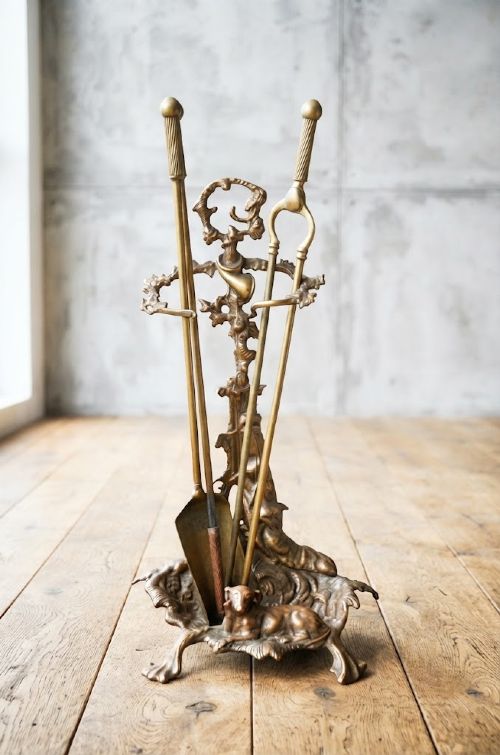
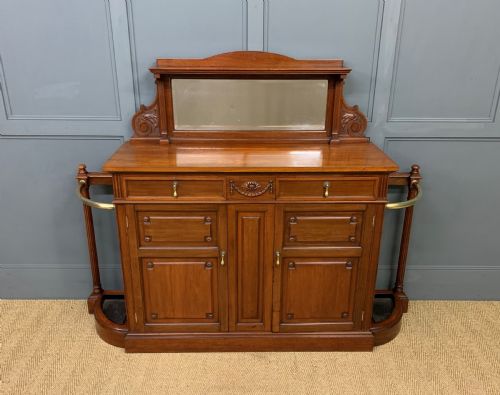
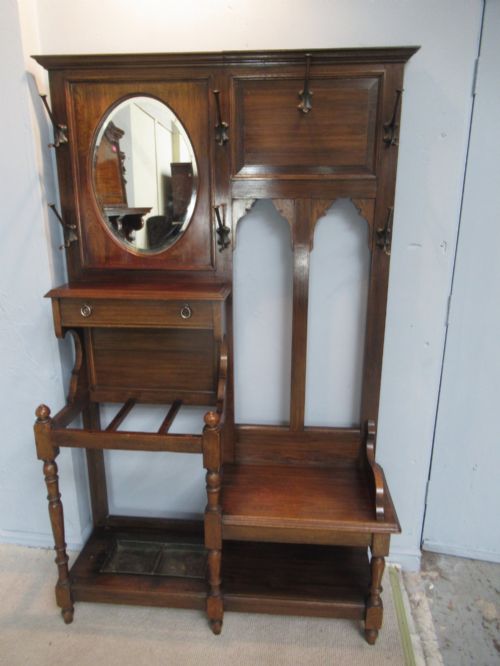
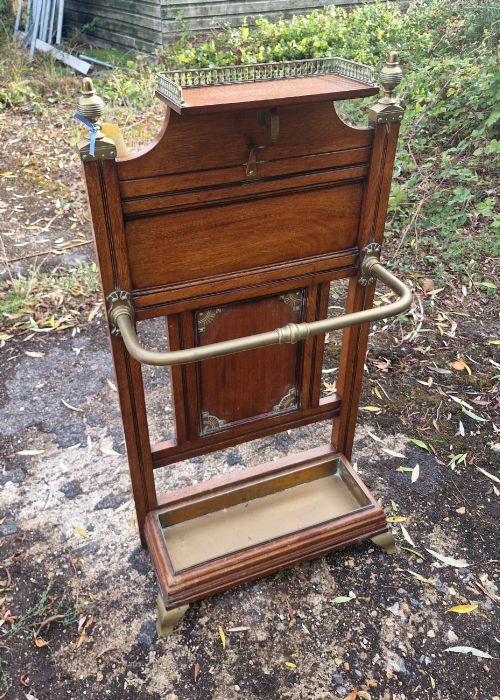
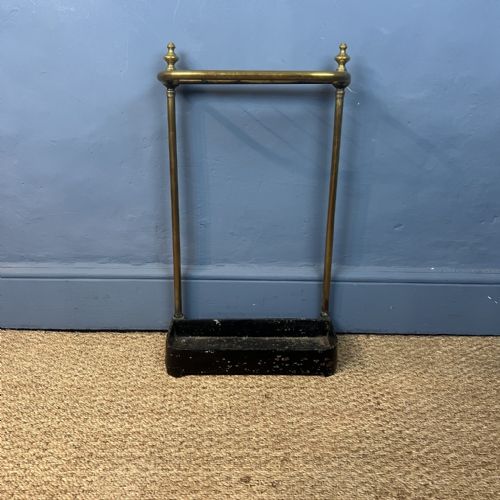
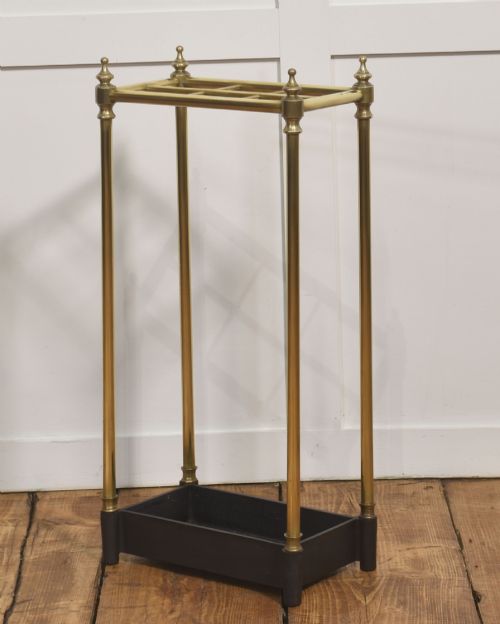
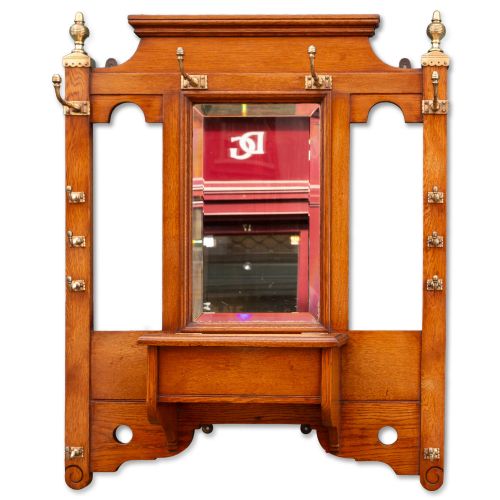
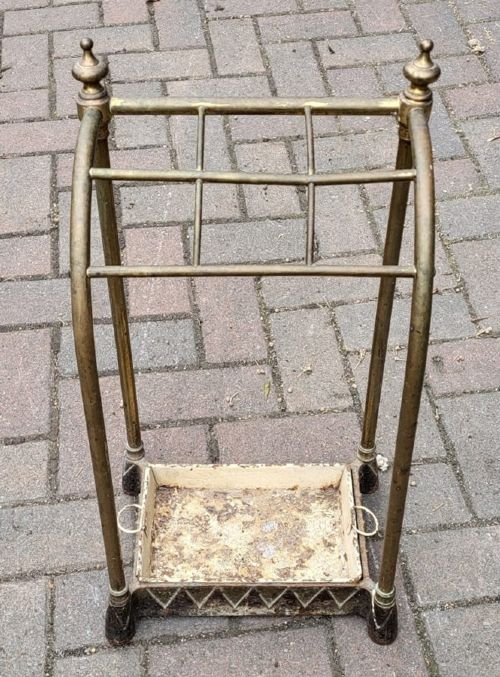
A victorian brass hall stand typically combines a metal or wooden frame with brass fixtures, designed to keep entranceways tidy for coats, hats, and walking canes. These pieces range from simple tubular brass umbrella holders to substantial oak and mahogany furniture featuring integrated coat hooks and drip trays.
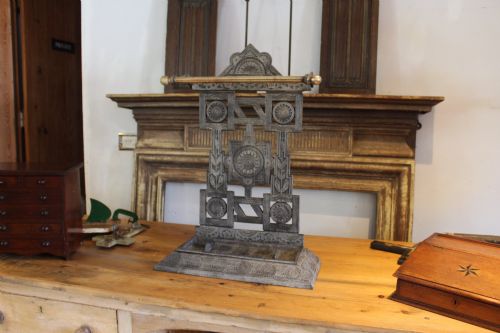
The selections available here reflect both compact demi-lune designs intended for narrow hallways and larger multi-purpose pieces incorporating timber framework. Dating predominantly from the nineteenth century into the Edwardian era, these stands appear in brass, cast iron, and coopered oak with visible metal mounts.
How they were made
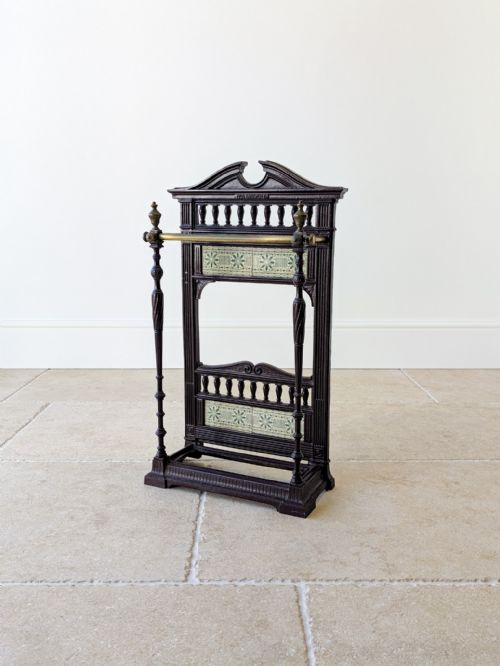
Maker workshops utilised durable combinations of cast brass, heavy iron bases, and solid hardwoods like oak, walnut, and mahogany. Metal components were often cast or tubular, joined securely to wooden panels or held together with structural rivets and screws.
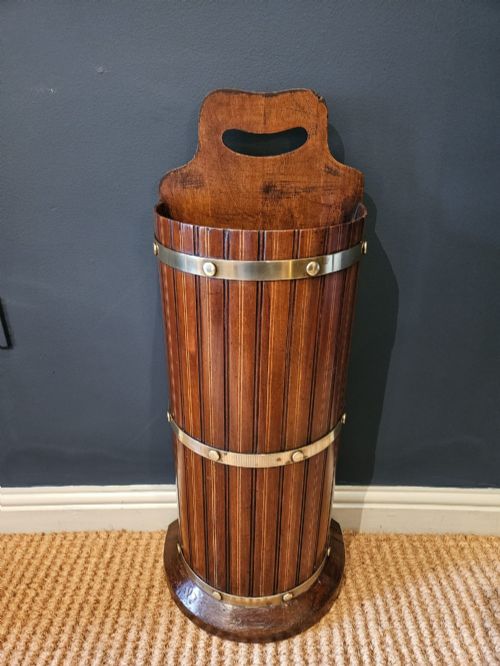
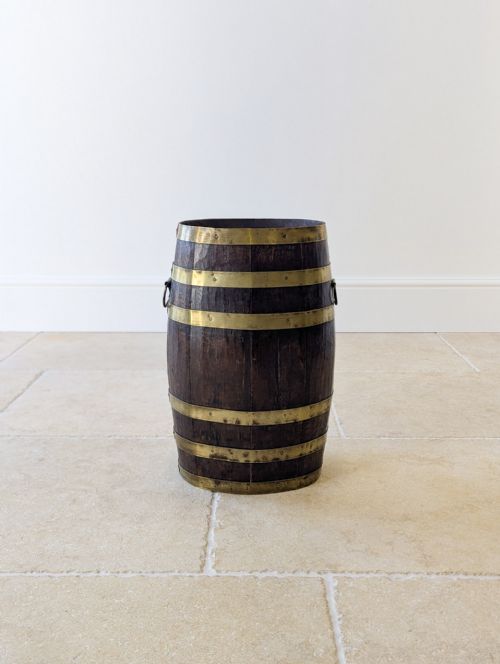
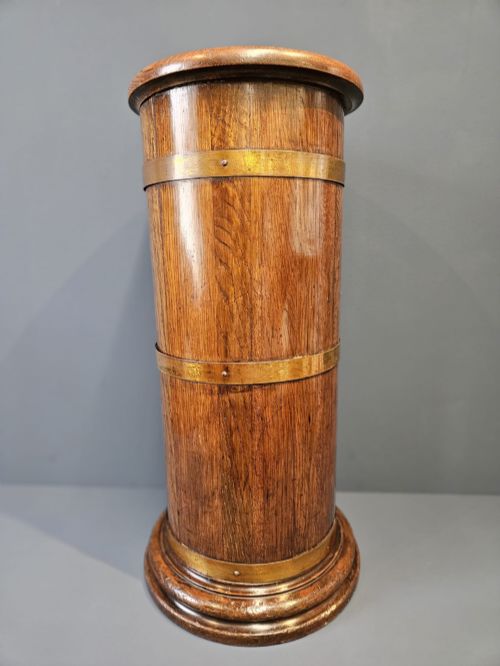
Wooden sections relied on traditional joinery, while coopered umbrella barrels used tight stave construction bound with brass bands. Drip trays in sheet brass or cast metal were fitted underneath to catch moisture from wet sticks and umbrellas.
Listings feature brass combined with oak, mahogany, cast iron, and glass across Victorian and Edwardian periods.
What varies in quality
Quality depends upon the weight of the metal castings and the structural integrity of the frame. Heavy, thick-gauge brass and substantial hardwood timber distinguish better examples from lighter, purely decorative pieces.
The presence of original fitted components, such as matching metal drip trays and marked maker elements, alters the standing of an individual piece. Finer items display clean casting details and robust joints that withstand daily use.
Coalbrookdale·Thomas Jeckyll·Jas. Shoolbred
The Victorian Brass Hall Stand Glossary
- Demi-lune
- Half-moon shape. This semicircular profile allows the stand to sit flush against an entrance wall.
- Coopered
- Made with wooden staves joined side by side. Metal bands hold these curved slats together around a central cavity.
- Drip tray
- A removable metal basin placed at the base. It catches water running off wet umbrellas and walking sticks.
- Stick loop
- A metal divider framework. This upper grid keeps individual walking canes and umbrellas separated upright.
Victorian Brass Hall Stand: Frequently Asked Questions
Where should a hall stand go?
These stands belong in an entrance hall or porch where guests remove outer garments. Their narrow profiles let them fit against hallway walls without blocking doorways.
Position them on hard flooring rather than thick carpet so that metal feet and drip trays rest on a stable surface.
How do you clean brass?
Maintenance requires a soft cloth to remove dust from metal surfaces. Harsh chemical cleaners can strip away historical surface tones.
Keep the brass dry to prevent spotting, particularly around the lower drip trays where moisture collects.
Can they hold heavy walking sticks?
Solid brass and cast iron frames support heavy wooden canes and walking sticks easily. The heavy bases prevent tipping when items are placed inside.
Distribute heavier items evenly across the stick loops to maintain balance.
What woods were used?
Cabinetmakers built the wooden frames using oak, walnut, and mahogany. Golden oak and dark walnut appear frequently alongside coopered pine or oak barrels.
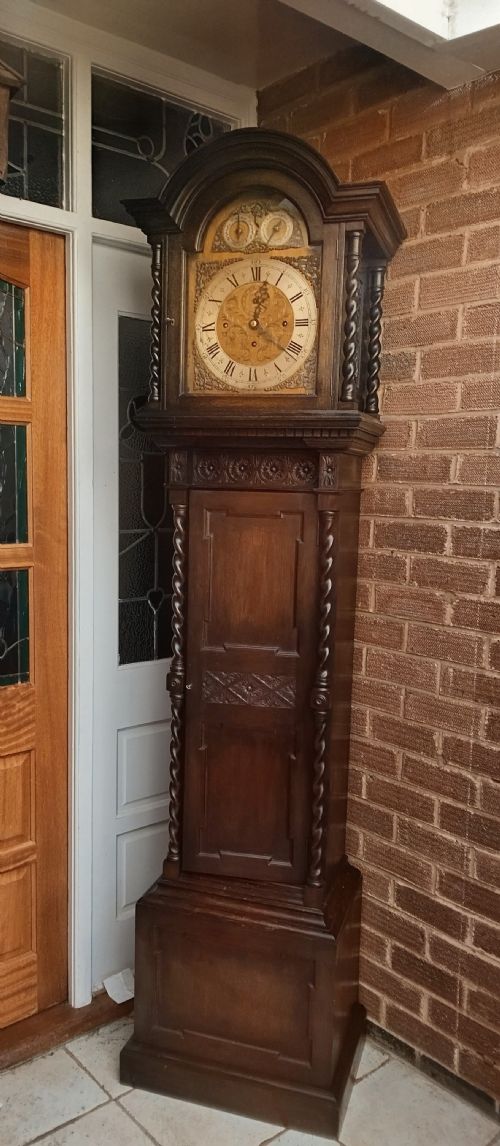
These timbers matched other entrance furniture such as hall cupboards and longcase clocks.