


Brass Hall Stick Holder
These brass hall stick holder pieces organise umbrellas and canes with period weight, uniting functional cast metal with domestic hallway design.
Brass Hall Stick Holder
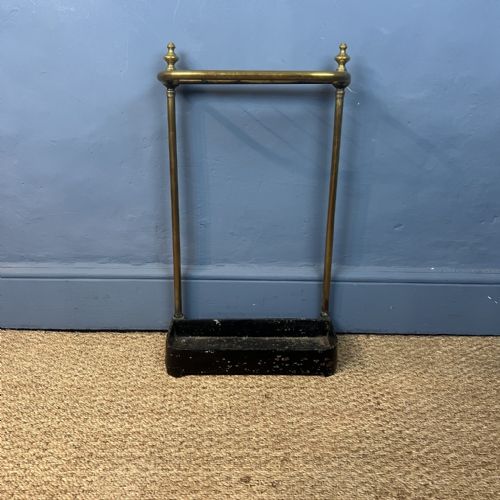
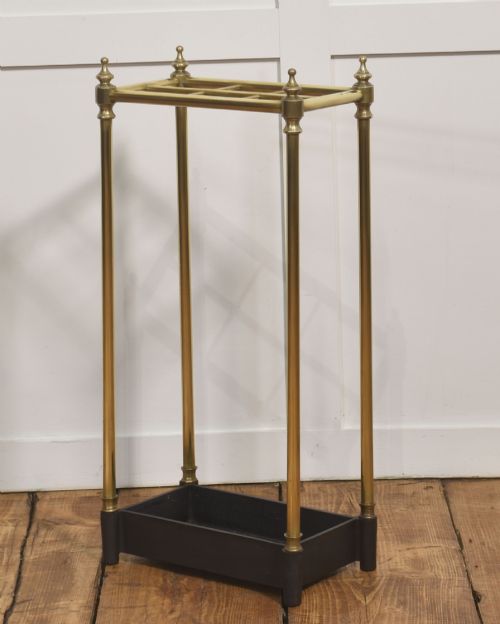
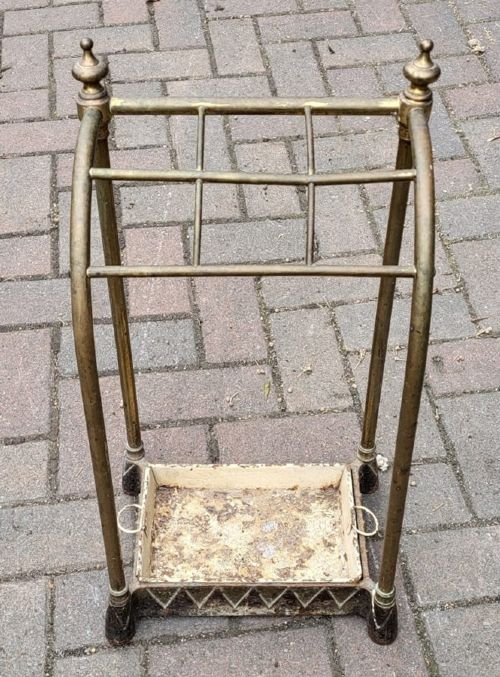
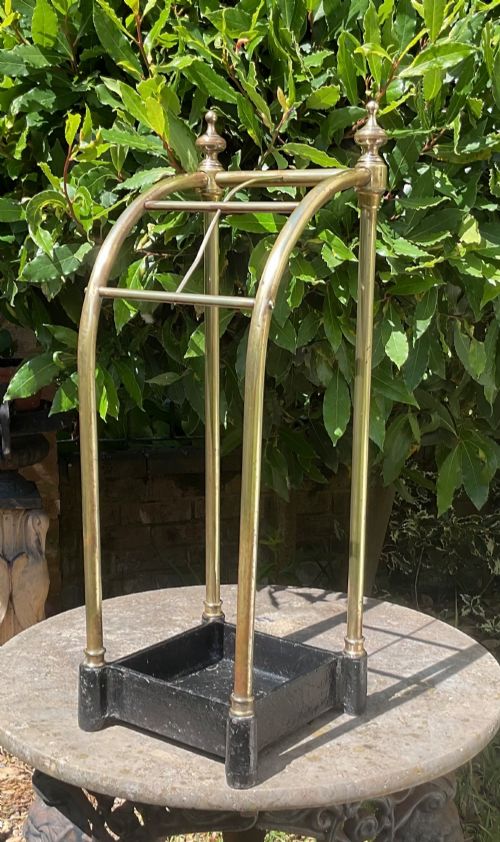
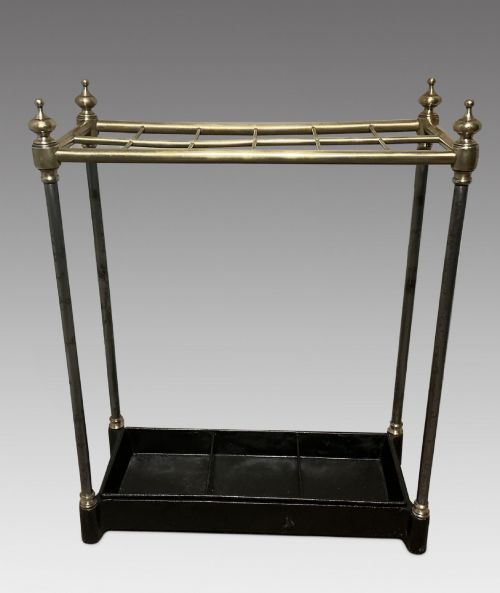
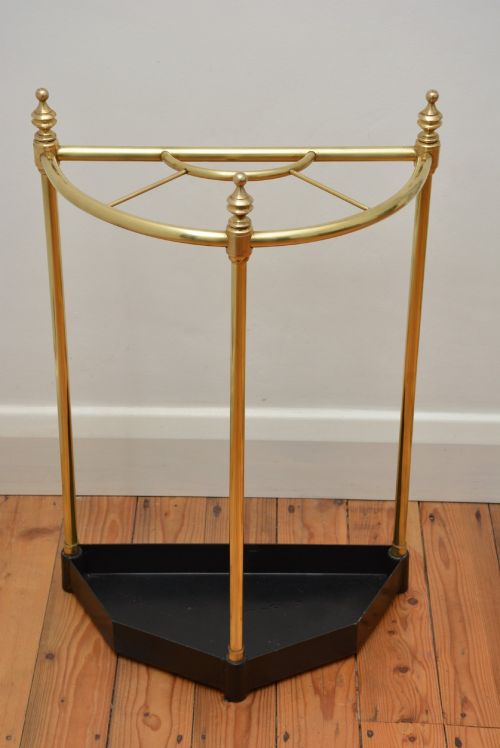
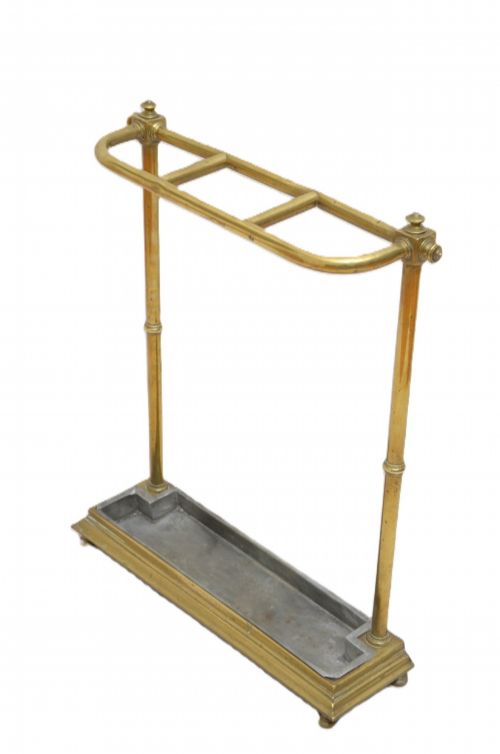
A brass hall stick holder is a hallway receptacle designed to store walking sticks, canes and wet umbrellas cleanly within domestic entryways. When you examine these listings, you encounter robust Victorian and Edwardian examples formed primarily from heavy brass, often paired with stable cast iron bases.
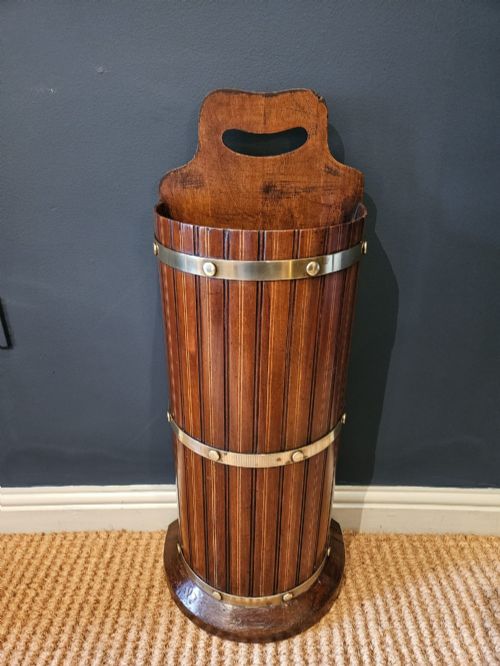
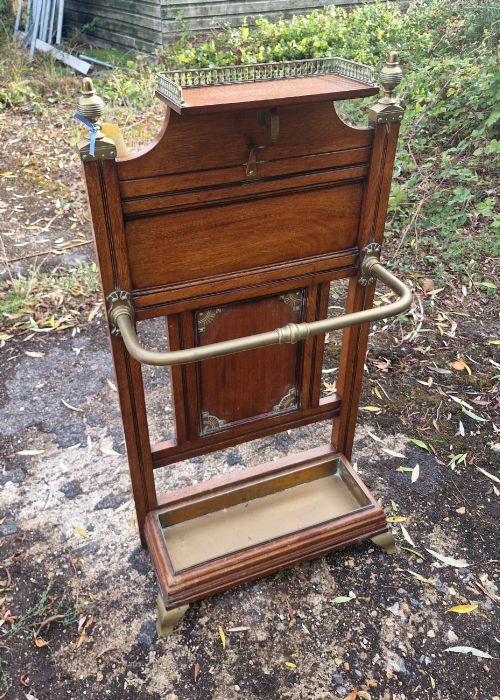
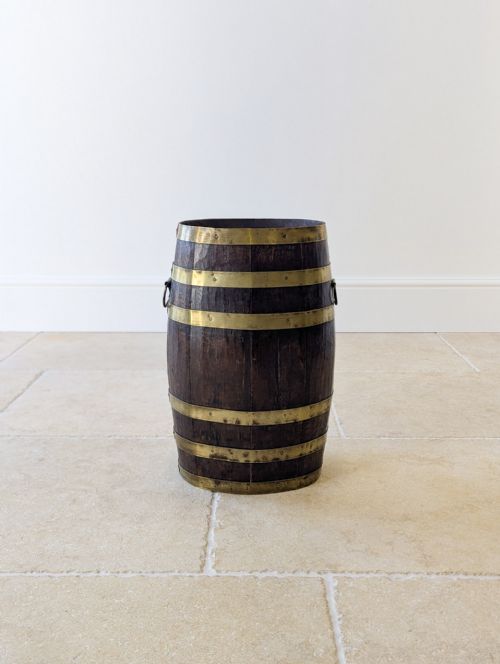
The dominant forms span cylindrical umbrella stands, half-moon demi-lune shapes designed to sit flat against hallway walls, and coopered timber barrels bound in brass rings. Many pieces incorporate original metal drip trays at the base to catch moisture from wet weather gear.
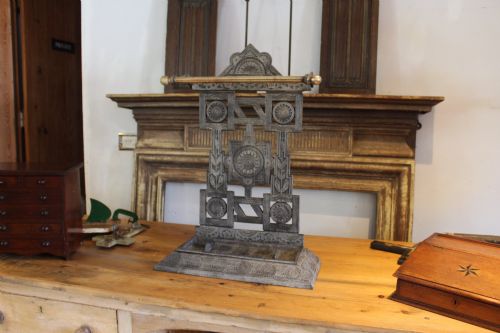
Origins heavily reflect nineteenth and early twentieth century British domestic life, drawing on styles from the Aesthetic Movement, Arts and Crafts, and Gothic Revival. These variations allow the holder to function as both a practical hallway utility and an expression of period interior taste.
Materials and construction methods
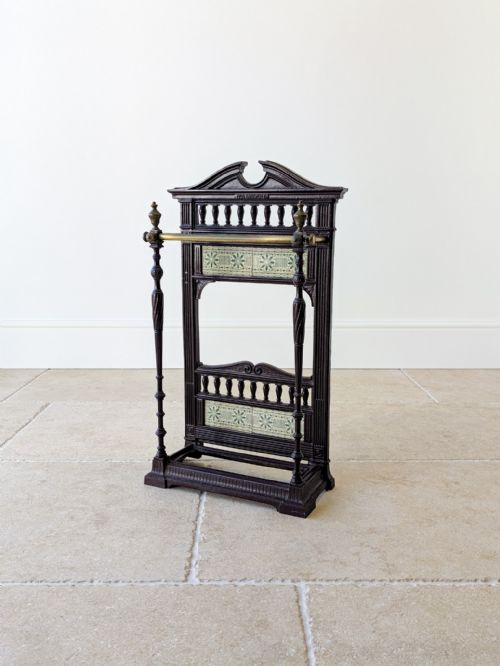
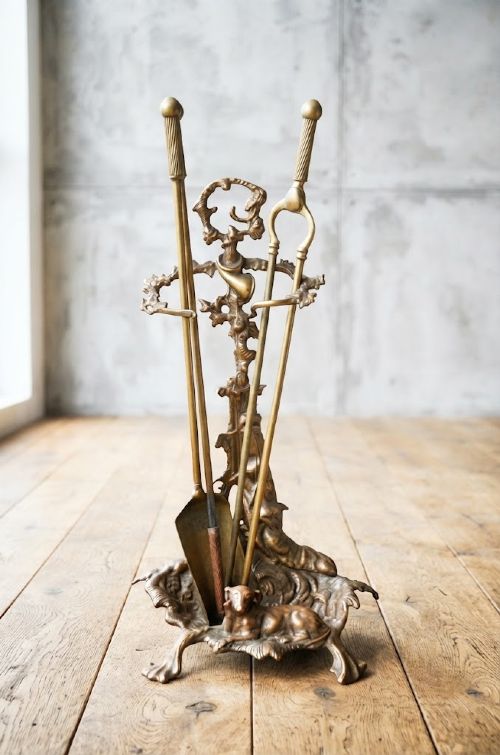
Makers utilised cast brass, sheet brass and cast iron to build rigid frameworks capable of supporting heavy walking canes and damp umbrellas. Pierced sheet metal panels, cast decorative motifs, and sturdy tubular brass rails form the structural integrity of these hallway pieces.
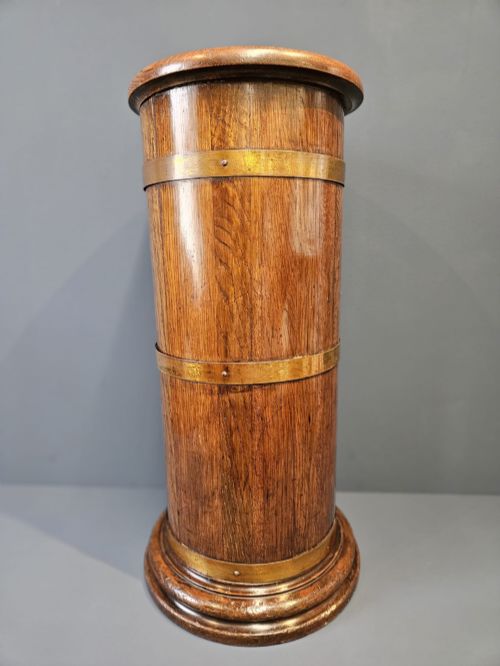
Timber construction relies on traditional coopered oak or mahogany staves bound tightly with heavy brass bands, echoing the craft of cask making. Cast iron elements frequently provide the necessary ballast at the base to prevent tipping when loaded with multiple sticks.
Distinguishing quality across examples
Quality rests in the weight of the casting, the crispness of pierced metalwork details, and the integrity of structural joints. Superior examples display robust gauge brass and heavy cast iron bases that remain stable without wobble.
The presence of original matching drip trays and identifiable maker craftsmanship elevate an ordinary hall container into a refined antique. Finer pieces demonstrate thoughtful integration of mixed materials, such as well-fitted oak staves secured by heavy brass hoops rather than thin plated alternatives.
Coalbrookdale·Thomas Jeckyll·James Shoolbred
The Brass Hall Stick Holder Glossary
- Demi-lune
- A half-moon shape designed to stand flat against a hallway wall. This profile allows the holder to occupy minimal floor space in narrow corridors.
- Coopered
- A method of construction using tapered wooden staves bound together with metal hoops. This technique originates from barrel making and appears frequently in oak stick holders.
- Drip tray
- A removable metal basin seated at the base of the stand. It collects rainwater from wet umbrellas to protect hallway flooring.
- Aesthetic Movement
- A late nineteenth century design style emphasising visual beauty over narrative meaning. Pieces from this movement often feature stylised floral or geometric brass motifs.
- Cast brass
- Molten brass poured into a mould to create solid, decorative components. This technique yields deep relief patterns and heavy structural parts.
Brass Hall Stick Holder: Frequently Asked Questions
What is a brass hall stick holder?
A brass hall stick holder is a dedicated hallway accessory built to store walking canes, umbrellas and parasols. These items keep entryways tidy by containing wet tips and long shafts in a single designated container.
Constructed primarily during the Victorian and Edwardian eras, they combine durable metals like brass and cast iron with practical drip trays. They serve as both functional furniture and decorative statements for period hallways.
How do I care for a brass stand?
Maintenance involves dusting the metal components regularly and ensuring the interior drip tray is emptied and dried after wet weather use. Avoid harsh chemical polishes that strip away historical patina.
For wooden elements bound in brass, a gentle application of wax preserves the timber staves without harming the surrounding metal hoops.
Were these made for umbrellas?
These holders were designed to accommodate both wet umbrellas and walking sticks, which were essential everyday accessories for Victorians and Edwardians stepping outdoors. Many designs feature upper divider rings to keep long shafts separated and organised.
The inclusion of a waterproof base tray confirms their dual purpose for rain gear and walking canes alike.
How do I date a stick stand?
Dating relies on identifying stylistic markers such as Aesthetic Movement motifs, Arts and Crafts construction, or Gothic Revival details. Material combinations, such as coopered oak with heavy brass bands or cast iron bases, also point toward specific decades in the nineteenth and early twentieth centuries.
Patent numbers stamped into the metalwork or attributed maker names further pinpoint the manufacturing period.