



Victorian Brass Desk Organiser
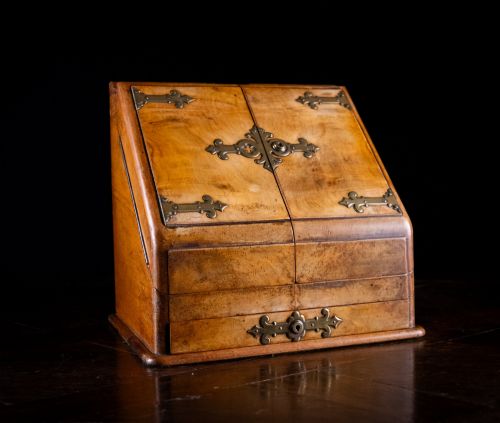
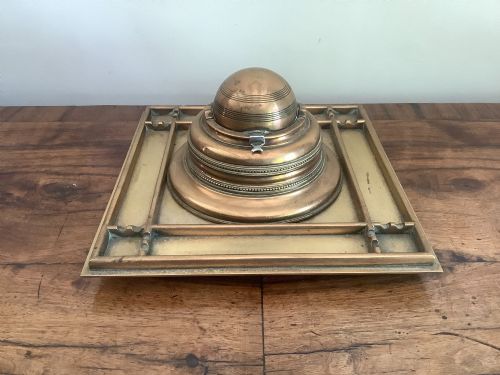
A victorian brass desk organiser brings order to the writing table through substantial metalwork mounted on timber frames.
Victorian Brass Desk Organiser
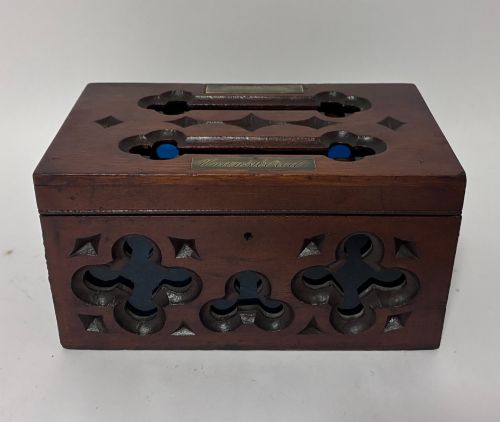
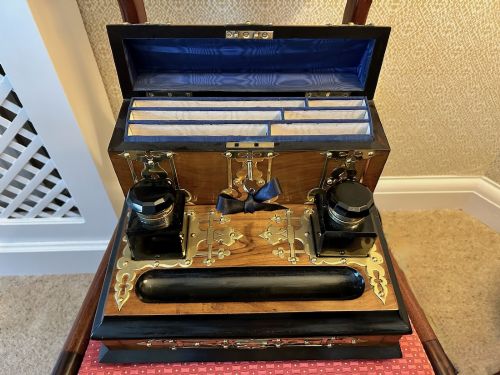
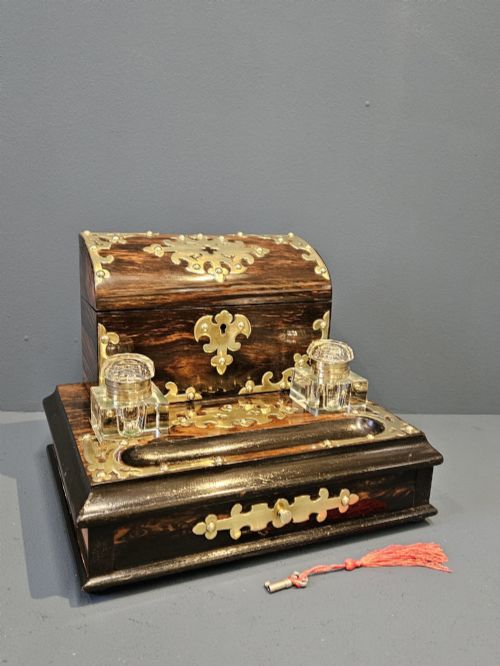
A victorian brass desk organiser comprises desktop accessories designed for correspondence, including stationery cabinets, inkstands, letter racks, and book slides. These pieces originate primarily from the nineteenth century, spanning Victorian, Edwardian, and Gothic Revival periods.
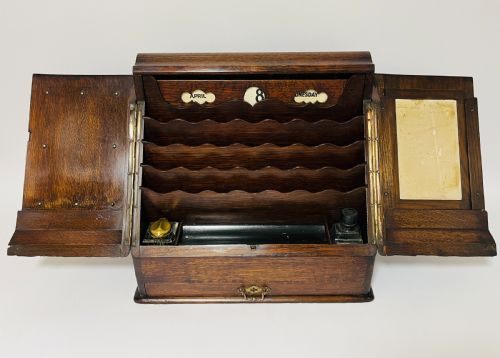
The version most commonly met on this page combines a wooden carcase of walnut, oak, coromandel, or mahogany with heavy brass mounts, hinges, and corner brackets. They range from compact single inkwells to substantial drop-front stationery boxes and correspondence chests.
Materials and Technique
Construction relies on pairing dense hardwoods such as walnut, oak, and coromandel with cast and chased brass hardware. Cabinetmakers utilised dovetail joints for wooden boxes and secured brass mounts with flush-fitting slotted screws.
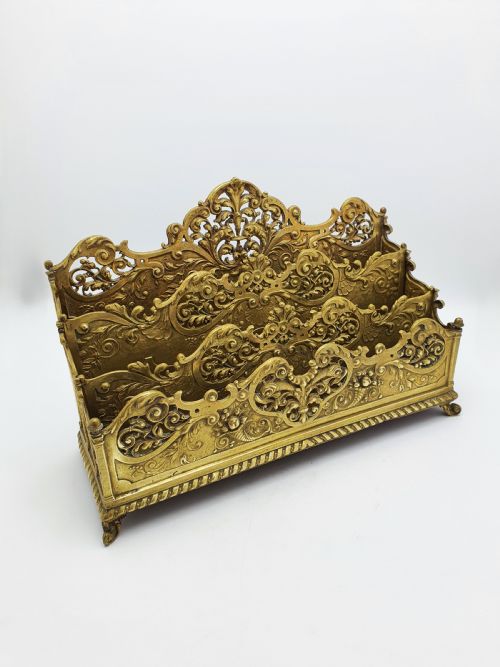
Metal components often feature ornate casting, piercing, and engraving, particularly on Rococo Revival letter racks and Gothic Revival mounts. Glass inserts appear frequently in inkstands, shaped to fit snug brass collars within the wooden stands.
Playing cats and cricket bats find their way onto the desk, proving Victorians liked their inkwells with a sense of humour.
Judging the Standard
Quality rests in the weight of the brass and the figure of the underlying timber, such as highly figured walnut or richly grained coromandel. Superior examples display crisp chasing on the metalwork and precise joinery on the wooden carcase.
The inclusion of patented mechanisms, such as expanding book slides or complex locking stationery boxes, distinguishes finer workshop production from standard commercial desk tidies.
Betjemanns
The Victorian Brass Desk Organiser Glossary
- Standish
- A portable desk stand designed to hold inkwells, quill pens, and sanders. These fitted trays form the central hub of many nineteenth-century writing tables.
- Stationery box
- A tabletop cabinet with compartments for paper and envelopes, often featuring a sloping or drop-front lid. They keep writing materials organised and dust-free.
- Book slide
- An expanding rack with hinged or sliding ends designed to hold a small row of volumes upright. Brass mounts frequently reinforce the wooden terminals.
- Coromandel
- A dense, heavily figured exotic timber from Asia used extensively for luxury Victorian boxes. Its dark brown grain with dramatic black streaks contrasts sharply with polished brass mounts.
Victorian Brass Desk Organiser: Frequently Asked Questions
What is a standish?
A standish is an inkstand or desk tidy that accommodates inkwells, pens, and sometimes a sand shaker. It serves as the primary writing accessory on a Victorian desk.
These pieces range from simple wooden trays with single glass wells to ornate brass-mounted arrangements with drawers and compartments.
How were stationery boxes used?
Stationery boxes held writing paper, envelopes, and correspondence neatly upright on the desktop. Their lidded or drop-front designs kept paper clean until needed.
Victorian households relied on these cabinets to maintain order in the study or drawing room.
What woods appear most often?
Walnut and oak form the bulk of the timber carcases, appearing alongside exotic hardwoods like coromandel and mahogany. These durable woods provided a stable base for heavy brass mounts.
Figured veneers and solid cuts showcase the natural grain beneath the metalwork.
How do I date these pieces?
Dating relies on stylistic clues, such as Gothic Revival pointed arches or Rococo Revival scrollwork, combined with construction methods. Patent stamps and hardware styles also help narrow the decade.
Mid-nineteenth-century examples often lean towards tortoiseshell and brass inlay, while later Edwardian sets feature simpler brasswork.