


Vintage Sliding Book Stand
A vintage sliding book stand expands to fit your shelves, bringing practical engineering and rich woods to your desk.
Vintage Sliding Book Stand
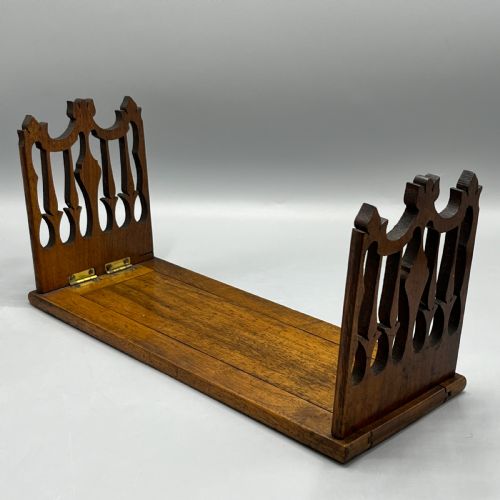
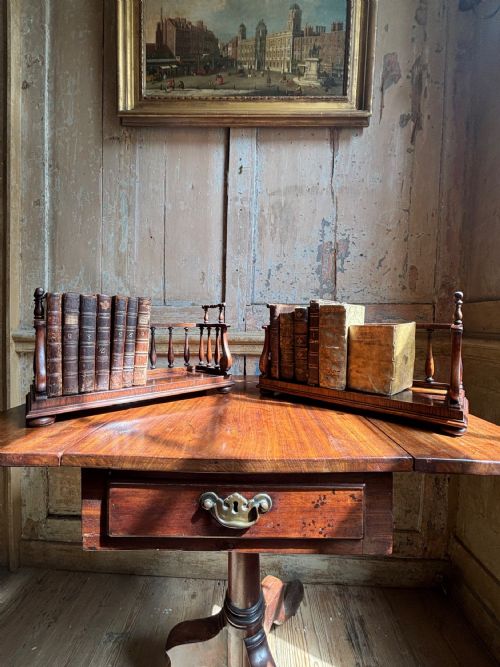
A vintage sliding book stand, also found as a book slide or book trough, keeps volumes upright on desks and tables with a clever expanding mechanism. When you search for a vintage sliding book stand, you encounter pieces designed to hold a row of books securely between two ends.
The selections range across the nineteenth century and into the twentieth century, taking forms such as simple wooden racks and elaborately decorated library holders. Origin styles stretch from Victorian Gothic Revival and William IV to Anglo-Indian and Art Deco.
Makers and workshops utilised various formats including double-ended book stands and folding troughs. These items served home libraries and writing desks alike, keeping working volumes close at hand.
How they were made
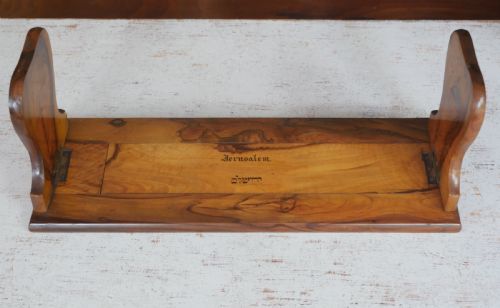
Cabinetmakers worked with dense hardwoods including rosewood, walnut, burr walnut, oak, teak, and olive wood. These timbers provided the weight and stability required to support heavy volumes without tipping the frame.
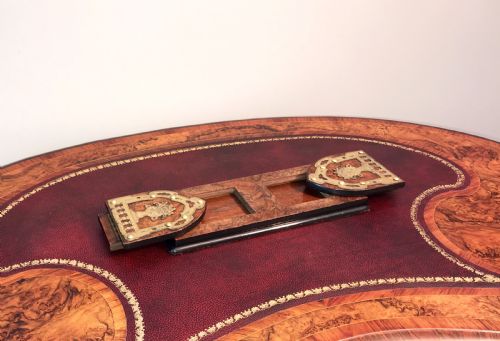
Metal components such as brass mountings reinforced the extending mechanisms and added structural support to the wooden terminals. Decorative elements involved intricate techniques like wood mosaic, Tunbridge ware, and hand-painted plaques.
Materials span traditional British hardwoods like oak and walnut alongside exotic timbers such as teak and olive wood.
What varies in quality
The standard of a sliding book stand depends on the precision of the extending mechanism and the selection of timber. Finer examples display figured veneers like burr walnut or carefully fitted wood mosaic work.
Decoration distinguishes standard desk accessories from superior library pieces. Hand-carving in teak or olive wood and finely painted plaques elevate the craftsmanship of the terminals.
The Vintage Sliding Book Stand Glossary
- Book slide
- A desk accessory with expanding sides designed to hold a variable number of volumes upright. These items shorten and lengthen to suit the shelf space available.
- Tunbridge ware
- A form of woodworking involving tiny mosaic tiles made from natural coloured woods to create pictorial designs. It appears on nineteenth-century desk pieces.
- Gothic Revival
- An architectural and decorative style drawing on medieval forms, featuring pointed arches and heavy ecclesiastical motifs. It recurs frequently in Victorian library items.
- Anglo-Indian
- A descriptive term for items produced in India during the British period, often featuring dense carved teak and native decorative motifs. These pieces combine British furniture forms with local craftsmanship.
Vintage Sliding Book Stand: Frequently Asked Questions
How do sliding book stands work?
These stands feature a base with overlapping channels or a sliding track that allows the two ends to move inward and outward. This mechanism lets you adjust the length to accommodate a growing or shrinking row of books.
Once positioned, the weight of the volumes and the friction of the slide help keep the end supports stable against the books.
What woods were used for book stands?
Cabinetmakers employed a wide variety of timbers depending on the period and origin, including rosewood, walnut, burr walnut, oak, and teak. Exotic woods such as olive wood and specialised multi-coloured wood mosaic also appear.
Heavier hardwoods provided the necessary heft to prevent the ends from sliding outward under the pressure of leaning books.
Where were these stands used?
They sat on library tables, office desks, and drawing-room sideboards to keep current reading material organised. Their adjustable nature made them particularly useful on surfaces where book collections changed frequently.
They also served as decorative desk accessories in nineteenth-century homes, matching other library furnishings like inkstands and stationery boxes.
How do I date a book stand?
Dating relies on stylistic clues, timber choice, and construction methods characteristic of different eras. Pieces showing Gothic Revival motifs or rosewood construction typically point to the nineteenth century.
Later pieces reflect Edwardian simplicity in oak or Art Deco lines in mahogany and teak, aligning with the broader design movements of their decades.