


Victorian Brass Companion
When you search for a victorian brass companion, you are looking at hearthside utility cast and forged to warm a room with bright metal.
Victorian Brass Companion
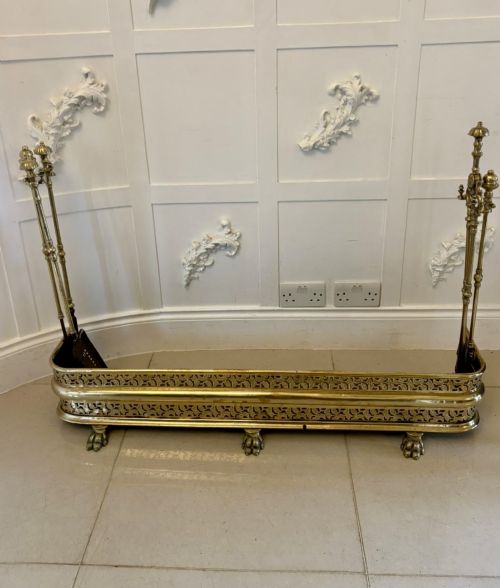
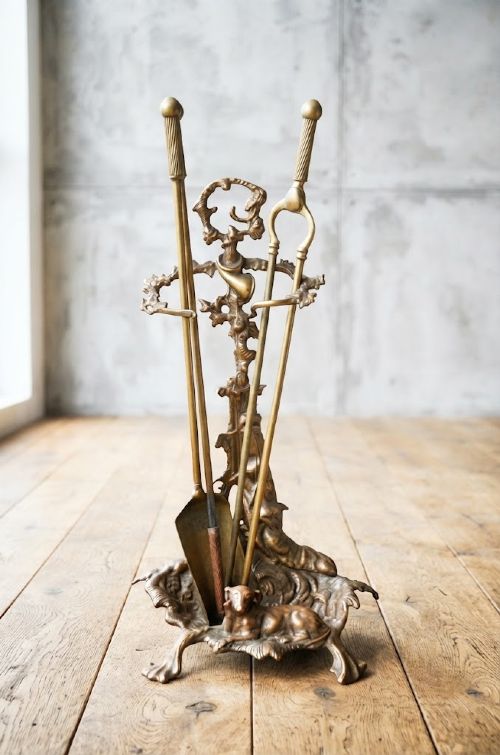
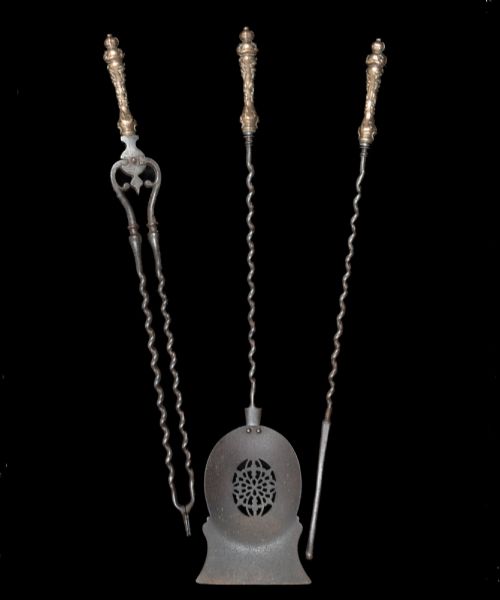
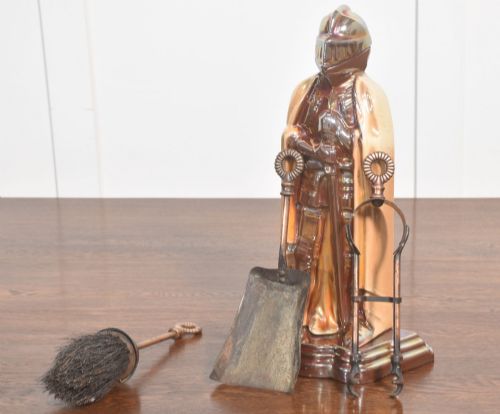
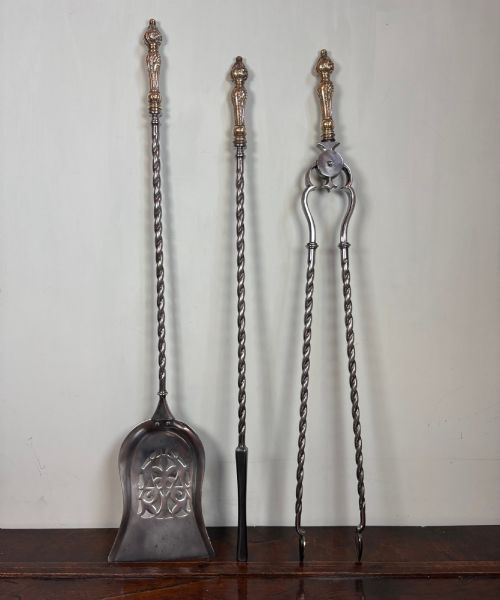
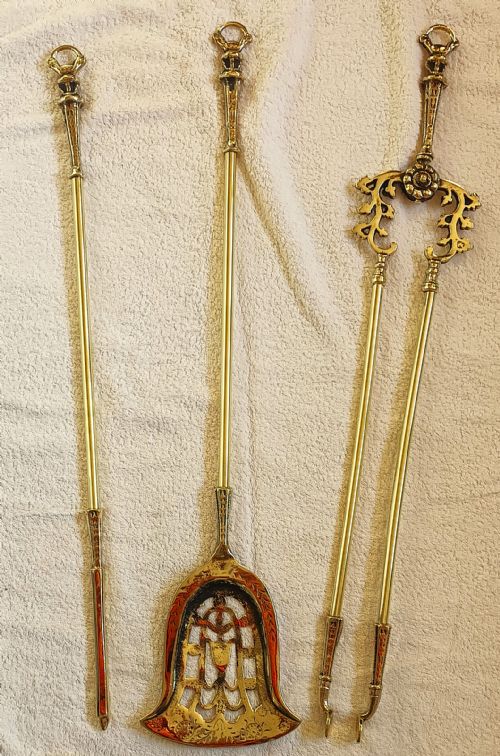
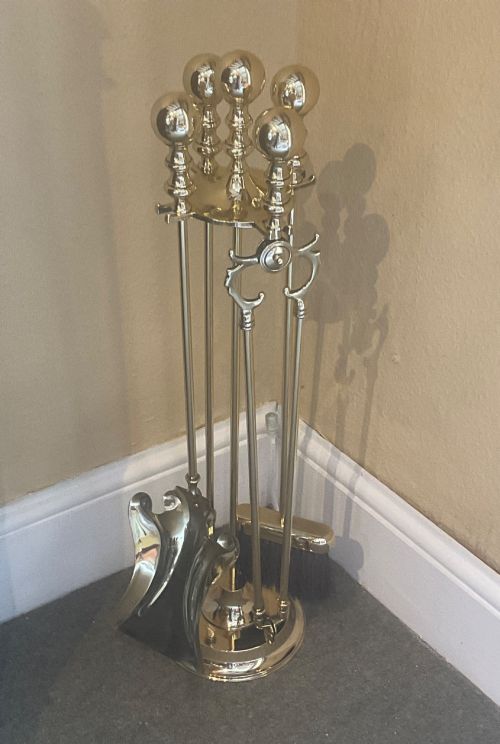
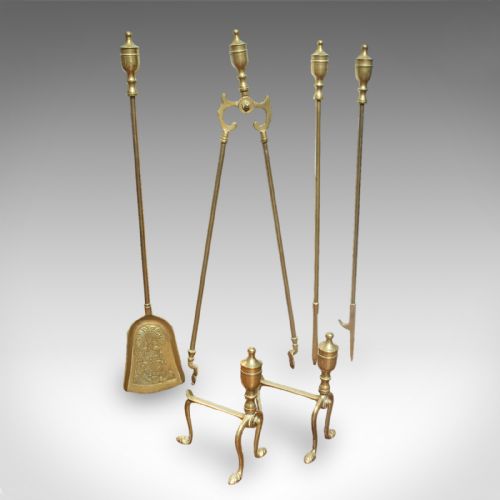
A victorian brass companion set brings together the essential tools needed to tend a coal or wood fire, usually comprising a poker, shovel, and tongs, often accompanied by a stand, fire dogs, or an andiron pair. These items sit beside the hearth as both working implements and decorative accents, reflecting the period's taste for domestic order and ornate metalwork.
The pieces you encounter on this page span the nineteenth century into the early decades of the twentieth, encompassing standard Victorian production alongside Regency, Edwardian, and Arts and Crafts stylistic variations. While many sets present straightforward functional forms, others incorporate cast hunting scenes, rope twist handles, or distinctive Art Nouveau motifs.
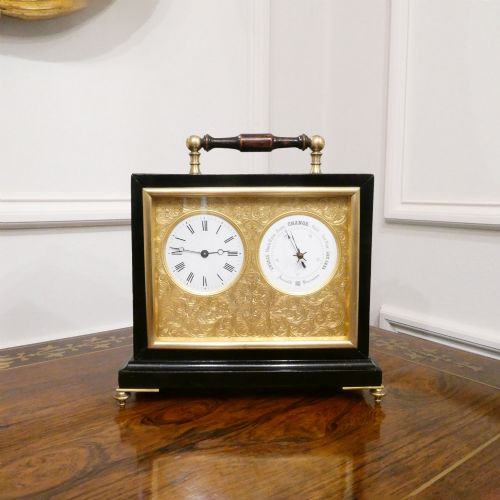
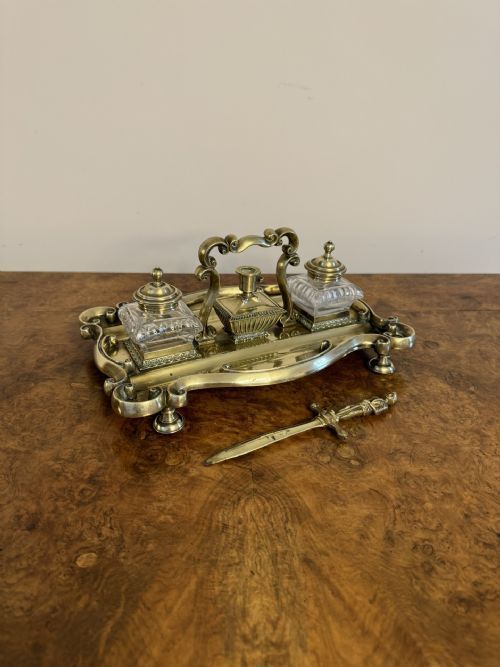
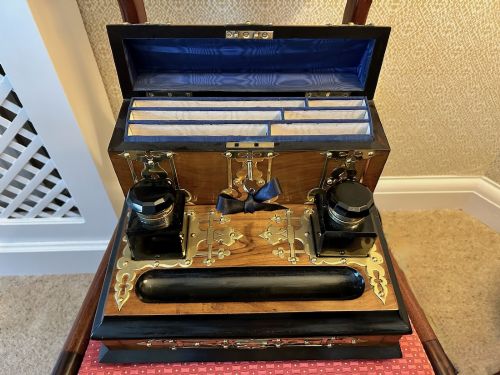
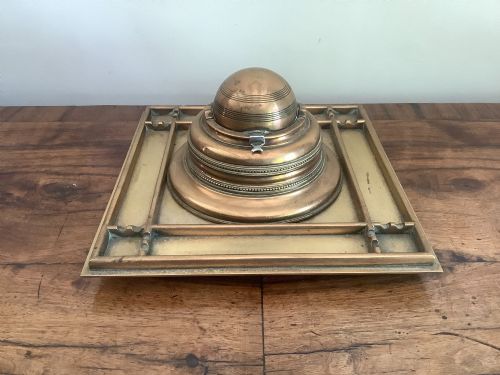
Alongside traditional fireside tools, the evidence records related brass-mounted items such as desk stands and coal scuttles that share materials and decorative treatments of the era. Buyers seeking a cohesive hearth setup will find complete suites of fire irons alongside companion stands designed to keep the tools upright and tidy.
Materials and construction
Makers relied primarily on brass and steel, combining cast brass components with forged steel shafts and tool tips to ensure durability under daily use. Handles were frequently cast with decorative patterns, rope twists, or figural details, then secured to sturdy iron or steel rods.
Additional materials appear across the wider domestic objects recorded here, including walnut, rosewood, coromandel, copper, and glass incorporated into desk sets and log bins. Brass mounting, inlay, and cast decorative plaques unite these varied woods and metals within distinct nineteenth-century styles like the Aesthetic Movement and Napoleon III.
Several Victorian companion sets feature hunting dogs cast directly into the handles to keep watch by the fire.
Assessing quality and finish
Quality reveals itself in the weight and substance of the metal, where heavier cast brass components and substantial steel bars indicate superior manufacturing. Lighter, thinner stampings contrast with solid, thick-gauge companion stands and fire irons designed to withstand regular handling at the hearth.
Detailing in the casting distinguishes finer examples, from crisp hunting scenes and clean rope twists to well-defined decorative mounts. The survival of original companion stands, matching fire dogs, and intact tool sets preserves the complete aesthetic intent of the original maker.
The Victorian Brass Companion Glossary
- Companion set
- A matched group of hearth tools, typically including a poker, tongs, and a shovel, designed to be stored together on a stand or rack.
- Fire irons
- The individual poker, shovel, and tongs used for managing a coal or wood fire.
- Andirons
- Supporting metal bars or fire dogs placed on the hearth to hold logs above the floor of the fireplace.
- Aesthetic Movement
- A late nineteenth-century design style emphasising visual and material beauty over narrative or moral content.
- Art Nouveau
- A decorative style characterised by flowing, organic lines and floral motifs popular around the turn of the twentieth century.
Victorian Brass Companion: Frequently Asked Questions
What is included in a companion set?
A standard set includes a poker for moving logs, tongs for handling coal or embers, and a shovel for clearing ash from the grate.
Many listings also include the stand, rack, or a pair of fire dogs designed to accompany the tools on the hearth.
How do I date a brass fireside set?
Dating relies on stylistic clues, manufacturing methods, and material combinations recorded across the Victorian and Edwardian periods.
Heavier cast brass, specific decorative motifs like rope twists, and associated design movements such as Arts and Crafts or Art Nouveau help narrow the production era.
How should I display fire irons?
Companion sets are traditionally displayed directly beside the fireplace using an upright stand, dedicated tool rest, or resting against fire dogs.
Keeping the tools together on their original stand highlights the matching handles and coordinated metalwork of the suite.