



Victorian Brass Poker
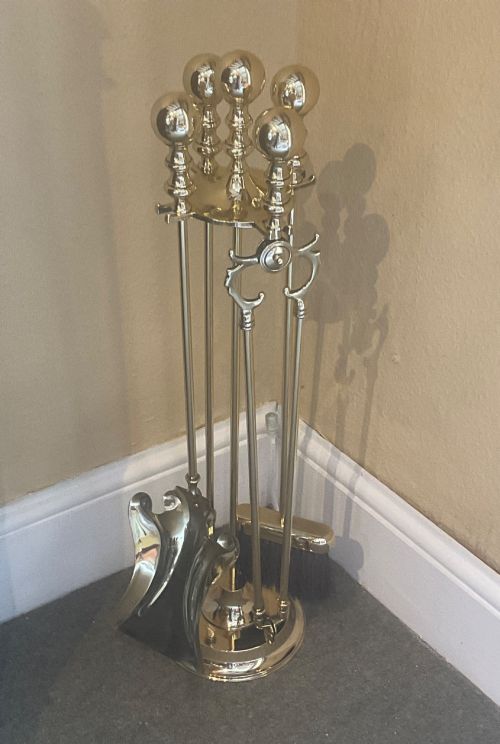
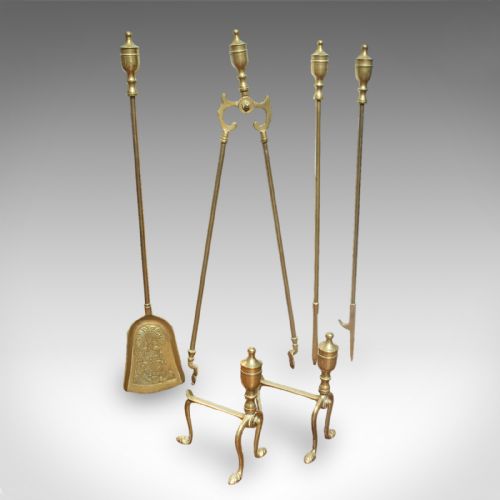
A victorian brass poker is a hearth implement built to stir coal fires, appearing here primarily within fireside tool sets and companion suites.
Victorian Brass Poker
A victorian brass poker is a hearth implement designed to tend coal fires, encountered most frequently as part of larger fireside tool sets and companion suites. These items originate predominantly from the nineteenth century, emerging alongside companion sets, fire irons, and associated fireplace accessories.
The selection ranges from individual pokers to complete sets containing shovels, tongs, and fire dogs. While many pieces date directly to the Victorian period, related examples span into the Edwardian era and the early twentieth century, reflecting ongoing domestic production of fireside metalwork.
Makers produced these tools for functional hearth use in English homes, often pairing brass with steel or iron components. Buyers seeking a victorian brass poker generally encounter them within sets that include traditional English, Arts and Crafts, and Rococo Revival stylistic influences.
How they were made
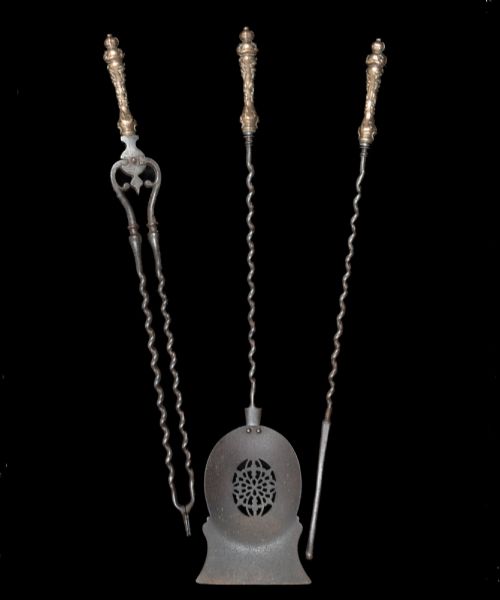
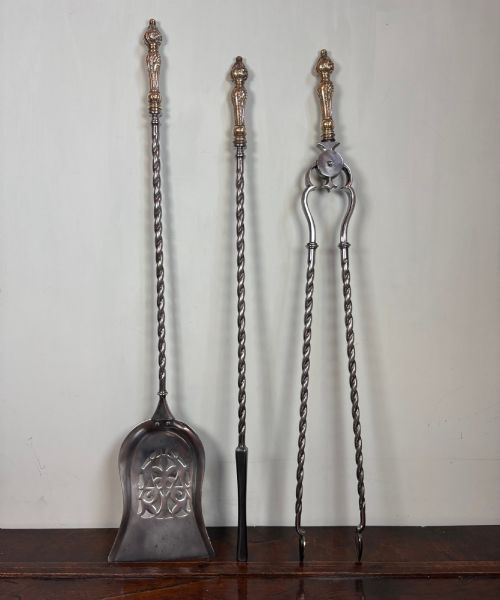
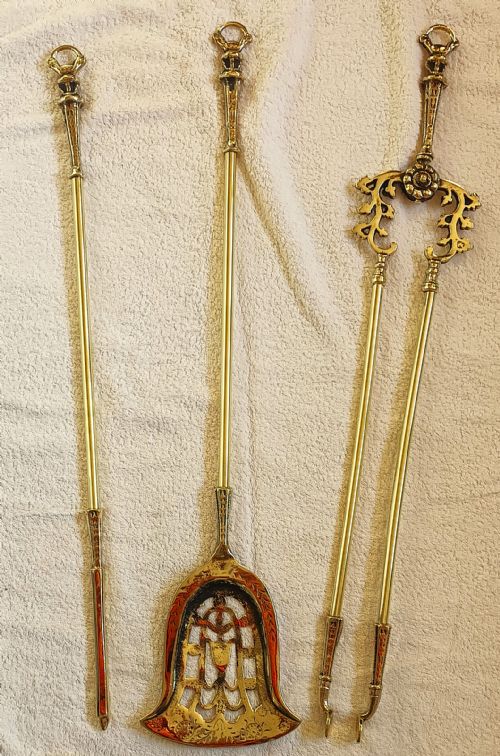
Makers combined brass with steel and iron to construct these hearth tools, utilising the durability of iron for shafts alongside the bright appearance of brass for handles and decorative elements. Workshops employed casting and forging techniques, shaping metal into rope twist handles, starburst motifs, and smooth companion shafts.
Craftsmen also utilised copper and gun metal in related hearth pieces, applying poker work decoration on specific wooden items or combining cast brass with polished brass surfaces. Individual components were assembled to withstand regular use beside the fireplace while maintaining decorative detail.
Listings feature materials including brass, steel, iron, cast iron, burr walnut, enamel, polished brass, and wood.
What varies in quality
Distinction across the range rests on the substance of the metalwork and the precision of decorative elements like rope twists and starburst patterns. Heavier gauge brass and solid steel components indicate sturdier construction compared to lighter, purely decorative alternatives.
The integrity of the assembly between the handle and the shaft marks the difference between standard production and superior craftsmanship. Original matching sets that retain all corresponding companion tools demonstrate higher desirability than assembled collections.
Howard & Sons
The Victorian Brass Poker Glossary
- Companion set
- A matched collection of fireplace tools, typically including a poker, shovel, and tongs, housed together near the hearth. These suites provided all necessary implements for tending a coal fire.
- Fire irons
- The collective term for metal implements used to manage a fireplace, comprising pokers, tongs, and shovels. They were frequently forged from steel or iron and fitted with brass handles.
- Fire dogs
- Supporting metal irons placed on the hearth to hold logs or support fire baskets. They often accompany matching sets of fire tools.
- Poker work
- A decorative technique involving heated metal points applied to wood surfaces to burn intricate designs. This method appears on specific nineteenth-century boxes and pins rather than metal tools.
- Rococo Revival
- A nineteenth-century design style characterised by ornate, asymmetrical scrollwork and natural motifs. Fireside accessories styled in this manner feature elaborate, curved brass casting.
Victorian Brass Poker: Frequently Asked Questions
What is included in a companion set?
A companion set typically comprises a poker, a coal shovel, and a pair of tongs, designed to work together at the hearth.
These tools are often held together in a matching stand or paired with fire dogs for complete fireplace maintenance.
Are these pokers made entirely of brass?
Many pokers feature brass handles combined with steel or iron shafts to provide necessary strength for stirring coal.
Pure brass variants exist, but the combination of metals was common to ensure durability during regular fireplace use.
How do I identify a Victorian piece?
Victorian pieces often display period manufacturing methods such as hand-finished brass casting, distinct rope twist handles, or traditional English styling.
They generally date from the nineteenth century, aligning with the dominant production eras recorded in the evidence.
Can these tools still be used on a fire?
These historical iron and brass implements were originally built for active hearth use and functional fire tending.
Many buyers continue to utilise them alongside traditional open fires, provided the metalwork remains structurally sound.