
Victorian Brass Column Lamp
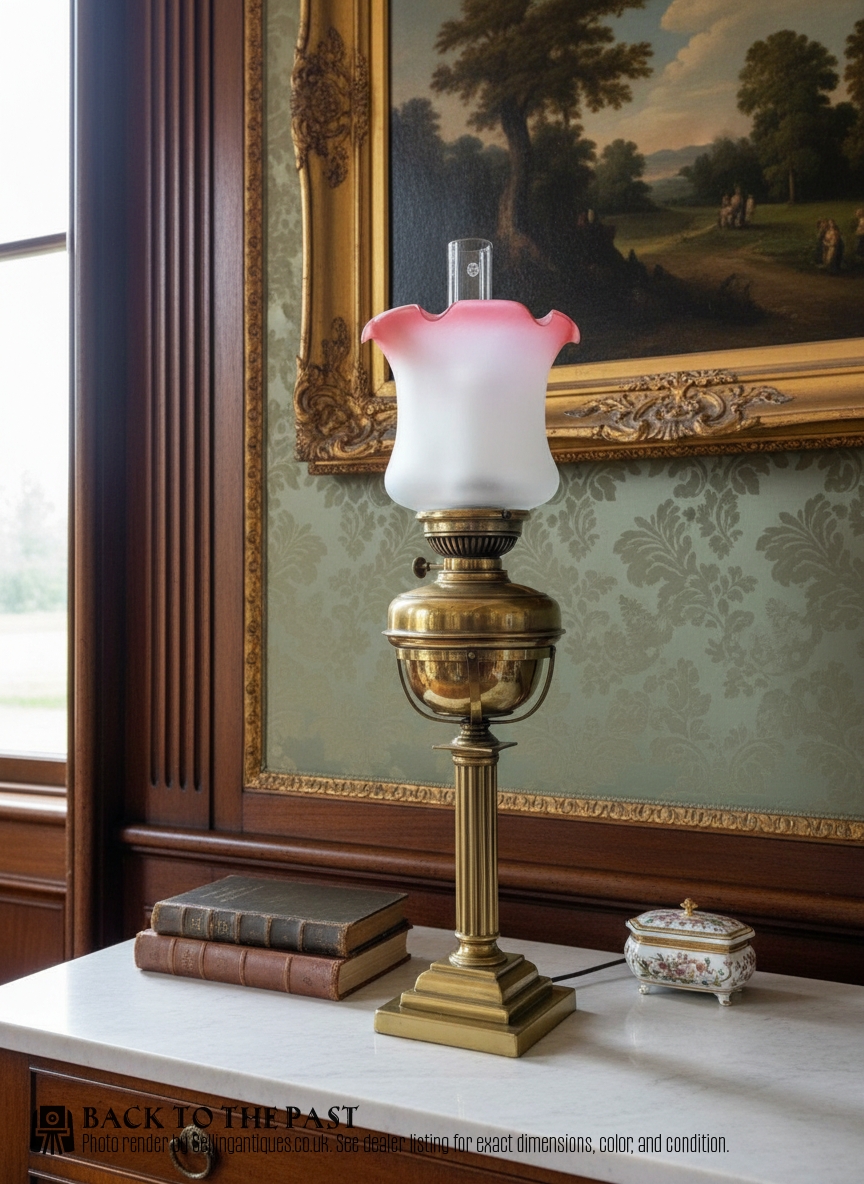
A victorian brass column lamp brings height and classical proportion to a room, catching the light across cast metal and coloured glass.
Victorian Brass Column Lamp
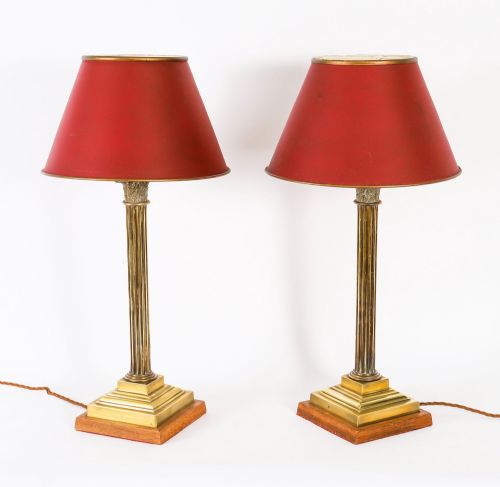
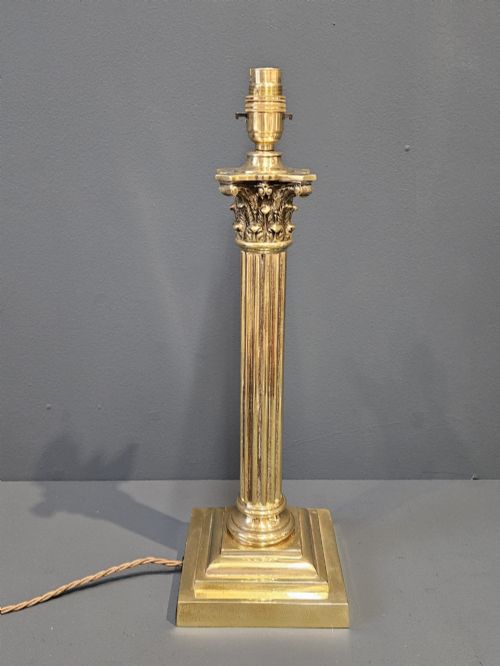
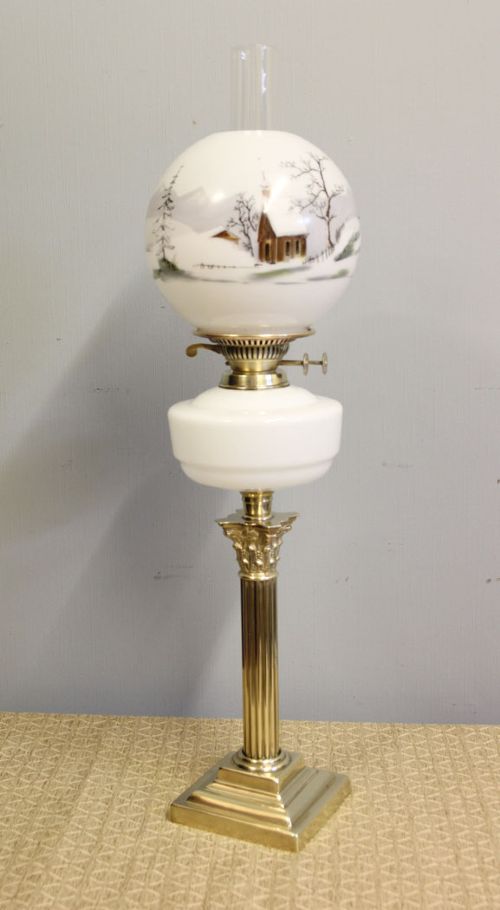
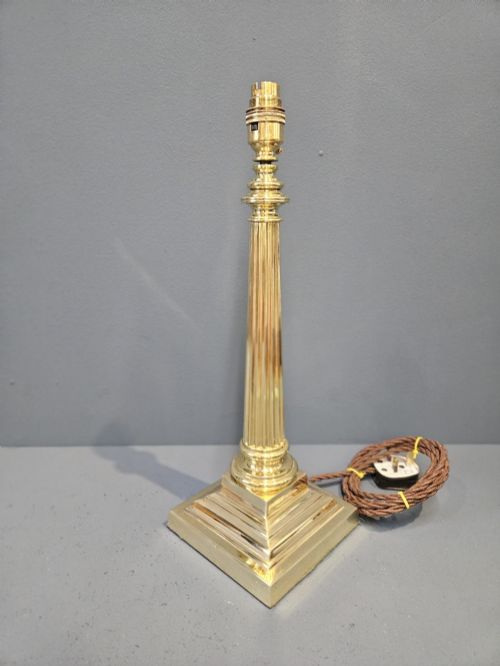
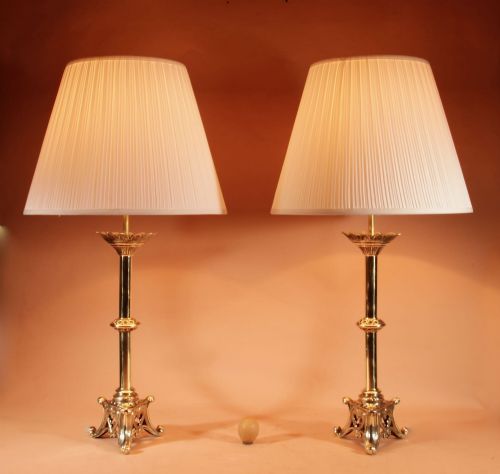
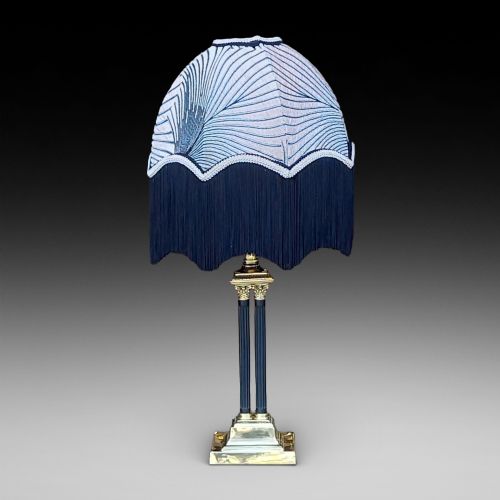
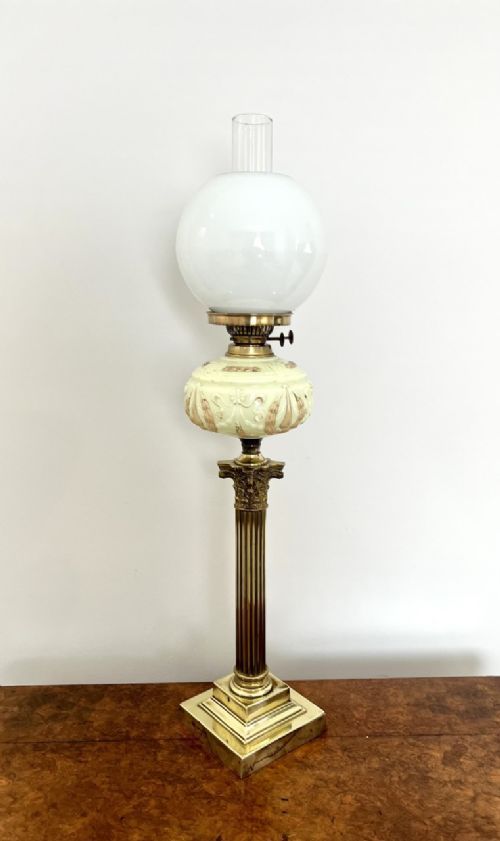
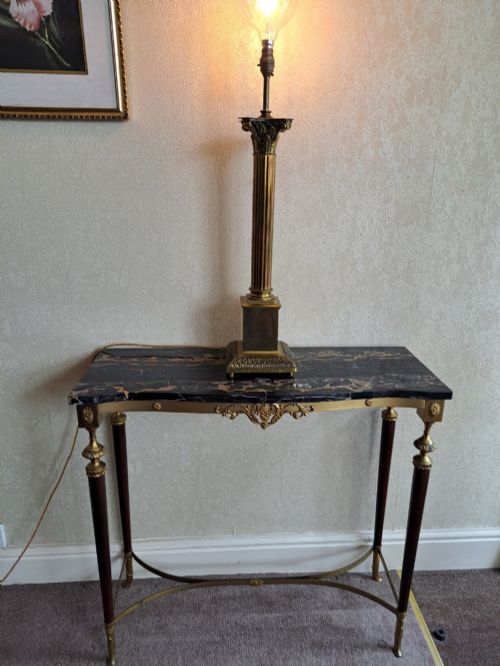
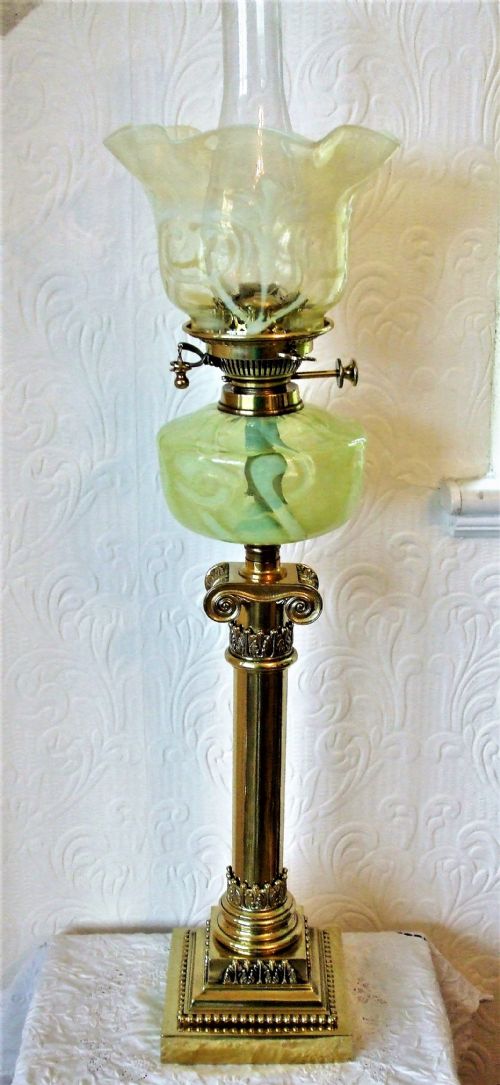
When you search for a victorian brass column lamp, you encounter lighting designed for nineteenth-century interiors, spanning table models, standard floor heights, and adjustable pillars. The Corinthian column form dominates the selection, frequently paired with stepped or heavy square bases.
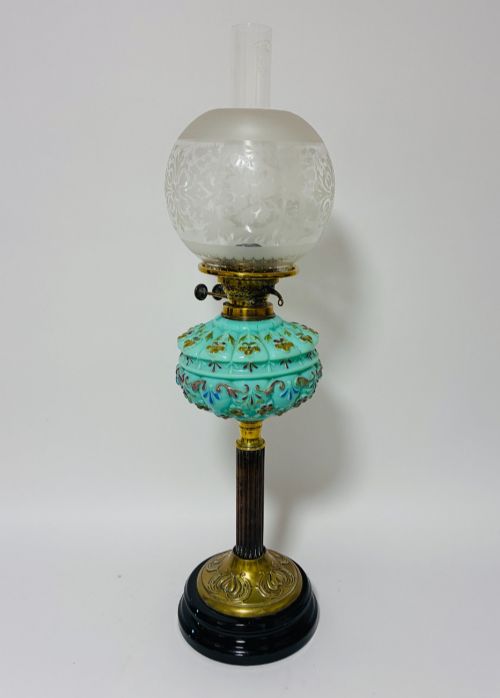
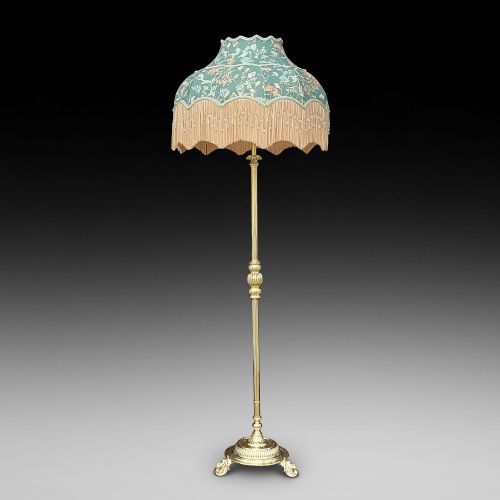
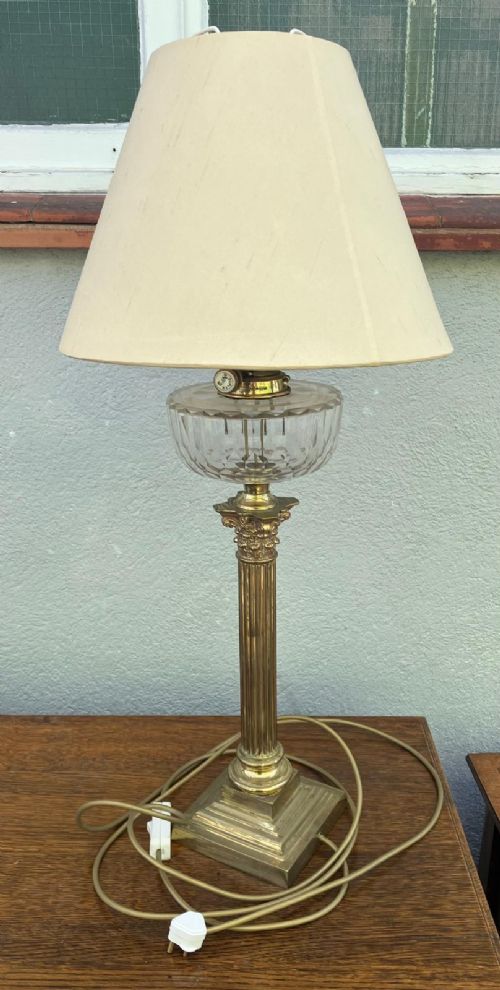
Many examples originate as oil lamps later adapted for electricity, retaining their heavy metal reservoirs and burner assemblies. Alongside table heights, taller floor lamps and standard lamps appear from the Victorian and Edwardian periods.
Materials and Construction
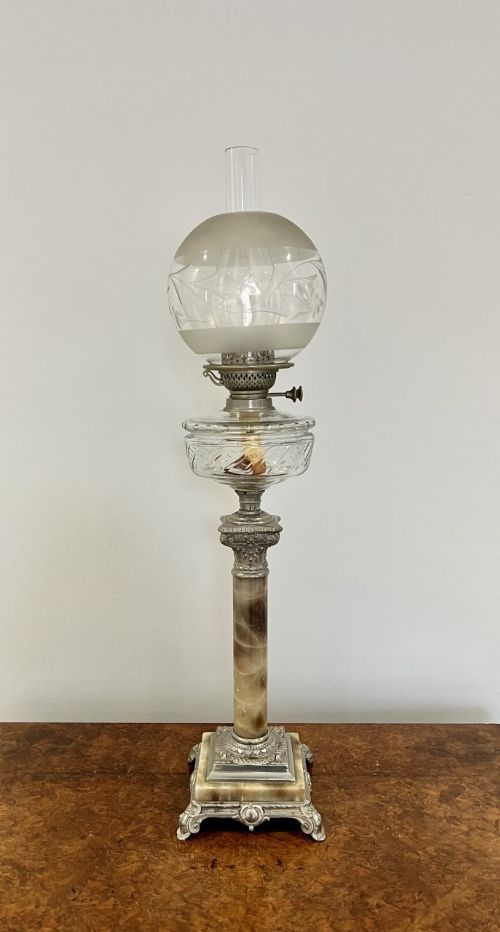
Makers utilised cast and spun brass for the shafts and capitals, often mounting the heavy metal columns onto slate, marble, or ceramic bases for stability. Elaborate capitals display classical acanthus leaves and volutes modelled on ancient architectural orders.
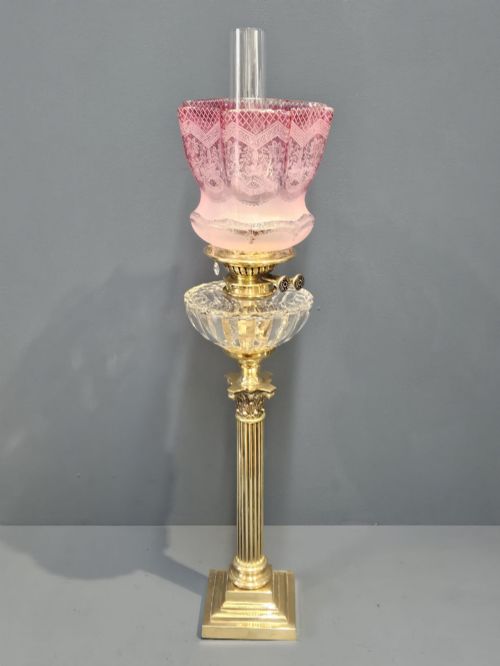
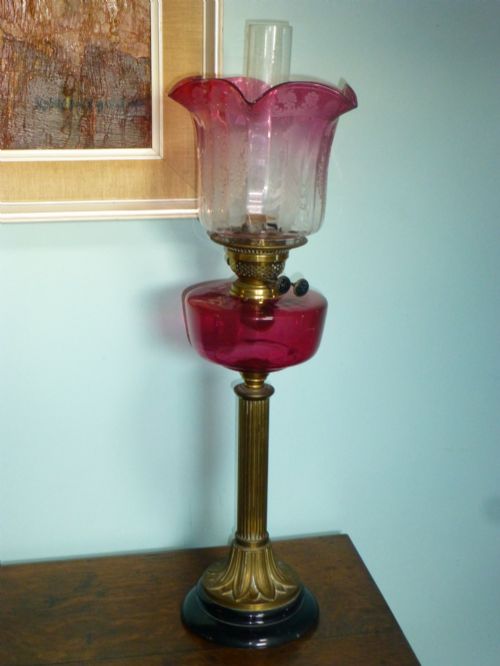
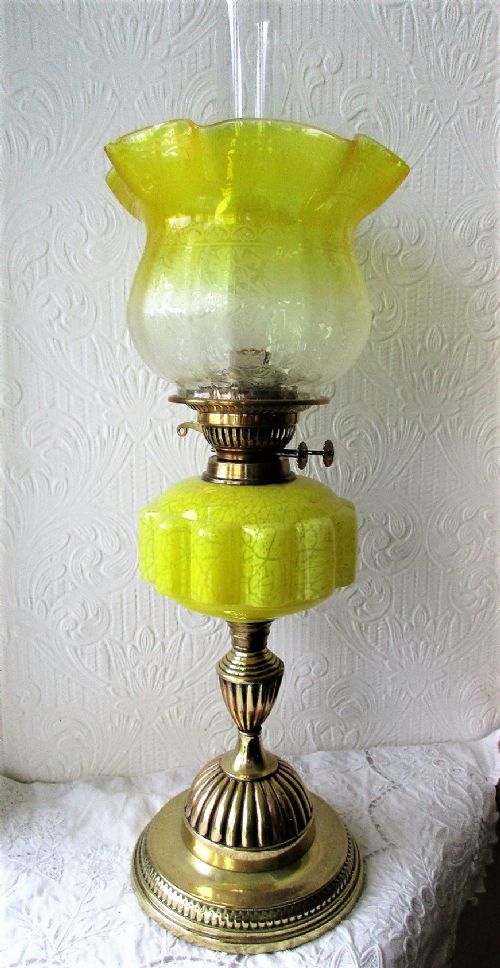
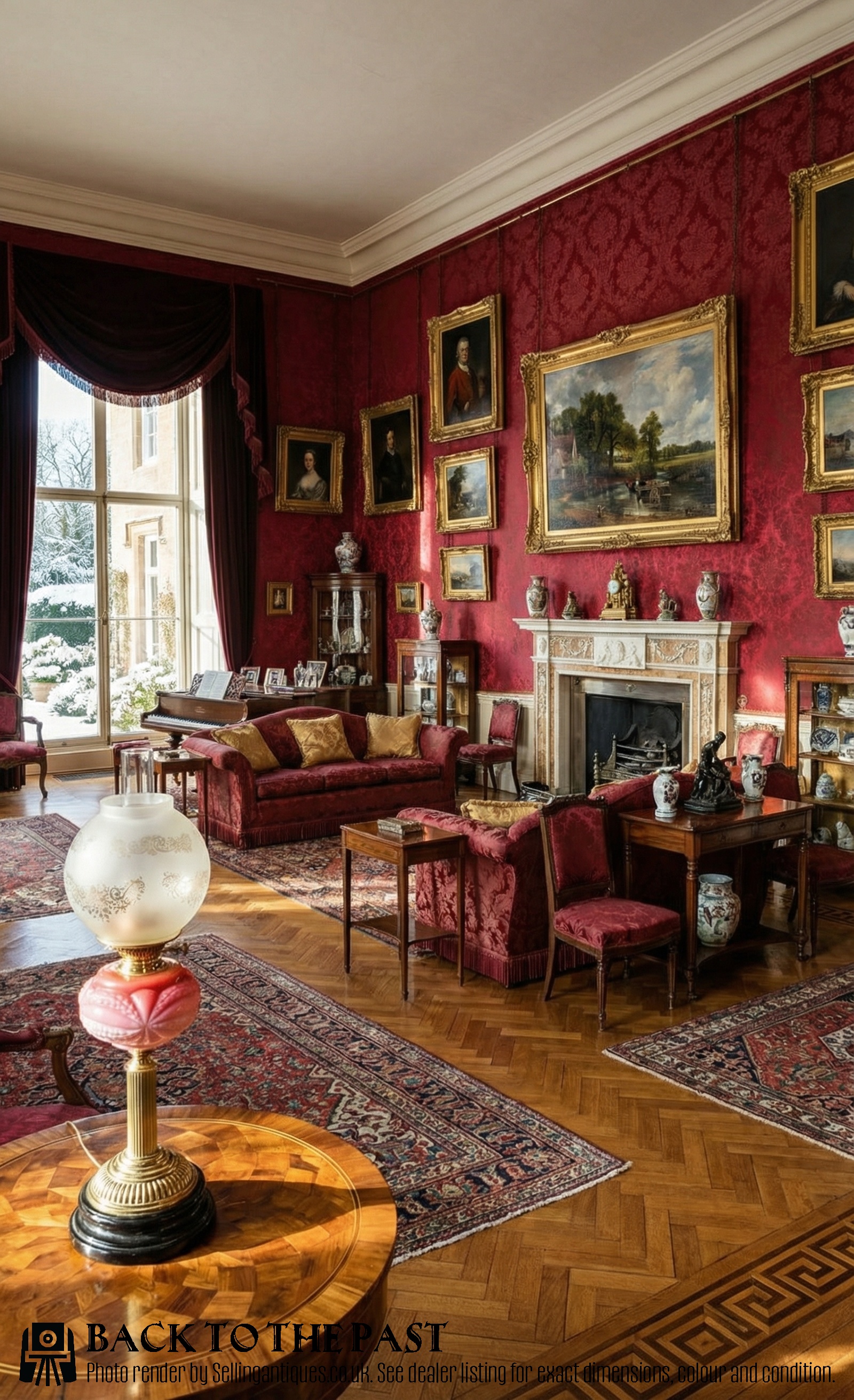
Coloured glass forms an integral part of the construction, with cranberry, opaline, and etched glass shades or fonts sitting atop the metal structure. Burner mechanisms in brass incorporate maker stamps and duplex systems designed to burn paraffin cleanly.
Victorian Brass Column Lamp Retail Price Guide 2026
Typical asking prices for victorian brass column lamp among the pieces listed under this phrase on Sellingantiques today, from the lower quarter to the upper quarter. They describe what is for sale here now, not the wider market.
Some tall standard lamps include built-in brass galleries designed originally to hold glass smoke bells above the flame.
Judging Quality
The crispness of the casting in the brass capital separates mass production from finer workshops, where leaf work and detail remain sharp and deep. Weight and gauge of the metal also dictate standard, heavier columns offering greater stability and substance.
The integrity and type of the glass components influence overall standard, particularly where hand-etched shades or coloured opaline fonts survive intact. Maker attribution through stamped burner knobs adds distinction to individual pieces.
Hinks and Sons·Hinks
The Victorian Brass Column Lamp Glossary
- Corinthian column
- An architectural column style featuring an ornate capital decorated with acanthus leaves, frequently utilised on nineteenth-century lamp standards.
- Duplex burner
- A twin-wick mechanism popular on Victorian oil lamps designed to produce a brighter flame.
- Opaline glass
- An opaque white or tinted glass type used extensively for lamp shades and fonts during the nineteenth century.
- Font
- The oil reservoir section of a lamp, commonly manufactured from coloured glass or brass.
Victorian Brass Column Lamp: Frequently Asked Questions
Were these lamps originally for oil?
Most of these pieces started life as burning lamps using paraffin before being converted for modern electrical use. Many retain their original brass burners and galleries alongside the wiring.
Makers built them with heavy metal reservoirs to hold fuel safely beneath the fabric or glass shades.
How do I identify a Corinthian column?
The defining feature is the ornate capital at the top of the shaft, carved with stylized acanthus leaves and scrolls. This classical architectural detail mimics ancient stone temples.
Below this capital, the brass shaft rises straight, often with reeding or fluting along the metal.
Are standard lamps adjustable in height?
Certain floor-standing examples feature telescopic brass mechanisms allowing the column to extend upward. These tall models provide adaptable lighting for reading or room illumination.
Adjustment levers and screws remain visible on the shaft of these specific pieces.
What glass colours appear on these lamps?
Cranberry pink, milky opaline, and clear etched glass dominate the surviving shades and fonts. These coloured glass elements create warm ambient light when illuminated.
Etched patterns on the glass often feature floral or winter botanical scenes.