




Classical Column Oil Lamp
A classical column oil lamp brings stately proportions and warm metallic lustre to a room, channelling ancient architecture into domestic lighting.
Classical Column Oil Lamp
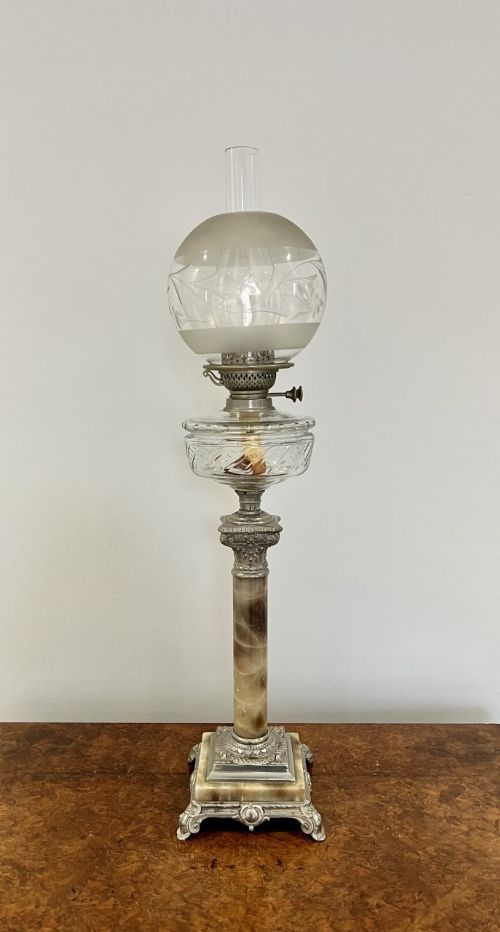
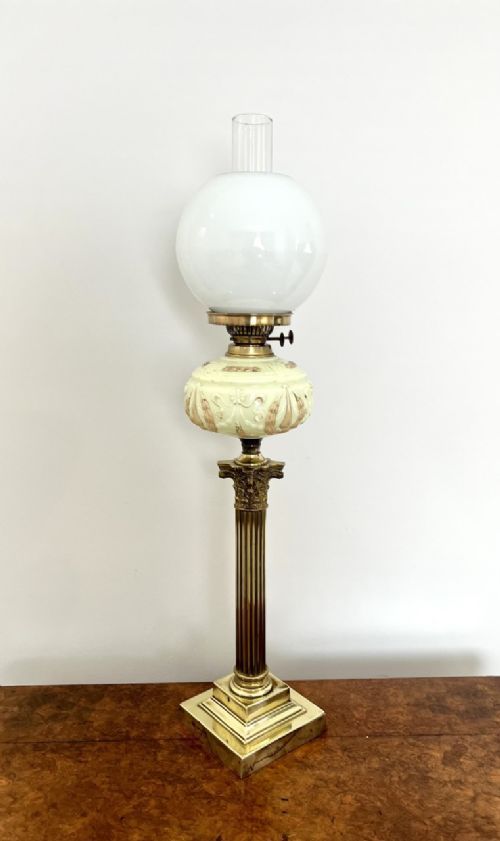
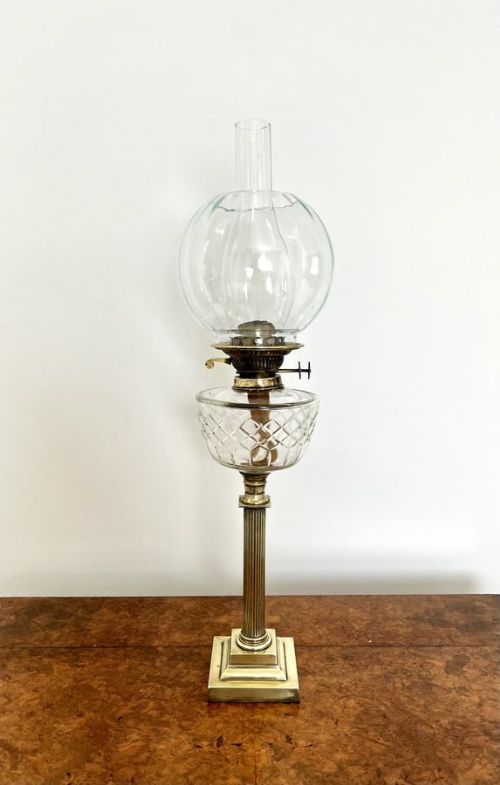
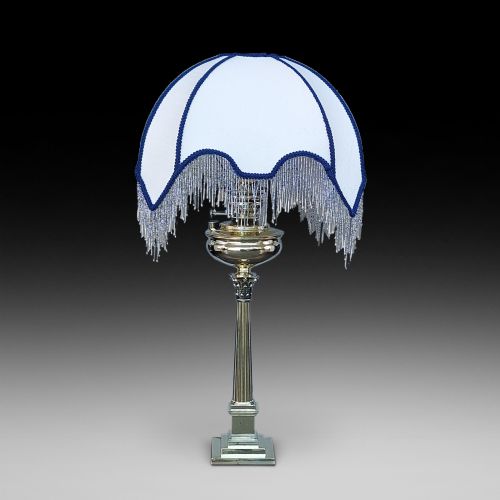
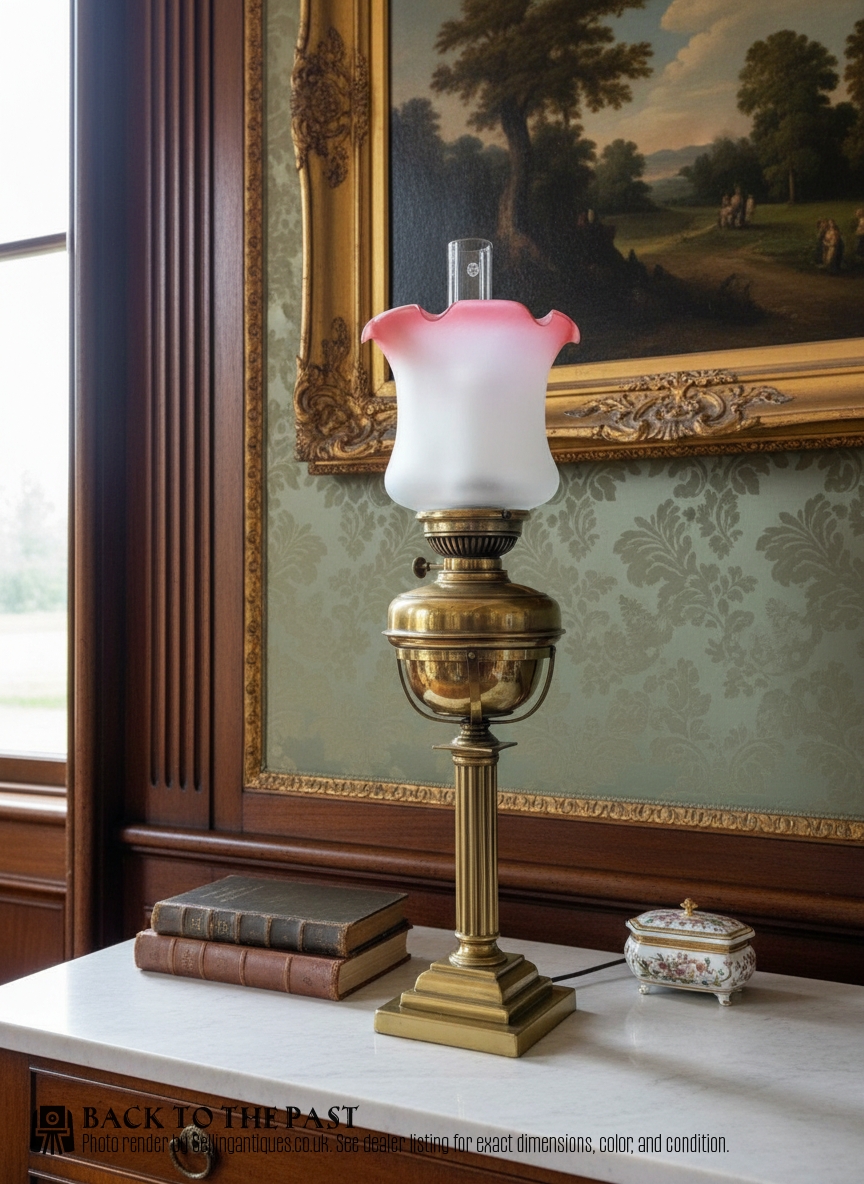
A classical column oil lamp takes its architectural inspiration from ancient Greek and Roman orders, translating monumental stone columns into domestic lighting. You will encounter shafts styled after the Corinthian, Ionic or simple reeded columns, supporting a fuel reservoir at the top.
The majority of these pieces originate from the nineteenth century, spanning the Victorian and Edwardian eras, alongside earlier William IV examples. They appear frequently in brass, silver plate and gilt bronze, often paired with cut glass reservoirs and fabric shades.
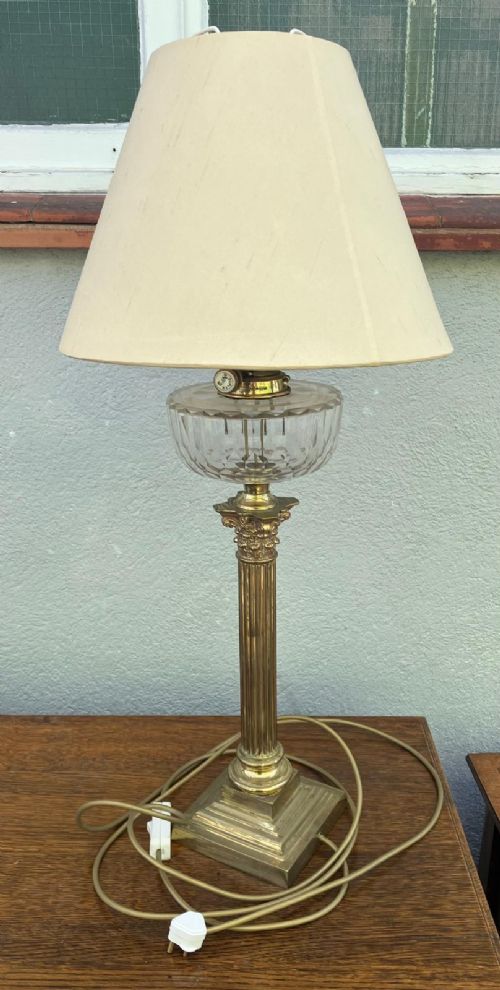
Many survivors begin life as burning lamps before undergoing conversion to electricity for modern convenience. Table lamps dominate the selection, offering a commanding presence on sideboards and desks through substantial heights and stepped bases.
Materials and construction methods
The manufacture of a classical column oil lamp relies heavily on cast and turned brass, silver plate, or gilt bronze to form the rigid architectural shaft and stepped base. Makers frequently incorporated cut glass for the central reservoir to catch the light, sometimes augmenting the design with ceramic bodies or onyx columns.
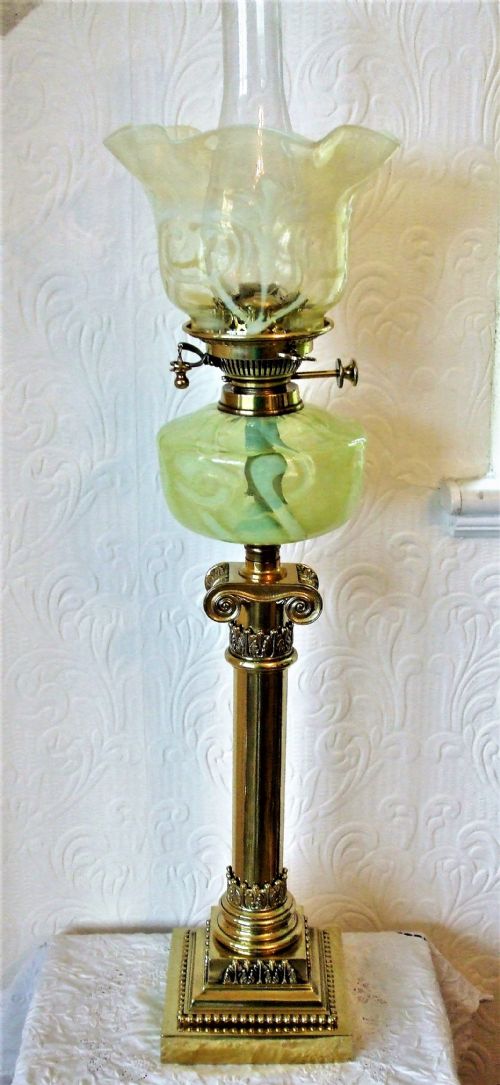
Detailing on the capitals draws directly on classical stonemasonry, casting intricate acanthus leaves for Corinthian designs or delicate volutes for Ionic versions. Skilled metalworkers assembled these tiered components with threaded rods and heavy weighted bases to ensure stability beneath a tall burner and shade.
Classical Column Oil Lamp Retail Price Guide 2026
Typical asking prices for classical column oil lamp among the pieces listed under this phrase on Sellingantiques today, from the lower quarter to the upper quarter. They describe what is for sale here now, not the wider market.
Some nineteenth-century columns secretly moonlight as electricity converts, trading volatile paraffin for the modern convenience of the flick switch.
Distinctions in quality and execution
Quality in a classical column oil lamp rests upon the crispness of the cast metalwork and the depth of the architectural detailing. Finer examples display sharply rendered acanthus leaves on the capital and heavy, substantial gauge brass or silver plate rather than thin pressed sheet metal.
The integration of materials also defines the upper tier, seen in heavy cut glass reservoirs that fit securely and accurately into their metal collars. Proportion and scale elevate certain pieces, where the height of the column balances harmoniously against a stepped square base.
Hinks of Birmingham·Goldsmiths and Silversmiths Company
The Classical Column Oil Lamp Glossary
- Corinthian column
- A classical architectural order featuring an ornate capital decorated with carved or cast acanthus leaves. This motif appears frequently on the upper shaft of nineteenth-century metal lamps.
- Ionic column
- A classical order distinguished by scroll-shaped ornaments known as volutes on the capital. It offers a slightly more restrained profile than the Corinthian alternative.
- Reservoir
- The container situated at the top of the column designed to hold burning fuel. These components are frequently fashioned from clear or cut glass.
- Reeded column
- A shaft decorated with parallel, convex mouldings running vertically along the length of the pillar. This decorative treatment provides texture and visual rhythm to the standard column form.
Classical Column Oil Lamp: Frequently Asked Questions
How do I date a classical column oil lamp?
Dating relies on observing the materials, construction methods and stylistic markers recorded across the nineteenth century, from William IV gilt bronze through to Edwardian onyx examples.
Heavier cast brass components and specific maker signatures often help narrow the production window, while conversions to electricity indicate later adaptations of original oil-burning mechanisms.
Were these lamps originally electric?
These pieces started life as oil lamps during the Victorian and Edwardian periods, utilising burners and glass reservoirs to illuminate rooms before domestic electricity became widespread.
Most surviving examples have since been converted to electricity by routing wiring through the central column, allowing them to function safely as modern table lamps.
Where should I place a column lamp?
The commanding height and architectural presence of a column lamp make it well-suited for heavy sideboards, large desk surfaces or entrance hall tables where it can anchor the surrounding decor.
Ensure the surface can support the substantial weight of cast metal and glass, and choose a spot with adequate vertical clearance for the shade.
What metals are commonly used?
Brass forms the foundation for the vast majority of these pieces, offering a durable and lustrous medium for intricate architectural casting and polishing.
Silver plate and gilt bronze also appear among the selections, alongside contrasting elements of onyx, ceramic and cut glass reservoirs.