
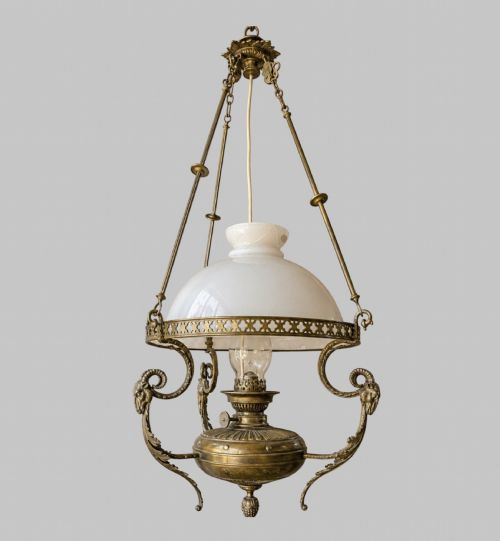
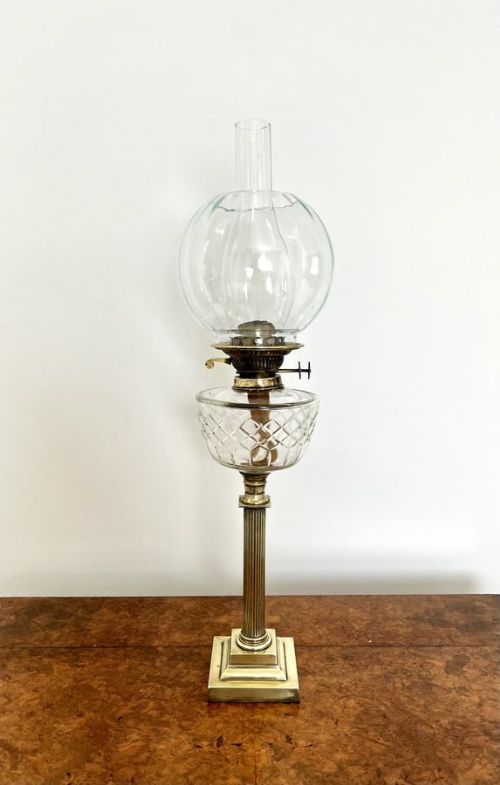
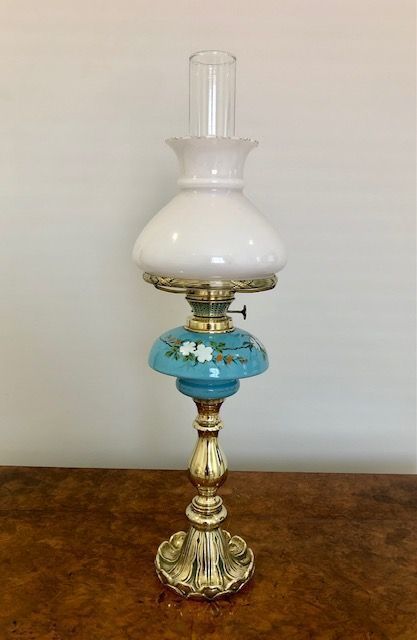

Antique Brass Paraffin Burner
An antique brass paraffin burner brings warm light and solid nineteenth-century weight into a modern room.
Antique Brass Paraffin Burner
An antique brass paraffin burner is a domestic lighting fixture designed to burn lamp oil using a cotton wick. These objects span from the mid-Victorian era through the Edwardian period and into the early twentieth century.
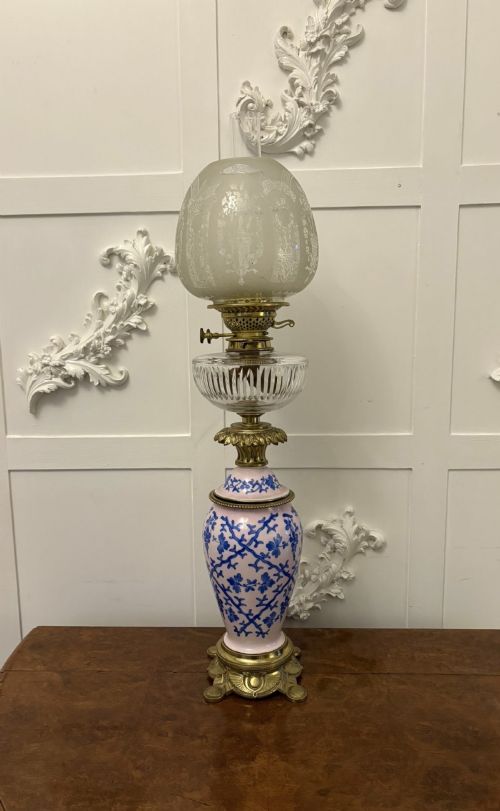
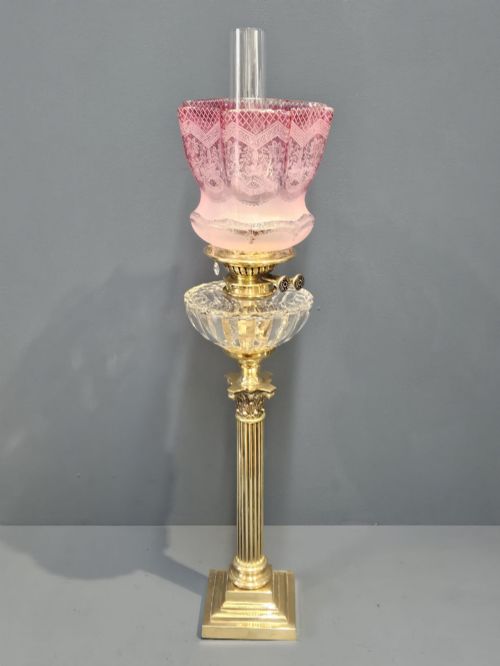
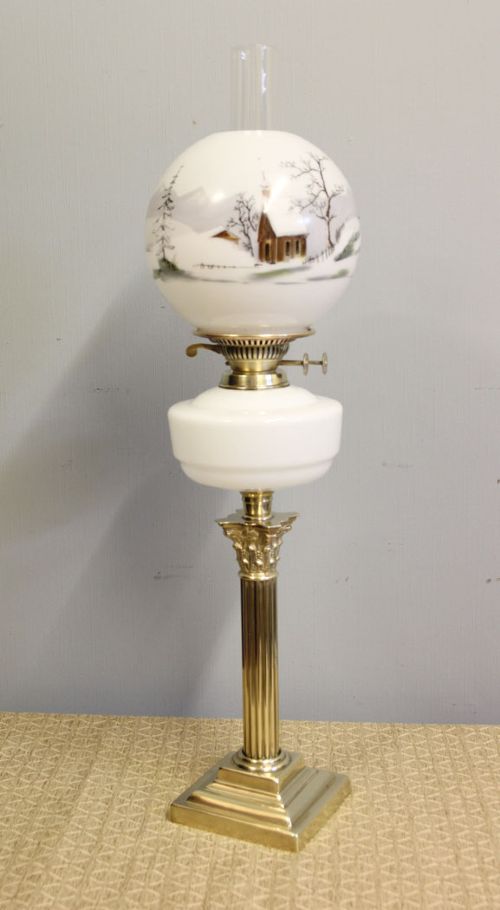
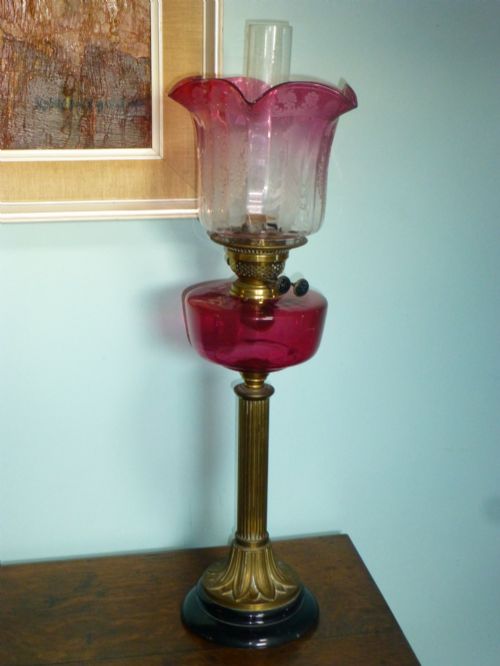
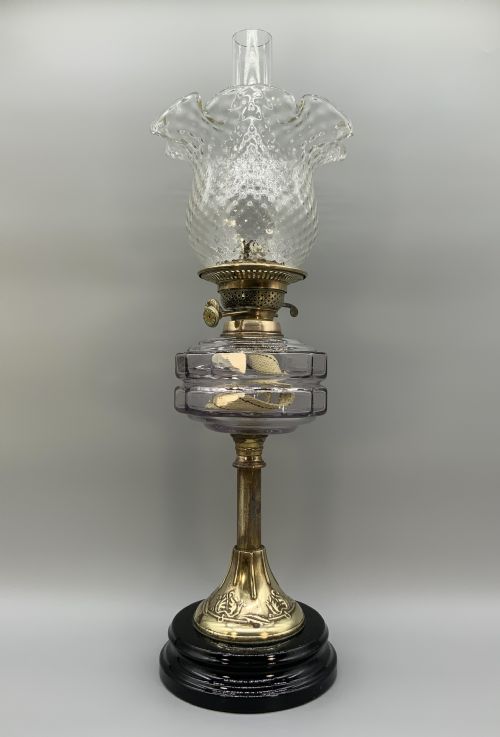
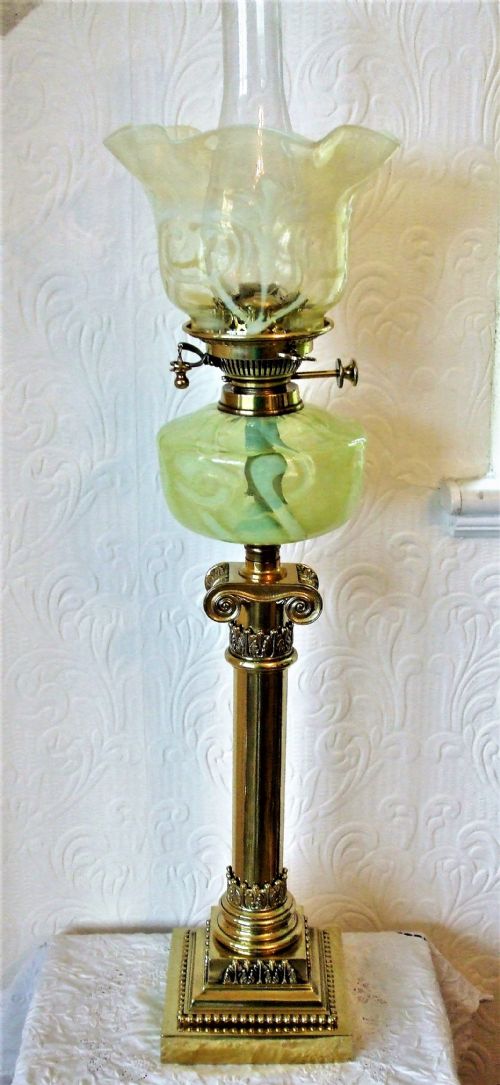
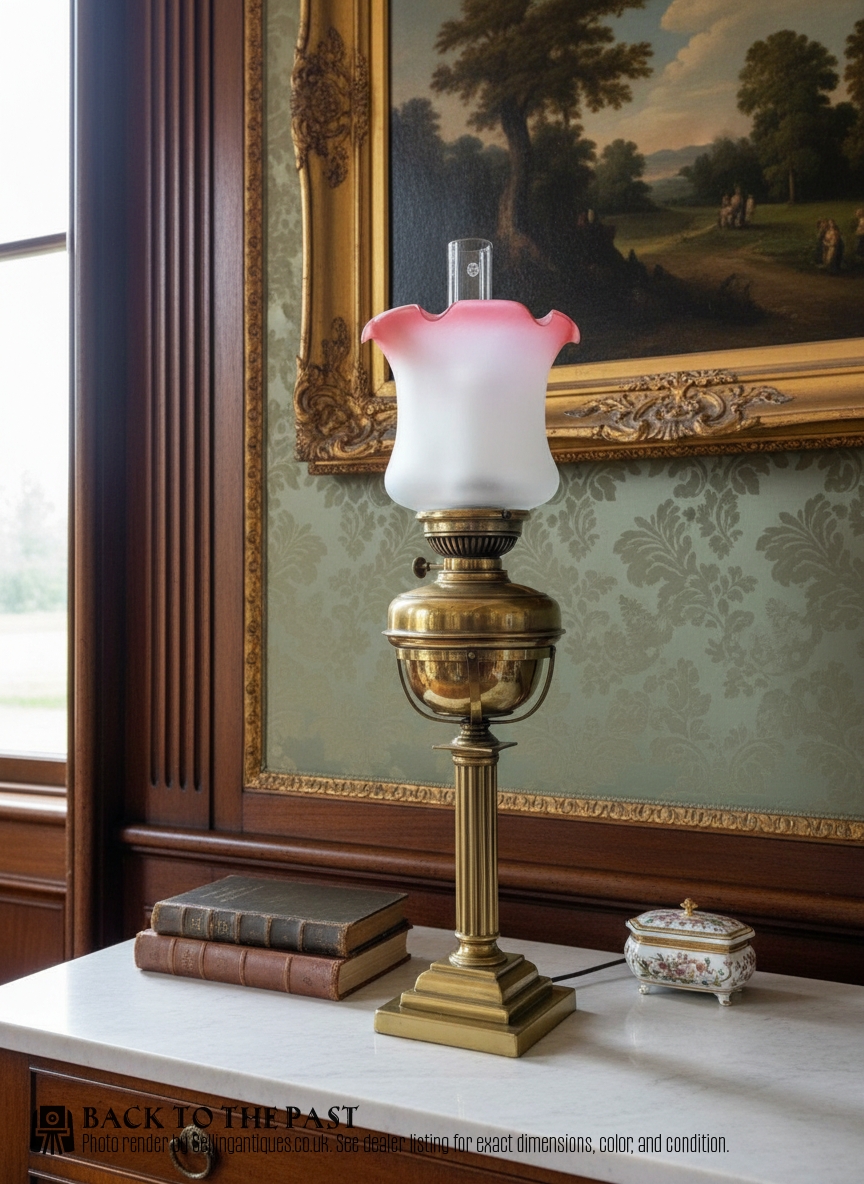
The version most commonly met on this page is the tall table lamp, often standing on a Corinthian or Ionic column above a heavy metal base. Many examples combine polished brass reservoirs and stems with contrasting glass components.
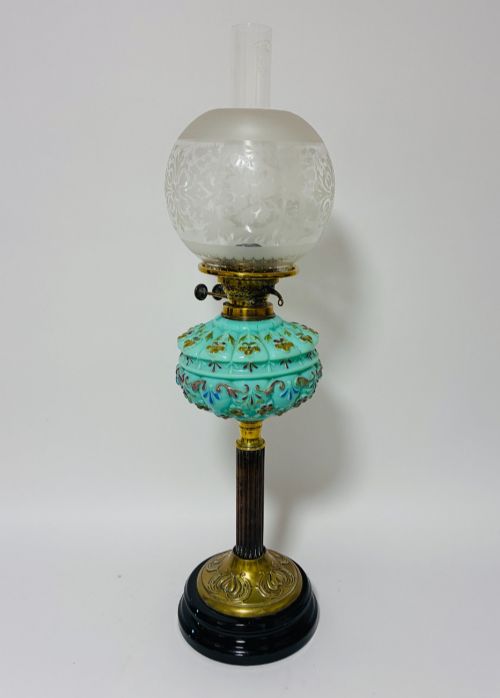
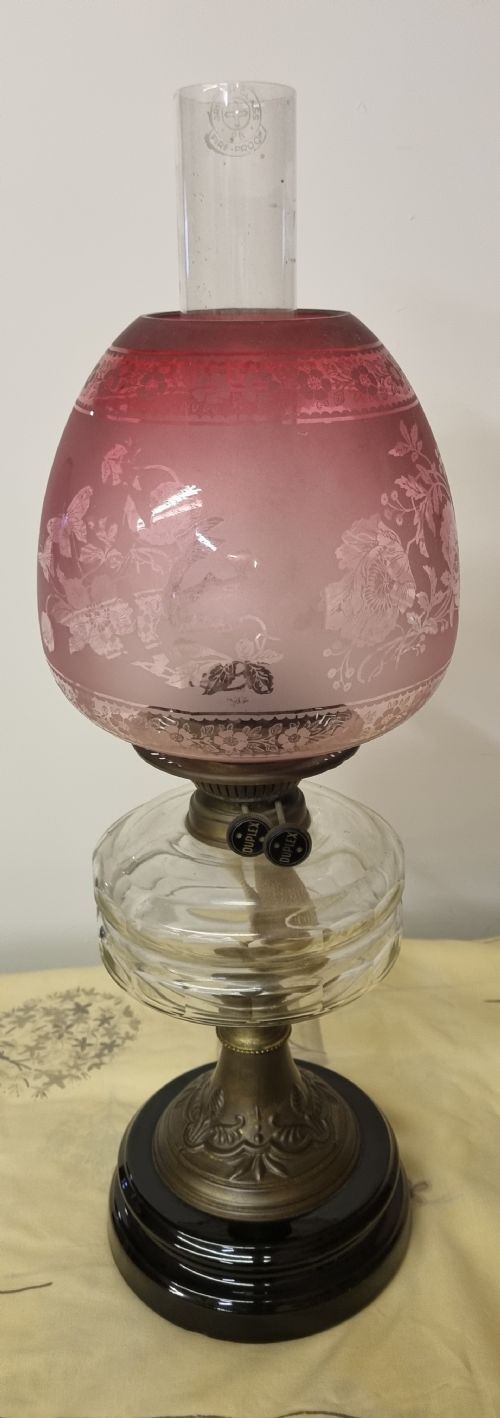
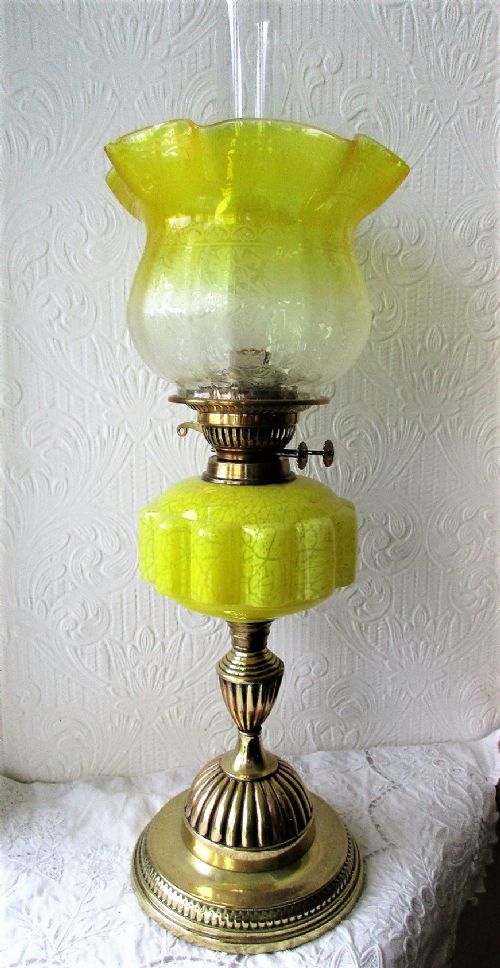
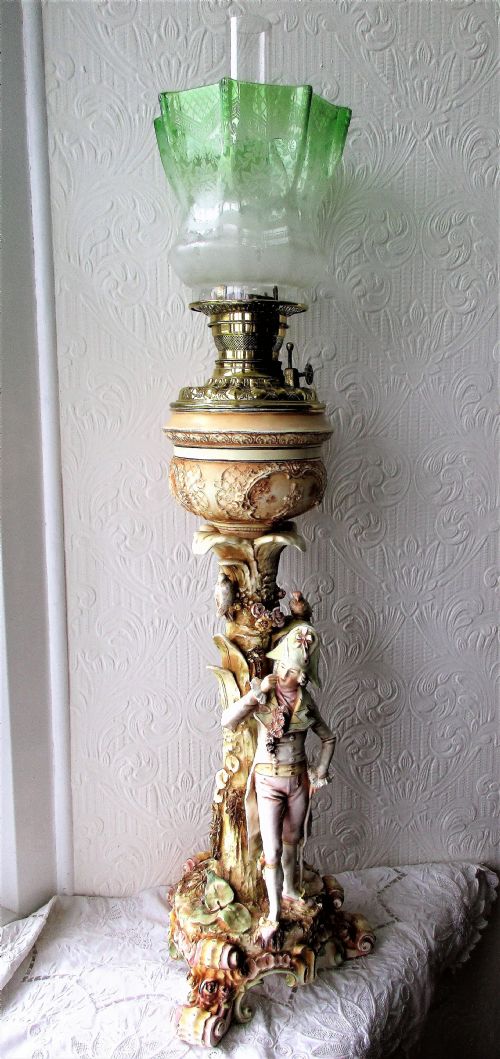
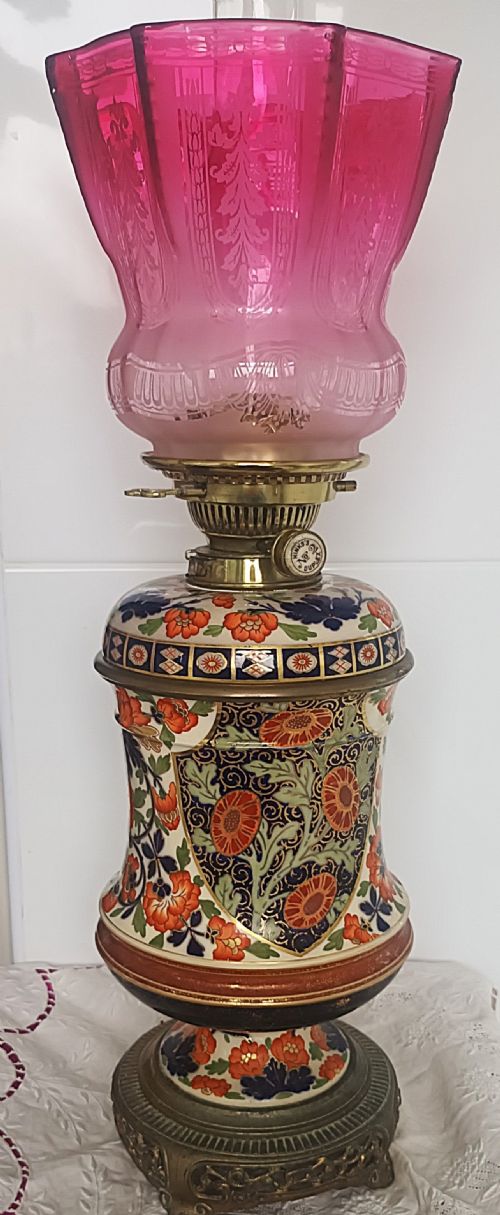
Makers mounted these burners on ceramics, porcelain, or coloured glass fonts, creating pieces that served as both functional household illumination and decorative domestic centerpieces.
Materials and Construction
Makers constructed the structural columns and bases from cast and spun brass, polished to a bright finish or left with a warm patina. These metal parts support fuel reservoirs made from pressed glass, opaline glass, or hand-painted porcelain.
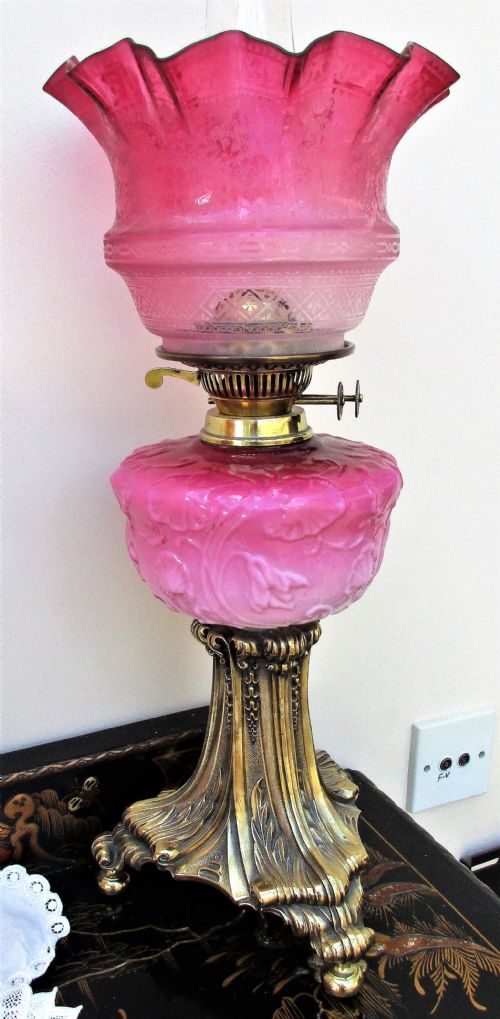
Shades paired with these burners involve hand-blown glass, including cranberry glass, etched glass tulip designs, and satin glass. Specialised mechanical components such as duplex burners and twin-burning systems regulate the flame.
Listings here feature nineteenth-century and early twentieth-century examples incorporating brass, cranberry glass, porcelain, and ceramic materials.
Distinctions in Quality
Quality depends upon the precision of the cast brass detailing, such as the crispness of acanthus leaves on a Corinthian capital or the substantial weight of the metal base. Superior examples integrate complex double-burner mechanisms alongside intact, hand-blown or etched glass shades.
Lamps combining multiple materials, such as porcelain figures paired with brass mounts or layered cranberry and cut glass fonts, demonstrate higher craftsmanship than standard utilitarian models.
Hinks·Taylor Tunnicliff·Wild and Wessel
The Antique Brass Paraffin Burner Glossary
- Duplex burner
- A double-wick mechanism designed to produce a brighter flame than single-wick variants. This system requires two parallel flat wicks housed within a shared gallery.
- Font
- The oil reservoir portion of the lamp, positioned above the base and below the burner. Fonts appear in brass, ceramic, and coloured glass.
- Opaline glass
- A milky, semi-translucent glass popular for Victorian and Edwardian lamp shades. It diffuses the internal flame into a soft glow.
Antique Brass Paraffin Burner: Frequently Asked Questions
How do I operate an antique paraffin burner?
Fill the reservoir with standard lamp oil and allow the cotton wick to absorb the liquid thoroughly before lighting. Adjust the wick height using the side thumbwheel to control the flame size and prevent smoke.
Keep the glass chimney clean and dry to ensure proper airflow and clear illumination during use.
Can I convert these lamps for electric use?
Many collectors prefer to preserve the original oil mechanism without alteration, maintaining historical integrity. Conversion involves running a discreet cord through the central column without damaging the brass fittings.
Professional wiring ensures the lamp functions safely as a bedside or desk light while retaining its antique appearance.
How do I clean antique brass safely?
Dust the metal gently with a dry microfibre cloth to remove surface particles without scratching the antique surface. Avoid harsh chemical polishes that strip away the aged patina accumulated over decades.
Glass components and shades can be washed separately in warm soapy water and dried completely before reassembly.
How do I distinguish Victorian from Edwardian lamps?
Victorian models often feature heavy, ornate brass castings, Corinthian columns, and rich cranberry or etched glass shades. Edwardian examples tend toward simpler lines, slender columns, and lighter opaline or pastel shades.
Makers active around the turn of the century frequently combined classical revival motifs with functional improvements like twin-burning systems.