
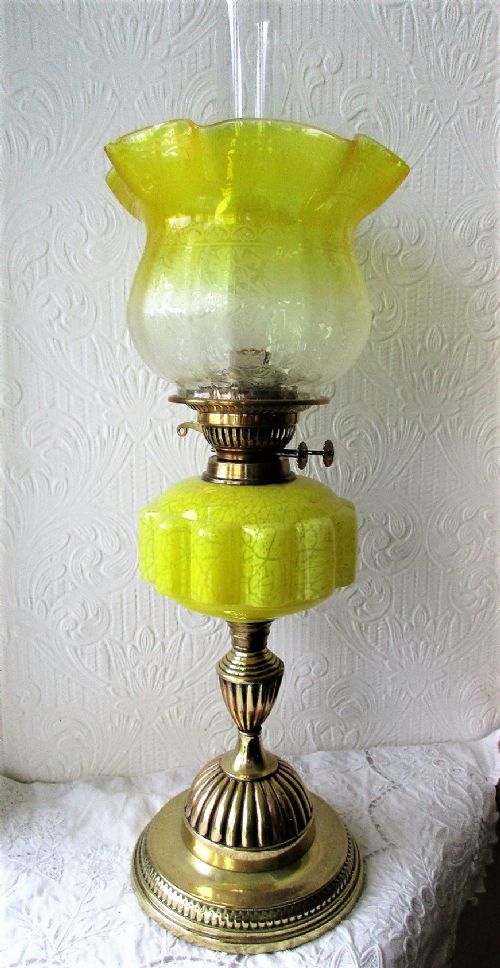
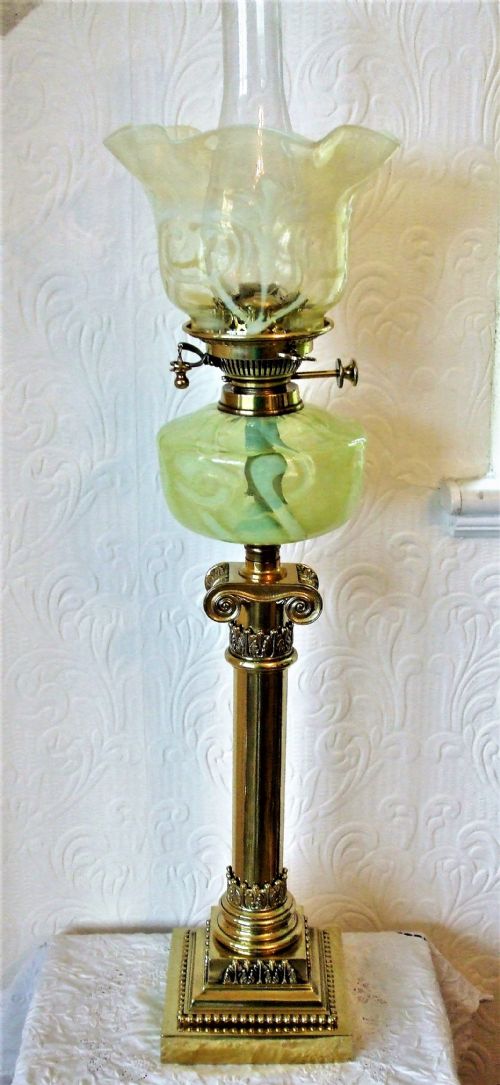
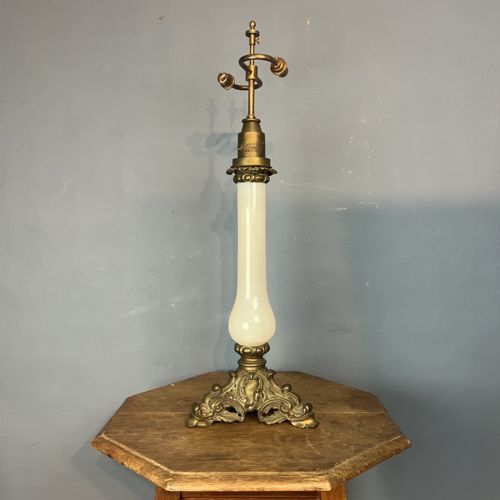
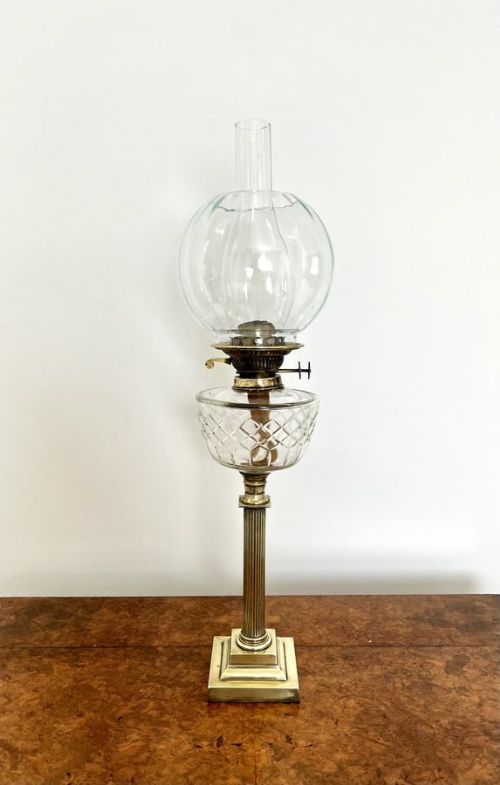
Column Oil Lamp
When you search for a column oil lamp, you enter a distinct world of Victorian and Edwardian domestic lighting defined by architectural brass and colourful glass fonts.
Column Oil Lamp
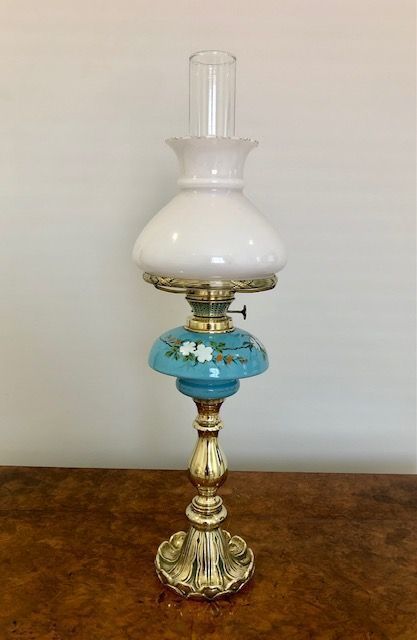
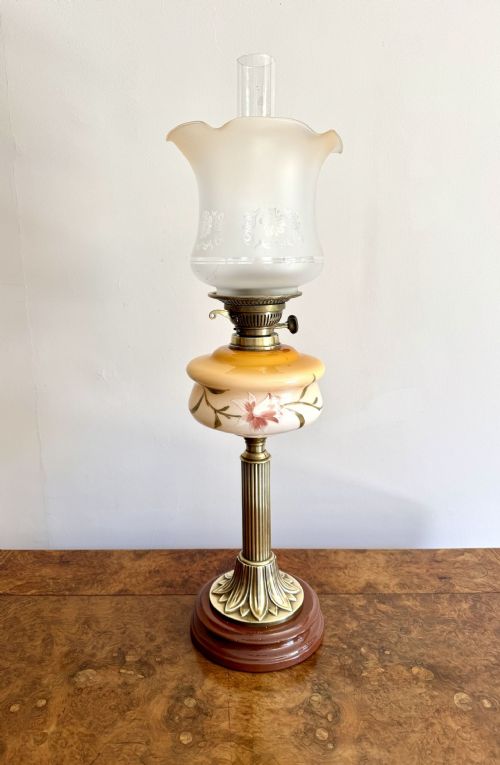
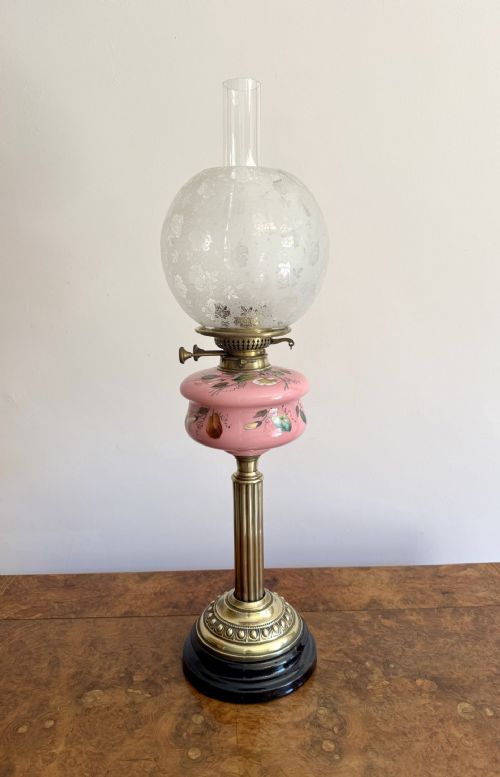
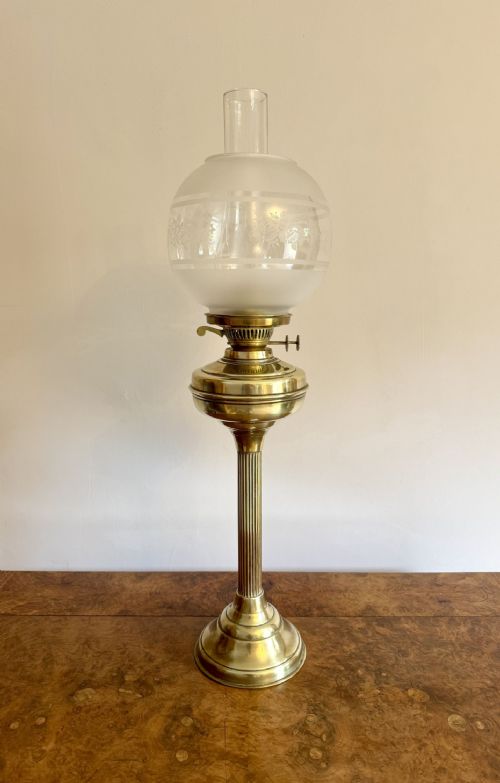
A column oil lamp combines an architectural metal shaft with a glass or ceramic reservoir, designed to illuminate nineteenth-century interiors. These domestic items draw heavily on classical design traditions, frequently adopting the proportions of ancient Greek and Roman capitals.
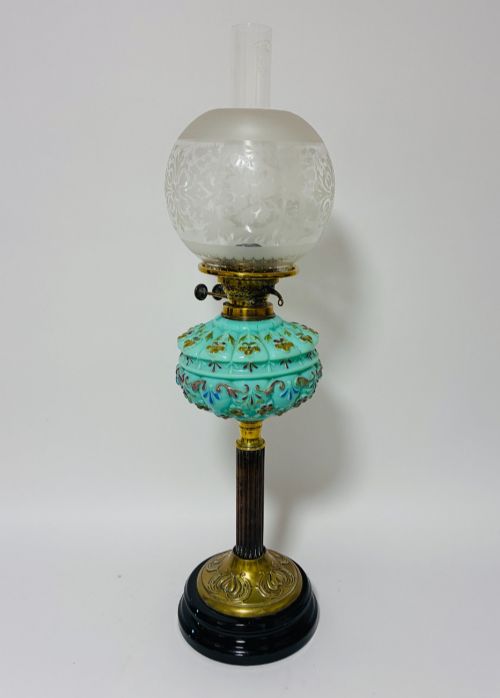
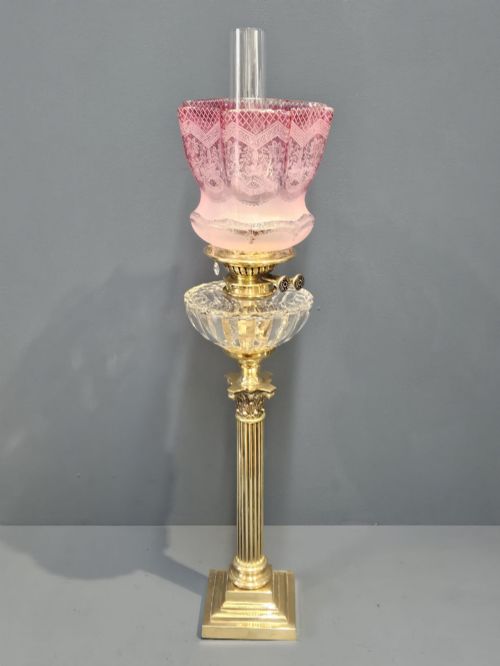
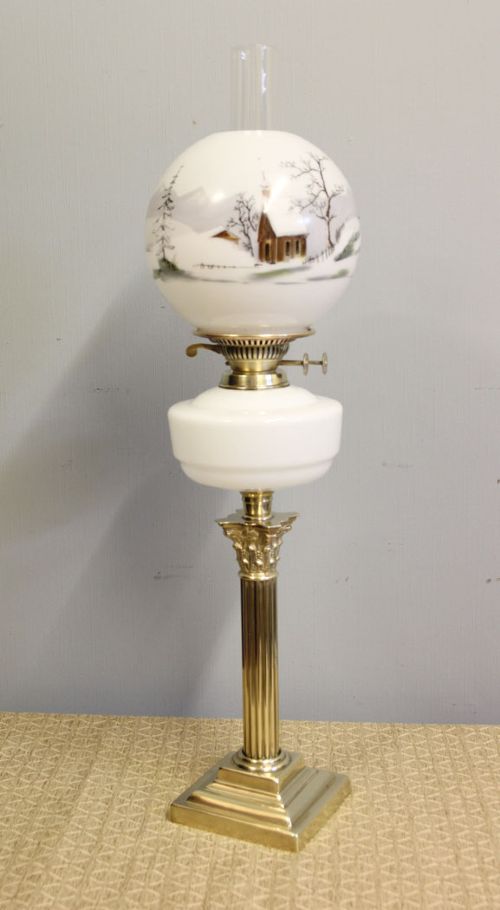
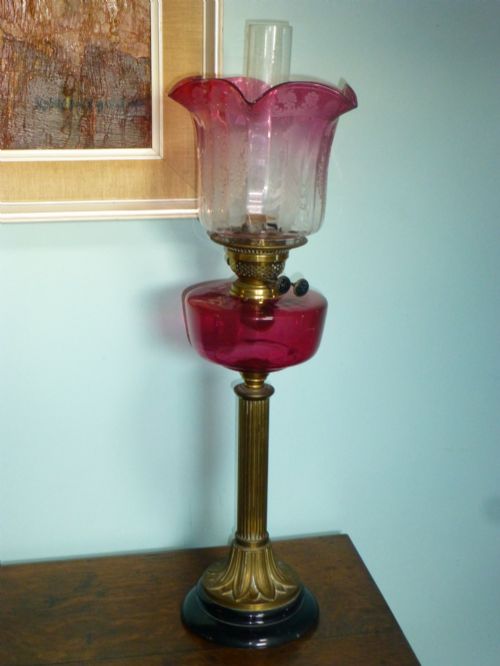
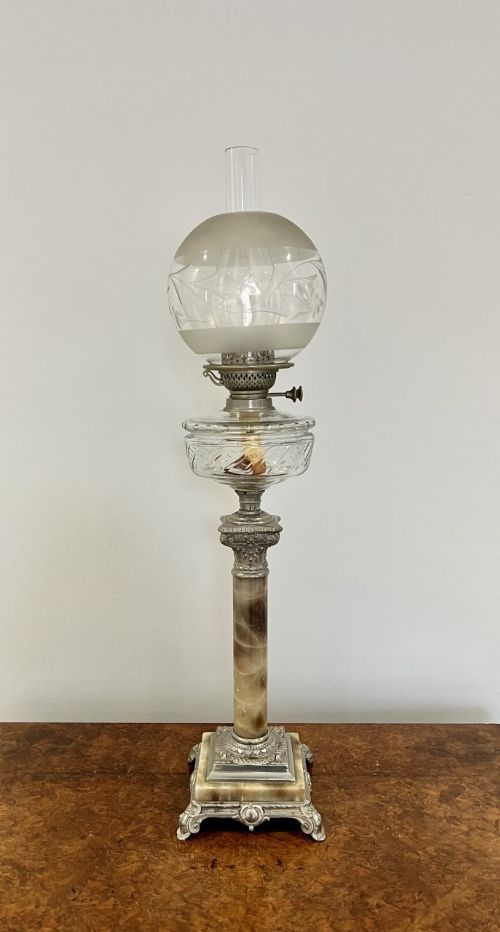
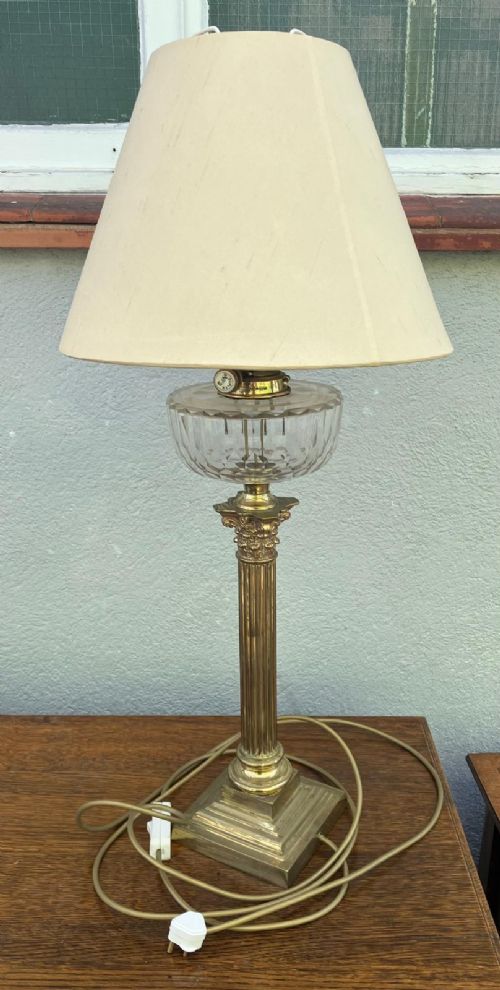
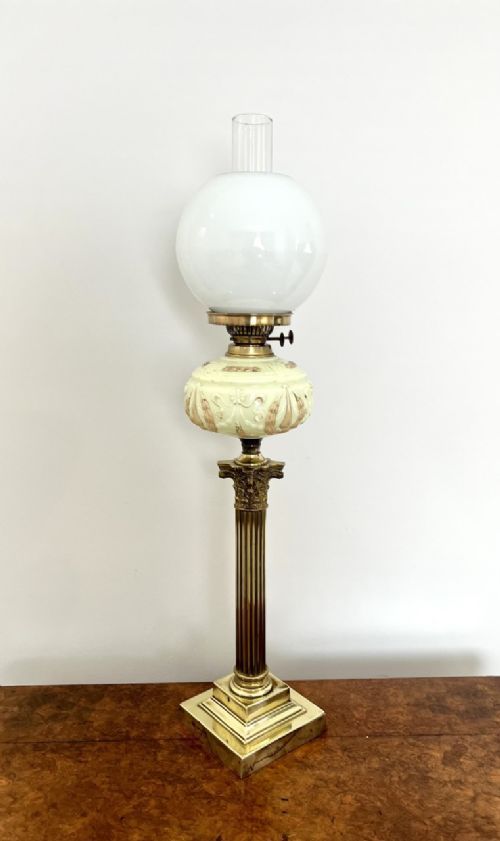
The version most commonly encountered on this page is the Victorian brass Corinthian column oil lamp. These pieces typically pair a stepped square base with a fluted or reeded brass shaft and a contrasting coloured glass font.
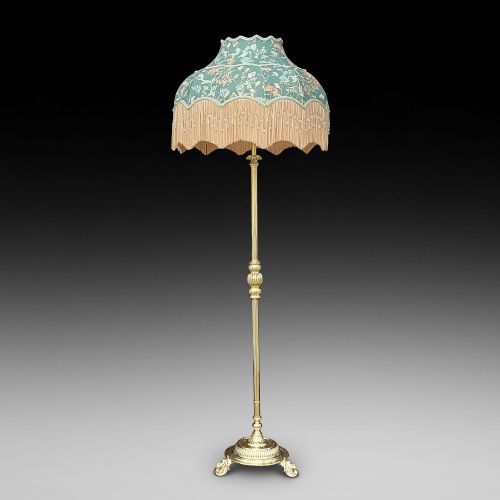
Beyond standard table models, collectors encounter taller standard lamps designed to stand directly on the floor. Surviving examples frequently retain their original burners, while others have been carefully adapted for modern electric use.
How they were made
Makers constructed the primary columns from cast and turned brass, silver plate, or occasionally bronze, often incorporating detailed acanthus leaf motifs into the capitals. These metallic structures provide the necessary weight and stability to support heavy glass reservoirs.
Reservoirs and shades utilise coloured or cased glass, including cranberry, ruby, opaline, and cut crystal varieties. Specialised techniques allowed artisans to etch floral or winter scenes onto the glass shades, diffusing the internal light.
Materials recorded on this page include brass, silver plate, bronze, and diverse coloured glasses such as cranberry, ruby, and opaline.
What varies in quality
The standard of modelling in the cast brass capitals distinguishes everyday lighting from exceptional examples. Finer pieces display crisp, deep casting work in the acanthus leaves rather than softened or flattened details.
Proportion and scale play significant roles in determining the distinction of a lamp. Taller standards, heavier gauge metalwork, and unusually coloured or deeply cut crystal fonts mark out the most ambitious production.
Hinks of Birmingham·Messenger and Co·Goldsmiths and Silversmiths Company·Mc Gary·Osler
The Column Oil Lamp Glossary
- Corinthian column
- A classical architectural order featuring an ornate capital decorated with acanthus leaves. This motif forms the visual anchor for the majority of these lamps.
- Duplex burner
- A double-wick mechanical system developed to produce a significantly brighter flame than single-wick predecessors. It remains a hallmark of larger Victorian lighting.
- Font
- The glass, ceramic, or metal reservoir that holds the paraffin or oil beneath the burner. They frequently appear in contrasting colours such as cranberry, blue, or ruby.
- Opaline glass
- An opaque, milky-white glass popular during the nineteenth century for shades and fonts. It diffuses light with a soft, even glow.
- Standard
- A tall floor-standing version of the table lamp, sometimes featuring telescopic adjustment. These pieces served to illuminate larger Victorian reception rooms.
Column Oil Lamp: Frequently Asked Questions
How do I date a column oil lamp?
Dating relies heavily on stylistic cues, burner patents, and manufacturing techniques recorded across the nineteenth century. Earlier pieces from the mid-century often feature simpler bronze or opaline combinations, while later Victorian and Edwardian examples lean towards elaborate Corinthian capitals and etched cranberry glass.
Stamped maker names and patent marks on the brass burner wheels offer further chronological precision. Comparing the weight of the metal and the complexity of the glass cutting helps place the lamp within its proper decade.
Were these lamps originally electric?
None of these lamps were originally electric, as they were manufactured during the Victorian and Edwardian eras to burn paraffin or other illuminating oils. The burners and internal wick mechanisms represent the original functional technology of the period.
Many surviving pieces have since been converted to electricity for modern convenience. Collectors often weigh the appeal of an untouched original burner against the practical utility of a professional electrical conversion.
How were column oil lamps used?
These lamps provided essential indoor illumination for Victorian and Edwardian homes before widespread electrification. Table versions sat upon desks, sideboards, and parlor tables to cast light for reading and entertaining.
Taller standard floor lamps stood in corners or beside seating areas, functioning as prominent decorative furniture pieces as well as light sources. Their substantial brass and glass construction ensured they remained stable during daily domestic use.
What is a duplex burner?
A duplex burner is a dual-wick mechanism designed to burn paraffin efficiently and produce a brighter light than standard single-wick lamps. These assemblies typically feature twin thumbwheels to control the height of each flame independently.
The presence of a recognised maker's name on these brass mechanisms frequently adds historical interest to the piece. They represent a significant technical advancement in nineteenth-century domestic lighting.
How do I live with a converted lamp?
Living with a converted column oil lamp involves integrating a piece of nineteenth-century architecture into modern interior spaces. Their substantial height and reflective brass columns make them effective focal points on large tables or sideboards.
Pairing the lamp with a sympathetic fabric or glass shade maintains its historical character while providing functional ambient light. The durable metal and glass construction requires only gentle dusting to maintain its appearance.