


Victorian Brass Bound Bucket
These victorian brass bound bucket pieces are sturdy timber containers strengthened with metal, offering practical fireside storage and classic maritime charm for the home.
Victorian Brass Bound Bucket
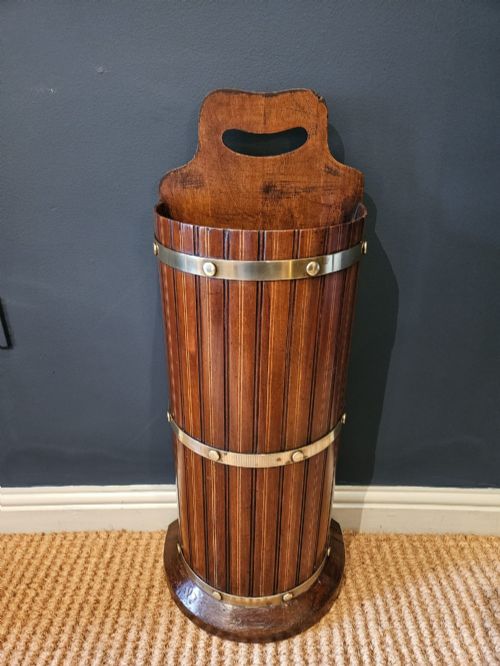
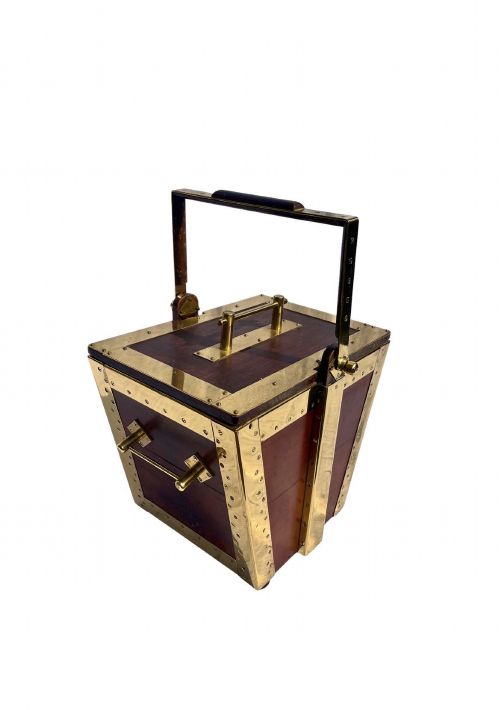
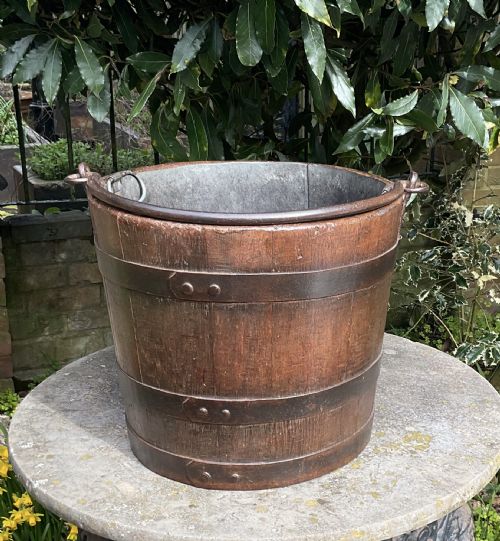
When you search for a victorian brass bound bucket, you are looking at functional wooden vessels traditionally used for coal, logs, wine cooling, or umbrellas. The examples found here span the nineteenth century into the early twentieth century, taking forms such as oak umbrella stands, walnut fireside bins, mahogany log stores, and coppered rum barrels.
You are most likely to meet coopered oak and mahogany forms on this page, often fitted with metal liners or armorial crests. These sturdy containers served practical roles in domestic and naval settings alike before finding a permanent place in traditional interior decoration.
Materials and construction
Makers built these pieces using traditional coopering techniques, shaping individual staves of oak, mahogany, walnut, or general wood to form rounded or oval vessels. Skilled artisans then secured these timber staves with tight bands of brass and iron to ensure structural integrity.
Many examples incorporated internal zinc, metal, or lead liners to contain moisture or coal dust, protecting the outer timber from decay. Surface details ranged from plain polished wood to decorative handles and cast armorial crests.
Object forms span umbrella stands, coal boxes, log bins, rum barrels, boat-shaped jardinieres, and fire buckets.
Distinguishing quality
The distinction between standard utility items and finer examples lies in the precision of the coopering and the selection of timber grain. Richly figured mahogany, well-matched oak staves, and substantial gauge brass bands separate decorative display pieces from basic utilitarian gear.
Proportion and original internal hardware also dictate desirability, particularly where stamped crests, secure handles, or fitted liners remain intact. Pieces retaining their structural robustness without excessive timber shrinkage stand firmly at the upper end of the range.
The Victorian Brass Bound Bucket Glossary
- Coopered
- Made by a cooper using curved wooden staves bound together with hoops of metal or wood. This method was essential for watertight vessels like casks and tubs.
- Jardiniere
- An ornamental pot or stand for holding plants or flowers. These items often mirror the construction of coal buckets but feature waterproof liners.
- Celleret
- A lockable container used for holding bottles of wine near the dining table. They frequently appear in mahogany with robust brass bands.
- Armorial crest
- A design derived from a coat of arms, sometimes engraved or mounted onto metal surfaces. Such crests appear on naval and institutional equipment.
Victorian Brass Bound Bucket: Frequently Asked Questions
What were these buckets originally used for?
These vessels served various domestic and maritime functions, including holding coal for hearths, storing logs, cooling wine, and containing umbrellas or walking sticks in hallways.
Naval examples also functioned as rum barrels or fire buckets, reflecting the demanding daily requirements of ships and large households alike.
How do I care for wooden buckets?
Keep wooden pieces away from direct heat sources and excessive moisture swings to prevent the timber staves from shrinking or cracking. Regular polishing with appropriate wax helps maintain the lustre of both the wood and the brass bands.
Avoid using abrasive cleaners on the metal mounts, as gentle maintenance preserves the natural patina accumulated over the decades.
How can I tell the age of a piece?
Dating relies upon examining the timber species, hand-cut joinery details, and the construction methods used for the brass bands. Nineteenth-century examples often display distinct tool marks and heavier gauge metals compared to later reproductions.
The presence of original zinc liners and period wear patterns also provides reliable clues regarding the decade of manufacture.
Are these pieces waterproof?
While many historical examples featured metal liners designed to hold water, ice, or wet umbrellas, original linings can develop leaks over time. It is advisable to inspect the interior container before using it directly for plants or liquids.
Using a modern secondary insert inside the historic shell helps protect the original timber from water damage.