
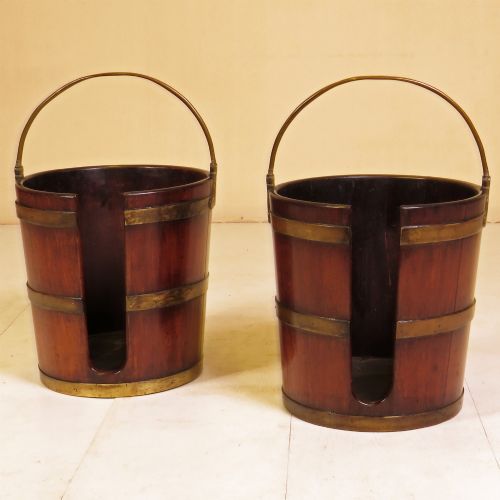
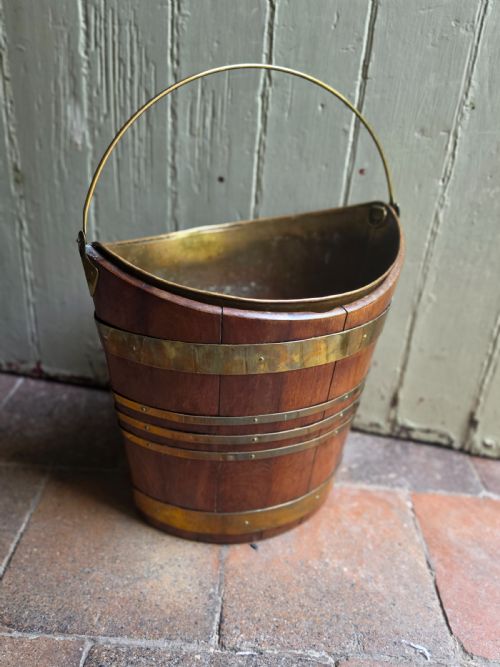
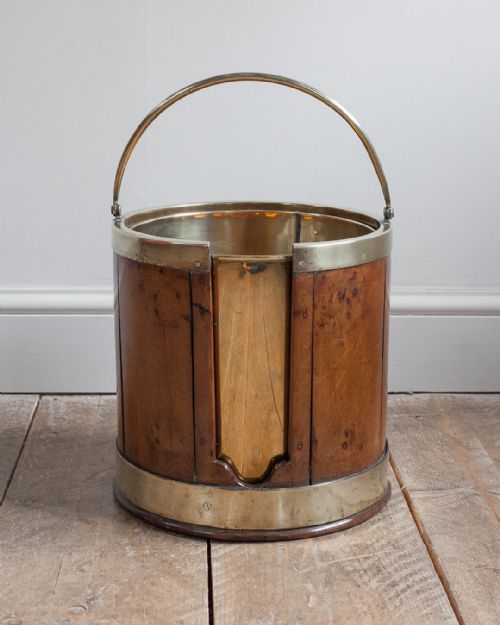


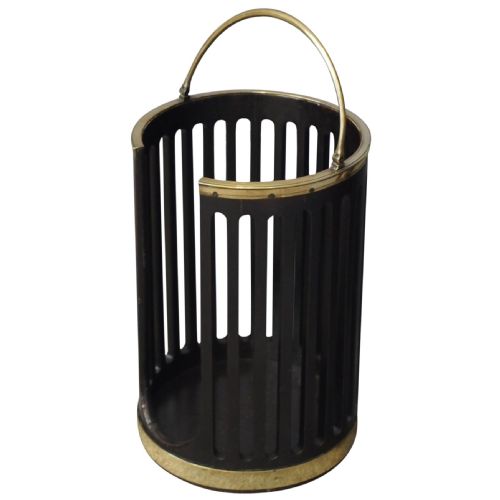
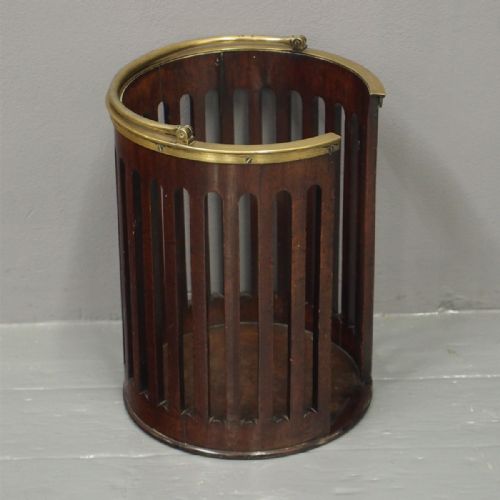

Brass Bound Mahogany Pail
A brass bound mahogany pail is a sturdy timber vessel traditionally used for holding plate or serving wine, combining rich tropical hardwood with bright metalwork.
Brass Bound Mahogany Pail
When you search for a brass bound mahogany pail, you encounter robust coopered containers built to withstand heavy domestic use in Georgian and Victorian dining rooms. These pieces commonly take the form of plate buckets, wine coolers, and wine coolers and cellarettes designed to stand beside the table or hearth.
The versions most frequently met on this page span the eighteenth century and the nineteenth century, including specific George III and Victorian examples. Makers shaped these items from dense timber, fitted them with metal bands for structural strength, and utilised internal linings to protect the wood from moisture.
Collectors find that these decorative containers served practical roles before transitioning into purely ornamental pieces for contemporary interiors. The survival of pairs and individual items reflects the enduring appeal of traditional cabinetmaking and cooperage from the Georgian era.
Materials and construction methods
Makers constructed each brass bound mahogany pail using traditional cooperage techniques, joining individual vertical staves of mahogany with precision and securing them tightly with heavy metal bands. The timber provides a deep, warm grain while the metal strapping ensures durability across centuries of use.
Workshops incorporated brass for the structural bands and decorative accents, frequently pairing it with internal components of zinc and iron. This combination of materials allowed the vessels to safely hold wet ice, bottles, or heavy ceramic plates without compromising the timber staves.
Many of these noble vessels spent their youth hiding under sideboards, silently holding heavy plates while aristocrats argued about grain tariffs.
Distinctions in quality and finish
The finest examples display superior timber selection with rich figuring in the mahogany, alongside hand-beaten or cast brass bands that fit the contours of the staves without gaps. Lesser pieces show simpler grain patterns and heavier, less refined metalwork.
The integrity of the coopered construction and the preservation of original linings, such as zinc, dictate the overall standard of survival. Pieces that retain their original structural harmony without excessive timber shrinkage stand at the top of the range.
The Brass Bound Mahogany Pail Glossary
- Coopered
- Constructed from curved wooden staves joined edge to edge and bound with metal hoops, much like a barrel. This method gave vessels the strength needed to hold liquids or heavy tableware.
- Plate Bucket
- A specialised container designed to hold dining plates safely during meals or storage. They frequently feature a curved brass handle and a flared rim.
- Cellarette
- A low cabinet or container used to hold wine bottles near the dining table. In this context, they share the coopered construction and brass binding of standard pails.
- Stave
- One of the narrow vertical strips of mahogany that form the body of the pail. Coopers tapered these pieces precisely to create the characteristic curved profile.
Brass Bound Mahogany Pail: Frequently Asked Questions
What were brass bound mahogany pails used for originally?
These vessels served practical functions in large households, primarily holding porcelain plates or chilling wine bottles with ice during formal meals.
Servants positioned them beneath sideboards or beside the dining table for easy access throughout the course of a dinner party.
How do I tell an 18th-century piece from a Victorian one?
Eighteenth-century examples generally display finer dovetail or coopered joinery and lighter, more elegant brass bands with hand-finished details.
Victorian pieces tend to be heavier in construction, utilising thicker mahogany staves and machine-finished brass components that reflect industrial production shifts.
Can I use these pails for plants or logs today?
While sturdy, original Georgian and Victorian pieces benefit from careful handling to preserve their historical timber and metalwork surfaces.
Using them as dry decorative containers or standalone objects protects the fragile internal linings and historic wood from moisture damage.
Why do some pails have handles and others do not?
Pails equipped with strong brass drop handles were designed to be carried easily by servants when filled with heavy plate or ice.
Those without handles typically functioned as stationary wine coolers or cellarettes that remained in a fixed position beside the dining table.