


Victorian Blush Porcelain
Victorian blush porcelain brings soft, creamy ceramic tones and delicate floral hand-painting into any room, offering a distinct charm for collectors of late nineteenth-century ceramics.
Victorian Blush Porcelain
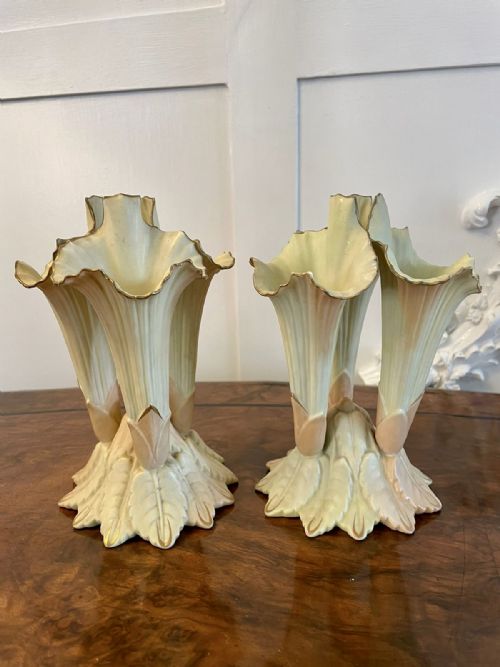
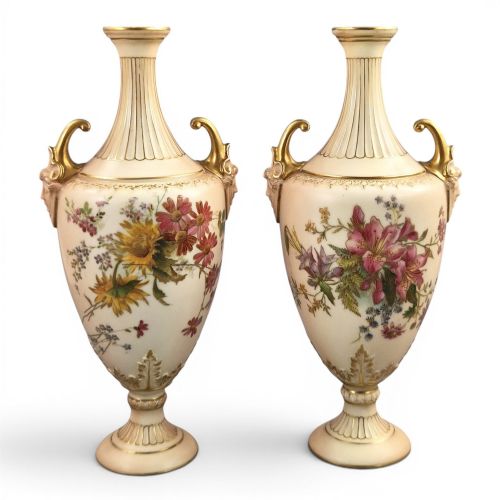
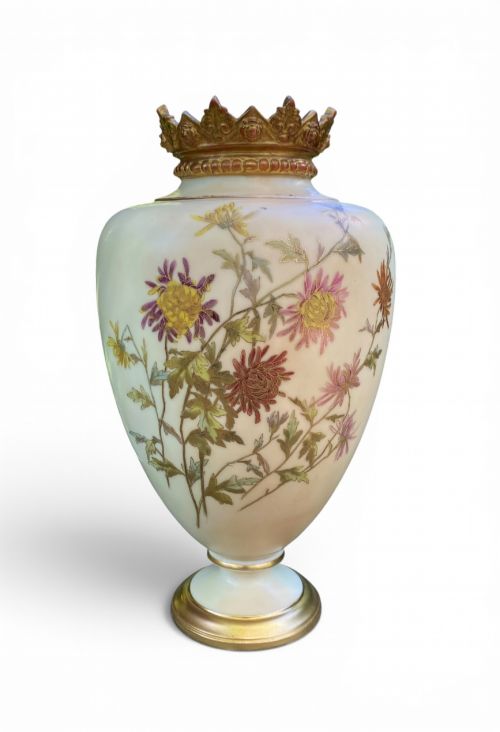
When searching for victorian blush porcelain, collectors encounter pieces primarily produced by British potteries during the late nineteenth and early twentieth centuries. These items range from vases and jugs to intricate figurines and ewers.
The most common examples on this page hail from Royal Worcester, often bearing the characteristic blush ivory ground adorned with floral sprays and gilt edges.
The aesthetic spans standard Victorian production as well as specialised movements like the Victorian Aesthetic Movement and Victorian Orientalism, reflecting diverse stylistic influences of the period.
Materials and Techniques
Potters created the signature ivory effect using a specialised porcelain body covered in a delicate tinted glaze, onto which artists hand-painted floral motifs and pastoral scenes.
Gilding, gold leaf, and enamel were frequently applied to handles, rims, and borders to accentuate the pale ceramic background.
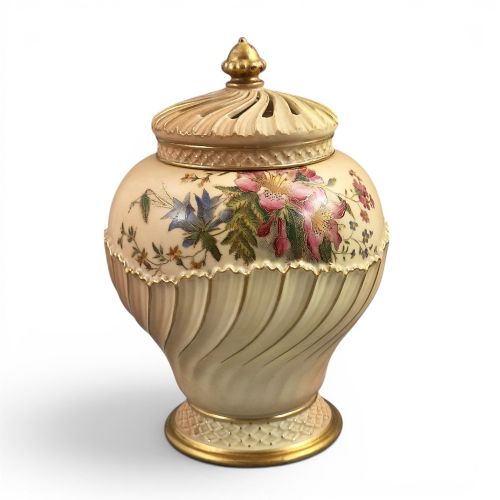
Many items incorporate pierced elements or moulded details, requiring skilled craftsmanship in both the initial shaping and the final decorative finishing.
Listings span the nineteenth and twentieth centuries, incorporating Victorian, Edwardian, and later periods alongside materials like gold leaf and enamel.
Quality Variations in the Range
The skill of the hand-painting dictates much of the distinction between standard production items and exceptional works, particularly in detailed figure painting and floral rendering.
Complexity of form also plays a role, as heavily modelled pieces with pierced handles, intricate ewers, or figural components demand greater technical mastery from the potter and decorator.
Signatures, date ciphers, and specific pattern numbers provide clear indicators of origin and workshop standard, guiding the discernment of collectors.
Royal Worcester·Locke And Co·Carlton Ware·Kornilov Brothers·Doulton Burslem
The Victorian Blush Porcelain Glossary
- Blush ivory
- A soft, creamy ceramic glaze developed to mimic the appearance of ivory, serving as the canvas for hand-painted decoration.
- Ewer
- A large jug with a wide spout and elaborate handle, traditionally used for pouring water but frequently produced purely for display.
- Gilding
- The application of gold leaf or gold paint to ceramic surfaces, typically highlighting rims, handles, and decorative borders.
- Pâte-sur-pâte
- A method of ceramic decoration where successive layers of liquid clay are built up to create a low relief cameo effect before firing.
- Pot-pourri jar
- A decorative vessel featuring a pierced cover designed to hold dried scented plant materials for freshening a room.
Victorian Blush Porcelain: Frequently Asked Questions
How do I clean Victorian blush porcelain?
Dust these delicate ceramic items gently with a soft, dry cloth to prevent any accumulation of dirt.
Avoid using water, chemical cleaners, or abrasive materials, as these can damage the hand-painted enamels and delicate gilding.
Can these vases hold water?
Many of these vessels were created primarily for ornamental purposes rather than practical daily use.
Placing water inside antique ceramic pieces can risk moisture seeping into older bodies and glazes, so dry display is generally recommended.
How do I identify a date mark?
British potteries often stamped their wares with specific symbols, dots, or letter codes beneath the glaze to indicate the precise year of manufacture.
Consulting standard factory date reference guides helps match these impressed or printed ciphers to the correct decade.