



Victorian Blue Pottery Vases
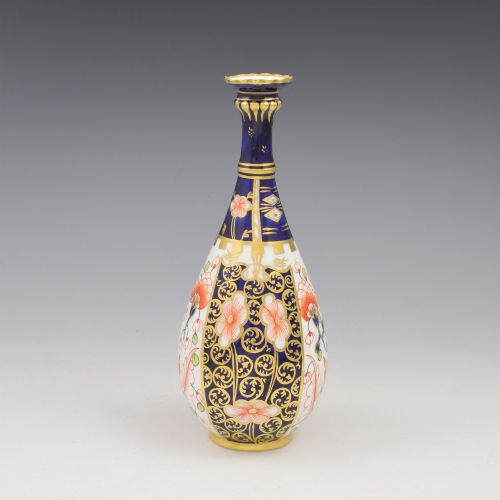
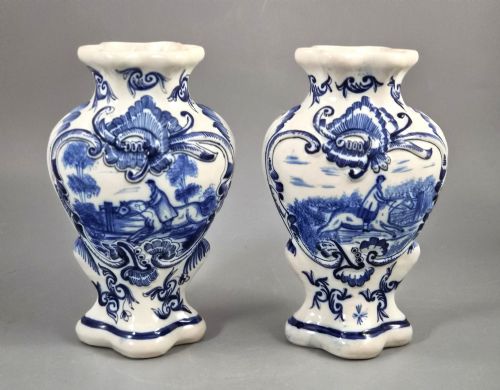
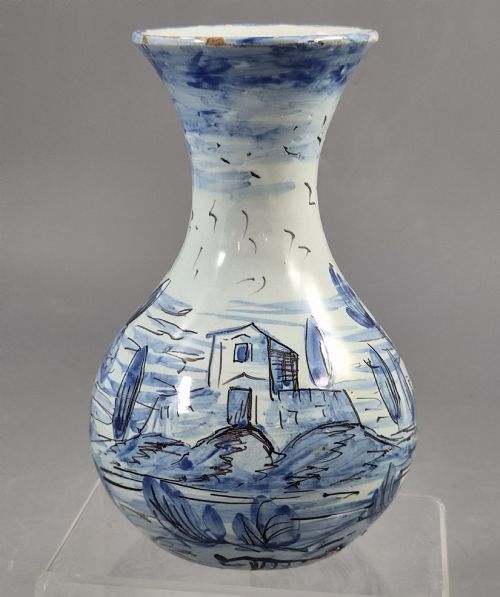
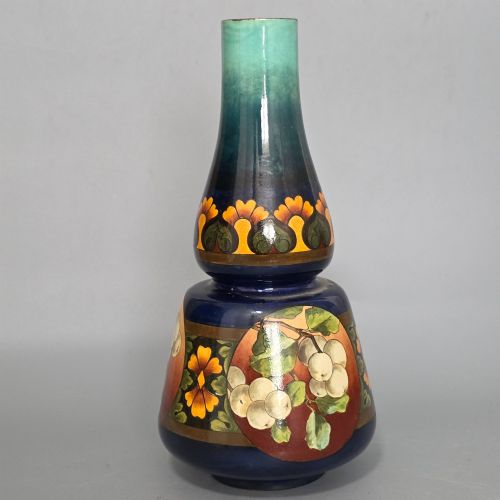
These Victorian blue pottery vases bring rich colour and varied glaze work into a room, offering strong historic character for collectors and decorators alike.
Victorian Blue Pottery Vases
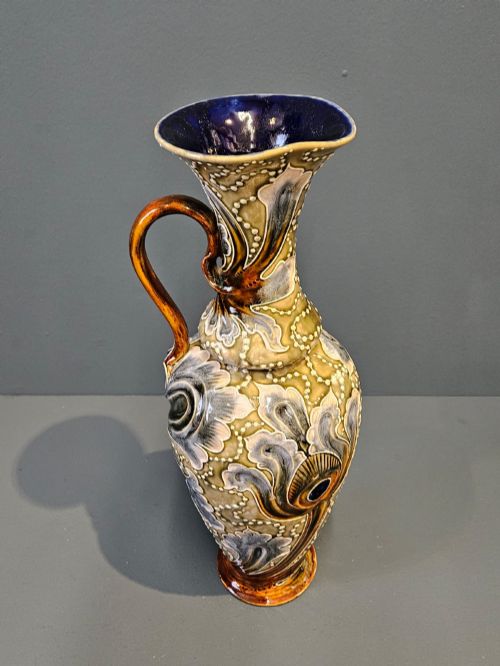
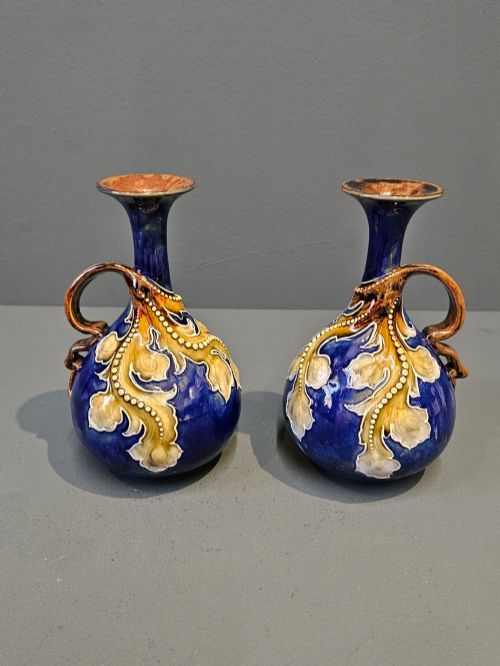
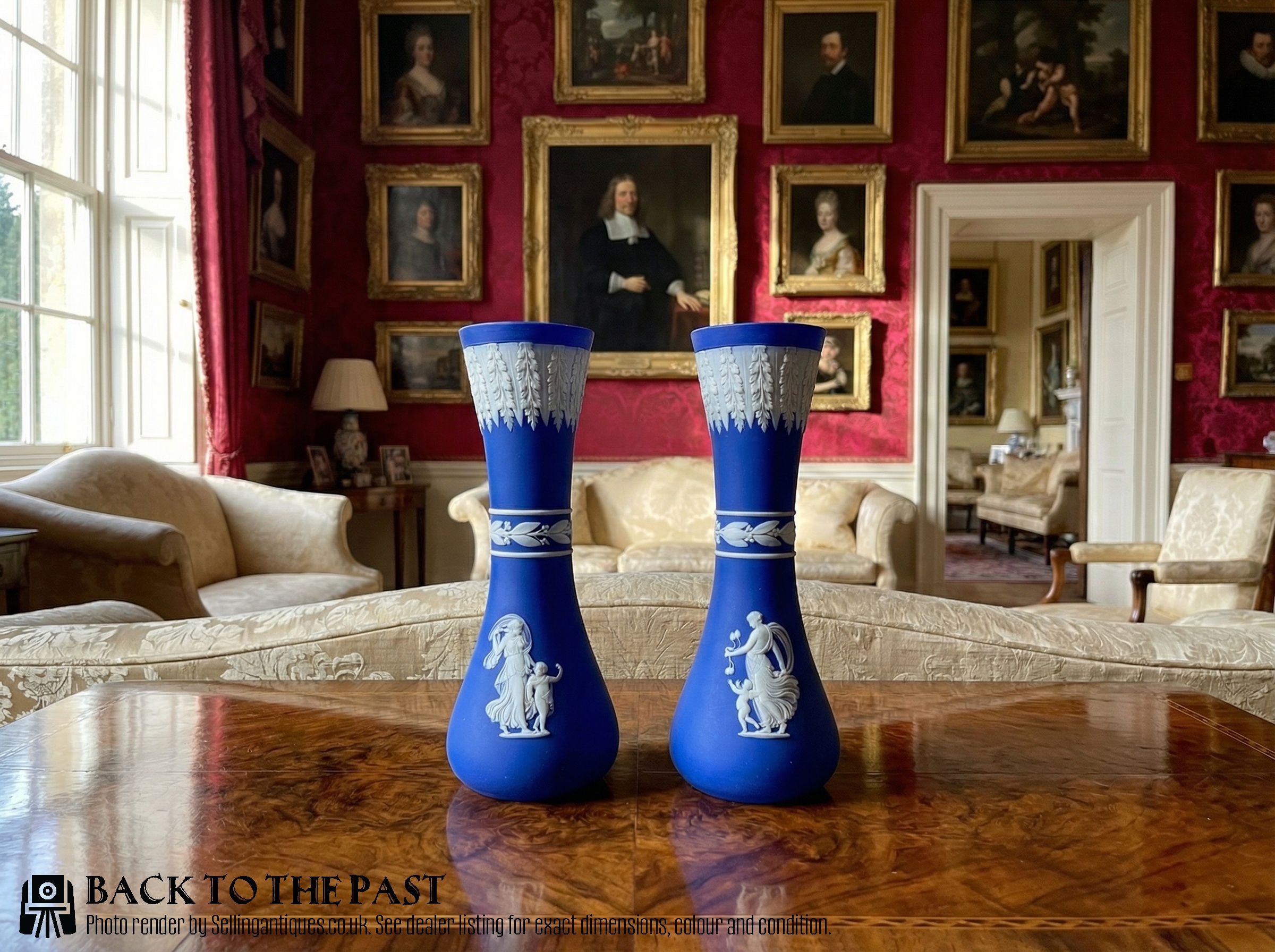
Victorian blue pottery vases encompass a wide range of decorative vessels produced across the nineteenth century and into the early twentieth century. These pieces appear in forms such as standard vases, ewers, wall pockets, jars and spill vases.
The selection on this page leans heavily towards British studio and commercial production, dominated by Doulton Lambeth wares alongside Staffordshire figures, Minton majolica and Moorcroft pottery. Continental works, including French faience and Italian maiolica, also populate the range alongside items bearing distinct Art Nouveau and Arts and Crafts styling.
Buyers encounter everything from monumental display urns to small cabinet pieces, reflecting the diverse output of Victorian potteries working in blue earthenware and stoneware.
How they were made
Potters shaped these vessels using earthenware and stoneware bodies, often applying intricate glazes and enamel highlights to achieve rich surface depths. Techniques ranged from slip-casting and throwing to detailed hand-painting and applied moulded relief work.
Many items incorporate specialised treatments such as gold leaf detailing, tin glazing for faience, or salt-glazing typical of stoneware production. Firing took place in traditional kilns, sealing the cobalt blue pigments and underlying ceramic bodies under durable protective coats.
Victorian Blue Pottery Vases Retail Price Guide 2026
Typical asking prices for victorian blue pottery vases among the pieces listed under this phrase on Sellingantiques today, from the lower quarter to the upper quarter. They describe what is for sale here now, not the wider market.
Materials recorded across the inventory include ceramic, earthenware, stoneware, enamel, gold leaf, and specialised glazed finishes.
What varies in quality
Quality in these pieces depends heavily on the crispness of the moulding and the depth of the glaze application. Works decorated by recognised studio artists or produced by leading firms show superior control over cobalt pigments and surface textures.
The artistic ambition of the form also dictates standing, with standard commercial vessels sitting below monumental exhibition pieces and complex hand-painted creations from premier workshops.
Cantagalli·Fourmaintraux-Courquin·Doulton Lambeth·Lauder Pottery·William Moorcroft·Royal Doulton·Wedgwood·Minton·Ernst Wahliss·Staffordshire Adams·Burmantofts Faience·Carlton Ware·Mason·Macintyre
The Victorian Blue Pottery Vases Glossary
- Maiolica
- Tin-glazed earthenware decorated with opaque metallic oxide colours. This technique produced vibrant blue surfaces popular in Italian Renaissance revival pieces.
- Ewers
- Large jugs featuring a wide spout and an ornate handle. Victorian makers often treated these water vessels purely as decorative display objects.
- Faience
- European tin-glazed pottery akin to delftware. It provided a smooth white background ideal for intricate blue painted decoration.
- Spill vesta
- Small decorative holders designed to contain taper matches used for lighting lamps and fires. They often took whimsical figurative forms in Staffordshire ceramics.
- Stoneware
- A heavy, dense ceramic fired at high temperatures until vitrified. This process rendered the material completely impermeable to liquids without requiring interior glaze.
Victorian Blue Pottery Vases: Frequently Asked Questions
How do I identify a genuine Victorian vase?
Examine the base for impressed factory marks, registration diamonds or artists' monograms typical of nineteenth-century production.
Look closely at the weight, glaze consistency and wear patterns to confirm genuine period manufacture rather than later reproduction.
Were these vessels used for flowers?
Many larger ewers and urns served purely decorative purposes on mantelpieces and sideboards rather than holding water.
Smaller spill vases and standard vessels did see domestic utility for holding dried stems or matches.
How should I clean blue pottery vases?
Dust surfaces gently with a soft, dry brush to avoid disturbing fragile surface glazes or enamel details.
Avoid immersing antique ceramic pieces in water, particularly those with exposed earthenware bodies or old repairs.
What is the difference between earthenware and stoneware?
Earthenware is fired at lower temperatures, resulting in a porous body that requires a complete glaze to hold water.
Stoneware undergoes high-heat vitrification, producing a dense, impermeable material that resists chipping and moisture naturally.