


Victorian Beer Pitcher
These Victorian beer pitcher selections offer robust serving vessels from the nineteenth century, built for hearty hospitality and table display.
Victorian Beer Pitcher
A victorian beer pitcher spans functional vessels designed for pouring ale, stout, and cider during the nineteenth century. These forms include tavern jugs, ceramic pitchers, tankards, and figural Toby jugs.
The selections on this page draw from earthenware, salt-glazed stoneware, and tin-glazed pottery alongside metal options such as pewter and silver plate. Buyers meet both British Staffordshire pottery and continental imports like German Westerwald salt-glazed stoneware and Dutch Delftware.
Moulded earthenware and salt-glazed stoneware dominate the ceramic offerings, frequently paired with applied reliefs or cobalt blue details. Metal vessels rely on silver plating, pewter, and Old Sheffield Plate for their heavy, durable construction.
Materials and methods
Makers shaped ceramic bodies through throwing or moulding, utilising earthenware, ceramic, and stoneware clays. Potters applied tin glazes, salt glazes, and polychrome pigments before firing the vessels in kilns.
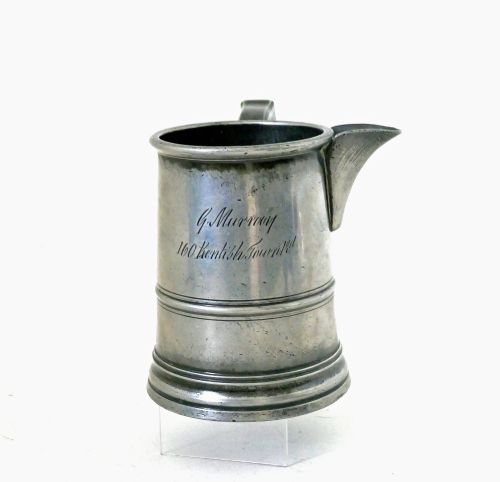
Metal versions depended on pewter casting and silver plating over base metals like copper in the Old Sheffield Plate tradition. Workshops added functional elements such as hinged lids, glass bases, and engraved silver mounts.
Listings feature nineteenth-century periods including the 1860s, 1880s, and 1890s, spanning earthenware, stoneware, pewter, and silver plate.
Assessing quality and character
The presence of precious metal mounts, including hallmarked silver rims and lidded tankard fittings, elevates the status of a vessel. Substantial weight in pewter and silver-plated items indicates superior metal thickness and durable construction.
Simon Peter Gerz·Doulton Lambeth
The Victorian Beer Pitcher Glossary
- Salt-Glazed Stoneware
- Pottery fired at high temperatures where salt is thrown into the kiln to produce a pitted, orange-peel texture. This dense material withstands liquids without absorbing them.
- Toby Jug
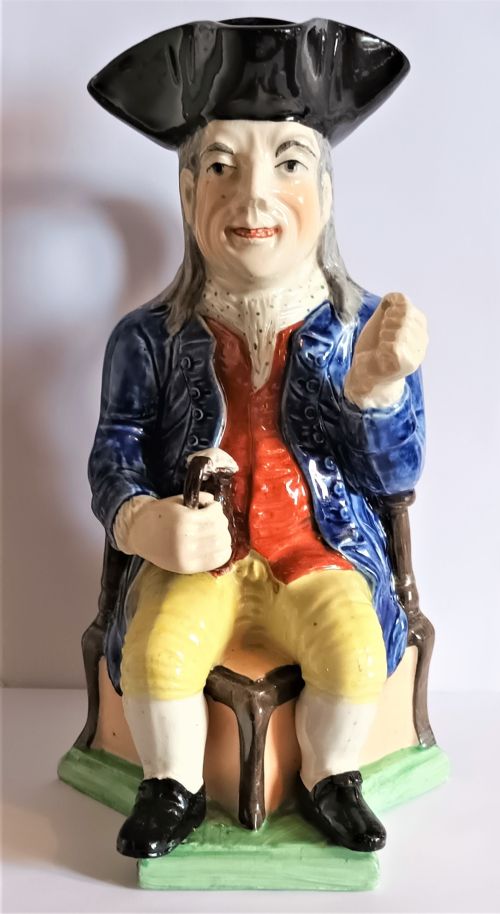
- A pottery jug modelled in the shape of a seated, stout person holding a mug of beer. These figural pieces date widely across the nineteenth century.
- Old Sheffield Plate
- A material made by fusing a thin sheet of silver to a thicker copper core. This technique predates modern electroplating.
- Westerwald
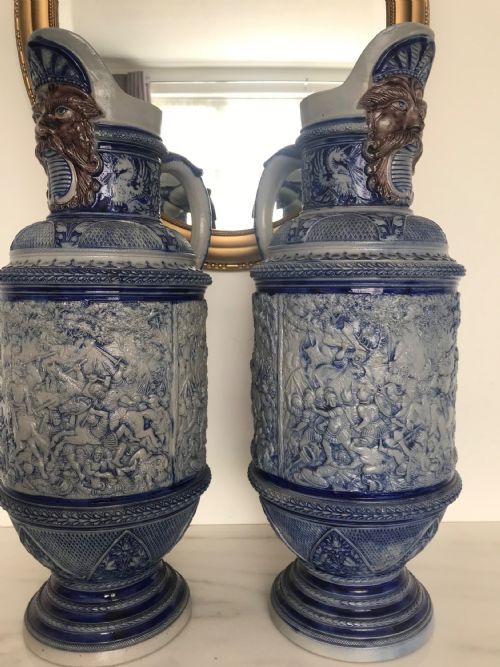
- A German region renowned for grey salt-glazed stoneware decorated with cobalt blue incisions. Pieces from this area frequently depict historical scenes.
- Tin Glaze
- An opaque white glaze containing tin oxide that provides a smooth surface for painted colours. It defines earthenware traditions like Dutch Delftware.
Victorian Beer Pitcher: Frequently Asked Questions
What materials were these pitchers made from?
Makers utilised earthenware, ceramic, salt-glazed stoneware, and tin-glazed pottery alongside metals like pewter, silver plate, and Old Sheffield Plate.
Selections often incorporated glass bodies with silver mounts or ceramic bodies with applied silver rims.
How do I date a nineteenth-century beer jug?
Dating relies on stylistic markers, maker marks, and material technology typical of the 1800s. Nineteenth-century pieces frequently combine historical revival styles with period manufacturing methods.
Evidence on this page spans specific decades from the 1850s through the 1890s, alongside broader nineteenth-century attributions.
What is the difference between a jug and a tankard?
Jugs typically feature a rounded body, a defined pouring spout, and a handle for lifting and tilting. Tankards generally present a straight-sided cylindrical form with a handle and occasionally a lidded top.
Both vessel types served beer, ale, and cider across nineteenth-century tables and taverns.
Are these pitchers suitable for daily use?
While historic vessels remain structurally sound, many buyers choose to display them as decorative items or collections. Ceramic and metal pieces from the nineteenth century require gentle hand washing to preserve glazes and metal plating.
Silver-plated and pewter examples need periodic polishing to maintain their finish.