


Antique Silvered Lidded Jug
An antique silvered lidded jug brings practical nineteenth-century and early twentieth-century elegance to your table.
Antique Silvered Lidded Jug
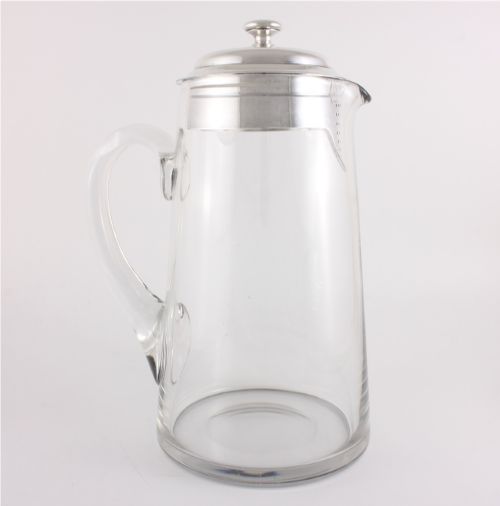
When you search for an antique silvered lidded jug, you encounter a varied selection of vessels designed for serving wine, beer, whisky, and water. These pieces primarily span the Georgian, Victorian, Edwardian, and Art Deco periods, showcasing forms such as claret jugs, whisky noggins, beer pitchers, and cocktail mixers.
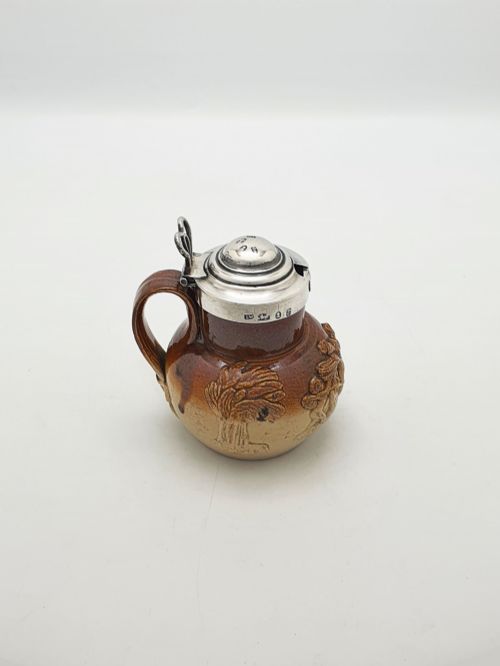
The most common examples on this page pair clear glass or stoneware bodies with sterling silver or silver-plated mounts. You also find entirely metallic iterations shaped from Old Sheffield plate, copper, and solid sterling silver, featuring hinged lids and secure handles.
Materials and construction methods
Maker's workshops combined blown or cut glass and stoneware bodies with fitted metal collars, spouts, and hinged lids. Metals such as sterling silver and Old Sheffield plate were worked into mounts and hand-engraved floral designs.
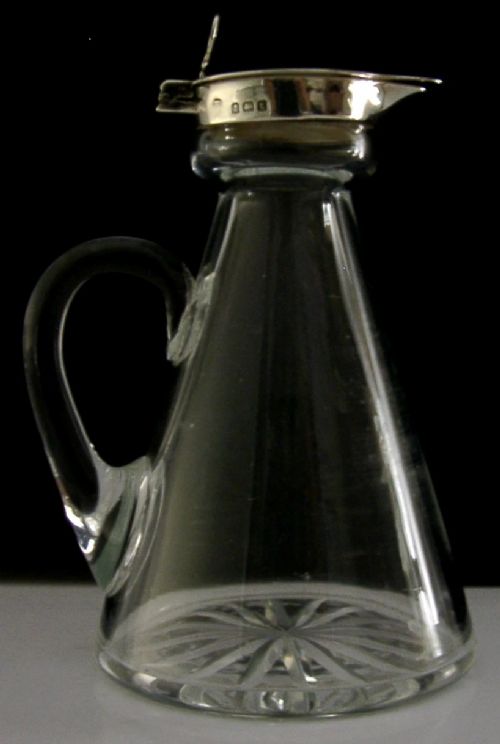
Glass bodies frequently display cut crystal patterns, while ceramic pitchers utilise stoneware, sometimes paired with woven handles or lion and shield finials to complete the composition.
Listings feature items from the Georgian period through to the 1930s, utilising sterling silver, silver plate, glass, and stoneware.
Assessing quality in silvered lidded jugs
Quality rests upon the weight and integration of the metal mounts relative to the glass or ceramic body. Substantial sterling silver collars and crisp hallmarks indicate higher production standards.
The precision of the hinged lid mechanism and the clarity of cut glass or stoneware determine the refinement of the piece. Hand-engraved details and sturdy handle construction elevate the overall standard of the vessel.
Hukin and Heath·Elkington and Co
The Antique Silvered Lidded Jug Glossary
- Claret jug
- A tall vessel specifically designed for serving red wine at the dining table. These pieces often combine glass bodies with elaborate silver or silver-plated mounts and hinged lids.
- Whisky noggin
- A small personal spirit decanter or jug, frequently paired with a sterling silver mount and a matching label. They date commonly to the Edwardian and George V eras.
- Old Sheffield plate
- A composite material formed by fusing a thin sheet of silver to a thicker copper base. It appears on eighteenth and nineteenth-century beer and communion jugs.
- Stoneware
- A heavy, dense ceramic material fired at high temperatures. It provides a durable body for ale pitchers and tankards fitted with silver collars.
Antique Silvered Lidded Jug: Frequently Asked Questions
What were these jugs originally used for?
These vessels served various beverages depending on their specific form and size. Claret jugs poured wine at dinner parties, while whisky noggins held individual measures of spirits.
Larger metal and stoneware pieces functioned as beer jugs, cider tankards, lemonade pitchers, or communion vessels in ecclesiastical settings.
How do I date an antique silvered lidded jug?
Dating relies heavily upon metal hallmarks stamped onto the silver collars, mounts, or lids. These assay marks reveal the exact year and city of manufacture for sterling pieces.
Stylistic cues, such as Victorian rococo revival details, Edwardian proportions, or Art Deco geometric lines, help determine the period when hallmarks are absent or unclear.
How should I clean a silver mounted glass jug?
Wash the glass body gently in warm soapy water using a soft brush, taking care not to submerge weakened historical cements or delicate handles. Dry the glass promptly with a lint-free cloth.
Polish the silver mounts separately with a specialised cloth, avoiding contact between metal polish and the glass or ceramic surfaces.
Can I still use these jugs for serving drinks?
Most glass, ceramic, and metal examples remain fully functional for serving wine, water, or spirits at your table. Inspect the interior and the condition of the seals before use.
Hand-washing is essential for preserving historical materials, and acidic liquids should not be left inside silver-plated or copper vessels for extended periods.