



Victorian Armless Accent Chair
A victorian armless accent chair offers low, deep seating designed for nineteenth-century parlours and bedrooms.
Victorian Armless Accent Chair
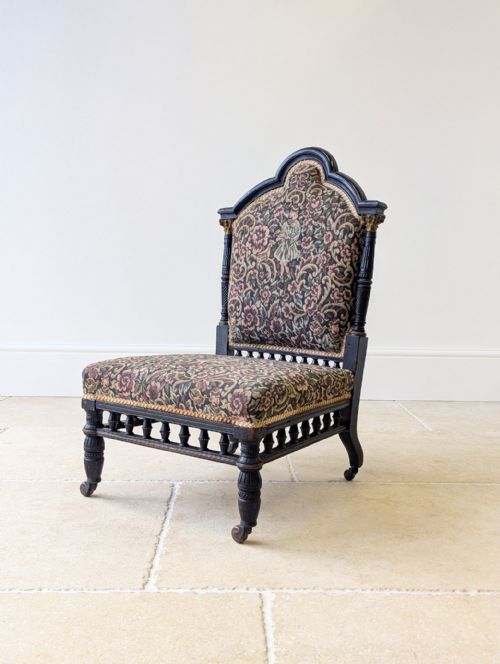
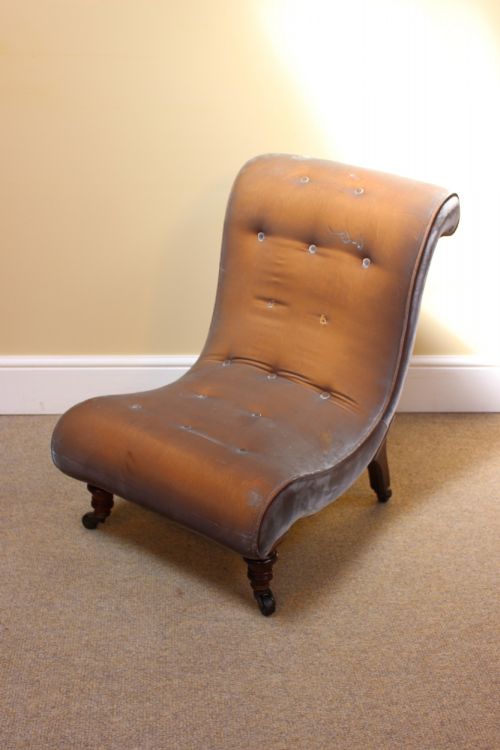
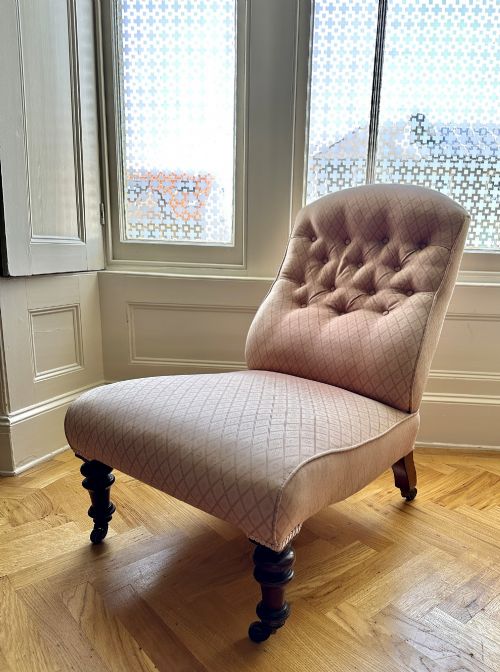
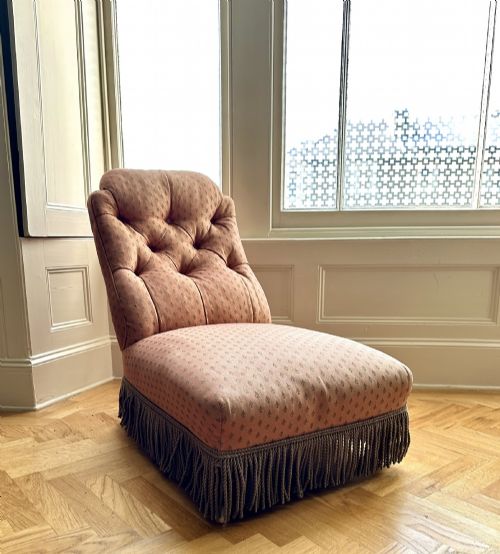
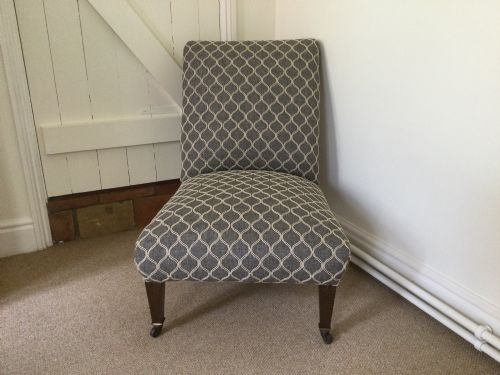
A victorian armless accent chair encompasses low-slung seating forms including slipper chairs, nursing chairs, and salon chairs from the nineteenth century. These pieces appear in walnut, mahogany, and ebonised wood frames, frequently upholstered in velvet or textile.
The most common examples on this page are walnut and ebonised frames dating from the mid-nineteenth century to the late Victorian period. They arrive in styles spanning the Aesthetic Movement, Napoleon III, and Regency influences.
How they were made
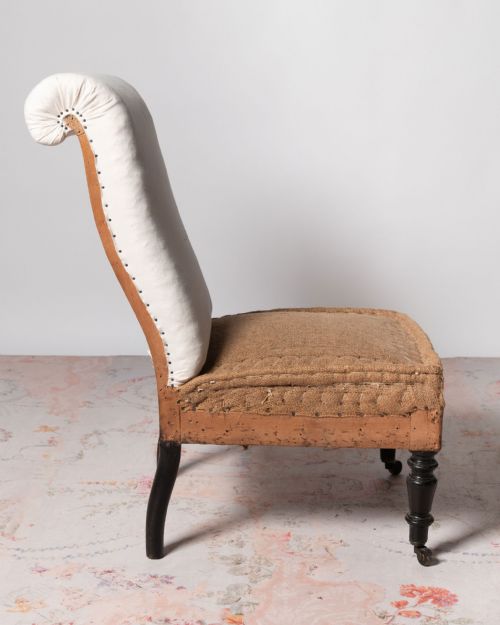
Frames are constructed from hardwoods such as walnut, mahogany, and rosewood, alongside ebonised wood with occasional gilt details. Brass fittings appear on castors, supporting the low seat profile.
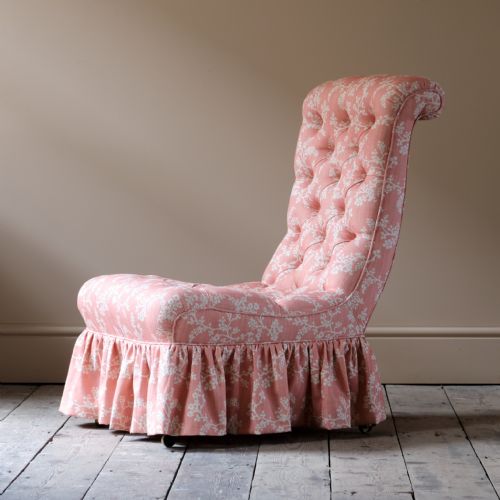
Traditional upholstery techniques utilise textile, velvet, and various upholstery fabrics. Button backs, scroll backs, and fringes complete the decorative finish of the padded seats.
The furniture spans Victorian, Aesthetic Movement, Napoleon III, and Regency styles.
What varies in quality
The sophistication of the timber framing and carved detail distinguishes standard production from notable workshop output. Timber selection, such as figured walnut or rosewood, elevates the presence of the frame.
Upholstery execution and frame proportions dictate the visual balance of the low seating. Maker attribution, such as pieces associated with Gillows or Howard and Sons, reflects higher standards of cabinetmaking.
Gillows·Hindley and Sons·Howard and Sons
The Victorian Armless Accent Chair Glossary
- Nursing chair
- A low chair with an upholstered back, traditionally used by mothers for nursing infants in the nineteenth century. The lack of arms allowed full freedom of movement.
- Ebonised wood
- Timber treated with a chemical finish or stain to imitate expensive ebony. This dark, polished surface was popular during the Victorian and Aesthetic periods.
- Cabriole leg
- A furniture leg that curves out and then in, resembling the leg of an animal. It appears frequently on walnut frames from the nineteenth century.
- Button back
- An upholstery technique where buttons are pulled deep into the padding to create a diamond pattern. This method secures the filling and adds texture to the chair back.
Victorian Armless Accent Chair: Frequently Asked Questions
What is a victorian armless accent chair used for?
These pieces serve as low occasional seating in living rooms, bedrooms, and dressing areas. Their compact scale suits smaller spaces where traditional armchairs would overwhelm the room.
The absence of arms allows them to sit comfortably beneath dressing tables or in bedroom corners. They function primarily as decorative accent pieces that provide extra seating when entertaining.
How do I identify a nineteenth century piece?
Examine the timber framing for solid walnut, mahogany, or ebonised wood rather than modern veneers. Hand-turned wooden legs and traditional joinery indicate nineteenth-century construction methods.
Upholstery styles such as buttoning, scroll backs, and fringing align with Victorian design trends. Period pieces often feature brass castors attached to cabriole or turned legs.
Are slipper chairs and nursing chairs the same?
Both terms describe low, armless nineteenth-century chairs, but their historical uses differed slightly. Slipper chairs sat primarily in dressing rooms, while nursing chairs offered padded support for mothers.
Today, these terms often describe similar compact, low-to-the-ground seating forms. The physical proportions and lack of arms remain shared characteristics across both types.
How do I live with antique low seating?
Position these chairs where their low height does not clash with modern, taller upholstery. They work well paired with low coffee tables or positioned in bedroom corners.
Protect fragile historic fabrics from direct sunlight to preserve the textile. Many pieces accommodate new upholstery if the original fabric requires replacement.