
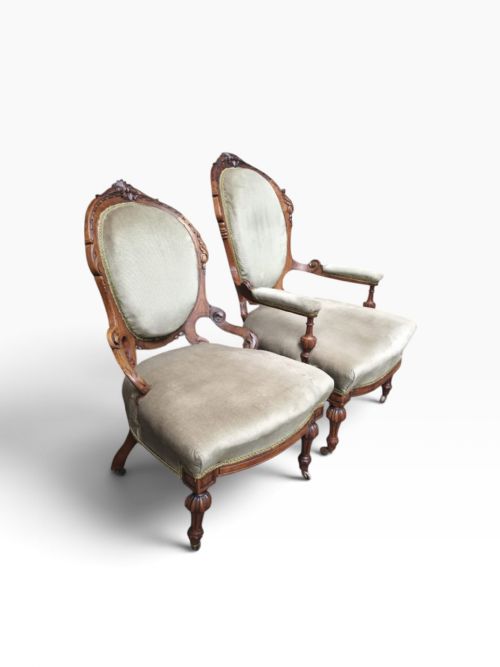
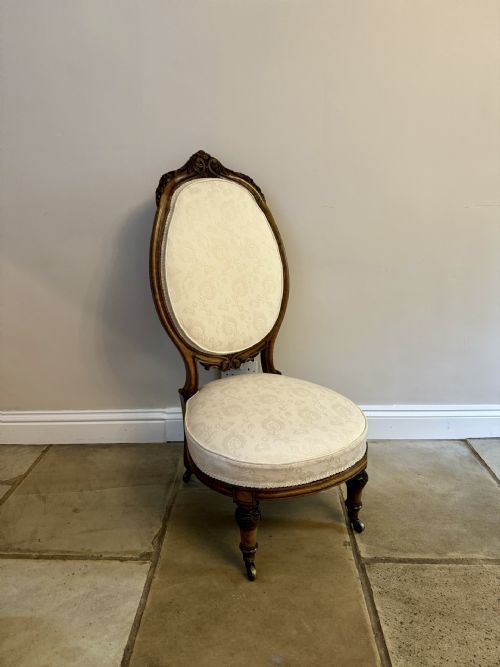


Rococo Revival Ladies Chair
These rococo revival ladies chairs bring carved walnut and rosewood into the room with low seats and deep Victorian curves.
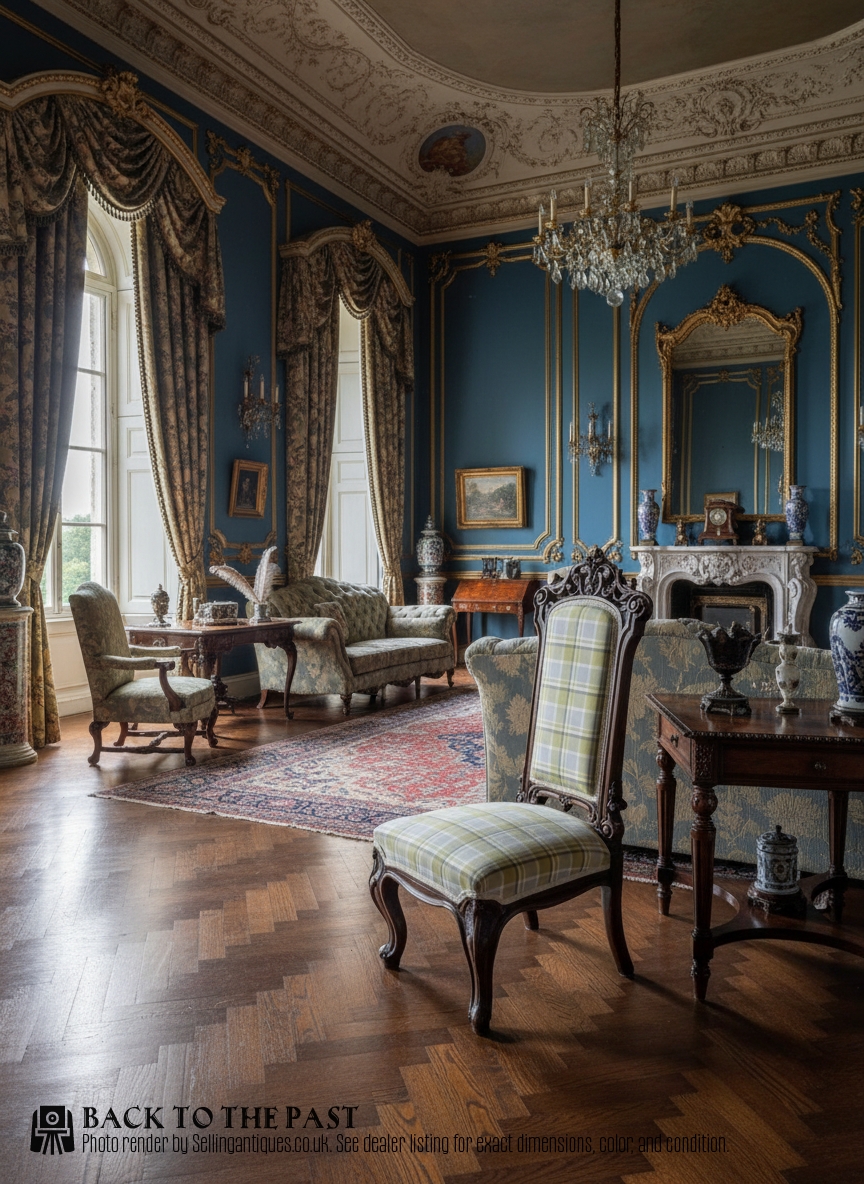
Rococo Revival Ladies Chair
When you search for a rococo revival ladies chair, you are looking at nineteenth-century seating built for the parlour or drawing room, typically lower in the seat than a standard armchair. The examples found here span the Victorian era, reaching from the early Victorian period through to 1900, taking the form of nursing chairs, side chairs, and elbow chairs.
You are most likely to meet walnut and rosewood frames on this page, carved with the characteristic flowing lines of the Victorian rococo revival style. These smaller seating forms were designed to accommodate the voluminous skirts of the period, offering comfort without heavy proportions.
The selection includes matched his and hers sets as well as single accent chairs, often retaining their original fabric upholstery or presented ready for textile replacement. Their origins sit firmly in the nineteenth century, with specific dates clustering around the middle decades.
How they were made
Makers shaped these frames from solid walnut and rosewood, timbers chosen for their dense grain and capacity to hold deep, sculptural carving. Some pieces received an ebonised finish to mimic more costly exotic woods.
Upholstery fabric, textile, and traditional stuffing formed the seat and back, secured with brass tacks or hidden fixings. Metal components occasionally reinforced the internal structure of the joints.
Some chairs arrived in pairs designed for a gentleman and his lady to sit side by side in matched comfort.
What varies in quality
The crispness of the carved detail separates a superior piece from a plain one, showing the hand of a skilled artisan in the depth and undercut of the foliage and scrolls. Softer, shallower carving indicates a simpler workshop production.
The choice of timber dictates the upper tier of the range, with figured rosewood and high-grade walnut commanding attention over ebonised alternatives. Structural integrity in the slender cabriole legs completes the distinction.
The Rococo Revival Ladies Chair Glossary
- Cabriole leg
- A furniture leg that bends outward and then tapers inward, ending in a small foot. This shape mimics animal legs and defines the rococo silhouette.
- Nursing chair
- A low-seated chair designed for feeding infants or general relaxation in the bedroom. They feature shorter legs and supportive upholstered backs.
- His and hers chairs
- A matching pair of parlour chairs comprising a larger armchair for a gentleman and a smaller, armless version for a lady. They share identical carved frames and upholstery.
- Ebonisation
- The process of staining timber, often fruitwood or beech, to imitate ebony. This treatment creates a dense black surface popular in Victorian design.
Rococo Revival Ladies Chair: Frequently Asked Questions
What is a rococo revival ladies chair?
It is a small nineteenth-century seat featuring curved frames, floral carving, and a low profile.
These pieces reflect the mid-Victorian taste for ornate, flowing designs inspired by earlier French styles.
Where were these chairs used?
They sat primarily in the Victorian drawing room, parlour, or private bedroom.
Their compact size made them suitable for ladies receiving callers or tending to domestic tasks.
How do I date these chairs?
Look to the timber, the style of the carving, and the proportions of the frame.
Earlier nineteenth-century examples often employ rosewood, while walnut dominates the middle and later Victorian decades.
Can I use them every day?
Yes, provided the frame remains solid and the internal webbing is secure.
Many buyers choose to update the textile upholstery to suit modern interiors while preserving the antique wood.