


High Back Nursing Chair
A high back nursing chair offers low seating and upright support, prized by collectors for graceful Victorian and Edwardian timber frames.
High Back Nursing Chair
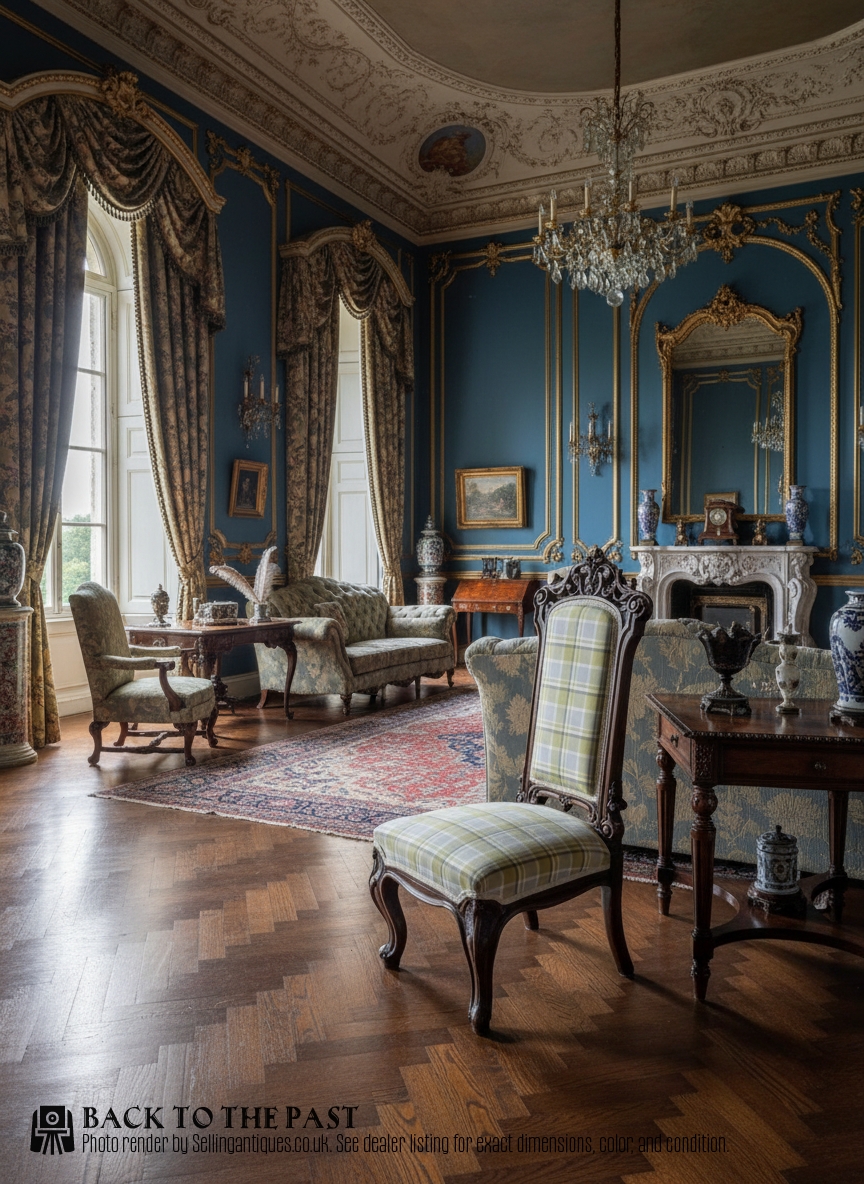
A high back nursing chair is a low-slung seat designed during the Victorian and Edwardian periods for comfort and ease beside the hearth or bedroom. These pieces frequently appear in walnut, mahogany, and rosewood timbers with varied upholstery.
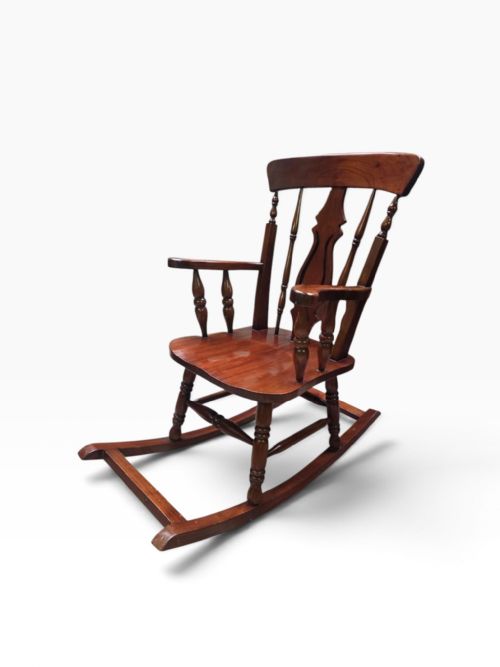
The selection ranges from simple rocking chairs and prayer chairs to elaborate button-upholstered ladies chairs and occasional seating. Walnut frames from the mid-nineteenth century predominate alongside later Edwardian mahogany examples.
Makers utilised various revival aesthetics, producing Gothic Revival, Rococo Revival, and Art Nouveau interpretations. Each variant provides a distinct silhouette defined by a tall upholstered backrest and sturdy wooden framework.
How they were made
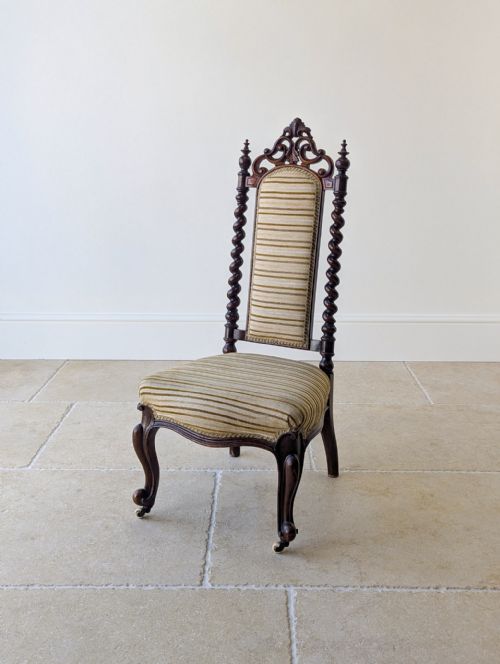
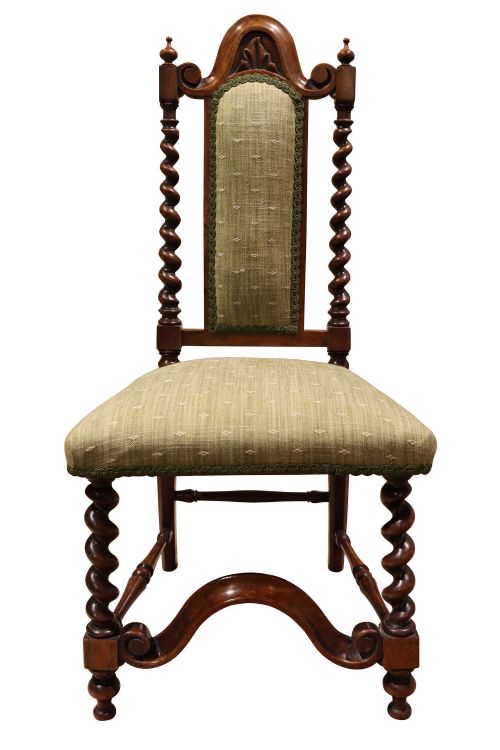
Timbers such as walnut, mahogany, and rosewood form the structural chassis of these seats, often shaped with carved decoration or barley twist turnings. Brass elements and original textile or velvet upholstery complete the construction.
Traditional joinery secures the low frames, while sprung or padded upholstery techniques deliver the characteristic supportive backrest. Show wood frames display meticulous hand-carving in styles spanning the Victorian era into the twentieth century.
Some Victorian prayer chairs feature barley twists so enthusiastic they appear to be mid-dance.
What varies in quality
The refinement of the timber carving and the sophistication of the frame silhouette dictate the standing of an individual piece. Walnut and rosewood examples with intricate barley twist legs or sculptural scroll backs sit at the upper end of the range.
Integrity of the timber frame and the preservation of original upholstery fabrics determine the grade of survival. Pieces retaining untouched show wood and cohesive period textiles command greater interest among collectors.
R Whytock of Edinburgh
The High Back Nursing Chair Glossary
- Prie-Dieu chair
- A low-backed devotional chair designed for kneeling and prayer during the nineteenth century. These items frequently feature tall upright backs and padded armrests.
- Barley twist
- A spiral turning technique applied to wooden chair legs and stretchers. This decorative detail is characteristic of mid-Victorian seating.
- Show wood
- Polished wooden framing left visible around the upholstered sections of a chair. Walnut and mahogany show wood highlights the cabinetmaker's skill.
- Button upholstery
- A tufted upholstery method securing fabric with recessed buttons to create a patterned surface. This finish is typical on finer Victorian parlour and nursing chairs.
- Gothic Revival
- An architectural and decorative style drawing inspiration from medieval forms. Pieces display pointed arches and ecclesiastical motifs.
High Back Nursing Chair: Frequently Asked Questions
What is a high back nursing chair used for?
These low seats were originally designed to allow mothers to nurse infants comfortably while maintaining an upright posture.
Today, they serve as decorative accent chairs in bedrooms or living spaces, offering compact proportions and distinctive historical character.
How do I date a Victorian nursing chair?
Dating relies on identifying timber choices, such as rosewood and walnut in the mid-nineteenth century, alongside stylistic markers like Gothic Revival carving or barley twist turnings.
Later Edwardian pieces introduce lighter mahogany inlays and distinct upholstery treatments that separate them from earlier Victorian examples.
Are nursing chairs comfortable for daily use?
The low seating position and supportive upright backrests provide a firm and distinct sit compared to modern lounge furniture.
Many examples feature padded upholstery and sprung bases that make them suitable for regular placement in a bedroom or quiet corner.
What is the difference between a nursing chair and a prie-dieu chair?
While both share low proportions and tall backs, prie-dieu chairs were originally built for prayer with narrow ledges designed for kneeling.
Nursing chairs focus more on relaxed parlour seating, though the terms often overlap in nineteenth-century cabinet work.