




Tartan Upholstered Chairs
Tartan upholstered chairs bring strong pattern and enduring timber frames into a room, offering both comfort and distinct character.
Tartan Upholstered Chairs
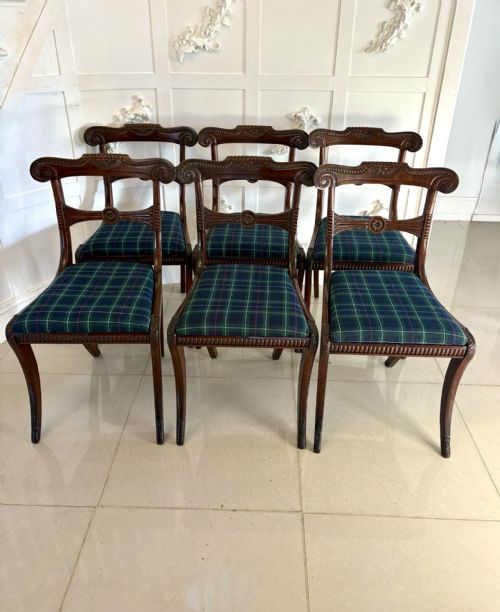
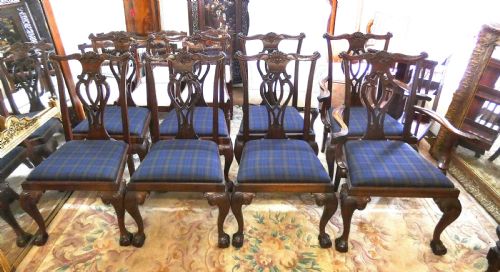
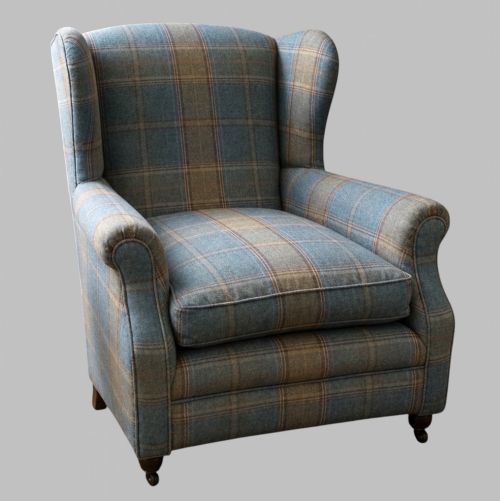
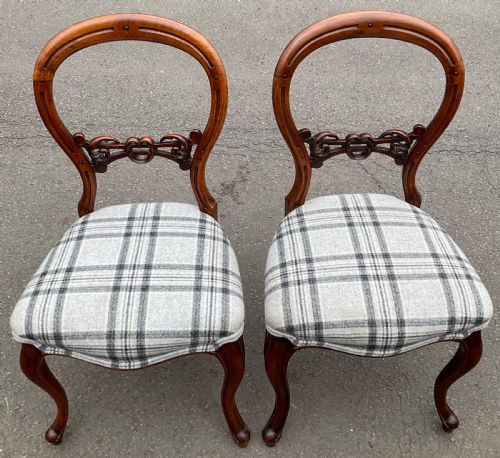
Tartan upholstered chairs encompass a range of seating forms from the nineteenth century onward, upholstered in woolen checks and plaids. Buyers seeking tartan upholstered chairs will encounter dining chairs, side chairs, and substantial armchairs.
The selection includes Victorian and Edwardian examples alongside pieces from the 1930s. Frames span from carved walnut and mahogany dining seats to deep reclining armchairs and wingbacks.
Origins stretch across classic English styles, featuring Regency dining sets, Hepplewhite style armchairs, and Arts and Crafts walnut dining chairs. Each piece combines traditional woodworking with patterned fabric.
How they were made
Construction relies on solid timber frames fashioned from mahogany, walnut, oak, and pitch pine. Joinery techniques from the nineteenth and early twentieth centuries ensure structural integrity in both dining and lounging forms.
Upholstery incorporates durable wool and textile fabrics featuring plaid and check designs. Additional detailing often involves brass castors on legs and careful hand-carving on wooden show-wood frames.
Tartan Upholstered Chairs Retail Price Guide 2026
Typical asking prices for tartan upholstered chairs among the pieces listed under this phrase on Sellingantiques today, from the lower quarter to the upper quarter. They describe what is for sale here now, not the wider market.
Listings feature timber frames in mahogany, walnut, oak, and pitch pine paired with wool and textile upholstery.
What varies in quality
Quality differentiates itself through the crispness of timber carving and the architectural proportion of the frame. A finer armchair displays superior joinery and more substantial secondary woods beneath the upholstery.
The precision of the fabric application matters significantly when working with checks and plaids. Aligning the pattern symmetrically across the seat, back, and wings distinguishes higher grade reupholstered examples.
The Tartan Upholstered Chairs Glossary
- Bergère armchair
- An upholstered armchair with enclosed wooden sides, often made of mahogany or walnut. This form dates back through the nineteenth and early twentieth centuries.
- Carver armchair
- A dining chair with open arms, traditionally placed at the head of a dining table. These pieces match larger sets of side chairs.
- Wingback armchair
- A high-backed fireside chair featuring protective side panels designed to shield against drafts. Early examples often rest on substantial mahogany or oak legs.
- Pitch pine
- A resinous softwood utilised for structural framing and decorative furniture. It appears in robust nineteenth-century seating.
- Arts and Crafts style
- A design movement emphasising handcraftsmanship and simple structural honesty. Furniture from this tradition utilises solid woods like walnut and oak.
Tartan Upholstered Chairs: Frequently Asked Questions
What periods do these chairs cover?
The available selection spans from the early nineteenth century through the Edwardian era and into the 1930s. You will find pieces reflecting Georgian and Victorian design principles alongside later revival styles.
This broad chronological spread means construction details and timber choices change considerably depending on the specific decade of manufacture.
Are these chairs suitable for daily use?
Many of these pieces, particularly the armchairs and reclining variants, are built for comfortable everyday seating. Sturdy hardwood frames in oak, mahogany, and walnut provide lasting physical support.
Dining chairs in sets offer practical utility around a table, combining historic timber frames with durable wool upholstery suitable for regular dining.
What woods are used in the frames?
Mahogany and walnut predominate among the finer dining and parlor seating. Oak and pitch pine appear frequently in library chairs, reclining armchairs, and sturdier frameworks.
These timbers provide the necessary structural rigidity to support deep upholstery and active daily use over many decades.