



Pair Oak Open Armchairs
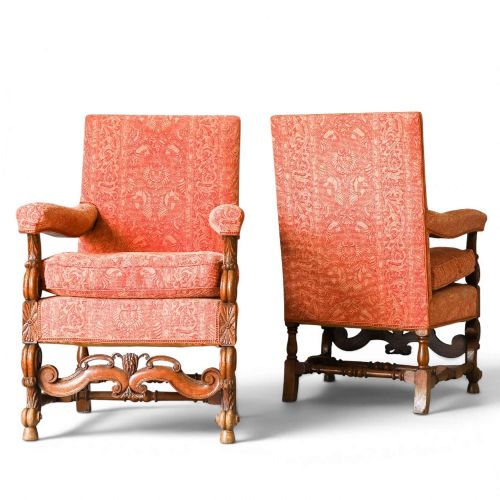
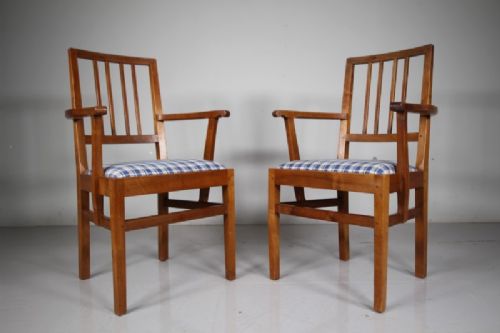
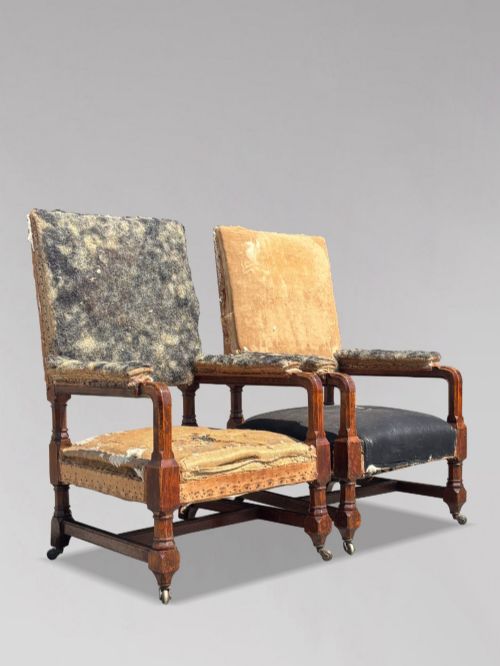
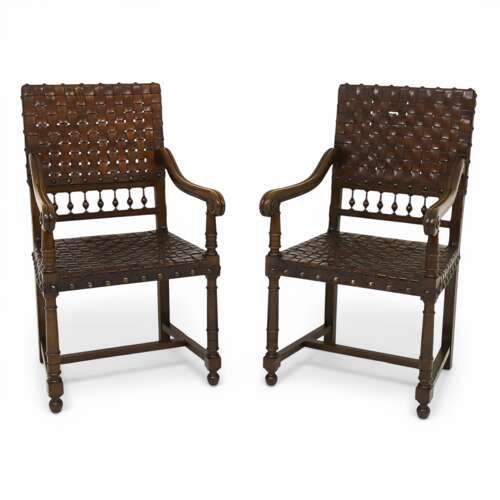
These pair oak open armchairs offer sturdy timber frames and open armrests, combining practical seating with substantial historical character for the home.
Pair Oak Open Armchairs
Most examples appearing here belong to the nineteenth-century Gothic, Carolean, and Renaissance revivals, alongside early twentieth-century Arts and Crafts and studio pieces. Buyers regularly meet sturdy frames incorporating woven leather, rush, tapestry, or fabric upholstery across both highback and low-slung armchairs.
How they were made
Timbers are primarily solid oak, sometimes bleached or finished to highlight the natural grain, joined using traditional methods suited to heavy daily use. Frames frequently incorporate turned supports, carved slot backs, stretchers, and panelled construction.
Upholstery techniques vary from drop-in seats and tacked leather to woven rush and tapestry panels. Brass studding often secures leather hides directly to the timber frame, while auxiliary materials like hessian provide internal support.
Listings incorporate nineteenth and twentieth-century examples, spanning English Country, Arts and Crafts, and various revival movements.
What varies in quality
The standard of carving and timber selection dictates the distinction between standard utilitarian seating and high-end studio output. Crisp, deeply articulated ornamentation on the oak frame indicates superior craftsmanship compared to softer, machine-produced detailing.
Makers' stamps, documented provenance, and retained original upholstery materials elevate certain items. The integrity of the underlying joinery and the harmonious matching of the timber grain across both chairs determine overall desirability.
Edward Barnsley·Dicon Nance·Heals
The Pair Oak Open Armchairs Glossary
- Wainscot chair
- A heavy wooden armchair with a panelled back, popular in the seventeenth century and revived in later periods. These chairs usually feature solid timber seats and sturdy armrests.
- Carver
- A term used to describe an armchair, often matching a set of smaller dining chairs. They typically feature open arms designed to accommodate bulkier clothing.
- Arts and Crafts
- A design movement prioritising traditional craftsmanship and honest materials over mass production. Pieces from this style often display simplified oak frames with exposed joinery.
- Bergere
- An enclosed or open armchair with a wooden frame and cane or wicker-work panelling. They frequently include loose upholstered seat cushions for comfort.
- Fauteuil
- An open-arm armchair originating in France, characterised by upholstered armrests and exposed wooden framing. These pieces often exhibit stylistic influences from various French decorative periods.
Pair Oak Open Armchairs: Frequently Asked Questions
How do I date an oak armchair?
Dating relies on examining the construction methods, tool marks left on the timber, and the specific revival style employed by the maker. Nineteenth-century pieces often display machine-assisted sawing alongside hand-finishing, while earlier interpretations show entirely hand- cleft wood.
Stylistic cues such as turned stretchers, crest rails, and upholstery attachment methods further narrow the period of manufacture. Comparing the timber patination and wear patterns provides additional confirmation of age.
Where were these armchairs used historically?
These sturdy timber seats served primarily in formal libraries, entrance halls, and large reception rooms where durability mattered. Their substantial frames made them suitable for fireside placement and reading duties.
Country variations often populated farmhouse kitchens and dining spaces, while Gothic revival models suited ecclesiastical or grand domestic interiors. Their open arms accommodated heavy historical garments comfortably.
Are replacement upholstery materials acceptable?
Replacing worn leather, fabric, or rush is standard practice for antique seating that sees continued daily use. Maintaining period-appropriate materials preserves the historical integrity of the piece.
Original upholstery remains desirable for collectors, but durable modern replacements ensure the chairs remain functional. The underlying wooden frame dictates the primary value of the furniture.
What is the difference between an armchair and a carver?
The term carver traditionally denotes an armchair designed to match a set of smaller dining chairs, featuring open arms to accommodate seating at a table. Standard armchairs might serve standalone functions in libraries or hallways.
Both forms utilise identical joinery and timber stock, differing mainly in their intended placement within a room. Many listings use the terms interchangeably for seventeenth- through twentieth-century oak seating.