

Edwardian Carved Side Chairs
Edwardian carved side chairs bring practical seating and period character to rooms, shaped by the revival styles and cabinet-making traditions of the early twentieth century.
Edwardian Carved Side Chairs
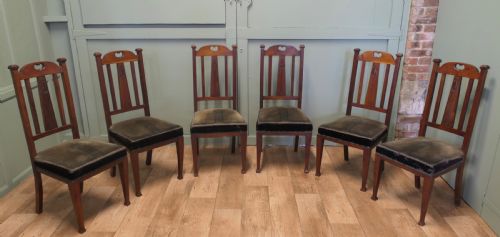
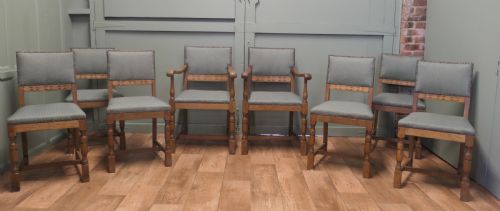
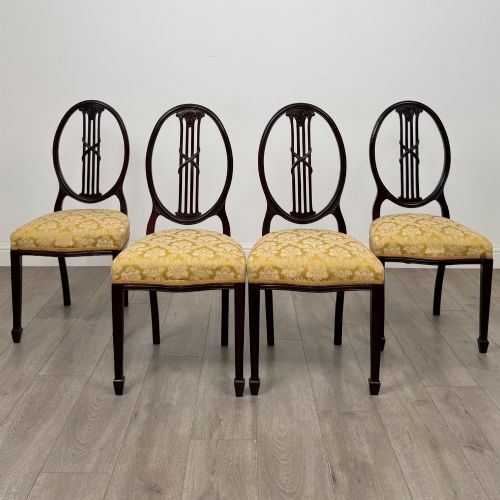
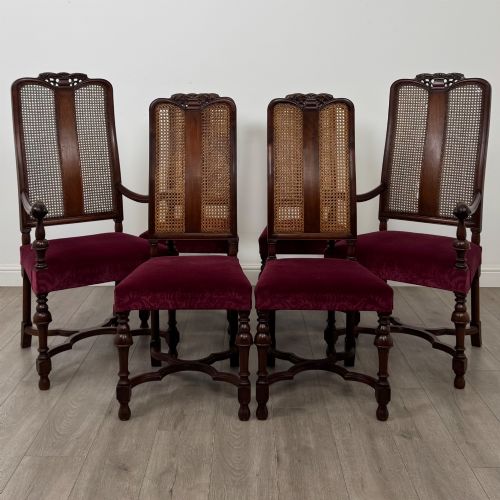
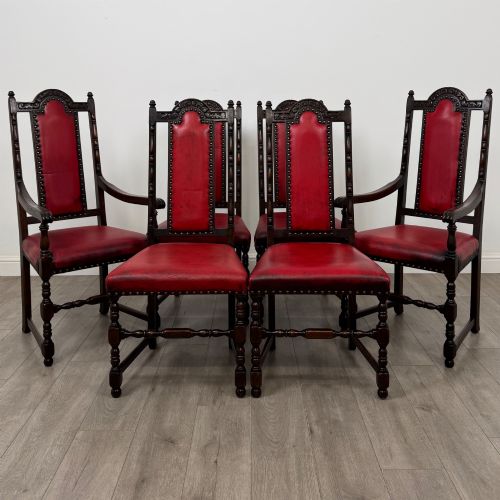
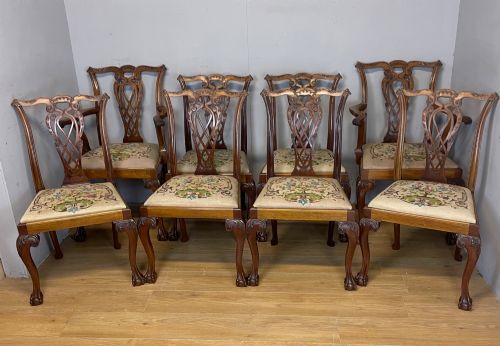
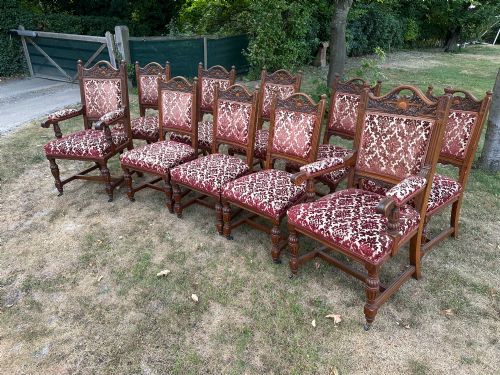
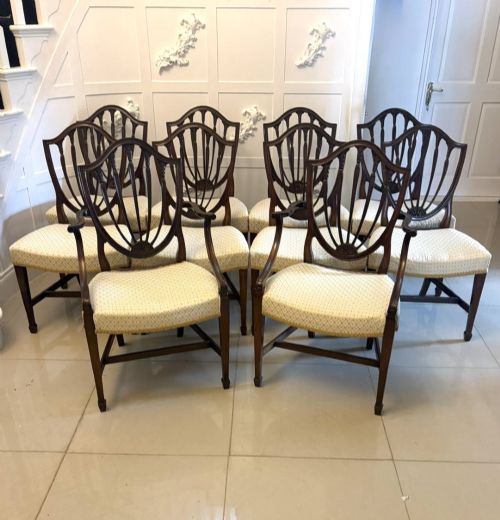
Edwardian carved side chairs are primarily upright seating forms designed for dining rooms, parlours and halls, originating predominantly from the Edwardian era alongside late Victorian and early twentieth-century periods. These pieces frequently appear in matching sets of four, six, eight or ten, as well as in pairs or as individual items.
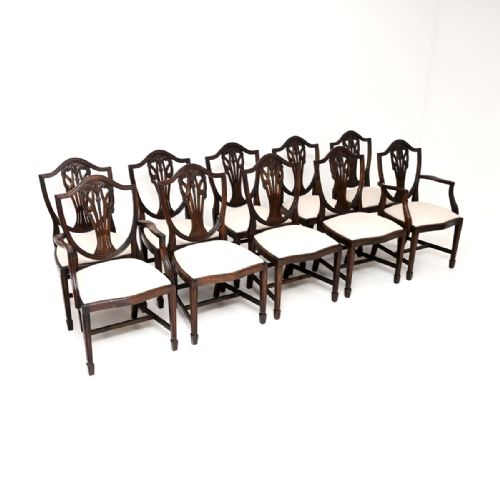
The designs draw heavily on earlier historical vocabularies, showing distinct influences from Chippendale, Hepplewhite, Jacobean and Queen Anne revivals, alongside Arts and Crafts and Art Nouveau movements. Common variations include shield backs, lyre backs, ladder backs and simpler turned or panelled forms.
Makers utilised a range of domestic and imported timbers, adapting traditional chair-making methods to suit both formal dining spaces and domestic interiors. Buyers encounter these chairs in formats ranging from sturdy oak and walnut frames to lighter mahogany and beech structures.
Materials and construction
Cabinet makers built these chairs using solid hardwoods such as mahogany, oak, walnut and beech, often selecting timber for grain pattern and structural durability. Joinery relied on traditional mortise and tenon techniques to ensure stability across load-bearing legs and back frames.
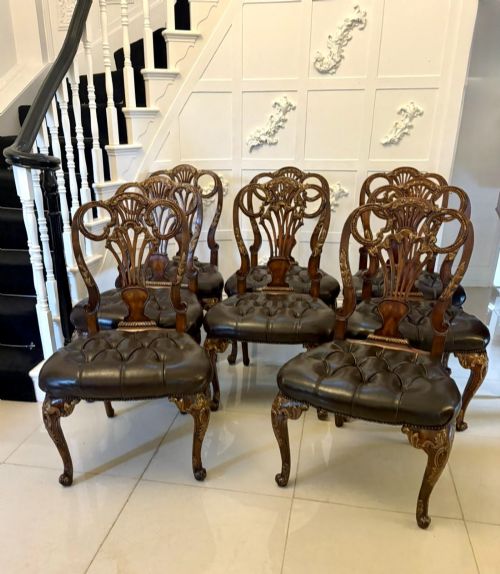
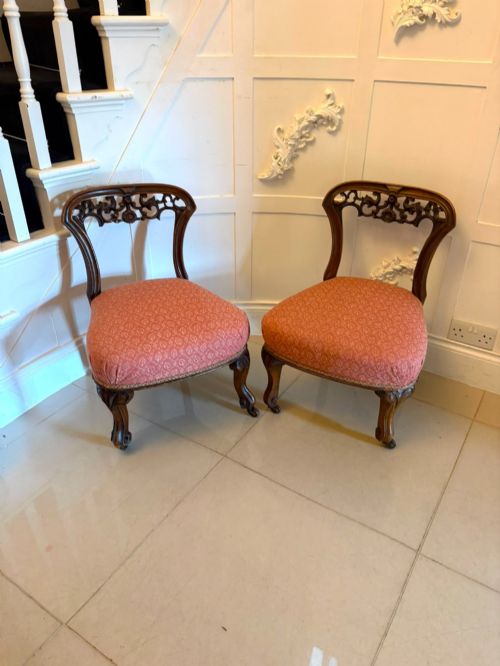
Carving was executed by hand or with mechanical assistance, applying decorative motifs such as ribbons, scrolls, fluting and trefoils directly to the solid wood of the splats and crest rails. Upholstered drop-in pads or fixed seats incorporated materials like leather, fabric, velvet and textile, secured with brass tacks or webbing.
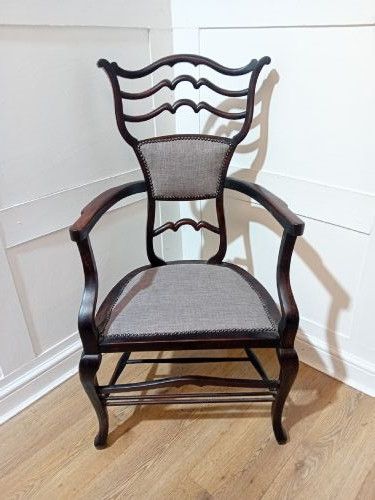
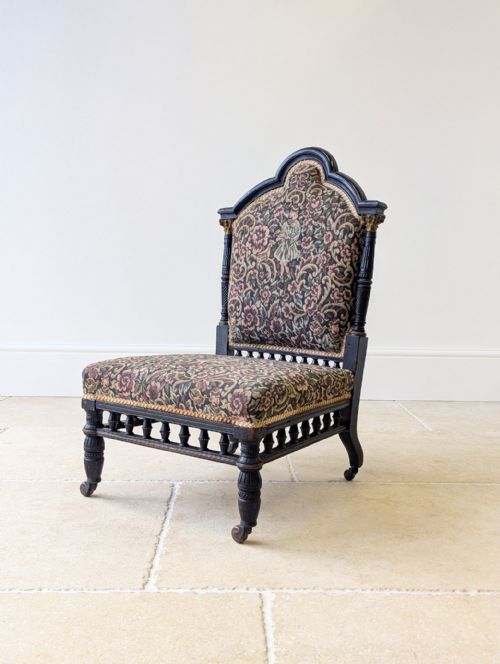
Some Edwardian rooms featured dedicated gossip chairs designed for seated sideways conversation.
Assessing quality
Quality rests upon the crispness of the timber carving and the structural integrity of the frame joints. Superior examples display deep, sharply defined relief work on the splats and crest rails rather than shallow, machine-pressed moulding.
The choice and thickness of timber dictate longevity, with dense grain and tight joinery separating robust dining seats from lighter, more brittle examples. Original upholstery methods and well-preserved secondary woods underneath further distinguish workshop standards.
Charles Tozer·Warings·Maple and Co
The Edwardian Carved Side Chairs Glossary
- Side chair
- A chair without arms, traditionally used at the dining table or placed against a wall.
- Shield back
- A chair back shaped in the outline of a heraldic shield, popularised in the eighteenth century and revived later.
- Splat
- The vertical wooden strip down the middle of a chair back, often carved or pierced.
- Barley twist
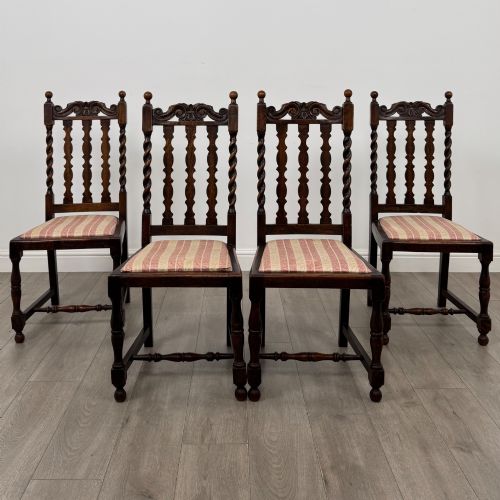
- A decorative turning technique resembling a twisted rope, common on legs and stretchers.
- Gothic Revival
- A style drawing inspiration from medieval architecture, featuring pointed arches and trefoil details.
Edwardian Carved Side Chairs: Frequently Asked Questions
How do I spot an Edwardian chair?
Edwardian chairs often combine lighter proportions with revival styling, drawing on eighteenth-century or Arts and Crafts motifs. They tend to use timbers like mahogany, oak and walnut with machine-assisted or hand carving.
Examine the construction under the seat and check the timber type to help confirm the manufacturing period.
Are these chairs suitable for daily use?
Most wooden side chairs from this period remain sturdy enough for regular dining or occasional seating when joints are sound. Solid hardwood frames handle daily weight well if the joinery has been properly maintained.
Ensure the glued joints and stretchers are secure before putting antique chairs into heavy service.
How do I mix styles at a dining table?
Mixing chair styles works best when pieces share a common timber, such as oak or mahogany, or a similar era. Pairing a set of side chairs with contrasting carvers at the head of the table creates a balanced look.
Keep seat heights consistent to ensure guests sit at a comfortable level around the table.