

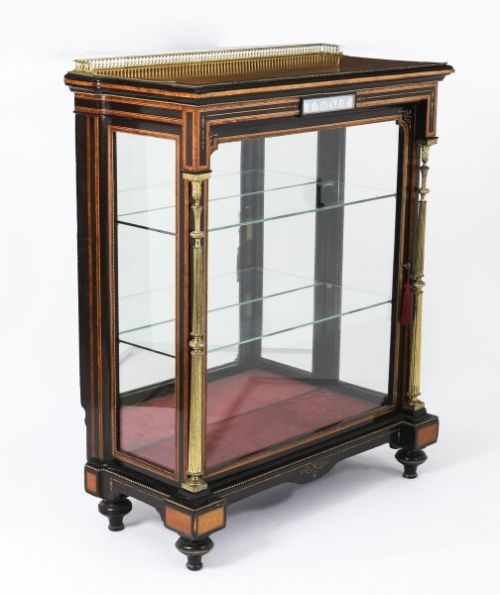


Victorian Amboyna Cabinet
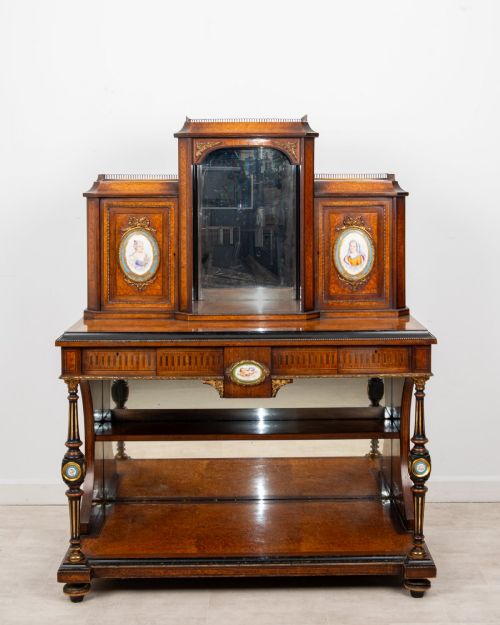
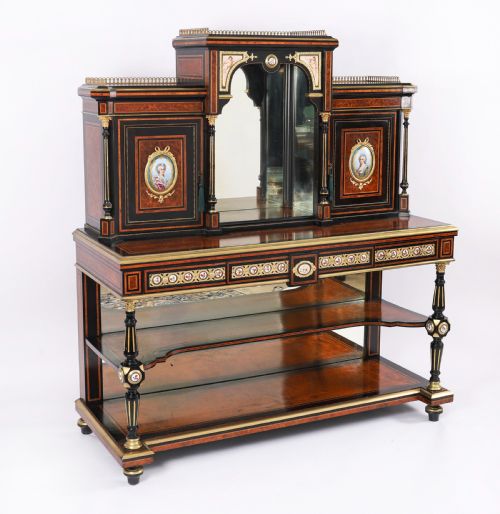
A victorian amboyna cabinet brings rich burled wood grain and dark ebonised contrast to a room, offering both display space and refined storage.

Victorian Amboyna Cabinet
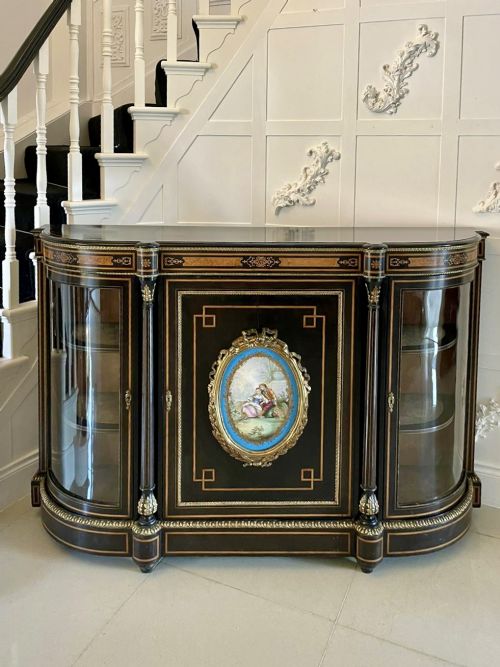
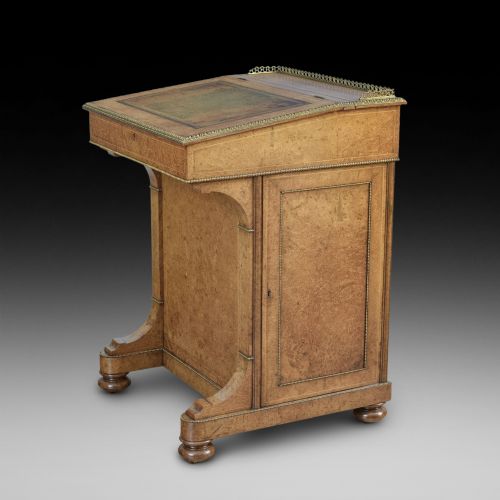
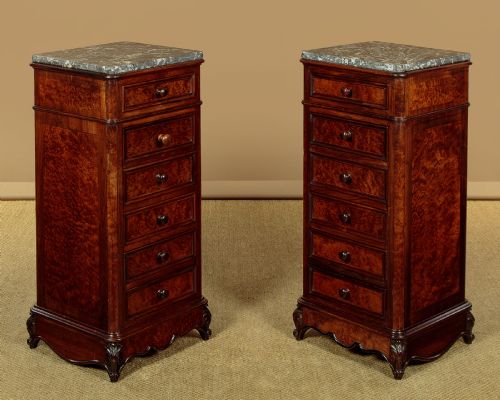
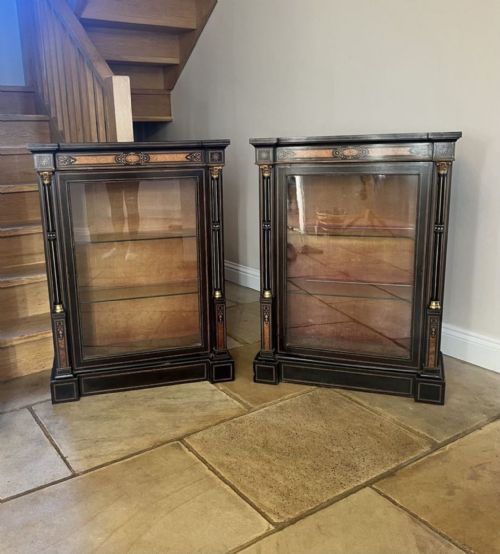
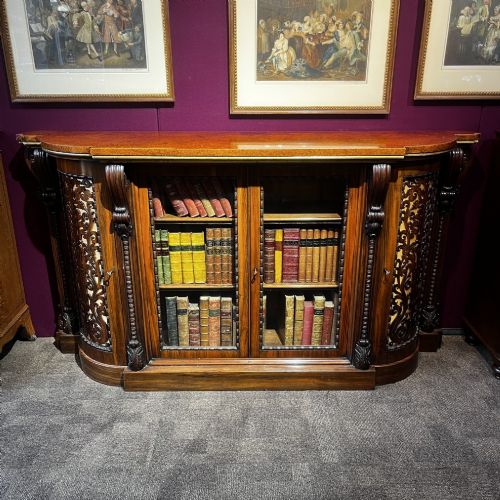
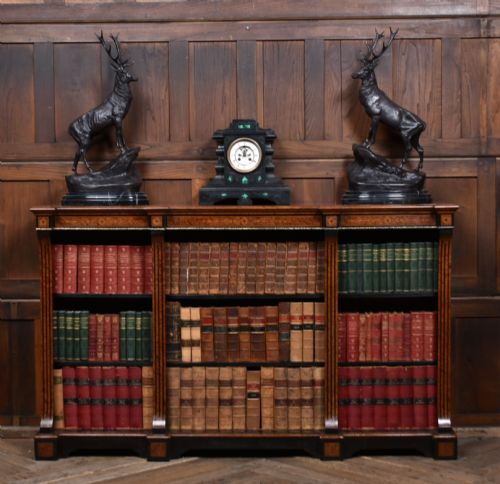
A victorian amboyna cabinet encompasses a variety of forms designed for nineteenth-century interiors, ranging from compact bedside pedestals and music cabinets to expansive breakfront credenzas and display pier cabinets.
The selections span the Victorian, late Victorian, and early Victorian periods, often reflecting French influence or styles such as the Aesthetic Movement and various revivals.
Buyers commonly encounter pieces that combine amboyna veneer with ebonised wood, glass panels, and brass mounts to create striking visual contrast.
How they were made
Cabinet makers utilised amboyna veneer for its intricate, speckled grain patterns, typically laying it over a secondary wood and pairing it with contrasting ebonised timber.
Decoration relied on precision craftsmanship, incorporating brass stringing, ormolu mounts, ceramic plaques, and detailed marquetry inlay into the structural design.
Some nineteenth-century music cabinets include internal partitions designed specifically to keep sheet symphonies from slumping into melancholy heaps.
What varies in quality
The standard of a piece depends on the depth and symmetry of the amboyna grain selection, alongside the crispness of the ebonised details and brass mounts.
Exhibition-grade items demonstrate superior joinery, complex inlay work, and integrated decorative elements like porcelain plaques or gilt metal mounts that remain intact and stable.
Lamb of Manchester
The Victorian Amboyna Cabinet Glossary
- Ebonised
- Wood that has been chemically treated or painted to imitate ebony, providing a dense black finish. This technique creates sharp contrast against lighter veneers.
- Credenza
- A grand nineteenth-century cabinet form used for storage and display, frequently featuring glass doors and architectural mounts. They sit low to the floor.
- Pier Cabinet
- A narrow display cabinet built to fit the wall space between windows. These pieces often incorporate glazed doors to showcase porcelain or books.
- Marquetry
- The art of applying pieces of veneer to a structure to form decorative patterns and pictures. Makers used various coloured woods to achieve pictorial depth.
Victorian Amboyna Cabinet: Frequently Asked Questions
Where should I place a cabinet?
These cabinets work well in reception rooms or hallways where their detailed grain and dark contrast can be appreciated. Pier cabinets suit narrow wall spaces, while larger credenzas anchor a main wall.
Keep the timber away from direct sunlight and heat sources to protect the delicate amboyna veneer from fading or drying out over time.
How do I clean the wood surface?
Dust the cabinet regularly with a soft, dry cloth to prevent buildup in the grain and carved details. Avoid standard household sprays that contain silicone or harsh chemicals.
Apply a quality furniture wax sparingly when the wood appears dry, buffing it gently to maintain the natural sheen of the ebonised and veneered surfaces.
Were these pieces used for storage?
Nineteenth-century households utilised these cabinets for multiple purposes, from housing sheet music and books to displaying prized porcelain collections. Smaller bedside pedestals and writing desks served more private domestic functions.
Interior shelving and fitted compartments varied depending on whether the primary purpose was display behind glass or enclosed storage.
How do I identify a revival style?
Revival pieces borrow decorative motifs from earlier eras, incorporating elements like classical mounts or specific architectural proportions into nineteenth-century forms. Makers combined these historical references with contemporary Victorian construction methods.
Look closely at the secondary timbers inside the cabinet and the style of the brass hardware to help determine the manufacturing period.