


Victorian Agate Pin
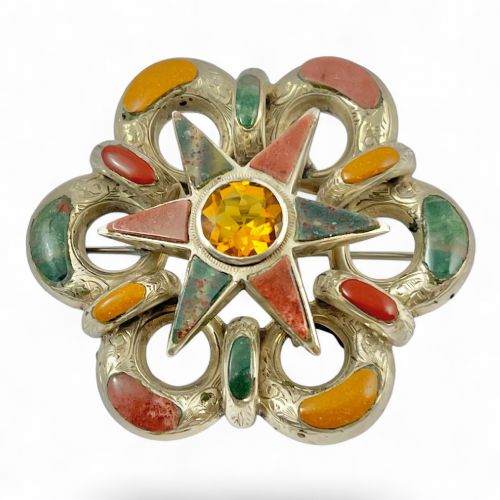
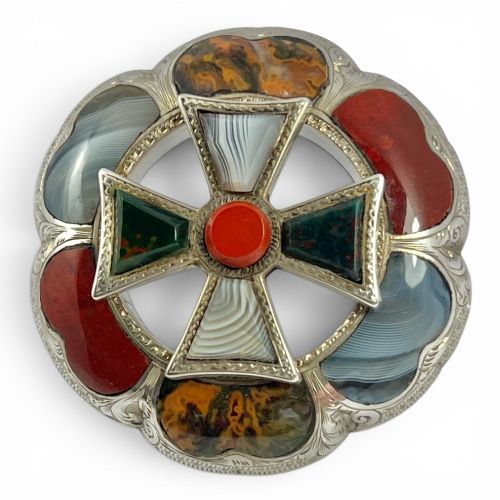
These Victorian agate pin pieces offer the characteristic hardstone work of the nineteenth century, prized for their durable pebble settings and varied natural banding.
What these pieces are
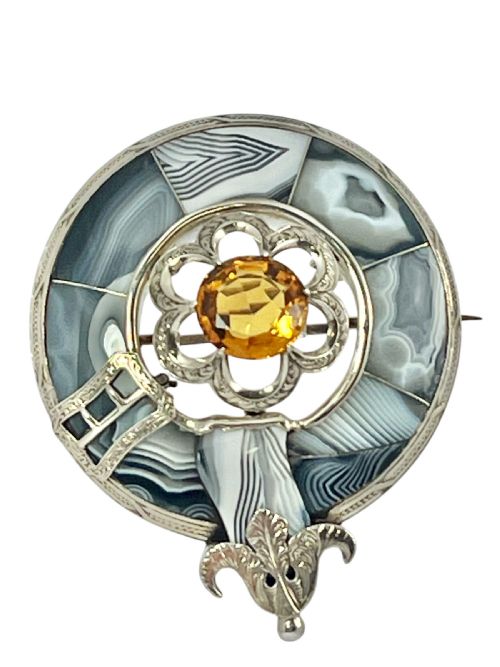
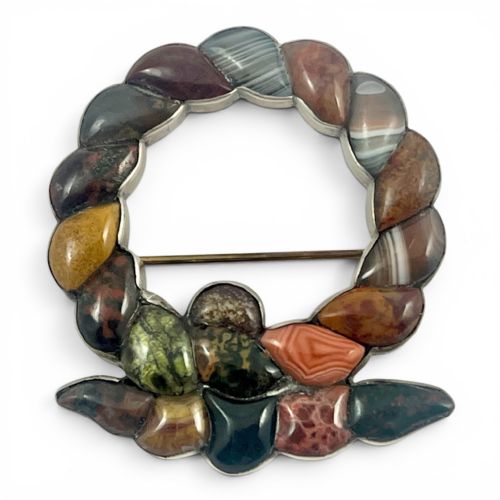
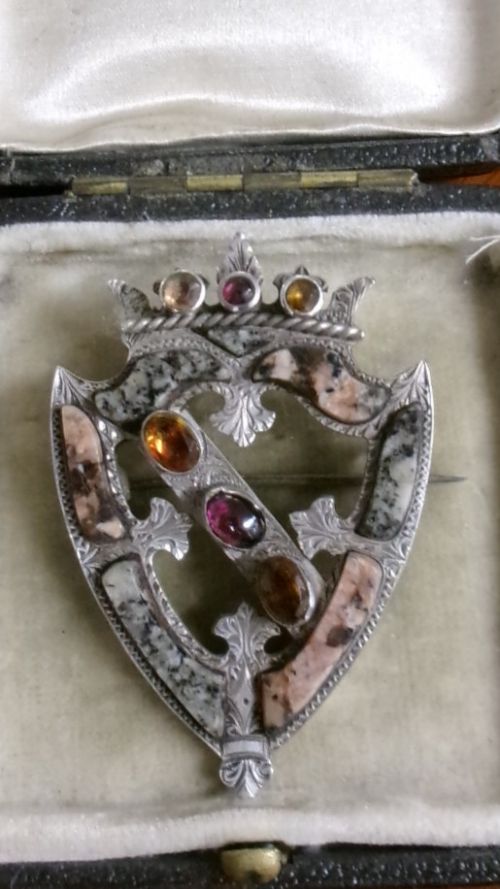
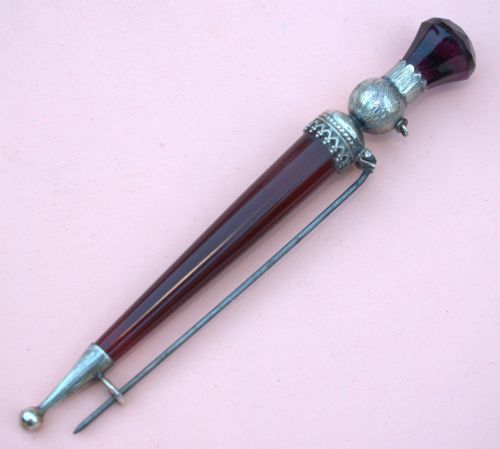
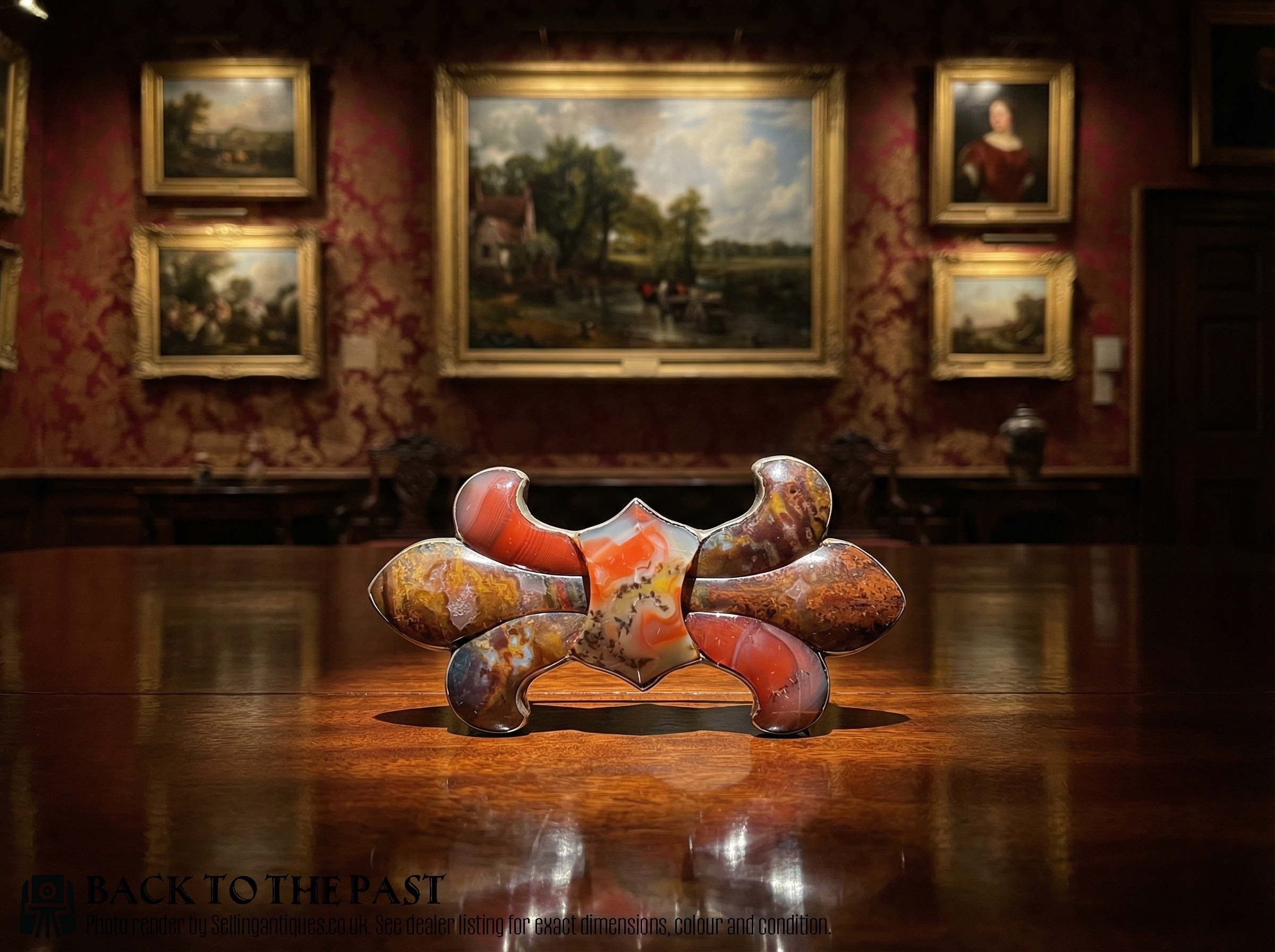
A Victorian agate pin is typically encountered as a Scottish silver brooch or pebble pin, reflecting the nineteenth-century fascination with native hardstones. The selection spans standard silver brooches, stick pins, kilt pins, and swivel pendants from the Victorian era.
Most examples originate from the mid to late nineteenth century, specifically around the eighteen-fifties through to eighteen-eighty. They incorporate regional styles such as the Victorian Scottish Revival, utilising local hardstones mounted in substantial silver or pinchbeck settings.
The form functions primarily as a wearable fastening or decorative brooch, often taking the form of knots, shields, or circular pebble clusters. Buyers frequently find these items paired with citrine, jasper, carnelian, and bloodstone alongside the core agate material.
How they were made
The construction relies on shaping and polishing natural hardstones into smooth specimens, which are then secured within metal mounts. Metals recorded include silver, nine-carat gold, eighteen-carat gold, and pinchbeck.
Lapidary work involves cutting banded agates, jaspers, and carnelians to highlight their natural strata, often arranged in geometric or pebble formations. These stones are then set meticulously into metal bezels by period jewellers.
Retail Price Guide 2026
Typical UK retail prices for victorian agate pin, calculated from the Sellingantiques database of over a million retail prices indexed since 2003. This retail price guide relies exclusively on Sellingantiques data; no external sources or auction records are used, so the figures do not describe the wider market.
Listings demonstrate materials including silver, agate, jasper, and citrine, alongside gold and pinchbeck variants.
What varies in quality
Quality separates simple mass-produced items from finer pieces through the stone selection, colour contrast within the banded agate, and the complexity of the silver or gold mounting. Superior examples display carefully matched specimen stones with distinct natural patterns.
The precision of the lapidary work and the weight of the precious metal define the upper end of the range. Heavier mounts and intricate metalwork alongside varied hardstones like bloodstone and citrine indicate superior Victorian craftsmanship.
The Victorian Agate Pin Glossary
- Agate
- A form of chalcedony quartz displaying distinct natural bands of colour. It forms the primary hardstone material across these nineteenth-century pieces.
- Pinchbeck
- An alloy of copper and zinc developed to imitate gold. It appears frequently in period settings and clasps.
- Hardstone
- A semi-precious stone shaped and polished for jewellery rather than faceted as a gemstone. Includes agate, jasper, and carnelian.
- Revival
- A nineteenth-century design movement drawing inspiration from historical aesthetics, particularly Scottish heritage themes. It governs much of the regional brooches found here.
- Specimen stone
- An individual mineral sample selected for its specific natural visual qualities. These form the decorative elements of pebble jewellery.
Frequently Asked Questions
What metals are these pins made from?
The listings demonstrate items formed primarily in silver alongside pinchbeck and gold alloys. These metals provide the structural mounts for the hardstones.
Craftsmanship of the period utilised these materials to secure heavy pebble clusters safely during daily wear.
How do I date a Victorian agate pin?
Dating relies on the recorded periods spanning the mid to late nineteenth century, typically identified through style, mount construction, and material combinations. Items from eighteen-fifty onwards often display specific Scottish Revival motifs.
Comparison with documented archive pieces helps establish the likely decade of production for individual brooches and stick pins.
What is Scottish Revival jewellery?
This style reflects the Victorian interest in Scottish themes, heavily promoted by royal patronage in the nineteenth century. It incorporates native hardstones and traditional motifs like knots and kilt pins.
The aesthetic combines regional materials such as banded agate, jasper, and citrine within heavy silver settings.
How were these pins used?
Original usage involved fastening heavy fabrics, shawls, and plaids, or serving as decorative lapel ornaments and stick pins. The robust construction suited heavier textiles.
Today, collectors wear them as brooches or integrate them into modern wardrobes as statement accessories.