



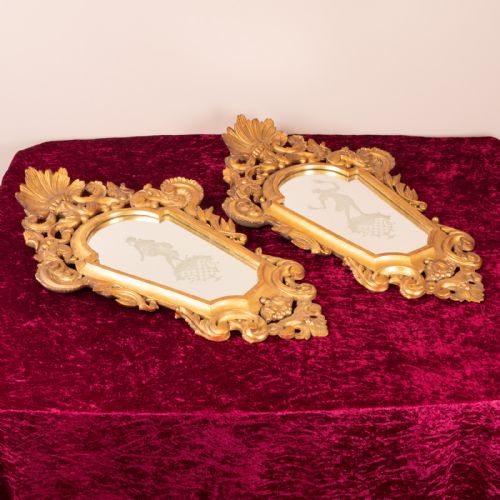
Venetian Rococo Wall Mirror
These venetian rococo wall mirror pieces bring dramatic curved frames and brilliant glass into a room, offering both light and grand theatrical presence.
Venetian Rococo Wall Mirror
When you search for a venetian rococo wall mirror, you encounter pieces defined by sweeping asymmetrical scrolls, elaborate crestings, and heavily carved wooden frames. The selection ranges from authentic eighteenth-century examples to nineteenth-century revivals and twentieth-century interpretations, spanning wall mirrors and girandoles with integrated candle arms.
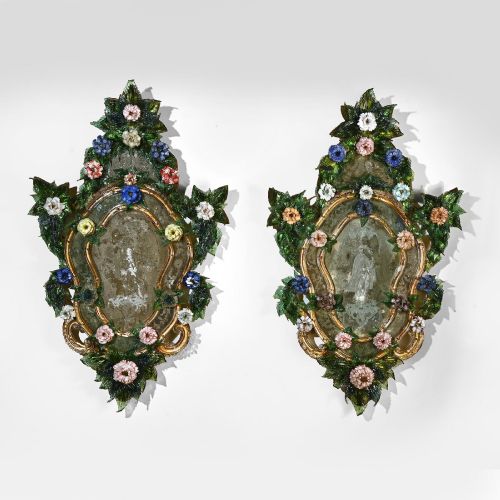
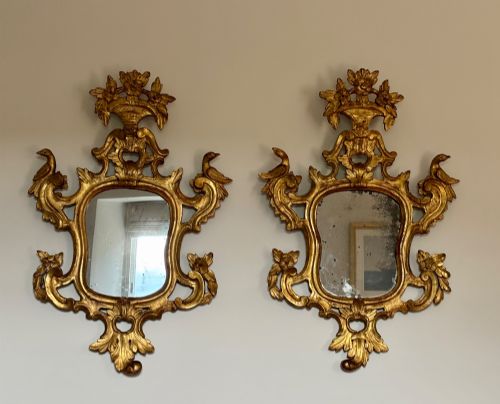
The version you are most likely to meet on this page is an Italian or Venetian creation finished in giltwood, gold leaf, or hand-painted polychrome decoration. Many feature engraved plates or are presented in pairs, reflecting the grand scale of historic palazzo interiors.
How they were made
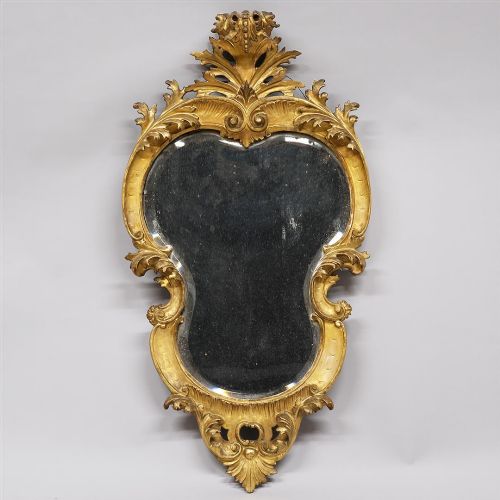
Makers shaped these frames from carved wood, applying layers of gesso before finishing the surface with gold leaf, silver-leaf, or polychrome paint. Wood carving provided the deep, flowing relief characteristic of the style, while gesso created a smooth base for crisp detailing.
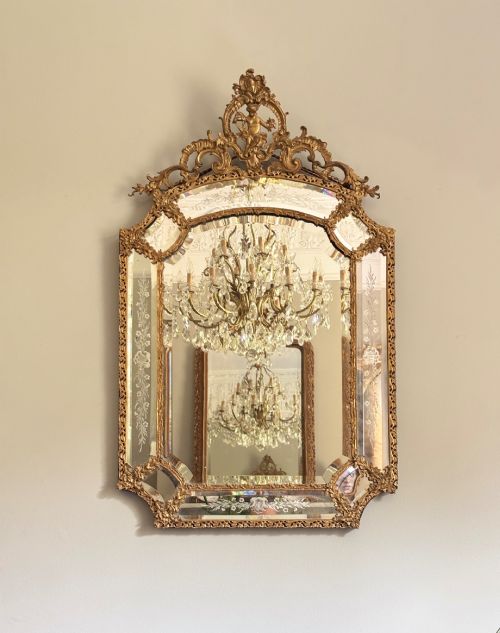
Mirrors incorporated hand-blown glass plates, frequently featuring delicate hand-engraved patterns or segmented mirror borders held in place by decorative corner clips.
Object forms on this page include standard wall mirrors, pier glass, and twin-arm girandoles finished with hand-painted polychrome details.
What varies in quality
The distinction between ordinary and exceptional work lies in the depth and crispness of the wood carving, where finer examples display deeply undercut scrolls and fluid asymmetry rather than flat, mechanical decoration. The quality of the gilding and the subtlety of hand-painted polychrome surfaces further separate standard decorative pieces from superior works.
The integrity of the glass plate also dictates worth, as early engraved mirror plates and original segmented glass sections carry greater visual complexity than simple replacement sheets.
The Venetian Rococo Wall Mirror Glossary
- Giltwood
- Wood that has been coated with gold leaf or powder over a prepared gesso ground. This finish provides the characteristic metallic brilliance seen on historical Italian frames.
- Gesso
- A plaster-like mixture applied to wood frames to create a smooth surface for gilding or painting. It allows carvers to achieve sharp relief details.
- Girandole
- A wall mirror featuring attached candle arms or sconces designed to reflect candlelight into the room. These pieces combine lighting with decorative wall furniture.
- Pier glass
- A tall mirror specifically designed to hang on the wall space between windows. They often feature painted or carved wooden frames tailored to narrow proportions.
Venetian Rococo Wall Mirror: Frequently Asked Questions
How do I hang a heavy giltwood mirror safely?
These carved wooden frames carry substantial weight and require secure fixing directly into structural wall studs or masonry using heavy-duty brackets. Professional installation ensures the frame is properly supported without placing undue stress on historic joints.
Position the mirror at a height that allows it to reflect natural light from windows effectively while maintaining a balanced visual relationship with surrounding furniture.
How can I tell an eighteenth century mirror from a nineteenth century revival?
Eighteenth century examples display hand-carved details and glass plates with authentic age-related oxidation and irregularities. Revival pieces from the nineteenth and twentieth centuries often feature machine-prepared woods and cleaner, more uniform silvering.
Examining the construction methods at the back of the frame, including the type of nails and the wood grain, helps reveal the true age of the piece.
Can I place these mirrors in a modern interior?
The ornate scrollwork and reflective surfaces of these pieces contrast sharply against minimalist walls, adding texture and historical depth to contemporary spaces. They serve as striking focal points above mantelpieces, sideboards, or hallways.
Ensure the scale of the wall corresponds to the generous proportions of the frame to let the decorative details stand out clearly.
How should I clean an antique mirror plate?
Use a soft, dry microfiber cloth to remove dust from both the carved frame and the glass surface. Avoid spraying liquids directly onto the glass or the giltwood, as moisture can seep behind the silvering or damage the gesso.
If cleaning fluid is necessary, apply a small amount to the cloth rather than the mirror itself to protect fragile edges and historic finishes.