
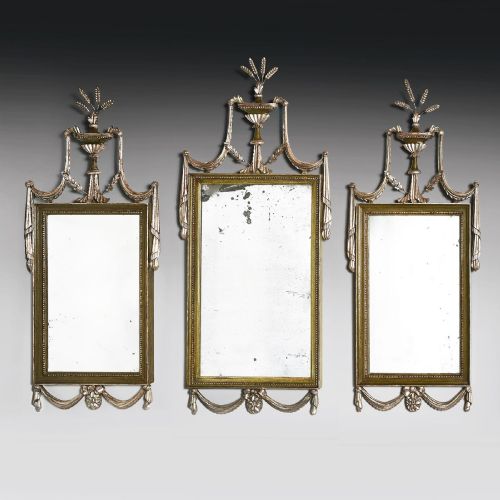
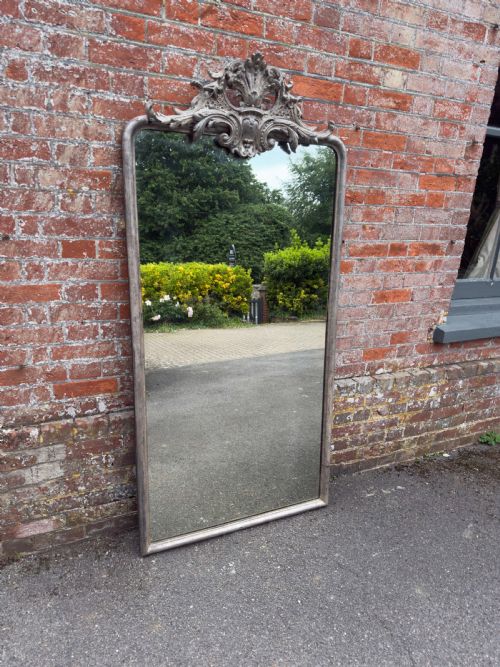

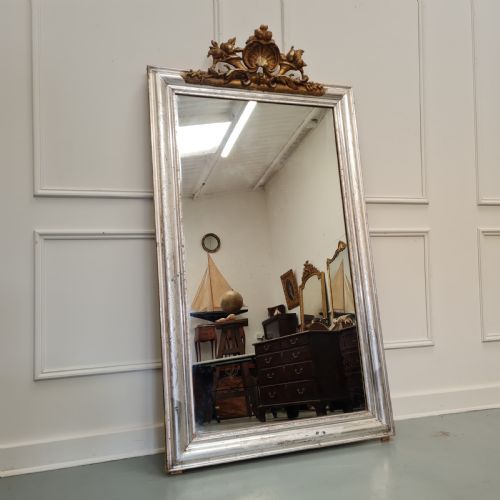


Silvered Carved Wood Mirror
A silvered carved wood mirror brings reflective depth and metallic warmth to an interior, drawing the eye with its historic craftsmanship.
Silvered Carved Wood Mirror
A silvered carved wood mirror is a decorative wall hanging or overmantel piece defined by its wooden structure and metallic reflective surface. These objects range from compact wall mirrors to large architectural overmantels designed to anchor a room.
The most common examples encountered on this page originate from nineteenth-century France, often featuring carved wood and gesso construction with arched or shaped tops. Collectors also discover occasional earlier seventeenth and eighteenth-century examples alongside twentieth-century interpretations.
How They Were Made
Artisans built these frames using carved timber as a foundation, applying layers of gesso to smooth the surface before laying down silver leaf, gold leaf, or metallic paint. This preparation allowed craftsmen to execute intricate relief work, from flowing Rococo curves to restrained neoclassical lines.
Reflective surfaces utilised traditional mirror glass, sometimes showing historic distressing or mercury backing depending on the period of manufacture.
Materials recorded across the inventory include silver leaf, gesso, carved wood, and mirror glass.
What Varies in Quality
Quality rests upon the depth and precision of the wood carving, where crisp architectural moulding and fluid organic ornaments elevate a piece far above simple commercial production. The integrity of the original surface preparation also dictates value, with undisturbed silver leaf and gesso layers showing superior handcrafting.
Proportion and scale play vital roles, as does the survival of original mirror plates and historic backing structures that indicate untouched provenance.
Gillows Of Lancaster
The Silvered Carved Wood Mirror Glossary
- Gesso
- A plaster-like mixture applied to wood frames to provide a smooth base for gilding or silvering. Artisans built up these layers before carving fine details into the surface.
- Overmantel
- A large mirror specifically proportioned to hang above a fireplace mantelpiece. These pieces often feature horizontal emphasis to span the width of the hearth.
- Girandole
- A decorative wall mirror fitted with candle branches or sconces attached to the frame. The reflective glass amplified the flickering candlelight in historic interiors.
- Louis Philippe
- A mid-nineteenth-century French style characterised by gentle arched tops and understated beaded or ribbed frames. This design prioritises clean elegance over heavy ornamentation.
- Silver Leaf
- Extremely thin sheets of silver applied to a prepared surface to create a metallic finish. It develops a distinct natural patina as it ages over the centuries.
Silvered Carved Wood Mirror: Frequently Asked Questions
How do I hang a heavy silvered carved wood mirror?
Large antique mirrors require professional wall fixings distributed evenly to support substantial timber and gesso weight. Securely anchoring directly into wall studs or using heavy-duty masonry brackets ensures safe installation.
Position the mirror at a height that reflects natural light from windows or balances the surrounding furniture proportions.
What is the difference between silver leaf and silvered paint?
Silver leaf consists of beaten metallic sheets applied over a gesso base, producing a deep, reflective lustre that tarnishes naturally over time. Silvered paint relies on liquid pigments applied directly to the wood substrate.
Leafed surfaces display subtle seams and hand-applied texture, whereas painted surfaces offer a more uniform metallic appearance.
How should I clean an antique silvered mirror frame?
Dust the carved wooden elements gently with a soft, dry brush to prevent accumulating debris in the recesses. Avoid chemical polishes or modern solvents that can strip historic metallic leaf and gesso.
Clean the glass plate using a mild glass cleaner applied to a cloth rather than sprayed directly onto the mirror, protecting the surrounding historic frame.
How can I tell a nineteenth-century mirror from an earlier piece?
Nineteenth-century French examples frequently utilise moulded gesso over carved wood with characteristic Louis Philippe arched profiles or Bistro styling. Earlier seventeenth and eighteenth-century pieces display heavier Baroque or Venetian carved depth with distinct joinery.
Examining the backboards, fixings, and the nature of the glass ageing helps confirm the period of origin.