


Venetian Gondola Painting
A venetian gondola painting brings the quiet canals, lagoon light and dark wooden hulls of Italy directly into a room.
Venetian Gondola Painting
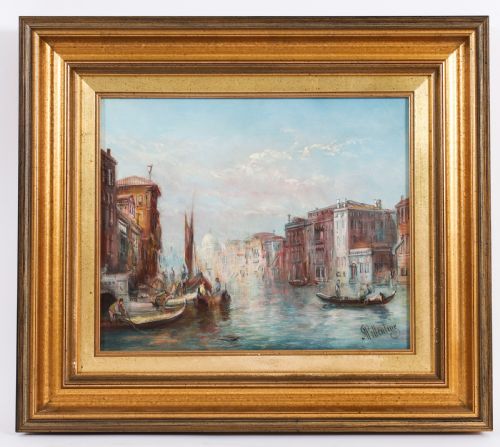
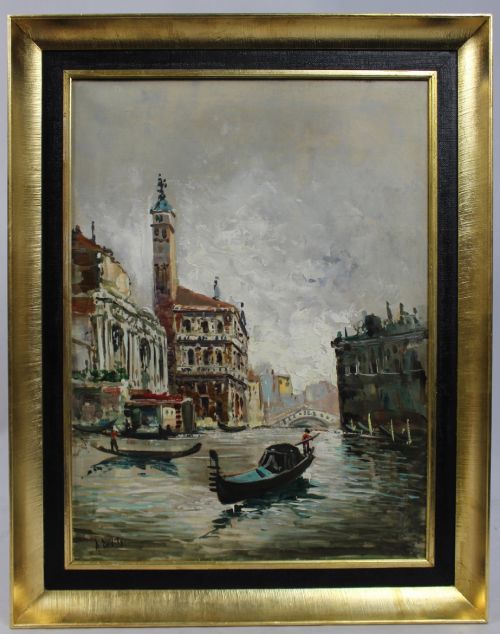
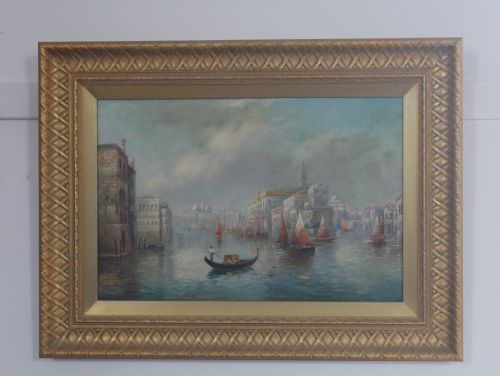
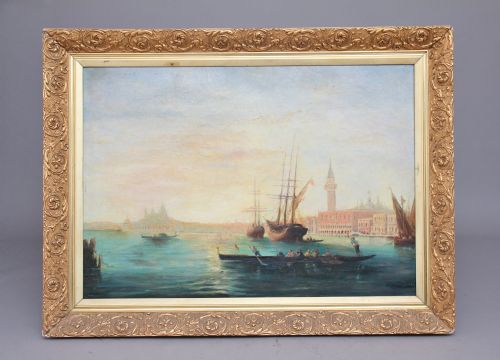
A venetian gondola painting captures the unique topography of canals, lagoons, and historic palazzos through various artistic lenses. These works range from detailed nineteenth century oil paintings of the Grand Canal to early twentieth century watercolours showing gondoliers passing beneath bridges.
Buyers will encounter oil on canvas, watercolours, and mixed media works created across different eras including the nineteenth century and mid-century impressionism. Alongside traditional wall art, the selection occasionally includes related furnishings such as an antique venetian gondola chair carved from wood.
The subjects focus heavily on iconic Venetian landmarks like the Mocenigo Palace, the Ducal Palace, and Santa Maria della Salute. Artists depict these scenes under changing light conditions, from bright afternoon lagoon views to moonlight pastel compositions.
How they were made
Artists utilise traditional supports such as canvas, paper, and wood panels to build these compositions. Oil paint and watercolours form the primary mediums, applied to capture the reflection of light on water and the texture of ancient stonework.
Frames often consist of giltwood and gilded wood, adding a traditional reflective border that complements the luminous palette of the artwork. Mixed media variants incorporate pastel, gouache, and ink pen to build textured views of gondolas on the water.
One unexpected item offered is an antique wooden gondola chair, allowing a collector to sit inside the furniture of the canals.
What varies in quality
The depth of atmosphere and skill in handling light distinguish the finest works from ordinary decorative pieces. Master painters manage tone and perspective to evoke the distinct damp air and movement of the Venetian lagoon.
Provenance and attribution to recorded artists elevate specific works significantly above anonymous topographical sketches. The sophistication of brushwork, from tight nineteenth century romanticism to looser impressionist interpretations, dictates the visual power of the piece.
Alfred Pollentine·Antonio DeVity·F.D. Campo·Jane Vivian·Vittore Zanetti Zilla·Hercules Brabazon Brabazon·Wilfred Knox·Henry Wimbush·Charles Clement Calderon
The Venetian Gondola Painting Glossary
- Giltwood
- Wood carved and treated with a thin layer of gold leaf or gold paint. This finish frequently borders period frames to enhance the richness of the enclosed canvas.
- Impressionism
- An art style characterised by relatively small, thin yet visible brush strokes and an open composition. Works in this style emphasise accurate depiction of light and its changing qualities.
- Gouache
- A method of painting using opaque water-based pigments. It results in a heavier, more solid colour layer than traditional watercolour.
- Palazzo
- A grand palatial building in Italy. These structures form the architectural backdrop for many canal scenes.
- Lagoon
- The shallow body of water separated from the Adriatic Sea by a series of barrier islands. Venice sits directly within this aquatic basin.
Venetian Gondola Painting: Frequently Asked Questions
What periods do these paintings cover?
The works span from the eighteenth century through the Victorian era and into mid-century impressionism. Many date specifically from the nineteenth and early twentieth centuries.
Earlier pieces often lean towards romanticism while later examples adopt impressionistic or watercolour techniques.
Are all these pieces painted in oil?
Oil on canvas represents a significant portion of the available works, valued for its rich texture and depth of colour. Other pieces utilise watercolours, pastel, gouache, and ink.
Artists selected mediums based on whether they sought studio precision or rapid en plein air execution.
Who are the typical artists featured?
The selection includes notable painters such as Alfred Pollentine, Antonio DeVity, and Hercules Brabazon Brabazon. These figures specialised in capturing Italian architecture and maritime views.
Their signatures help anchor the date and origin of individual compositions.