


Venetian Canal Oil Painting
These venetian canal oil painting works capture the timeless light of Italy and bring enduring atmosphere to any room.
What these pieces are
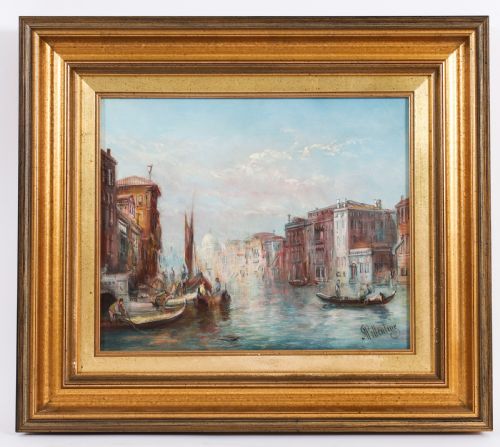
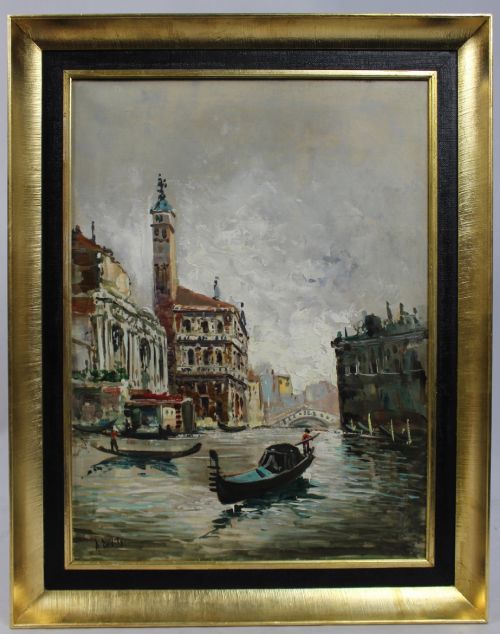
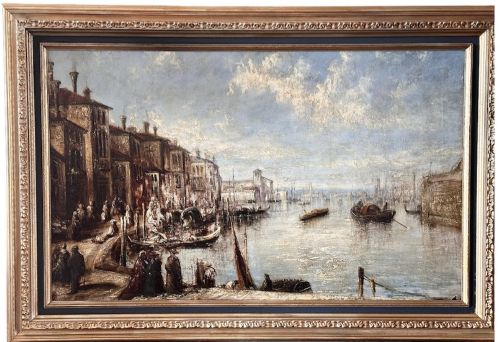
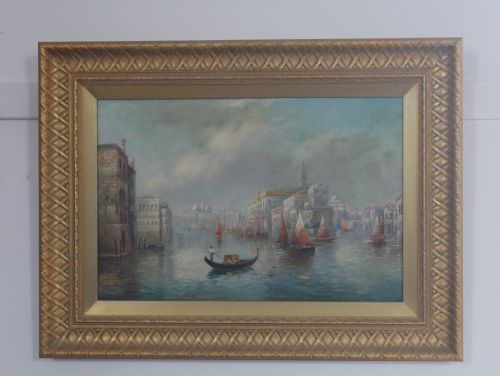
A venetian canal oil painting depicts water scenes, gondoliers and historic architecture along the waterways of Italy. Collectors seek these works to capture the distinctive light and romance of Venice within traditional framed canvases.
The pieces on this page span the nineteenth century through the early twentieth century, encompassing Victorian, Impressionist and French Post-Impressionism styles. Buyers frequently encounter views featuring the Grand Canal, San Simeone Piccolo, and the Bridge of Sighs.
Artists record these urban waterways using oil paint on canvas, copper and wood panel supports. The resulting artworks range from expansive framed gallery pieces to intimate miniature paintings.
How they were made
Painters apply oil paint to prepared canvas, copper sheets or wood panels, building up layers of pigment to capture water reflections and architectural detail. These painted surfaces are then housed within wooden frames finished with gesso and giltwood.
Makers carve and gild wooden frames to complement the oil paintings, often utilising traditional moulding and gilding techniques. Gilded wood and gesso frames provide structural support while enhancing the visual depth of the artwork.
Retail Price Guide 2026
Typical UK retail prices for venetian canal oil painting, calculated from the Sellingantiques database of over a million retail prices indexed since 2003. This retail price guide relies exclusively on Sellingantiques data; no external sources or auction records are used, so the figures do not describe the wider market.
Listings feature works executed in oil on canvas, copper and wood, spanning Victorian and Impressionist styles from the nineteenth and early twentieth centuries.
What varies in quality
Brushwork precision and atmospheric depth separate standard topographical records from masterworks of Impressionism. Superior paintings demonstrate confident handling of light on water and convincing perspective across architectural facades.
The integrity of the original canvas, oil pigment and frame determines the overall condition and visual impact of the piece. Intricate giltwood and gesso framing that remains intact adds significantly to the historical harmony of the artwork.
Marc Aldine·Antoine Bouvard Senior·William Raymond Dommersen·J Vivian·Charles Clement Calderon
The Venetian Canal Oil Painting Glossary
- Giltwood
- Wood that has been coated with a thin layer of gold leaf or gold paint. This material is commonly found on antique picture frames surrounding oil paintings.
- Gesso
- A plaster-like mixture applied to wood frames or canvas surfaces to prepare them for gilding or painting. It provides a smooth base for fine decorative details.
- Impressionism
- An artistic movement characterised by relatively small, thin yet visible brush strokes and an emphasis on accurate depiction of light. Works in this style focus on transient moments in daily scenes.
- Oil on Canvas
- A traditional painting medium where pigmented oil is applied to stretched woven fabric. This combination allows for rich colour blending and long-term durability.
Frequently Asked Questions
How do I date a Venetian painting?
Examine the canvas preparation, stretcher frame construction, and artist signatures against known active periods. Costume details of the gondolieri and architectural changes also provide helpful dating clues.
Stylistic shifts from nineteenth-century realism towards impressionist brushwork help narrow down the decade of creation.
Where should I hang an oil painting?
Select a wall away from direct sunlight and sudden temperature fluctuations to protect the oil paint and canvas. Proper placement ensures the delicate giltwood frame remains safe from environmental damage.
Position the artwork at eye level to fully appreciate the brushwork and detail of the canal scene.
How do I clean a giltwood frame?
Dust the gilded wooden surface gently with a soft, dry brush to remove accumulated particles. Avoid using water or chemical cleaners which can strip the delicate gold leaf.
Professional conservators should handle any deeper cleaning or repair of damaged gesso and gilding.
What subjects appear in these paintings?
Common subjects include the Grand Canal, gondoliers navigating beneath bridges, and historic waterfront buildings like San Simeone Piccolo. Artists frequently painted bustling Venetian waterways from the perspective of boats or quays.
These compositions focus on the interplay of southern light reflected upon water and stone facades.