
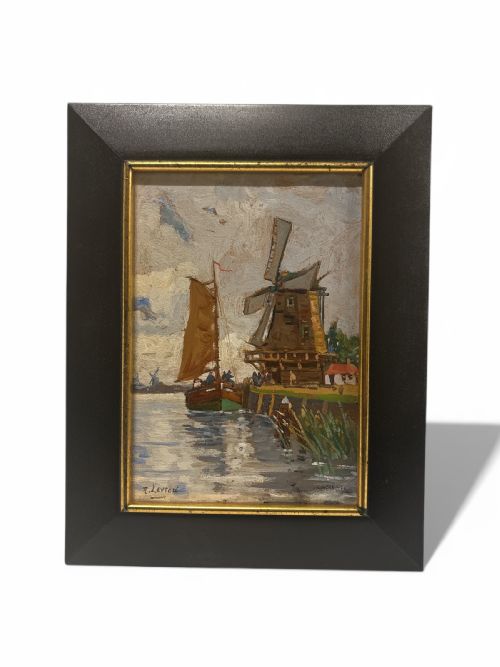


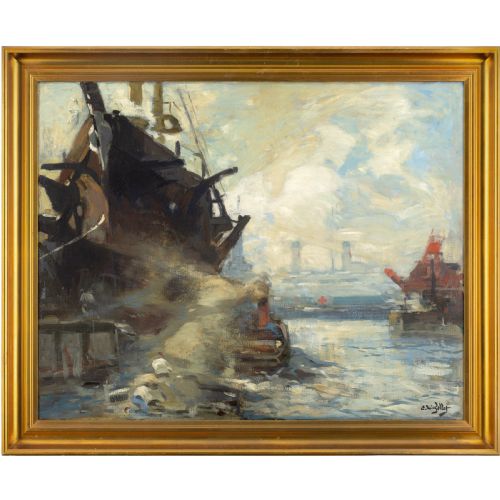
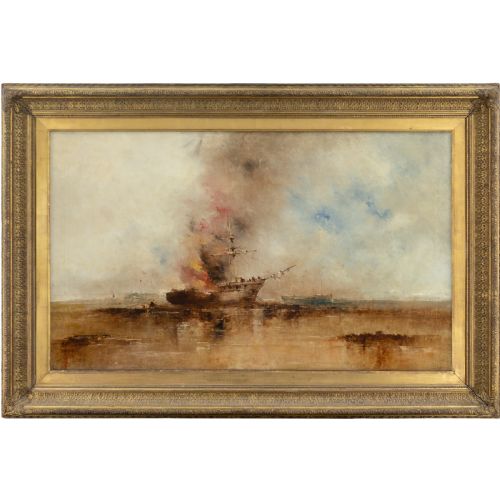
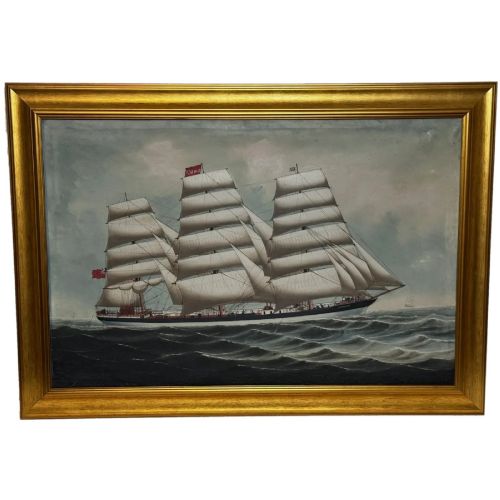
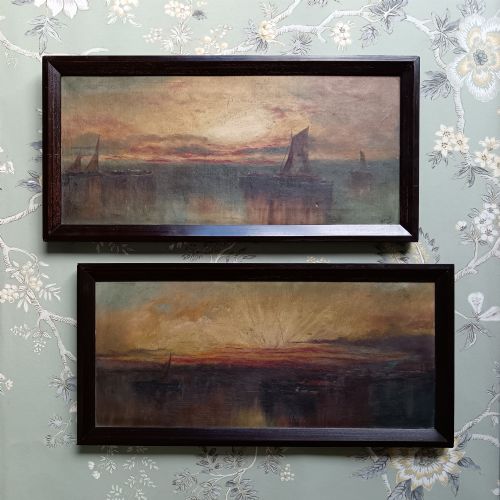
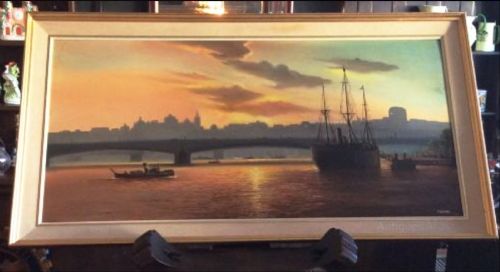


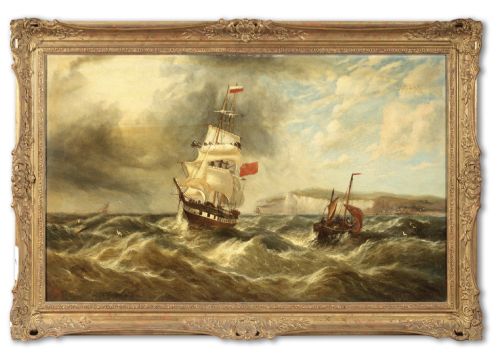
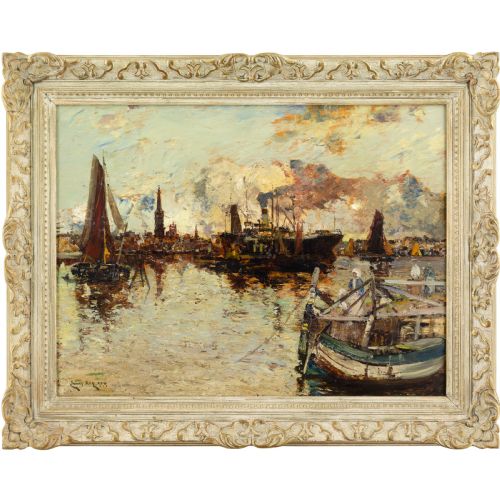

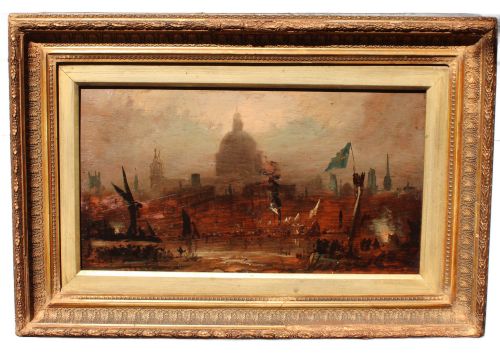
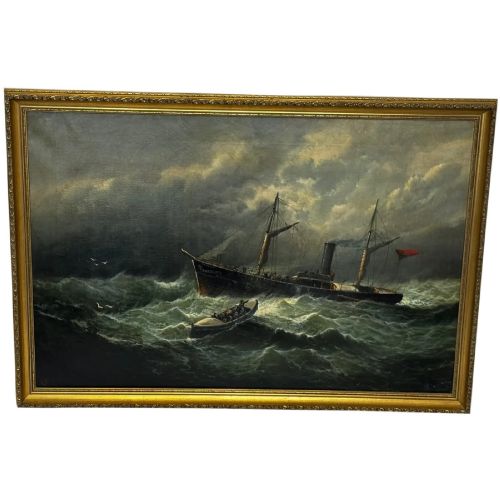
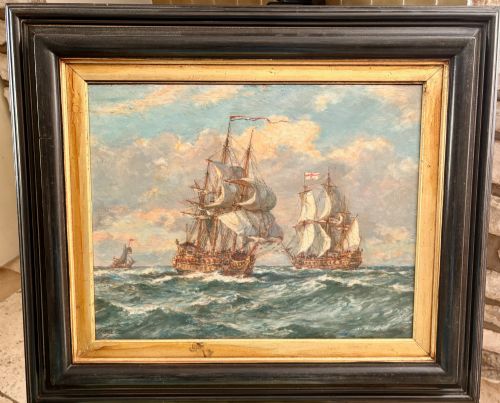
Framed Maritime Oil Artwork
These framed maritime oil artwork pieces capture open seas and busy harbours, offering enduring charm for any collector of historic marine scenes.
What these pieces are
When you search for framed maritime oil artwork, you encounter painted scenes of coastal views, Venetian canals, and open seas. These works capture the maritime history of the nineteenth and early twentieth centuries through detailed brushwork.
The pieces listed on this page predominantly take the form of oil paintings on canvas or board. They range from serene Venetian waterways to bustling Cornish harbours and coastal vistas.
Most examples date from the nineteenth century into the early decades of the twentieth century. Victorian marine art forms a strong core of this selection, alongside Edwardian depictions of coastal life.
How they were made
Artists applied oil paint to stretched canvas or rigid boards to create these enduring coastal and marine scenes. The medium allowed for subtle blending of light on water and dramatic skies.
Many of these works retain their original gilt wood or gold leaf frames. These ornate wooden surrounds complement the maritime subjects and protect the edges of the canvas or board.
Retail Price Guide 2026
Typical UK retail prices for framed maritime oil artwork, calculated from the Sellingantiques database of over a million retail prices indexed since 2003. This retail price guide relies exclusively on Sellingantiques data; no external sources or auction records are used, so the figures do not describe the wider market.
Venetian canals and Cornish harbours share space here with humble hay barges on the river Medway.
What varies in quality
Quality in these maritime works rests upon the artist's ability to render light, water movement, and atmospheric depth with precision. Finer pieces demonstrate confident brushwork and a balanced composition that draws the viewer into the scene.
The accompanying frames also influence the overall character of the piece, with hand-gilded wooden mouldings providing a superior finish compared to simpler surrounds. The integrity of the canvas and the preservation of the original oil paint further distinguish finer examples.
Gustave De Bréanski·Jane Vivian·William Raymond Dommersen·William Lambert Bell·Hubert Thornley
The Framed Maritime Oil Artwork Glossary
- Oil on canvas
- Pigment suspended in a drying oil applied to a woven fabric support. This traditional method allows for rich texture and lasting durability.
- Gilt wood
- Timber decorated with gold leaf or metallic powder to create a bright surface. This finish is typical of period frames housing historic paintings.
- Seascape
- A work of art depicting the sea, coastal views, or marine vessels. These subjects became particularly popular during the nineteenth century.
- Oil on board
- Pigment applied to a rigid wooden or composite panel rather than fabric. This method provides a firm, stable surface for smaller painted scenes.
Frequently Asked Questions
How do I date an oil painting?
Dating relies on stylistic evidence, stretcher construction, and artist signatures recorded on the work. Frame types often provide additional clues to the era of creation.
Consulting biographical records of identified painters helps narrow down the active period of production.
Are original frames important?
Original gilt wood frames enhance the historical integrity and visual appeal of nineteenth-century marine works. They were designed specifically to complement the palette and subject of the painting.
Matching frames demonstrate how the artwork was presented to contemporary buyers.
Where should I hang a marine painting?
These works suit traditional reception rooms, studies, or hallways where lighting can highlight the textured oil paint. Placing them away from direct sunlight protects the canvas and gilt surfaces.
Ensure the wall fixings can securely support both the painting and its substantial wooden frame.
What is the difference between canvas and board?
Canvas involves fabric stretched over a wooden frame, offering slight give and traditional texture. Board provides a completely rigid surface often utilised for smaller sketches and finished panels.
Both mediums were common in the nineteenth and early twentieth centuries.